Saturday, November 22, 2025

Exploring Japan's Thriving Motorcycle Culture And The Global Allure Of Two-Wheeled Transportation

The Japan Mobility Show 2025, a successor to the traditional Tokyo Motor Show, recently took place, showcasing the country's prominent motorcycle manufacturers alongside carmakers. This event highlights Japan's strong motorcycle culture, which is more deeply ingrained than in America, with streets often filled with motorcycles and scooters (www. designnews. com → automotive-engineering → cool-new-motorcycles-of-the-japan-mobility-show-2025). At the show, notable manufacturers such as Honda, Kawasaki, and Yamaha displayed their latest concepts, production models, and side businesses.

For instance, Honda showcased its new rocket, while Kawasaki presented a side-by-side ATV. Yamaha's stage featured one of its grand pianos and a drum kit, demonstrating the company's diverse interests. The event not only focuses on production motorcycles but also gateway two-wheelers for young enthusiasts and championship-winning grand prix race bikes.

This emphasis on motorcycles as a significant part of Japanese culture is reflected in the show's exhibits. According to Dan, a seasoned automotive journalist with over three decades of experience, the Japan Mobility Show offers a unique glimpse into the country's motorcycle industry (www. designnews. com → automotive-engineering → cool-new-motorcycles-of-the-japan-mobility-show-2025).

Image

The allure of two-wheeled transportation extends far beyond Japan's borders, captivating enthusiasts worldwide with its unique blend of thrill, practicality, and style. In the United States, for example, motorcycles have become an integral part of the country's automotive landscape, with many riders embracing the freedom and exhilaration that comes with hitting the open road.

From the rugged, off-road capabilities of adventure bikes to the sleek, high-performance designs of sportbikes, the diversity of motorcycles on offer has never been greater.

As motorcycle manufacturers continue to innovate and push the boundaries of design, safety, and performance, enthusiasts are spoiled for choice when it comes to selecting their dream bike.

Whether you're a seasoned rider or just starting out, there's a motorcycle to suit every style, budget, and riding preference.

With advancements in technology, such as anti-lock braking systems (ABS) and traction control, modern motorcycles offer a level of safety and sophistication that was previously unimaginable. From iconic American brands like Harley-Davidson to European marques like Ducati and BMW, the world of motorcycles is a rich and varied one, with a global community of riders and manufacturers united by their passion for two-wheeled transportation.

◌◌◌ ◌ ◌◌◌

Following in the long tradition of the old Tokyo Motor Show , the new Japan Mobility Show showcases the country's motorcycle manufacturers alongside...
Find other details related to this topic: See here

The Quiet Revolution of Electric Vehicles: A Shift in Physics and Architecture

The subtle, high-frequency hum of capacitors charging, a sound entirely absent from the internal combustion epoch, sets the stage for this quiet, unsettling revolution. It is not the bellowing arrival of a new god, but the soft-shoed entrance of an entirely different physics, one where mechanical identity is ceded to algorithmic control and instantaneous torque. The soundscape of the modern city—long ruled by the chaotic percussion of four-stroke engines, the roaring theater of hydrocarbon expansion—is yielding to a near silence, punctured only by the necessary whine of the tires on asphalt and the amplified lamentations of pedestrians startled by this sudden, silent mass. This metamorphosis is occurring not in the exterior shell, which often retains the nostalgic contours of its gasoline-burning ancestors, but in the dense, compressed geography of the battery pack below and the distributed intelligence that governs electron flow.

The primary advancement defining this shift lies in the alchemical pursuit of greater energy density within the lithium-ion matrix. Today's sophisticated packs rely heavily on Nickel-Manganese-Cobalt (NMC) chemistries, relentlessly adjusting the ratios, pushing the nickel content higher to unlock greater volumetric efficiency, while simultaneously battling the inherent instability this presents. Conversely, in the pursuit of durability and lower cost, the return to Lithium Iron Phosphate (LFP) cells—often characterized by their lower range but remarkable resilience and diminished cobalt dependence—marks a fascinating ideological schism within the manufacturing base. Engineers speak not merely of miles per charge, but of intricate, multilayered thermal management systems: liquid-cooled labyrinths ensuring that the chemistry remains in its optimal, cool state, preventing degradation that once crippled early electric vehicles. These cooling and heating circuits are arguably as complex and essential as the motor itself, a hidden circulatory system critical to battery longevity.

Yet, to focus exclusively on the battery is to miss the bewildering shift in automotive architecture. The electric vehicle is not a machine adapted to electricity; it is a computer built upon wheels. The "skateboard" chassis popularized by new manufacturers divorces the motive components from the passenger cell, creating profound flexibility in cabin design—a space where the transmission tunnel vanishes, freeing up surprising volume. This is complemented by the high-voltage architectures, notably the push toward 800-volt systems utilized by vehicles like the Porsche Taycan and the Hyundai Ioniq 5, which dramatically reduce charging times and copper consumption, forcing the rapid overhaul of public charging infrastructure. A confusing duality emerges: the vehicle's steel and aluminum structure is designed for decades of durability, while its integrated silicon—the microchips governing infotainment and autonomous capability—faces obsolescence cycles measurable in mere years.

Perhaps the most disruptive capability is the integration of bi-directional charging (V2G, or Vehicle-to-Grid). This transforms the passenger car from a consumer of energy into a massive, mobile, domesticated storage unit. When connected, the vehicle does not simply take; it can give back, feeding excess power to the home or the grid during peak demand. This capability elevates the electric car from a mere transportation device to a key piece of energy infrastructure, blurring the distinction between domestic appliance and conveyance. Instantaneous metamorphosis: the car receives an over-the-air (OTA) software update while parked, subtly adjusting its regenerative braking profile or optimizing its heat pump efficiency, becoming materially and functionally *better* overnight—a trick impossible for the fixed, mechanical identity of the ICE vehicle. Torque arrives silently, a sudden, seamless shove; a force measured not in gear ratios, but in the immediate, raw mathematics of electron availability. Range anxiety, though diminishing, remains a cultural anchor, tethering the future to anxieties rooted firmly in the past.

Friday, November 21, 2025

# The Engineered Standard

The sharp, clean tang of cold steel, mixed with the faint, sweet scent of newly cured fiberglass resin—that is the very aroma of mechanical possibility. The world of automobiles, defined by speed and movement, is fundamentally split between the mass-produced, standardized marvels and the intensely personal component assembly projects. One celebrates the precision of synchronized robotics; the other, the dedication of human hands working late into the night. It is a profound dichotomy, requiring different types of engineering prowess and distinct levels of commitment.

The standard production automobile represents a triumph of supply chain management and iterative design. Millions of units roll off assembly lines annually, each validated by rigorous safety and performance protocols. Consistency is paramount. Consider the intricate engineering required to standardize the torque delivery across a global fleet, or the logistics involved in ensuring every door panel fits exactly as designed in multiple continents. This system offers reliability and accessibility. Even within this standardization, unique approaches emerge. Subaru's commitment to symmetrical all-wheel drive across its non-sports models provides a foundational difference in vehicle dynamics, a decision implemented at the earliest stages of design, not aftermarket modification. Likewise, the integrated structure and passive safety systems of vehicles produced by manufacturers like Volvo demonstrate an uncompromising dedication to occupant protection, built in, not bolted on.

The Component Assembly Experience

Kit cars, defined legally as vehicles assembled by a non-manufacturer from supplied parts, offer a wholly different relationship between owner and machine. The builder is no longer just a driver; they are the final stage of manufacturing. This is a profoundly different kind of commitment, demanding technical knowledge, patience, and often a substantial investment in tools. Components are often sourced piecemeal: engines from one supplier, suspension geometry based on plans, and bodywork molded in proprietary molds. Frequently, kit vehicles utilize a "donor vehicle," borrowing crucial components like the powertrain, wiring harness, and title—which can simplify registration requirements by allowing the assembled car to retain the donor vehicle's original classification year, depending on jurisdiction.

The finished product often achieves performance metrics wildly divergent from the donor chassis.

Unique Configurations and Dedication

The appeal of the kit lies squarely in uniqueness and performance freedom. Builders bypass the rigid constraints of federal safety requirements that govern mass production, focusing instead on lightweight construction and tailored driving dynamics. Many contemporary kits are sophisticated, utilizing CAD-designed space frames and modern composites rather than relying on crude historical designs.

Exocet Chassis A notable example built around the running gear of a Mazda Miata. Stripping the donor car down to its essentials and fitting a minimalist exoskeleton, this conversion drastically reduces weight, amplifying the car's handling and power-to-weight ratio.
Factory Five Racing Roadsters These replicars—most notably the '33 Hot Rod and various Cobra recreations—often surpass the performance and structural rigidity of the originals they emulate, built with modern steel and advanced suspension geometry. They are highly specialized component systems.
Locost Sevens Based on the iconic Lotus 7 minimalist sports car, these are often built from scratch using detailed blueprints. The name itself stems from the goal of keeping the project *low cost*, focusing purely on function over unnecessary features. Pure driving.

The satisfaction derived from turning a collection of bundled components and raw materials into a functional, road-legal vehicle is incomparable. The machine becomes an extension of the soul, realized through meticulous effort. Every fastener torqued, every wire terminated, represents a personal decision, a choice between efficiency and absolute specificity. It is a slow, methodical journey toward unparalleled personal achievement.

Kaulig Racing's Flexible Chassis: A Revolutionary Approach To The Craftsman Truck Series

The steel of the No. 25 Dodge Ram sits cold now, awaiting the heat of 2026 asphalt, awaiting the singular demand of Kaulig Racing's most restless experiment. This fourth entry into the Craftsman Truck Series will not be settled by one man's touch. It is a vessel built for flexibility, a chassis designed to absorb a myriad of ambitions, week after fleeting week.

Team owner Matt Kaulig speaks of keeping fans "on their toes," but the deeper promise is the relentless search for specialized grace. Each Sunday will deliver a new concentration of talent, distilled skill set ready to ignite the tires for a few hundred hard miles before vanishing until the next opportunity calls. A necessary restlessness.

This "free agent driver program" is a deliberate rejection of established routine.

Where consistency usually anchors performance in motorsports, the No. 25 embraces fluidity. Imagine the sheer volume of concentrated knowledge being poured into the cockpit—the grizzled road course specialist, known only for their intimate understanding of heel-toe shifts on steep grades. Or the young hotshoe, whose only prior experience rests on the unforgiving high banks of short tracks, now given the largest stage for a single afternoon's declaration of speed.

Each driver carries a very specific geometry of experience. The truck must learn a new vocabulary every time the engine cranks.

The Flexible Chassis

What is often missed in the pursuit of the championship is the sheer effort required to adapt. This rotating arrangement forces a kind of immediate intimacy between man and machine; there is no slow build of trust, only urgent communication.

One driver might favor a loose rear, demanding the truck swing wide like a dancer; the next requires it rigid and predictable, a disciplined soldier. Kaulig Racing seeks to harness these momentary bursts of specialized genius. They are collecting fleeting moments of perfection.

The program, set for its debut season, is an intriguing study in leveraging niche expertise.

It is not just a seat; it is a temporary podium for those whose excellence is specific, whose window of opportunity is narrow. The goal is to bring in talent that possesses a unique key for a unique lock, a sudden infusion of memory—whether it is the handling of slick dirt surfaces or the precise line required for restrictor-plate aggression—right when the schedule demands it.

Concentrated Ambition


Rotating Expertise The structure prioritizes specialized skills, welcoming drivers known for mastery on specific track types (superspeedways, short tracks, road courses).
The Unburdened Drive Free agents enter the truck without the season-long weight of points, allowing for aggressive, singular focus on winning that specific event.

Pure performance.
Unique Driver Pool Expect a wide array of talent, from seasoned veterans seeking a limited schedule to rising stars testing the waters outside their usual developmental pipelines.
Adaptive Engineering The Kaulig crew must maintain a state of immediate readiness, tuning the No. 25 not for one driving style, but for instant conversion to another's demands.

Image

The lines that define success are often blurred, yet clarity is what drives us forward. In the realm of stock car racing, one series stands out for its unrelenting spirit and competitive edge: the Kaulig Racing Truck Series. Within this high-octane world, teams and drivers push themselves to the limit, fueled by a passion that borders on obsession.

Their quest for excellence is a testament to the human spirit, which craves challenge and achievement.

According to Forbes, the Kaulig Racing Truck Series has become a launching pad for talented drivers, providing them with a platform to hone their skills and make a name for themselves in the racing community. As the series continues to gain momentum, it attracts a diverse range of participants, each with their own unique story and motivation.

From seasoned veterans to young upstarts, the Kaulig Racing Truck Series offers a stage for drivers to showcase their prowess and vie for top honors.

With its rich history and competitive landscape, this series has solidified its position as a premier destination for racing enthusiasts and a proving ground for aspiring champions.

◌◌◌ ◌ ◌◌◌

Kaulig Racing's fourth Dodge Ram entry in the Nascar Craftsman Truck Series will have a unique program in 2026.
Other related sources and context: Visit website

The Complex Entanglement of Electric Vehicles and the Grid

The conventional wisdom surrounding the electric car often focuses on the quiet hum of departure, framing the vehicle as a simple, self-contained unit ready for consumption. This ignores the vast, volatile electrical system to which it must inevitably moor itself. We are encouraged to view the EV transition as sleek autonomy, but the reality is entanglement: a deep, dependent relationship with inherited infrastructure—the aging copper veins and steel transformers that have powered cities since the 19th century. The sheer electrical demand of adding millions of battery banks to existing residential circuits is the confusing, unromantic calculus of adoption. The electrical vehicle does not float free; it is a monument built atop the shoulders of the grid, demanding instantaneous power with an almost casual disregard for the system's historical limitations.

The electrical architecture within a high-performance EV is a dense choreography of resistance management, far more complicated than simply plugging in an appliance. Consider the Battery Management System (BMS): this is not merely a fuel gauge. It is a rapid-fire operating system monitoring thousands of individual cells—their specific voltage, their localized temperature, their state-of-health (SoH)—often utilizing predictive algorithms like advanced Kalman filtering to anticipate degradation. The confusing aspect for the consumer is the charging handshake itself, a negotiation governed by the ISO 15118 protocol, where the car dictates acceptable tolerances and the rate of current draw. This conversation must happen instantaneously and accurately before the heavy contactors close, allowing potentially catastrophic Direct Current (DC) to flow from a high-power station. When a vehicle utilizes an 800-volt architecture—as distinct from the ubiquitous 400-volt standard—it halves the necessary current for the same power transfer, dramatically reducing resistive heat loss, but simultaneously demanding exponentially more precise thermal control to prevent cell instability. This hidden arithmetic of efficiency defines the vehicle's functional longevity.

The most empathetic critique must be aimed at the fragmentation of this essential connection. The historic rivalry between charging standards, notably the split between the North American Charging Standard (NACS) and Combined Charging System (CCS), represents a failure of unified energy foresight. The car owner seeks seamless energy transfer; the system provides incompatible hardware and competing communications protocols. Furthermore, the true innovation that places massive stress on the electrical system is also the greatest promise: Vehicle-to-Grid (V2G) capability. When an EV is V2G enabled, it ceases to be a passive consumer and becomes a temporary, decentralized power source, capable of delivering critical kilowatts back to a home or neighborhood during peak demand or outages. This bidirectional flow requires complex power electronics that must not only convert DC stored energy back to grid-compatible Alternating Current (AC) but must also precisely match the grid's frequency and voltage instantaneously, a sophisticated electrical ballet performed by a machine meant primarily for motion. This capacity for reverse energy flow forces us to acknowledge that the electric car is not just a personal conveyance, but an increasingly essential, active component of the national electrical utility structure.

Thursday, November 20, 2025

The Complicated History and Evolution of Automotive Illumination

Automotive illumination is deceptively complicated; the seemingly simple glass lens often disguises a maddening snarl of thermodynamics, federal regulation, and poor quality control stretching back eighty years. Before the relative reliability of the twelve-volt system became commonplace—and reliability remains a highly subjective metric in mid-century wiring—motorists often wrestled with the fickle flame of the carbide lamp. This complex apparatus involved dripping water onto calcium carbide to produce acetylene gas, yielding a brilliant but unstable white light that necessitated manual ignition and constant monitoring. Imagine stopping your Overland on a rutted track near Cheyenne, wind biting hard, just to refill the small reservoir and strike a match against the damp dark. That's commitment. Or maybe just sheer, obstinate necessity.

In the United States, the federal requirement for a standardized seven-inch round sealed beam unit, enacted nationally in 1940, inadvertently stifled decades of potential optical innovation. European manufacturers were already experimenting with complex reflector geometries and interchangeable bulbs behind aerodynamic fairings. American designers, however, constrained by this single, immutable light capsule, had to resort entirely to styling tricks. Dual stacked beams. Quad systems. All these varied housings were merely aesthetic sheaths covering the identical, limited light-producing element. It was a photometric cage imposed by legislative decree. Consider the lengthy hood of a 1970 Pontiac Grand Prix; deeply recessed lamps peering out, looking like a pair of cautious, metallic eyes under a heavy brow. A silly and expensive concession to mandated uniformity.

Modern headlamp assemblies are not mere lamps; they are intricate optical computers containing microprocessors, specialized sensors, and often hundreds of individual light-emitting diodes. These Adaptive Driving Beam (ADB) systems, now finally permitted in the US after years of bureaucratic review, use sophisticated forward-facing cameras to precisely mask out specific segments of the high beam pattern, thereby protecting oncoming drivers from glare while maximizing possible illumination everywhere else. If one of the forty-eight tiny LEDs fails within a single Audi Matrix housing—an event generally caused by overheating the internal driver board—the entire unit, often a $3,000 replacement part, must be swapped out whole. It seems excessive, this high-tech fragility. A complicated, light-spewing brick that cannot be easily repaired. The simple joy of replacing a $4 9003 bulb? Gone.

And then there are the turn signals, those small, anxious beacons of fleeting intent. The unique satisfaction of perfectly amber lenses—not the red signaling found on some domestic and imported models—is due entirely to the very specific demands of the ECE R6 standards regarding chromaticity coordinates. Did you ever own a first-generation Acura NSX or a Mazda Miata equipped with pop-up headlamps? The sheer mechanical drama of the light rising from its hiding spot, accompanied by the distinct whirring of the small, overworked motor. That motor always fails right after the warranty expires. They refuse to retract. Staring blankly at the damp sky. It is an empathy problem, perhaps; the motor gets tired of its nightly duty cycle and simply gives up the ghost after too many nocturnal ascents and descents. We ask entirely too much of these small, illuminated mechanisms.

When Digital Meets Brick-and-Mortar: Carvana's Foray Into The Traditional Car Dealership Model

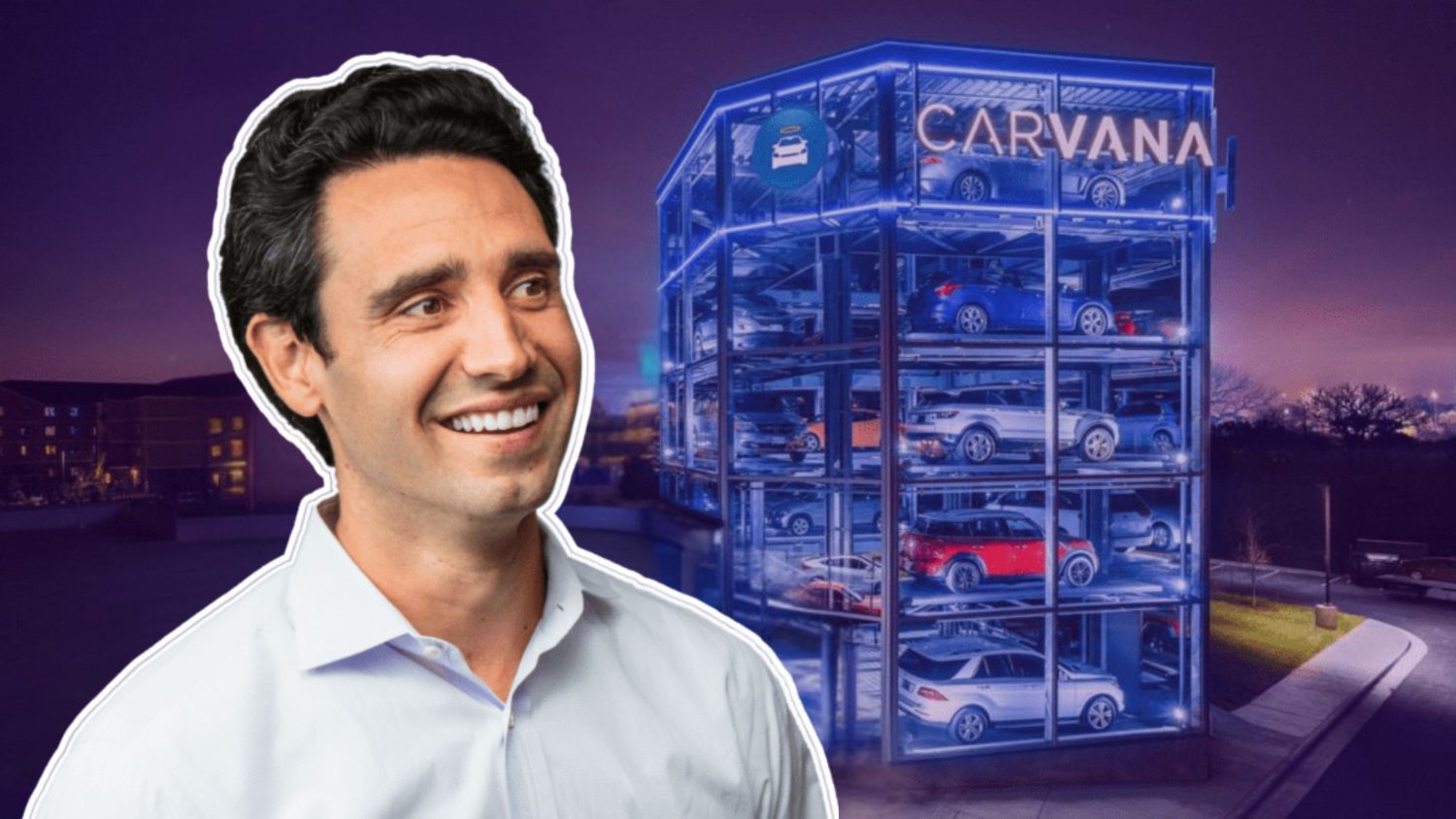
The acquisition of a franchised automotive dealership by Carvana, the digital enterprise known for its multi-story Vending Machine infrastructure and streamlined online sales, represents a significant ideological pivot. This transaction, involving a Chrysler, Dodge, Jeep, and Ram (CDJR) dealership in San Diego, places the used-car giant squarely within the regulated, intricate mechanism of the new car market.

It is a necessary collision of the hyper-digital and the staunchly corporeal, forcing a re-evaluation of what constitutes a modern car transaction.

The Algorithm Meets the Assembly Line

Carvana, an entity built upon the premise of inventory centralization and the abolition of the traditional dealership negotiation ritual, has now formally joined the club it once sought to dismantle.

The complexity inherent in selling a new vehicle—constrained as it is by Original Equipment Manufacturer (OEM) directives regarding geographic territory, pricing, and precise warranty fulfillment—stands in direct contrast to Carvana's established model of fluid, cross-state inventory movement. They must now contend with the Manufacturer's Statement of Origin (MSO), that crisp, untarnished document certifying a vehicle's virgin status, a bureaucratic tether that anchors the digital seller to the local, mandated franchise system.

This is the ultimate confusing aspect: how does an avatar of decentralized convenience operate effectively under rules designed for geographical retail monopolies?

The move is less about efficiency and more about possibility. Used vehicles, those delightful ghosts of previous drivers, offer inventory flexibility; new cars do not.

Each new Jeep Wrangler or Ram 1500 carries the exact weight of its factory specifications and its pre-determined margin structure. This specific dealership, nestled in San Diego, now serves as the strange, hybrid crucible where digital finance paperwork must marry the mandatory, physical pre-delivery inspection (PDI). It is a marvelous, almost whimsical irony: the company that championed the effortless click is now responsible for the deeply empirical task of ensuring that the oil level is correct on a brand-new Hellcat, a vehicle whose very existence defies quiet, streamlined purchase.

Where the Paperwork Resides

The conventional dealership has always been a repository of sensory experience: the smell of fresh leather, the blinding glare of polished paint, the resonant thud of a closing door.

It is also, crucially, the mandated physical location for the transfer of titles and the signing of intricate disclosures. Carvana's genius was eliminating the hours of waiting required for the final signature. Now, that digital efficiency must integrate with the very specific requirements levied by Stellantis, the parent company of CDJR brands.

Consider the unique inventory now under Carvana's digital umbrella: the high-performance Dodge Charger, the rugged, almost geological endurance of the Ram pickup, the ubiquitous utility of the Chrysler Pacifica minivan.

These vehicles are not interchangeable commodities; they possess deep, established brand identities that resist being reduced to mere pixelated images on a scrolling webpage. The purchase of a new vehicle often involves bespoke choices—the specific axle ratio, the preferred decal package, the requested upholstery type—decisions that feel deeply personal, demanding a human interface often excluded by the pure vending machine concept.

How will the impersonal digital kiosk provide the necessary hand-holding for someone customizing a $70,000 off-road vehicle? It is an expansion that suggests Carvana understands that certain transactions still require the comforting weight of a building, a fluorescent-lit office, and the definitive sound of a staple punching through thirty pages of mandatory disclosure.

The glass tower still beckons, but now the floor below must have space for the mandatory parts department and the official dealer stamp.

Image

In a bold maneuver, Carvana, the online used-car retailer, has set its sights on a new venture. The company, known for its car vending machines and seamless online shopping experience, is expanding its services to include a new type of retail space. This latest development marks a significant shift in Carvana's business strategy, as it seeks to bridge the gap between online and offline car buying.

The new retail concept, dubbed "Carvana Retail," aims to provide customers with a unique and immersive car-buying experience. The spaces, which will feature sleek and modern designs, will allow customers to browse and test drive vehicles in a more traditional retail setting.

According to Carvana, the goal of these new retail spaces is to provide customers with a more personalized and engaging experience, while also showcasing the company's extensive inventory of high-quality used vehicles.

As reported by CBT News, Carvana's foray into brick-and-mortar retail is a strategic move to cater to customers who still prefer to interact with products in person.

By offering a hybrid approach that combines the convenience of online shopping with the tactile experience of a physical retail space, Carvana is poised to disrupt the traditional car-buying model. With its innovative approach and commitment to customer satisfaction, Carvana is well-positioned to continue ← →

• • • •

Carvana expands beyond used cars with a San Diego Chrysler, Dodge, Jeep, Ram dealership, blending online convenience with a physical presence.
Find other details related to this topic: Visit website

# Autonomous System/Battery Friction Points

I confess, I once held the embarrassingly simple notion that the energy problem facing the fully autonomous electric vehicle (AV) was merely an exercise in mathematics: range divided by consumption equals charge interval. A tidy equation, suggesting that better density was the sole salvation. This was a profound misapprehension, akin to believing that a nervous system only needs a powerful heart, forgetting the voracious requirements of the ceaseless, panicked electrical activity surging through the dendrites. The convergence of AV compute stacks and battery technology is not a seamless marriage; it is a strained negotiation between a hungry, brilliant brain and a heavy, finite power source.

The contemporary EV battery—the massive, flat, lithium-ion slab sitting like a ballast under the floor pan—was designed primarily to move 4,000 pounds efficiently across 300 miles. It was not engineered, necessarily, to simultaneously feed a liquid-cooled supercomputer constantly processing petabytes of sensor data. This computational demand, which requires multiple high-end GPUs and CPUs to fuse Lidar, radar, and camera inputs into a plausible, predictive world model, places a non-trivial, parasitic drag on the system. The vehicle's perception stack alone can consume kilowatts of power, transforming what might be a respectable range for a human-driven EV into a disappointing short haul for an AV, especially when factoring in the necessary energy expenditure dedicated to cooling these hot, hard-working chips. The car is burdened by its own intelligence.

It is this frantic, detailed internal life that complicates the physics. The current generation of lithium-ion cells, robust as they are, contributes significantly to the vehicle's overall mass, diminishing the very efficiency gains provided by electrification. That extra weight demands more power to accelerate, more powerful regeneration systems to slow, and dictates a particular, sometimes ponderous, kinetic behavior on the roadway. The industry struggles against these constraints; this heavy, critical block of power dictates the design envelope. Every engineer knows the crushing anxiety of redundancy, the power overhead required for systems that must operate constantly, flawlessly—a power need that is simply layered atop the locomotion demand.

The hope resides, perhaps, in the eventual widespread deployment of solid-state batteries, promising lighter weight and significantly higher energy densities than their liquid-electrolyte predecessors. Imagine the relief for the poor, over-taxed self-driving chassis, the moment it realizes its power demands are finally met with less mass, allowing its sophisticated digital mind to operate without the looming, low-charge anxiety that shadows every mile. It's a yearning for lightness; an engineering aspiration that seeks to free the AV brain from the tyranny of its weighty, chemical stomach. The confusing reality: the more intelligent the car becomes, the less efficient it currently is at simple mobility.

** * Computational Power Draw High-performance processors required for sensor fusion and decision-making consume multiple kilowatts, fundamentally reducing the driving range available from existing battery packs.
Thermal Management The dedicated cooling systems necessary to prevent the overheating of the AV compute stack—the on-board server rack—are a secondary, continuous drain on the battery's reserves.
Weight Penalty Current battery chemistry dictates a substantial floor-pan mass, counteracting the efficiency benefits of EV architecture and placing higher loads on suspension and braking systems.
Sensor Load Lidar, radar, and high-resolution cameras, which must run constantly during autonomous operation, require consistent power that scales with the complexity and redundancy of the sensor array. Early real-world testing confirmed this relentless draw.

A Story Of Triumph And Accessible Innovation

Image

I. Juxtaposition of Setting and Incident: Addressing the unusual location (CMA Awards, Bridgestone Arena) for a deeply personal presentation of utilitarian equipment. The quiet gravity among spectacle.

II. The Recipient's Reality and Resilience: Detailing Sergeant Nick Koulchar's history (IED incident, resulting injuries) and his extraordinary post-trauma commitment to physical achievement (marathons, handcycling). The philosophy of finding strength in deficit.

III. The Mechanism of Accessibility: Examination of the specific vehicle (BraunAbility Chevrolet Traverse), its engineering details (kneeling function, in-floor ramp), the supply chain, and the confusing reality of presenting a highly functional object that exists just beyond the immediate horizon (slated for 2025 launch).

***

It is a peculiar thing, the way public life sometimes intersects with the private necessities of existence.

The stage at Bridgestone Arena, typically reserved for the amplified chords and polished narratives of "Country Music's Biggest Night," served that evening as the backdrop for a quiet acknowledgment of resilience. There, amidst the sustained applause and the focused attention of a hundred soldiers from the 101st Airborne Division, Chevrolet presented retired U.S. Army Sergeant Nick Koulchar with a modified vehicle.

This moment, delivered partly via a pre-recorded video and framed by the presence of country artist Ella Langley, was less about the glamour of the occasion and more about the simple, profound utility of movement. Such grand gestures always contain within them a kernel of the recipient's utterly specific reality—the daily calculations of approach angles and thresholds.

Sergeant Koulchar's path—a combat engineer and gunner whose service in Alpha Company 40th Engineers ended abruptly when an improvised explosive device found his vehicle—led to the loss of both legs above the knee.

The magnitude of this trauma, one learns, has been processed not into resignation, but into a relentless engagement with the physical world. Forty marathons. Weightlifting. Hunting. His accomplishments as an accomplished handcyclist suggest not recovery, but a determined redefining of capacity. He speaks of this profound alteration not as a disadvantage, but as a "superpower." This sentiment, that the deepest wounds can somehow be converted into unique operational capabilities, is perhaps the most compelling detail of the entire evening.

It suggests an empathy earned through trial, rather than merely granted by observation.

The actual object of this presentation was the next generation of driving accessibility: a BraunAbility Chevrolet Traverse. The integrated engineering of the vehicle is what mattered most, of course, featuring an in-floor ramp and a specialized vehicle kneeling function—mechanisms designed to seamlessly bridge the gap between pavement and cabin.

It is a complex ballet of steel and hydraulics, executed far from the CMA stage; the Traverse itself is assembled in Lansing, Michigan, and then expertly upfitted by BraunAbility in Winamac, Indiana. A strange thing to witness: the televised presentation of a vehicle whose pricing remains unknown and whose full launch is slated for the following year.

Yet, this vehicle represents not merely transport, but autonomous navigation of a world often indifferently constructed for non-standardized needs. One hopes the delivery is swift, that this intricate machine provides the freedom earned through such immense sacrifice.

The gift of a vehicle, transformed into a symbol of hope and resilience, was bestowed upon a deserving individual. A modest ceremony took place, bringing together those who had contributed to this remarkable act of kindness. The recipient, whose --- had been marked by hardship and struggle, stood humbly, eyes widening as the sleek, black vehicle was revealed.

The journey to this moment had been long and arduous.

The donor, a private individual who wished to remain anonymous, had been moved by the recipient's story and decided to take action. Through a series of discreet inquiries and arrangements, the vehicle was carefully selected and refurbished, its interior meticulously detailed to provide a comfortable and safe space for its new owner.

As the keys were handed over, a sense of gratitude and wonder filled the air.

The vehicle, now a tangible representation of the power of generosity, was set to become an integral part of the recipient's ---. It would facilitate daily commutes, enable access to essential services, and provide a sense of freedom that had long been elusive.

As the gathered guests dispersed, the recipient slipped into the driver's seat, a quiet smile spreading across their face.

The information in this article was first published in "USA TODAY".

◌◌◌ ◌ ◌◌◌

Chevrolet donated a wheelchair-accessible SUV to a U.S. Army veteran with a disability at the Country Music Association Awards in Nashville Nov.
Related materials: Check here

Wednesday, November 19, 2025

# The Historical Default and the Engine’s Location

The summer I finally drove my uncle's decaying 1978 Mercedes W123, I was struck by the strange, almost formal separation of duties it exhibited. My everyday car, a humdrum front-driver, felt like a nervous terrier straining at the leash, demanding immediate engagement from the front tires in both traction and steering. But the Benz? It simply waited for the throttle input, the rigid rear axle ready to deliver the push. It was less about nervous strain and more about directionality, an echo of 19th-century mechanical rectitude hidden beneath questionable metallic paint. This particular existential arrangement—the force applied from the back—is the oldest trick in the automotive book, yet it remains, for modern drivers, a peculiar, often confusing dance.

To discuss the inventor of Rear-Wheel Drive (RWD) is to fundamentally misunderstand automotive history. RWD was not an innovation; it was the inescapable consequence of fitting an internal combustion engine onto a frame. If you position the primary source of power—the heavy engine—in the rear or center, the most straightforward, least cumbersome way to transfer that power to the wheels is via a direct connection to the rear axle. When Karl Benz unveiled the Patent Motorwagen in 1886, often cited as the first practical automobile, its entire architecture was predicated on this rearward placement of power, making the RWD layout the primordial standard. Gottlieb Daimler and Wilhelm Maybach, who further developed the high-speed engine, continued this tradition. The simple, massive transmission components of the era demanded proximity to the driving wheels. For the early pioneers, they were not selecting RWD; they were merely following the shortest path of mechanical transmission. This confusing reality—that the foundational standard is now considered an enthusiast's choice—is central to its appeal.

Understanding the Arc of Propulsion

The practical difference between a car that pulls and a car that pushes is felt immediately, though rarely articulated well. In an RWD setup, the front wheels are exclusively dedicated to steering; the rear wheels are exclusively dedicated to propulsion. This physical partitioning of labor is critical for driving dynamics, especially under heavy acceleration or cornering. When you accelerate rapidly, the car's weight shifts backward (known as inertial load transfer), planting the rear tires firmly into the asphalt. This phenomenon gives RWD cars superior traction during launches compared to most Front-Wheel Drive (FWD) cars, whose front tires lift slightly under the same conditions, reducing grip. However, the opposing force is felt profoundly in low-traction environments, like rain or ice. Applying too much throttle mid-turn on a slick surface can cause the rear axle to push the front axle into an arc wider than intended. This is the notorious oversteer—the "tail slide"—and it is the unique and demanding language of rear-wheel propulsion. *A famous spin-out on an icy curve* remains a cautionary tale.

How To Drive and Respect RWD

If you are accustomed to the benevolent neutrality of a modern FWD car, transitioning to RWD requires a shift in attitude, treating the throttle less as a gas pedal and more as a rudder.

1. The Throttle as Steering Input: In an RWD vehicle, the accelerator pedal subtly influences the steering geometry, particularly when exiting a turn. Your tendency in a FWD car is to lift the throttle if the rear end feels loose. Do this in an RWD car on a slippery surface, and you will often worsen the slide. Instead, smooth, progressive modulation of the throttle is required. Small, almost imperceptible increases in power can sometimes stabilize a minor slide by ensuring the rear tires remain under tension. 2. Managing Weight Transfer: Learn to feel the car's weight distribution. Braking transfers weight forward, giving the steering wheels maximum traction for corner entry. Accelerating transfers weight rearward, maximizing the contact patch of the driving wheels for the exit. This is why performance driving often feels like a sequence of precise weight shifts. Do not mash the throttle abruptly mid-corner; wait until the steering wheel is pointing mostly straight before applying significant power. 3. The Counter-Intuitive Correction: If the rear end begins to slide out (oversteer), the instinctive reaction is often to turn the steering wheel sharply in the opposite direction while slamming the brakes. Resist this. The correction—often called counter-steering—must be quick but measured, turning the wheel *into* the direction of the slide. Simultaneously, a slight reduction in throttle, or sometimes a carefully managed application of throttle (depending on the situation and car stability controls), is required to allow the wheels to regain alignment. It is a moment of pure, terrifying physics. This highly responsive, analog relationship between the driver's input and the car's rotation is why, for many, the RWD configuration is not just a layout; it is the truest mechanical dialogue.

The Radical Single-Seater Defying Electric Racing Regulations

Image

The purple patch persists. A steady light cast over high-end electric motorsport, one defined by the imminent Gen4 era of Formula E—cars promised real downforce, almost doubled power—and the intricate physics of F1's renewed electrical push, coupled with active aerodynamics. Out in the regulated sun of the Middle East, the A2RL crews orchestrated another impressive sequence at Yas Marina, autonomous single-seaters executing a pattern of competition significantly more compelling than previous attempts.

These are the parameters of the present, the official specifications.

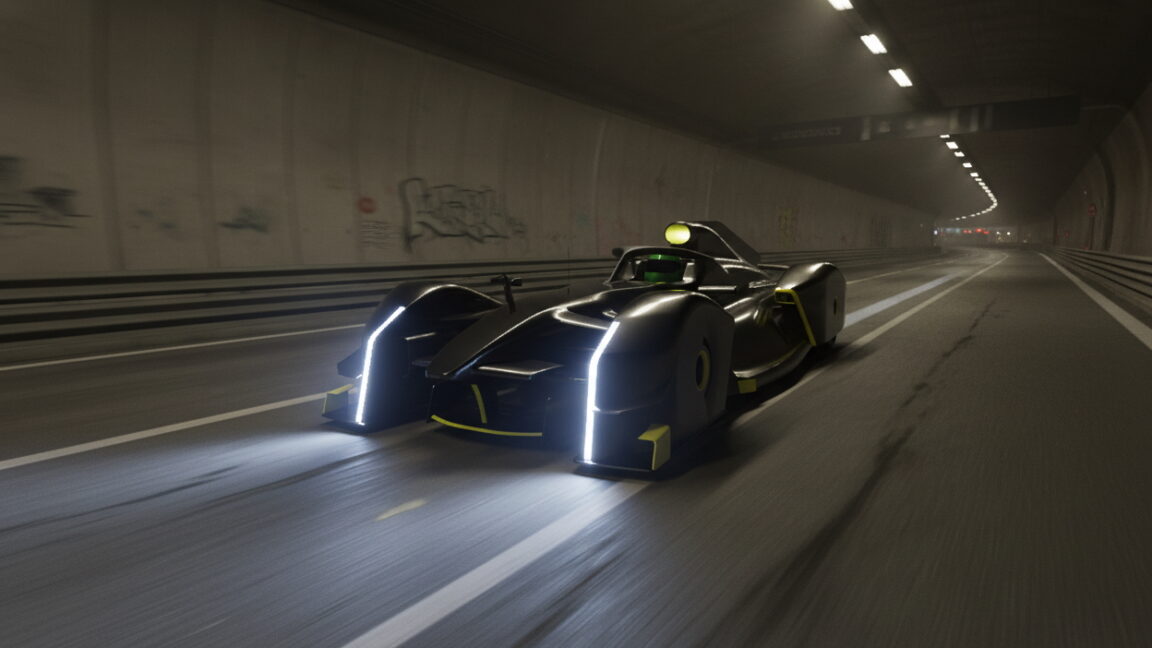
But there is a calculation running outside the official series. What if the constraint wasn't the mandate? The question asked by Lucas di Grassi—champion driver, philosophical advocate for clean technologies—and the re-emergent British legacy, Lola Cars. The result: the DRG-Lola, a single-seater concept engineered for pure velocity, designed to exploit technologies the rules currently prohibit.

A ghost car faster around a course like Monaco than any of its established competitors.

The engineering relies not on vaporware but on existing, validated components. The required energy is sourced from a 60 kWh battery pack, modules arranged tightly on either side of the cockpit, feeding twin electric motors.

804 horsepower—600 kW—distributed precisely across both the front and rear axles. Unlike the open-wheel spectacle of F1, the DRG-Lola features covered wheels. A practical heresy. The concept, which significantly reduces the car's drag coefficient, immediately evokes the Adrian Newey designs—the X2010, the X2019—concepts previously confined to the pristine circuits of the Gran Turismo simulation.

Lower drag equals less energy expended pushing air, resulting in significantly extended race distances. A matter of endurance through efficiency.

Downforce is the true differentiator. While the car generates substantial high-speed grip via its underbody and diffuser—simulations by Lola indicate 530 kg of downforce already achieved at 180 km/h—di Grassi has pushed the boundaries of low-speed adherence. A methodical approach.

It is an exploration of physics divorced from the limiting regulations, a pursuit of grip that promises performance metrics outside the usual band of high-speed racing. A concept built on necessity, demonstrating that the future of speed is less about burning fuel and more about the rigorous, specific deployment of watts and refined aerodynamics.

We're in something of a purple patch if you're a fan of clever new technology in single-seat race cars.
Find other details related to this topic: Check here

BMW, Norton, And Honda Unveil Innovative New Models

BMW G 450 GS production model unveiled, mirroring the R 1300 GS aesthetic.

Norton introduced the Manx R superbike, featuring a torque-heavy 1,200cc V4.

Honda debuted the CB1000GT, a premium sports tourer built upon the CB1000 Hornet platform.

The annual EICMA exhibition is often a complicated affair, filled with noise and profound intent.

The 2025 iteration showcased established names pursuing challenging new segments. Sometimes the most exciting entries are those that manage to confuse expectations completely. The production version of the BMW G 450 GS, which had been a dramatic concept in 2024, now presents a peculiar kind of ambition. BMW sought to replicate the imposing design and stature of the R 1300 GS flagship, scaled down to a manageable size.

This commitment to visual continuity is rare in the smaller classes. The face, the overall cockpit—everything suggests the largest GS model. Performance expectations are high, too. A new 450cc parallel-twin engine delivers a class-leading output of 48 horsepower. Paired with a curb weight under 400 pounds, the machine promises disproportionate capability for its footprint.

For years, high-performance V4 superbikes meant an Italian origin, usually Ducati or Aprilia. Norton, a company weighted heavily by its own long history, is joining this exclusive group.

The introduction of the Manx R, scheduled for 2026, is a powerful statement of renewed intent. The weapon is a 1,200cc V4 engine, producing 206 horsepower. That figure is competitive, yet the true distinction lies in the torque: 95 pound-feet. This specific number surpasses all direct rivals. The British manufacturer emphasized ensuring this power is genuinely usable.

This is a practical notion for a machine designed for such ferocity. Norton equipped the Manx R lavishly. Brembo Hypure calipers provide stopping force. Segment-first electronic Marzocchi suspension manages dynamics. Carbon fiber BST wheels are standard. These components are rarely seen together as stock equipment.

Honda sometimes approaches the liter-class segment with caution.

Following a long period of quietude regarding its larger offerings, the company's recent launches feel like highly deliberate choices. The naked CB1000 Hornet was a starting point last year. Now, the new CB1000GT is expanding that platform. It functions as a capable sports tourer, sharing the underlying architecture of the Hornet but packaged for longer distances.

Touring demands comfort, but also technology. The GT package is premium. It includes a six-axis IMU and electronic suspension. These technological additions provide heightened control and refinement, transforming the underlying platform into a sophisticated, long-distance companion.

**

EICMA 2025 Highlights

* BMW G 450 GS
Features a new 450cc parallel-twin engine producing 48 horsepower, the highest output in its class.

Design intentionally mirrors the R 1300 GS.
Norton Manx R (2026) Powered by a 1,200cc V4 engine making 206 horsepower and 95 pound-feet of torque. This torque figure exceeds competing V4 superbikes.
Premium Specification The Norton Manx R includes Brembo Hypure calipers, carbon fiber BST wheels, and electronic Marzocchi suspension as standard.
Honda CB1000GT A sports tourer built on the CB1000 Hornet platform, featuring enhanced capability via a six-axis IMU and standard electronic suspension.

Image

The anticipation is building for the Motorcycle Exhibition EICMA 2025, an event that promises to bring together motorcycle enthusiasts and industry professionals from around the world. According to a report by TopSpeed, this year's exhibition is expected to feature the latest models and innovations in the motorcycle industry.

As one of the most popular and highly anticipated events in the motorcycle calendar, EICMA has a reputation for showcasing cutting-edge technology and design.

The exhibition, which will take place in Milan, Italy, is a premier platform for motorcycle manufacturers to unveil their newest models and concept bikes. Visitors can expect to see a wide range of motorcycles on display, from sleek and sporty bikes to rugged and adventurous off-road models. With a focus on innovation and sustainability, EICMA 2025 is likely to feature electric and hybrid motorcycles, as well as advanced safety features and technologies.

TopSpeed notes that several major manufacturers, including Ducati and BMW, have already confirmed their participation in the event.

As the motorcycle industry continues to evolve, EICMA 2025 is set to be an exciting and informative event for anyone passionate about motorcycles. With its rich history and reputation for showcasing the best of the industry, EICMA is an event not to be missed.

◌◌◌ ◌ ◌◌◌

Each year, EICMA brings us a whole host of impeccable motorcycles . And 2025 was no different. Nearly all of your favorite big boys presented ...
More takeaways: See here

Tuesday, November 18, 2025

A Disappearing Art of Intimate Machine Control

The manual transmission is not merely an alternative powertrain; it is an incessant negotiation, requiring immediate, physical compliance that few other modern tools demand of their operator. This necessary intimacy—the calibrated modulation of the clutch pedal against the throttle input—establishes a curious hierarchy: the machine only moves when the driver achieves a specific, momentary mastery. The bewildering aspect for those outside of specialized work is why this difficulty is often maintained in vocational settings when automated ease is readily available. It persists because, for many fleet managers operating on strained budgets, the simple metallurgy of a mechanical system often translates to repairable certainty rather than electronic ambiguity. A worn third-gear synchro, announcing itself with a grating protest during hurried downshifts, signals a predictable expense, whereas an automated failure often requires proprietary diagnostics and the wholesale replacement of complex mechatronic modules.

For the driver whose work depends entirely on the movement of that specific vehicle, the knowledge of the transmission's temperament becomes operational expertise. They learn to feel the faint, high-frequency vibration that signals the throw-out bearing's approaching decay, a whisper of impending maintenance often ignored by management until the vehicle stalls under load. Consider the small delivery driver navigating dense city traffic, executing the undocumented ritual of double-clutching the ancient, heavy-duty truck to ensure a smooth engagement into second gear, preserving the integrity of the fragile cargo. Or the contractor who, realizing the expense of replacement, learns the exact throttle dip required to keep a heavily laden flatbed from rolling backward on a severe incline, holding the vehicle with a precise, tenuous balance between friction point and torque output—a moment of localized, critical skill. These daily struggles are not inconveniences; they are the unwritten, highly specific standard operating procedures.

This mechanical demandingness defines the employee's relationship to the job itself. When the tool requires constant, active participation, the work feels inherently different; driving becomes execution, not just management. The increasing rarity of this skill among younger workers creates confusing bottlenecks in certain fields—the sudden realization of a new hire, perhaps capable in every other aspect of the job, frozen in a company pickup in the staging yard, unable to master the initial launch because they do not grasp the function of the clutch delay valve. The lingering, faint odor of overheated organic material—clutch lining—that sometimes permeates the cab on a hot afternoon serves as a constant, subtle reminder of the margin of error permitted by this demanding companion. The manual gearbox, in its persistence within the working world, highlights a disappearing dedication: the willingness to learn the language of the machine, accepting its faults and celebrating its reliable, if demanding, simplicity.

Volkswagen's Financial Uncertainty Paralyzes Long-Term Product Planning And Investment Amid ...

Image

The most immediate consequence of the substantial financial uncertainty at Volkswagen Group is the abrupt paralysis of its long-term product planning: the supervisory board has deferred approval of the essential multi-billion-euro package that dictates future investment. This delay freezes the entire process of greenlighting new models and authorizing modernization across Volkswagen's network. According to reports from Germany, the company faces an estimated €11 billion gap within its critical 2026 investment plan, forcing management to postpone decisions that determine the fate of nearly 100 global factories, including anticipated upgrades in both Europe and the United States. This is not merely a bureaucratic holding pattern; it is a profound disruption that cascades directly into the supplier network, stalling complex development projects and putting several late-decade vehicle programs at considerable risk.

The strain of this projected cash shortage arrives at a moment when market performance demands flexibility, a quality the organization increasingly lacks.

The colossal expense associated with the obligatory transition to electric vehicles—a roadmap that involves some €160 billion in long-term spending commitments for software, new platforms, and plant overhaul—is colliding with tightening margins. The weakening demand curves observed in key markets across China and Europe exacerbate the situation, compounded by rising global production costs.

Furthermore, the company's U.S. business segment recently registered a substantial 67% collapse in profit, confirming that the pressure is acute where capital liquidity is most needed. Volkswagen's operating margin has fallen sharply, positioning it notably behind European rivals such as BMW and Mercedes; this disparity severely restricts the company's maneuverability to sustain expensive electrification projects without immediate funding certainty.

The budgetary hiatus adds a new, unwelcome chapter to Volkswagen's decades-long commitment to the U.S. market, leaving the development timelines for upcoming North American models in limbo, especially those tied to planned EV manufacturing expansion.

With the foundational budgeting package deferred, the decisions governing basic vehicle architecture—from battery sourcing specifications to aesthetic design choices for future crossovers—are suspended in ambiguity. Even as the company's organizational complexity grapples with this fiscal reality, certain high-volume SUVs continue to perform strongly, reliably securing high-tier safety achievements.

However, these isolated commercial successes cannot offset the fundamental scale of the group-wide cash shortage, confirming that the current crisis is structural.

Immediate Financial and Development Impacts


€11 Billion Gap The projected deficit within the Volkswagen Group's upcoming 2026 investment plan is estimated at €11 billion.
Approval Freeze The supervisory board has delayed approval of the multi-billion-euro investment package, essential for greenlighting new vehicle models.
Supplier Uncertainty Development projects are stalled across the vast supplier network due to the inability to finalize future product specifications.
U.S. Margin Collapse The U.S. business segment reported a 67% reduction in profit, highlighting localized financial pressures.
Factory Modernization Planned upgrades and modernization across nearly 100 global factories are currently on hold.

Volkswagen Group is facing a deepening financial crisis that could halt development of future vehicles, delay factory upgrades, and freeze product ...
Related perspectives: See here

The Tyranny of the Neutral Palette

The choice of vehicle color is not merely aesthetic; it is a profound philosophical declaration, a miniature flag planted firmly in the asphalt of modernity. Consider the sheer audacity of a world saturated with options, yet we consistently, collectively, choose gray.

We are currently living through the Great Beige Epoch, a period defined by the overwhelming dominance of achromatic shades. Survey any major highway or parking structure in the industrialized world, and you will observe a startling monochromatic consensus. Global data confirms that white, black, silver, and gray constitute over 75% of new vehicle sales. This conformity warrants critical examination. We purchase an artifact of speed and personal freedom, yet drape it in the visual equivalent of a filing cabinet. Why this sudden, deep commitment to anonymity? It is an economic decision disguised as a personal preference, a pre-emptive surrender to the inevitable depreciation curve.

The automotive manufacturers, in their attempts to inject life into these necessary neutrals, offer names that border on the poetic—"Magnetic Gray," "Pearl White Tri-Coat," "Obsidian Black"—each subtle variation demanding an additional £500, a dizzying linguistic sleight-of-hand. The difference between 'Platinum Silver' and 'Ice Silver' is, to the untrained eye, irrelevant, yet this tiny, confusing distinction is foundational to the identity of the car—and, perhaps, to the person driving it. One imagines the paint mixer, in some vast industrial complex, adjusting the metallic flake by a micron. A small, real incident: In 2022, certain European markets saw a single shade of dark gray become so popular the base pigments temporarily experienced minor supply issues. We are quite predictable creatures, aren't we?

How To Navigate the Chroma Complex

The process of selecting a vehicle color involves a bizarre interplay between personal desire, psychological impact, and fiscal foresight. You must decide whether the car is merely a functional box designed to retain value, or if it is a temporary canvas for your current emotional state.

Practical Considerations: Physics and Finance

Dark colors absorb significantly more solar radiation than light colors. If you live in Riyadh, choosing gloss black is a commitment to maximizing your air conditioning usage. Light colors, particularly white and silver, hide everyday dirt and swirl marks more effectively than black, which instantly reveals pollen, dust, and the microscopic detritus of city life. This is basic physics wrapped in the complex ritual of car washing. Furthermore, the longevity of certain high-saturation pigments, specifically deep reds and yellows, has historically proven more susceptible to UV fading, though modern clearcoats mitigate this significantly.

On the financial front, the market has spoken clearly: eccentric choices cost money upon resale. If you select 'Key Lime Green,' you are limiting your potential future buyers to the five people in your county who also desire Key Lime Green.

Resale Stability Neutral colors (White, Gray, Black) retain value better, simplifying future transactions.
Maintenance Burden Dark colors require meticulous washing; metallic finishes hide imperfections well.
Safety (Marginal) Highly visible colors (especially bright yellow, sometimes white) are marginally easier to spot in adverse weather conditions.

Psychological & Social Impact

If you opt for a vibrant hue—say, a rich, uncompromising Teal or a sunny Orange—you are making a choice that transcends mere transportation. You are announcing that you prefer being visually distinct to being economically pragmatic. It is a slight, defiant move against the beige flow. This empathetic position recognizes the unique isolation of the person whose car is actually memorable in the Tesco car park.

But beware the specific cultural meanings. In many Asian cultures, red signifies good fortune and celebration, making a vibrant sedan a socially approved choice. In other contexts, red is aggressively sporty, implying either speed or a speeding ticket.

What color makes you happy? Not the market. Not the resale value. Just the shade itself, parked in your driveway on a Tuesday morning. The sheer impossibility of reconciling those conflicting urges—the desire for stability versus the hunger for a splash of unbridled blue—is perhaps the most confusing aspect of vehicle ownership. The color is the only part you truly look at, even when you aren't driving.

Porsche's Electric Evolution: Navigating The Duality Of Performance And Sustainability

Image

The acceleration of electric momentum is palpable, a quiet, insistent force that has fundamentally shifted the landscape of automotive performance. But there remains a deep, almost nostalgic love for the mechanical symphony, the specific kinetic thrill of combustion. It is this duality—this unique tension between future demand and present affection—that Porsche navigates with deliberate care, offering an unusual permission to linger.

The upcoming debut of the electric Porsche Cayenne, slated for November 19, is a statement of intent.

A vehicle promising performance figures that verge on the astounding: output cresting 1,000 horsepower, an estimated 350-mile range. A silent brute, yes, but undeniably Porsche. Yet, the marque recognizes that not every customer is ready for this quiet revolution. Some still cherish the specific ritual of the petrol pump, the sound of a cold start; others require the reliability of the established infrastructure.

This awareness grounds the company's strategy: maintaining the choice, honoring the spectrum of commitment.

The Philosophy of Non-Judgment

Porsche's position is not one of mandate but of availability. Daniel Schmollinger, the CEO and Managing Director for Porsche Australia, articulated this stance, prioritizing what he termed "freedom of choice" for the customer.

This is a subtle act of corporate empathy. They are not judging the preference. If you still love the petrol model, fine for them.

This willingness to cater to both the enthusiast committed to tradition and the early adopter focused on sustainability requires remarkable production agility. It means embracing hybrid technologies not as a pause, but as a bridge—a sophisticated means of complying with shifting emissions regulations while retaining the distinctive warmth of the internal combustion engine.

Cayenne Electric Debuts November 19 with output over 1,000 hp. A profound electric statement.
718 Successors Pure EV versions of the Boxster and Cayman delayed until 2027 or later, demonstrating strategic patience.
Production Flexibility The ability to react rapidly to fluctuating market demand for either powertrain type.

Iteration and the Blended Future

The path forward is defined by highly complex engineering solutions designed to satisfy opposing demands.

Evidence of this iterative approach appears in the freshly launched Macan GTS Electric. It delivers 509 horsepower standard, with an overboost function temporarily hiking the output to 563 hp. A vehicle capable of hitting 60 mph in 3.6 seconds, its $103,000 starting price reflecting its technological density, including the adaptive air suspension and torque vectoring.

This is electric power tempered by demanding GTS precision.

But the complexity deepens with the combustion models. The delay of the all-electric 718 twins points toward an immediate future where hybridization becomes essential. Rumors suggest these smaller, beloved models might soon adopt the sophisticated, electrically assisted turbocharger technology pioneered in the 911 GTS T-Hybrid. Not achieving the 911's exact 532 horsepower output, perhaps. But blending the characterful efficiency.

Meanwhile, the electric performance envelope continues its relentless expansion: a hardcore version of the Taycan is developing, rumored to feature flared fenders and a dramatic, tall rear wing. Porsche is busy on both fronts. Busy satisfying two distinct, cherished kinds of love.

The largest challenge facing the automotive industry today is the shift towards sustainability and electrification. As governments worldwide implement stricter regulations to reduce greenhouse gas emissions, manufacturers are under pressure to produce eco-friendly vehicles. This seismic shift is not merely about replacing traditional internal combustion engines with electric motors, but also about reimagining the entire production process, from sourcing raw materials to designing end-of---- recyclability. Carmakers must balance the need for sustainability with consumer demand for performance, style, and affordability.

Another significant trend in the automotive industry is the rapid advancement of autonomous driving technologies.

With companies like Tesla and Waymo leading the charge, the development of self-driving cars is transforming the way we think about transportation. However, the path to widespread adoption is fraught with challenges, including regulatory hurdles, cybersecurity concerns, and public acceptance.

As the industry navigates these complexities, it is clear that the future of mobility will be shaped by the convergence of human and machine, with far-reaching implications for urban planning, infrastructure development, and social equity.

The intersection of sustainability, electrification, and autonomous driving is also driving innovation in vehicle design and manufacturing.

The use of advanced materials, such as carbon fiber and aluminum, is becoming more prevalent, enabling the creation of lighter, more efficient vehicles.

●●● ●●●

The Porsche Cayenne Electric debuts on November 19 as the brand's latest EV. It's shaping up to be an exciting offering from the brand, with an ...
Other references and insights: Check here

# Pioneers of Pull

The faint, pervasive scent of warm hydraulic fluid—an almost metallic, sterile aroma—often hangs in the air near vehicles designed for front-wheel drive, a subtle olfactory reminder of the intricate machinery governing direction and momentum in the same plane. This configuration, where the engine pulls rather than pushes the chassis, required a dramatic rearrangement of components and, subsequently, a distinct vocabulary to describe its revolutionary mechanical honesty. It is a technical arrangement born of necessity and packaging, but the names it acquired over time track the shifting public perception from mechanical oddity to standard ubiquity.

Early experiments with front-wheel drive were exercises in engineering novelty, often resulting in vehicle names that were highly descriptive, almost instructional. Before mass adoption standardized the generic acronym FWD, manufacturers understood that the unique positioning of the driving wheels was the primary selling point, demanding emphasis. Walter Christie, an American engineer, developed racing and fire engine applications in the early 20th century, though these remained specialized deviations rather than consumer models. It was the commercial efforts of the late 1920s and 1930s that cemented the technology in public consciousness, largely through the lens of luxury and aerodynamic design.

The Cord L-29, launched in 1929, was the first American car widely marketed with front-wheel drive. Its distinctive low profile and absence of a traditional drive shaft hump allowed for a revolutionary aesthetic. However, the most culturally resonant early terminology emerged in France. The 1934 Citroën Traction Avant, literally "front traction," was a masterpiece of integrated design—a monocoque body coupled with independent front suspension. This naming was starkly literal, declaring the vehicle's core principle with unreserved confidence, simultaneously positioning the car as intellectually superior to older, heavier designs.

Traction Avant A precise, functional declaration used by Citroën, contrasting sharply with evocative marketing names of the era.
The L-29 Cord's FWD flagship, capitalizing on the low-slung, advanced appearance enabled by the lack of a rear differential.
DKW's F-Series Early German adoption, successfully using small, two-stroke engines and FWD to create affordable and efficient post-war transport.

Efficiency and Cabin Empathy

The true triumph of FWD, beyond mere nomenclature, lay in its inherent spatial generosity. By consolidating the engine, transmission, and differential into one unit powering the front wheels, the entire central spine of the vehicle became available for human occupancy or cargo. This shift represented a quiet revolution in packaging, demonstrating empathy for the occupants by prioritizing interior volume. Sir Alec Issigonis's BMC Mini, introduced in 1959, epitomizes this architectural philosophy.

Issigonis utilized the transverse engine layout—placing the engine sideways across the chassis—a seemingly simple change that provided 80 percent of the car's footprint for passengers and luggage. The Mini did not require a specialized FWD title because its entire existence was a function of this spatial optimization. The mechanical description became subservient to the utility. The car's tiny exterior belied an interior volume previously impossible, making the Mini a profound counterpoint to the American tradition of large cars designed around a large engine compartment. This efficient packaging became the global blueprint for small-to-midsize cars thereafter, rendering the phrase "front-wheel drive" less a unique name and more a fundamental engineering standard.

Standardization and Technical Identity

As decades progressed, specific, proud names like *Traction Avant* faded from necessity as front-wheel drive ceased to be a distinguishing characteristic and became the norm for mass-market vehicles. The terminology migrated from specialized nouns to technical modifiers. Today, FWD exists primarily in comparison to its siblings—Rear-Wheel Drive (RWD) and All-Wheel Drive (AWD)—defining its identity by its limitations and advantages in contrast to alternative power delivery methods.

The common names now focus less on the novelty of the pull and more on the vehicle's intended function: stability, fuel economy, and superior traction in low-grip conditions due to the concentration of weight over the driving wheels. The journey from the distinctive Cord L-29 to the ubiquitous contemporary C-segment hatchback reflects a linguistic retreat. Technical superiority, once heralded by complex names, has simply become expected. The shift indicates that the battle for mechanical acceptance was decisively won, leaving engineers to refine the subtle feel of the steering rack rather than needing to convince the public of the concept's feasibility.

2026 Mercedes-Benz GLB EQ: A Revolutionary Facelift Shrouded In Familiarity

Here we have the new 2026 Mercedes-Benz GLB EQ, a profound contradiction observed under the harsh, indifferent gaze of the camera lens. It presents the paradox of absolute novelty dressed in comforting familiarity. The proportions remain remarkably similar to its predecessor, a visual echo designed perhaps to reassure the nervous consumer, yet the internal architecture is entirely reconstructed, riding upon the rigorous new MMA platform shared with the latest CLA. This is not simply a facelift; it is a ghost in the machine that still looks like the machine.

The recently spied prototype reveals a completely revised front fascia, one that appears noticeably softer, suggesting a conscious effort to dial down the previous model's slightly aggressive angularity, introducing a gentle curve where once there was severe geometry. The rear, too, speaks of sophisticated continuity: vertical taillights, which, according to observation, will likely be tethered by a slender light strip spanning the entire width of the tailgate, an illuminated horizon uniting the backend.

Technical specifics remain a tight, closely guarded secret, the three-pointed star brand maintaining a frustrating silence on the minutiae, yet the foundational expectations are clear.

The electric model, the one caught testing, might utilize an 85 kWh battery pack, feeding energy to a rear-mounted unit capable of generating almost 270 horsepower in the most accessible configuration. An all-wheel-drive dual-motor variant promises combined output approaching 350 horsepower. One ponders, standing before the sheer velocity promised by such numbers, the profound philosophical necessity of nearly 350 horsepower for safely navigating the average trip to the hardware store, perhaps simply to confirm one's continued commitment to the concept of immediate forward propulsion.

Reports also suggest the GLB will embrace hybrid assistance, likely marrying a 1.5-liter engine with a modest 1.3 kWh battery pack and an eight-speed dual-clutch automatic transmission featuring an integrated motor. Even the range-topping AMG version is expected to submit to this hybrid embrace, transforming raw aggression into efficient, electrifying performance.

If the exterior whispers continuity, the cabin screams revolution.

The interior is no longer a matter of speculation, having been officially teased by the automaker earlier this month. The shift in digital real estate is a radical departure; where the current GLB might have suggested screens were necessary, the new version decrees them essential, mandatory, covering the majority of the redesigned dashboard panel.

A central screen sits proximate to a dedicated passenger display, with a smaller unit residing behind the steering wheel for the instrument cluster. It establishes a digital democracy where every occupant is afforded their own dedicated glow. The already flashy ambient lighting system has undergone an enhancement, transforming mere illumination into an immersive, pulsating spectacle—a silent, perpetual rave accessible only to the driver and their chosen companions.

Most uniquely, one of the pre-production cars showcased a panoramic roof featuring a distinct pattern of small luminous points, an attempt to replicate the nocturnal grandeur of the cosmos above a suburban parking lot. It is a wonderfully silly, empathetic gesture, offering tailored synthetic starlight to those who might otherwise be too busy watching the 350 horsepower dash toward the next charging station.

The machine understands our need to feel utterly special, even while stuck in traffic.

Image

The Mercedes-Benz GLB EQ SUV, a vehicle that embodies the German automaker's foray into the electric era, presents an intriguing blend of style, functionality, and sustainable mobility. Its design, characterized by clean lines and a robust stance, seems to marry the conventional with the futuristic, a testament to Mercedes-Benz's ability to evolve its aesthetic language.

The GLB EQ SUV, positioned within the brand's electric EQ lineup, signifies a pivotal moment in the company's transition towards electrification.

One of the defining features of the GLB EQ SUV is its powertrain, which leverages Mercedes-Benz's advanced electric vehicle technology. The vehicle is equipped with a high-capacity battery pack, enabling it to achieve a considerable range on a single charge, thus addressing one of the primary concerns associated with electric vehicles: range anxiety.

The GLB EQ SUV's electric motor delivers impressive performance, characterized by instant torque and a remarkably smooth ride, underscoring the potential of electric propulsion to redefine the driving experience.

This article draws from information provided by autoevolution, a reputable source for automotive news and reviews.

The Mercedes-Benz GLB EQ SUV, as reported by autoevolution, is poised to make a significant impact in the electric SUV segment, offering a compelling combination of ← →

●●● ●●●

Caught testing yet again in the open, it looks pretty much like an evolution of its predecessor. It sports very similar proportions, has a ...
Other related sources and context: Check here

Monday, November 17, 2025

BMW's Most Famous And Iconic Exterior Colors And The Stories Behind Them

It is a certainty that paint—the final, thin layer of resin and pigment—can transcend mere aesthetics, becoming instead a precise signature for a moment in automotive history. These chosen hues, linked to the debut of specific models, function as visual anchors, marking milestones in Bavaria's mechanical evolution.

The Defiance of Yellow

Consider Dakar Yellow, a color choice that requires a certain unflinching confidence from the buyer.

It was not a color for the timid driveway. First seen prominently on the E36 generation of the BMW M3, it immediately declared that this particular vehicle was engineered for purpose, not for blending into the general flow of traffic. It was bright, yes, but held a slight, almost earthen depth beneath the shine, preventing it from tipping into simple neon.

It was paired frequently with the seriousness of the E36's sharp lines, a juxtaposition that worked: high performance demanded attention, and Dakar Yellow provided that attention in generous measure. A fleeting, intense relationship between metal and light.

Valencia Orange and the Anomaly

The story of Valencia Orange (WB44) is tightly woven with the unlikely existence of the 1M Coupe. This specific M car, a variant of the E87 1 Series, arrived in 2010—a small, aggressive machine whose life almost ended before it began.

Its very existence felt like an executive footnote that unexpectedly grew into a full chapter. Valencia Orange, that burnt metallic hue, served as its launch color, providing the perfect visual tension for a car that eschewed the expected M engine (the venerable S-code) in favor of the twin-turbo N54 inline six.

It was a superb driver's machine, often mated to a sweet, precise 6-speed stick shift. The orange, serious but slightly playful, signaled the vehicle's distinct place in the M lineage: not a purebred perhaps, but a magnificent hybrid. It is a color that captures the beauty of risk, now increasingly valuable precisely because the color is unavailable on newer models.

A collector's mark.

Estoril Blue: The Racetrack Memory

Estoril Blue carries the weight of history, its name derived from the famous Autódromo do Estoril in Portugal, a place where Formula 1 machines screamed through the 1980s and 90s. This association ties the color directly to competitive endeavor, offering a narrative of high-speed capability. Like Dakar Yellow, Estoril Blue became famous on the E36 M3. It is a deeper, more thoughtful color than its yellow counterpart; less an assertion and more a steady, confident presence.

It was one of several colors used by BMW named after race circuits, providing a subtle, geographical nod to the brand's performance heritage.

Although discontinued as a regular offering around 2015, or slightly later in some specific markets like the UK and Canada, Estoril Blue retains that classic, recognizable tint. It holds a distinct memory of the early 1990s, when the engineering focus was perhaps simpler. Today, requesting this particular shade requires a journey through the BMW Individual custom program, confirming its status as a sought-after, enduring legacy.

Image
Certain BMW colors stick in the memory forever, perhaps because they became a signature color for a certain BMW, or it was used as the launch color ...
Find other details related to this topic: Visit website

# The Weight Paradox

Pushing any machine past its intended design limits is not a casual exercise. When discussing the intricate relationship between front-wheel drive (FWD) architecture and sustained high velocity, one must first understand that the fundamental design mandate of FWD—packaging efficiency and economical mass production—stands in inherent opposition to the requirements of high-speed stability and extreme power delivery.

The modern FWD vehicle asks its front axle to perform three taxing functions simultaneously: propulsion, steering, and the bulk of braking. This mechanical overburden creates unique dynamic limitations at elevated speeds that rear-wheel drive (RWD) systems largely circumvent. While the immediate benefit of placing the heavy drivetrain components directly over the drive wheels provides excellent low-speed traction in adverse conditions, this advantage diminishes rapidly when inertia and power output increase. This delicate balance is often misunderstood by those who assume constant grip.

The inherent weight distribution of FWD, typically favoring the front axle by 60% or more, provides the initial traction benefit. However, rapid, hard acceleration, especially when approaching maximum speed capabilities, causes significant weight transfer toward the rear of the chassis. This phenomenon unloads the very wheels attempting to apply power to the pavement. The front tires, momentarily lightened, begin to struggle for purchase, demanding immediate, subtle steering corrections from the driver. The contradictory nature of this setup—where the application of power reduces the grip needed to handle that power—remains the core engineering challenge when designing fast FWD platforms. This mechanical inevitability is confusing: the physics dictates a loss of traction exactly when maximum effort is required.

Torque Steer and the High-Speed Dilemma

Perhaps the most recognized limitation when applying high horsepower to the FWD layout is torque steer. This is the abrupt, often alarming, lateral pull felt through the steering wheel when high torque is rapidly delivered, a phenomenon caused primarily by minute differences in the rotational friction or physical lengths of the two front axle half-shafts. Even small tolerances in manufacturing or assembly are magnified severely under peak load. In high-performance FWD cars, engineers must employ complex and expensive solutions to mitigate this steering corruption. Specific examples include the use of intermediate shafts designed to equalize the effective length of the axle shafts, or designing suspensions with a 'zero-offset' steering axis geometry, pushing the design far beyond simple economical aims. Without these unique, often overlooked mechanisms, the steering wheel becomes an adversary, fighting the driver for direction.

The Differential and Its Complex Trade-offs

A standard, mass-produced FWD vehicle utilizes an open differential. This component sends rotational energy to the path of least resistance, which, during high-speed cornering or when one wheel momentarily loses traction, results in excessive wheel spin and a severe curtailment of forward acceleration. Power is wasted. This required the development of sophisticated limited-slip differentials (LSDs) for high-performance applications, specifically helical gear LSDs. These intricate mechanisms manage the precise distribution of torque between the two front wheels, ensuring power is directed to the wheel with grip. The irony is pronounced: achieving speed and stability in a powerful FWD setup requires introducing costly, complex gearing—components that undermine the very simplicity FWD was originally designed to achieve.

**

Key FWD Speed Limitations

* Weight Transfer
Aggressive acceleration unloads the front drive wheels, diminishing necessary grip at peak performance moments.
Torque Steer Asymmetrical application of power leads to undesirable steering input requiring specialized, complex mechanical compensation.
Thermal Load The front tires and brakes absorb propulsion, steering, and major braking forces, increasing heat fatigue significantly faster than in separated-axle designs.
Steering Corruption The demand for high articulation angle in the constant velocity (CV) joints introduces fractional power loss and potential mechanical stress unique to the combined steering/propulsion axis.

The Evolution Of Genesis And The Progressive Rock Movement

Genesis, a pioneering progressive rock band, emerged in the late 1960s in Surrey, England. The band's early sound was characterized by experimental and psychedelic elements, which were a natural progression from the musical landscape of the 1960s (Far Out Magazine, n. d.). Tony Banks, one of the band's founding members and keyboardist, played a crucial role in shaping Genesis' distinctive sound.

Banks was an early adopter of keyboards and synthesizers, including the ARP Pro Soloist, which became an integral part of the band's music (Far Out Magazine, n. d.). As Genesis evolved, they transitioned from an experimental prog sound to a more mainstream appeal. This transformation was marked by the rise of Phil Collins as the band's lead vocalist.

During this period, Genesis' music became more pop-oriented, which ultimately contributed to Collins' success as a solo artist (Far Out Magazine, n. d.). The band's evolution has sparked debate among fans, with some preferring their early experimental work and others enjoying their later, more commercial sound. Tony Banks' perspective on the band's highs and lows is particularly valuable, given his involvement in Genesis from its inception.

Banks' adaptability and willingness to explore different musical styles have been key factors in Genesis ← →

Image

The evolution of progressive rock in the 1970s was marked by the emergence of iconic bands that pushed the boundaries of musical storytelling and experimentation. One of the defining characteristics of this genre was its incorporation of complex compositions, often featuring extended instrumental passages and conceptual themes.

Bands like King Crimson, Yes, and Emerson, Lake & Palmer helped shape the sound of prog rock, which was characterized by its use of synthesizers, intricate instrumental arrangements, and conceptual lyrics.

The cultural and social context of the 1970s played a significant role in shaping the prog rock movement. The late 1960s and early 1970s were a time of great social change, with the counterculture movement and the rise of hippie ideology influencing the music scene.

Prog rock bands drew inspiration from literature, mythology, and science fiction, creating concept albums that told sprawling stories and explored complex themes.

This emphasis on storytelling and conceptual cohesion helped to distinguish prog rock from other genres of the time. The influence of prog rock can still be heard today, with many contemporary bands drawing on the genre's legacy of experimentation and musical innovation.

According to an article by Far Out Magazine, the prog rock movement's emphasis on creativity and pushing boundaries has had a lasting impact on the music industry (Far Out ← →

●●● ●●●

For all its cultural revolutionaries and psychedelic experiments, the 1960s wasn't going to last forever, and neither was its musical landscape.
Other related sources and context: See here

# The Anatomy of Consolidation

I confess, I spent years assessing the geometry of propulsion with a kind of facile arrogance. I reduced the complex, humming decision of engine placement and drive wheels to an abstract formula. A mistake, certainly. Because to truly understand front-wheel drive (FWD) is not simply to grasp the mechanics—it is to recognize the deeply domestic, almost maternal decision that led to its widespread adoption. It is the realization that the arrangement of metal dictates the arrangement of life inside the cabin.

FWD is an architecture of necessity, a calculated maneuver to place the bulk of the engine and transmission over the wheels that handle both the steering and the power. This consolidation of components, this deliberate clustering in the front end of the vehicle, solved practical dilemmas that haunted post-war motoring. The absence of the traditional driveshaft running the length of the chassis freed up the interior space irrevocably. Think of the small, triumphant flattening of the floorboard; room for feet, for a handbag, for an unanticipated bundle. The weight of the engine, pressed down upon the front axle, provides an almost stubborn traction, particularly comforting when the road surface deteriorates into slick mud or unexpected snow. A design born not of performance ambition, but of persistent survival, of making do.

When the industry speaks of FWD, they are speaking of transverse mounting—an engine sitting sideways across the chassis, perpendicular to the direction of travel. This orientation is crucial. It minimizes the packaging footprint, demanding less length and allowing the cabin to push further forward. Consider the original Mini, a perfect, ingenious box conceived by Alec Issigonis in 1959. That car was a brilliant, tight knot of engineering designed to maximize passenger space within the smallest possible footprint. The engine, the transmission, the final drive—all nestled together. Such efficiency created a precedent that reverberated through decades of mass production. It demonstrated that economy need not sacrifice cleverness.

This clustering, however, introduces a peculiar behavioral quirk, a twitchiness at high power known as torque steer. When rapid acceleration is demanded, the differential sends unequal twisting forces to the front wheels, occasionally resulting in a momentary pull to one side. It is the engine's tiny, frantic struggle for control, a sudden, unpredictable resistance in the steering wheel itself. You feel it, that subtle tug of war, and you learn its cadence.

How to Understand and Maintain FWD

The ownership of a FWD vehicle, particularly an older model, demands an appreciation for its specific stresses. Because the front tires perform the dual duties of propulsion and direction, they wear faster, often unevenly, protesting their heavy load. Rotating these tires rigorously, maintaining alignment—this is not merely maintenance. It is listening to the machine, anticipating its needs before the whine begins.

Key Maintenance Points for FWD Systems:
Tire Rotation Schedule Adhere strictly to the manufacturer's schedule, typically every 5,000 to 7,500 miles. The front axle requires frequent relief.
CV Joint Inspection Constant Velocity (CV) joints allow the wheels to turn while receiving power. They are encased in rubber boots. A torn boot permits contamination, leading to joint failure. Listen for a rapid clicking sound during turns.
Transmission Fluid Because the transmission and differential often share the same fluid (especially in older, integrated transaxles), regular fluid changes are non-negotiable for longevity.
Weight Distribution Awareness The car is nose-heavy. Hard braking requires attention to the vehicle's pitch; the front wheels must be allowed to manage the deceleration effectively.

Brands Defined by the Front Axle

Certain brands cemented their identity entirely around the perfection of FWD. They moved past the arrangement as a convenience and elevated it to a defining characteristic.

Citroën: The Traction Avant (1934) was impossibly advanced for its time—low-slung, monocoque construction, and FWD. It wasn't just a car; it was a manifesto of modernity, demonstrating that FWD offered superior stability and road-holding. Volkswagen: The shift from the rear-engined Beetle architecture to models like the Golf (Rabbit in North America) and Passat defined the modern era of the company. Their adoption of reliable, powerful FWD layouts made them ubiquitous, dependable. They gave millions the keys to efficient travel. Saab: Known for their unique perspective on engineering, Saab utilized FWD heavily, leveraging the design for excellent winter performance and collision safety, pushing the engine deep into the chassis for better protection. Their cars always felt grounded, deliberate.

To drive a FWD vehicle is to experience a certain intimacy with the road. The front wheels pull you along; you feel the slight shudder of traction loss directly through the steering wheel. It is a relationship of constant feedback, a dialogue between the driver and the terrain. It asks you to be present, always. A necessary conversation, this mechanical intimacy.

Featured Post

The Allure of Four-Wheel Drive: A Philosophy of Freedom and the Machine

The Sovereignty of the All-Wheeled Path Gravity demands obedience. When the paved assurances of the city dissolve into the whims...

Popular Posts