Saturday, December 13, 2025

A Revolutionary Digital Interface: The Lucid Air's Left Cockpit Panel Redefines In-Car Simplicity

Image

The sheer complexity of modern vehicles feels, at times, like navigating a labyrinth designed by someone who secretly despises the simplicity of motion. We accept, perhaps begrudgingly, that the deep, resonant satisfaction of a dedicated tactile button for every single function has mostly faded into history; contemporary systems are too intricate for such analog purity.

Yet, the ensuing chaos of burying essential controls—like defogging or the headlamp settings—three layers deep into a central touchscreen menu is an unwarranted intrusion, a constant disruption to the rhythm of driving. After experiencing the Lucid Air Touring, however, I found unexpected emotional relief in a specific digital execution that transcends the normal frustration associated with in-car displays.

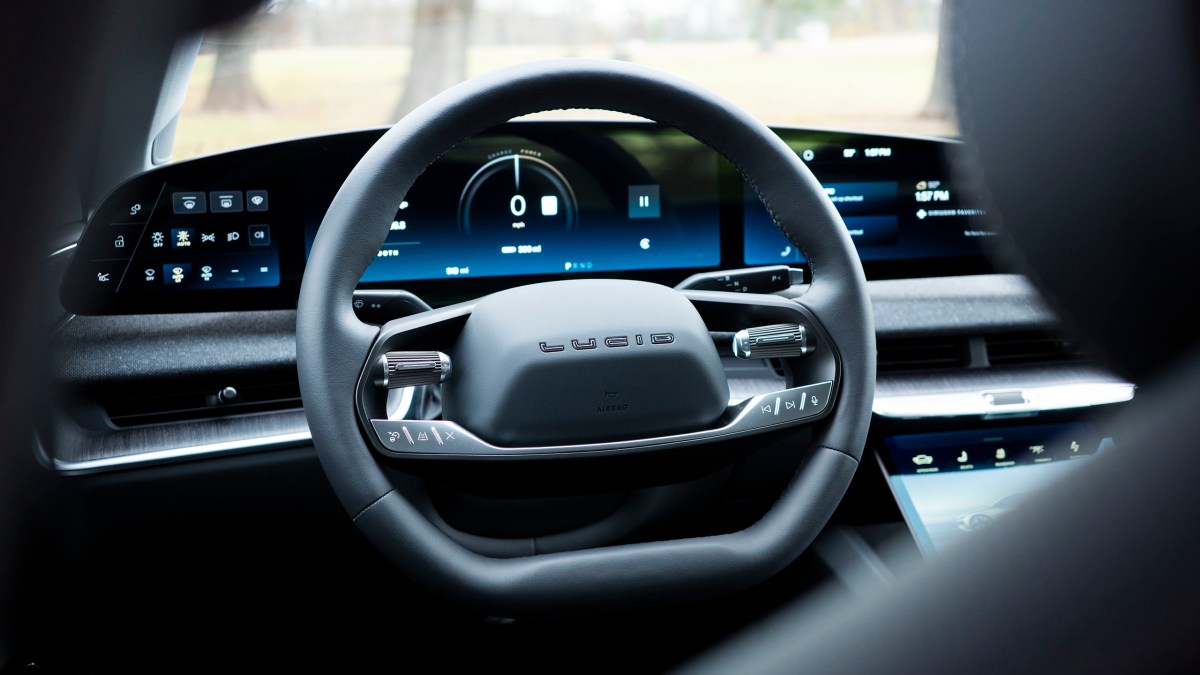
Lucid calls this localized interface the Left Cockpit Panel, and the naming convention itself emphasizes position, which is everything here.

Because the Air dedicates its right stalk exclusively to gear selection, the essential, ancillary controls usually found on stalk rings must be relocated. Instead of scattering these critical functions into a cryptic panel of under-dash buttons—a frequent industry lapse—Lucid collected them into a single, straightforward display situated perfectly to the driver's immediate left.

This panel is startlingly effective because it does not attempt to be a multi-functional hub. It is a digital rock, refusing to shift its configuration; the glyphs for lights, wipers, and environmental management are permanently resident. This design resolves an inherent automotive neurosis by defining a specific digital boundary for non-driving operations, providing unexpected order where typically there is only functional confusion.

In nearly every other vehicle configuration, that lower panel space beneath the dash centerline is treated like the receptacle for features the primary design team couldn't cleanly categorize.

It becomes the "junk drawer" of forgotten toggles: the auto high-beam switch, the elusive control for melting ice beneath the wipers, functions that feel disconnected from the central driving experience. It lacks internal logic. The Left Cockpit Panel trades that traditional scatter of plastic buttons for a clear, dedicated screen that simply displays the iconography we already understand.

The icons never move, never vanish behind a software update, and never require the driver to exit navigation to activate the cabin preconditioning. It is a pure, unique instance of digital efficiency that should be mandatory across the entire modern motoring landscape.

Static Display Logic The screen remains permanently focused on its core tasks, behaving like physical buttons encased under glass.
Essential Ancillary Features It houses critical functions such as exterior lighting controls, windshield wiper behavior settings, and front/rear defogging.
EV Specificity The panel also controls the opening and closing of both the charge door and the front trunk (frunk).
Design Resolution The configuration provides a necessary home for controls displaced by the gear selector being moved to the right steering column stalk.

As I recall, I once had a conversation with a friend who had just purchased a new car. She was thrilled with the sleek design and advanced features, but there was one thing that drove her crazy - the infotainment system. She found it confusing and frustrating to navigate, and often ended up distracted while driving.

This experience got me thinking about the importance of user interface design in the automotive industry.

According to "The Drive", a leading source for automotive news and trends, the user interface design in cars has become a critical aspect of the driving experience. A well-designed interface can enhance safety, convenience, and overall driver satisfaction.

As reported by "The Drive", many car manufacturers are now investing heavily in user-centered design, incorporating intuitive controls, clear displays, and voice-activated commands to create a seamless and enjoyable experience for drivers.

The goal of automotive user interface design is to create a system that is easy to use, while also providing drivers with the information and features they need.

This requires a deep understanding of human behavior, cognitive psychology, and technology. By prioritizing user needs and behaviors, car manufacturers can create interfaces that are both functional and aesthetically pleasing.

As the automotive industry continues to evolve, it's clear that user interface design will play a critical role in shaping the future ← →

◌◌◌ ◌ ◌◌◌

Screens in cars: It's a sore subject for many , and everyone seems to have some opinion on it, whether they actually like cars or not.
Other related sources and context: See here

# Understanding the New Operational Geography

Why do we grant mechanical vigilance the authority that we once reserved only for the deeply fatigued human eye? The vast, reflective expanse of the American highway, once the domain of solitude and the specific, highly localized knowledge carried in the head of a single driver, now prepares for a different kind of authority: that of the algorithm. This shift is not merely technological; it is deeply organizational and existential, compelling us to redefine the very nature of work and journey. It is easy to assume that autonomy means complete erasure of the old profession, but the technology, currently operating overwhelmingly at SAE Level 4, necessitates careful, continuous management, creating confusing new boundaries between machine action and human responsibility.

The current implementation focuses primarily on optimized, high-volume, hub-to-hub routes—the long, predictable stretches where sensing technology can achieve maximum confidence. The vehicle travels without the need for manual intervention for hundreds of miles, executing lane changes and maintaining distance with unsettling precision. However, these systems do not operate in a vacuum; they must be monitored, maintained, and occasionally rescued from what the industry terms 'edge cases'—the confusing confluence of poor road markings, sudden unexpected debris, or non-standardized construction zones which baffle the sensor array. Thus, the professional relationship with the road changes radically: the intimacy of control is replaced by the distance of supervision.

The "How To" of adapting to autonomous trucking work requires understanding this geographical limitation and the regulatory patchwork that allows Level 4 operations in some states while restricting them heavily in others. The job does not vanish; it is distilled, specialized, and often remote. The skills that held value—the ability to physically manipulate a heavy vehicle through adverse conditions—are supplanted by the capacity to interpret and manage data streams, ensuring regulatory compliance and predictive maintenance.

We must accept that for the foreseeable future, the machine still demands a human supervisor, even if that supervisor is a thousand miles distant. The physical discomfort of life in the sleeper cab gives way to the mental strain of monitoring complex telemetry screens, ready to assume teleoperation control when the automation stack falters. It is a transition from muscle memory and intuition to algorithmic fluency.

Refocusing Expertise: From Hands to Screens

The essential transformation involves recognizing which skills inherent to long-haul driving are transferable to the automated ecosystem. It is not the steering that matters; it is the comprehensive understanding of logistics, regulatory frameworks (like Hours of Service, even when monitoring a machine), and complex route optimization that retains critical value.

The shift mandates retraining, prioritizing diagnostic and remote control capabilities. The human element becomes the fail-safe, the ultimate decision-maker when the pre-programmed parameters fail. This responsibility is weighty, requiring rapid cognitive response rather than physical endurance.

Key Adaptations for the Modern Logistical Worker


Master Teleoperation and Remote Intercession Learn the interfaces used to remotely guide vehicles through unexpected obstacles (e.g., navigating a closed weigh station bypass or negotiating specific port logistics). This requires focused spatial awareness without physical presence.
Embrace Predictive Maintenance Diagnostics Develop the ability to interpret sensor data (Lidar, Radar, Cameras) not just to report a failure, but to predict the *onset* of mechanical failure specific to the automation hardware itself—the calibration drift of a sensor package, for example.
Focus on Cybersecurity and Data Integrity Understand that the autonomous vehicle is a rolling network node. Expertise in monitoring for anomalies in communication protocols ensures the secure, continued operation of the fleet.
Specialize in Localized Hub Coordination As long-haul driving becomes automated, the remaining manned work concentrates at the "first mile" and "last mile"—the busy urban environments where Level 5 autonomy is still deeply impractical. Expertise in navigating dense, highly unpredictable city streets retains indispensable human value.

The Confusing Optimism of the Network

There is a deep, confusing optimism embedded in this transition. While the image of the solitary driver vanishes, it is replaced by the necessary connectivity of the network. The human worker, instead of battling the road in isolation, becomes part of a continuous operational team, monitoring multiple vehicles simultaneously. The inherent loneliness of the open road is exchanged for the constant connectivity of a control center, perhaps reducing the fatigue-related incidents that plagued the former era.

The industry requires entirely new roles that never existed before the advent of machine sensing. We are training interpreters of machine intent, people who can look at a visual representation of the sensor inputs and immediately grasp *why* the truck hesitated—was it a low sun angle blinding the forward camera, or a sudden, unexplained burst of noise confusing the radar? This is where true human empathy and contextual knowledge—the awareness that a plastic bag can mimic a small deer on a rainy night—becomes the final layer of safety. The work changes, but the fundamental requirement for responsibility remains absolute.

Riding Into A Greener Future: The Double-Edged Promise Of Autonomous Electric Vehicles

Call for a ride in Austin or Atlanta and the machine that arrives might be devoid of a human operator, an autonomous vessel tracing lines through the heat. Waymo, owned by Alphabet, expands relentlessly, calculating routes for 14 million trips this year across five established U.S. territories. They are scheduled to push into Dallas, Houston, Miami, Orlando, and San Antonio by 2026. One million rides per week, that is the goal for the close of the subsequent year.

This mass movement of metal, from Waymo's fleet to the vehicles deployed by Amazon's Zoox and Tesla, uses batteries, replacing tailpipes with circuitry. Transportation remains the single largest source of greenhouse gas emissions in the United States. This expansion introduces a clean metric into a vast and dirty system.

A specific, hopeful detail: every single one of those self-driving taxis is electric.

Air Quality and Measurable Relief

The air, thinner. Studies reveal that replacing gasoline combustion with electric locomotion registers almost immediately in respiratory health data. This is not guesswork. Researchers at the University of Southern California's medical school quantified a decrease in emergency room visits for asthma after zero-emissions vehicles were introduced—a measurable change triggered by as few as twenty EVs for every one thousand residents.

It's a subtle shift in the microscopic architecture of the cities, an elemental rearrangement.

Electrifying only seventeen percent of the nation's passenger car population could result in modest but widespread reduction in ozone and particulate matter. The immediate environmental benefit is localized, immediate, felt. Imagine San Francisco, where Waymo maintains its largest concentration, one thousand autonomous vehicles tracing those dense hills.

That scale, replicated across the sprawl of Houston, changes the air breathed by hundreds of thousands. A real change, derived from silent vehicles crossing long, hot miles.

The Paradox of Effortless Movement

The sheer ambition of this shift, however, carries its own complications. The long-term implications are knotty, confusing. While eliminating the tailpipe is an unambiguous environmental good, the existence of cheap, ubiquitous driverless transportation alters human behavior.

The efficiency is too easy. Experts fear a surge in overall demand for car transportation; people taking trips they would have previously consolidated or forgone. Increased Vehicle Miles Traveled (VMT) is the environmental kryptonite of this technology.

Autonomous systems demand prodigious computing power, demanding ever more electricity to manage the navigational grids and decision-making processes, draining the grid in unexpected ways.

If the power source for charging those millions of batteries is not overwhelmingly clean—if it relies on coal or natural gas—the emission benefit is merely relocated, not eliminated. The long-term success of the emission reduction goal is inextricably tied to the speed of grid decarbonization. A sprawling problem, stretching from the central processors in Phoenix to the distant power stations keeping the whole thing running.

Convenience carries a hidden price tag. Still, the prospect of a million electric rides per week—the quiet hum replacing the internal combustion rattle—offers a unique kind of hope.

Image

The sun-baked asphalt unwound before them like a cracked and faded ribbon, as Rachel Kim stood at the edge of the testing facility, her eyes fixed on the sleek, silver form of the self-driving electric vehicle. Its smooth, aerodynamic lines seemed to belie the turmoil of emotions churning within her - excitement, trepidation, and a dash of skepticism.

The vehicle's electric motor hummed softly, a gentle thrum that belied the complex dance of electrons and algorithms that governed its movements.

As she watched, the vehicle's sensor suite sprang to ---, casting a digital net of detection and awareness across the surrounding landscape. The question on everyone's mind was: would the widespread adoption of self-driving electric vehicles truly deliver on their promise of reduced emissions, or would their benefits be offset by the energy demands of their complex systems?

Rachel's team had spent months poring over data, running simulations, and testing prototypes in a quest for answers.

Their findings were mixed, but one thing was clear: the environmental impact of these vehicles would depend on the source of the electricity used to charge them. If that electricity came from renewable sources like solar or wind power, the benefits would be substantial.

But if it came from fossil fuels, the gains would be much more modest.

◌◌◌ ◌ ◌◌◌

Call an Uber in Austin or Atlanta, and you might be offered a vehicle without a driver. Waymo, the self-driving taxi service owned by Google's ...
Alternative viewpoints and findings: Check here

# The Graying of the Revolution

The most compelling anomaly in the transition to electric mobility is not the battery chemistry or the charging infrastructure; it is the color of the cars themselves. We were promised a future of technological rupture and ecological rejuvenation, yet the electric vehicle landscape remains firmly anchored in the palette of the modern office park: white, black, silver, and various shades of deep metallic gray. This overwhelming preference for chromatic neutrality—often exceeding 80% of sales in certain key markets—presents a profound contradiction. How did a revolutionary technology inspire such aesthetic timidity? It is a peculiar psychological contract we have made, where the vehicle's technical sophistication must be balanced by a paint job that whispers of seriousness, stability, and, above all, maximum resale value. The vibrant, saturated tones of the past are relegated to specialty trims or reserved for concepts destined never to see production.

Manufacturers quickly learned that the early adopters, often financially conservative despite purchasing expensive new technology, prioritize depreciation avoidance. White and gray, traditionally the most durable colors for residual value calculations, thus became the default shield against future regret. Furthermore, certain technical considerations, while minor, contribute to the bias. White paint exhibits superior thermal reflectivity, a marginal but quantifiable benefit to battery cooling and cabin temperature management, particularly in arid climates, thereby slightly improving overall range efficiency. While a minuscule gain for the average commuter, this detail becomes part of the marketing narrative surrounding efficiency.

Consider the early offerings from manufacturers attempting to establish a new brand identity. Tesla, for years, maintained a strikingly limited, austere color menu, essentially forcing conformity for the sake of streamlined production and brand uniformity. Polestar, carving out a minimalist, performance-focused niche, doubled down on this scarcity, offering only highly specific, non-vibrant monochrome tones—Snow (white), Magnesium (light gray), Midnight (black), and Void (dark gray)—reinforcing the notion that electric performance is inherently serious business, too refined for frivolous color. The market's reaction confirms this: we want the future, provided it looks appropriately sober in the garage.

Economics, Aesthetics, and Efficiency

The choice of color for an EV is often tangled in a confusing loop of perceived sustainability and economic reality. Is selecting a subdued gray tone a tacit acknowledgement that this expensive purchase must retain its value, or is it a subconscious attempt to minimize the environmental footprint by selecting a color associated with efficiency? It is often impossible to disentangle the two. The metallic finish, ubiquitous on nearly all contemporary EVs, serves to blur lines and shadows, disguising the often radically unconventional aerodynamic shapes necessary for maximum range. This gloss, however, usually requires additional coats and materials, complicating the claim of total minimalist sustainability.

The Unique Outliers

Not all manufacturers bowed to the dictates of the monochrome collective. Some sought to inject personality, recognizing that individuality remains a persistent, hopeful human trait, even when purchasing complex machinery. The Fiat 500e, for instance, frequently appears in brilliant pastels—a bright sky blue, or a distinctive pistachio green—colors that reference Italian heritage while defiantly rejecting the grayscale consensus. They are small, cheerful statements of protest against the overwhelming seriousness of battery technology.

Porsche Taycan's Boldness Despite being a premium vehicle, Porsche offered colors like Frozen Berry Metallic (a complex pink/purple) and Neptune Blue, recognizing that their clientele seeks aesthetic expression concurrent with performance.
Hyundai Ioniq 5 This model introduced unique, somewhat confusing, matte paint options such as Gravity Gold Matte—a shade that shifts wildly depending on the light, appearing almost silver in certain conditions.
Volkswagen ID. Buzz Capitalizing on retro nostalgia, the Buzz brought back two-tone options, offering playful combinations of white and bright colors (e.g., lime yellow or candy white/energetic orange), a stark departure from the typical EV lineup.

These unique applications demonstrate that color is far ▩▧▦ surface treatment; it is a vital, often costly, signal about the owner's relationship to the machine and the future it promises. It raises an immediate question: Do we love the technology enough to forgive the current aesthetic restraint, or will we wait until the palette catches up with the progress? The struggle between sensible economics and genuine expression continues to define the electric vehicle driveway.

Extended Range Electric Vehicles: The Future Of Long-Haul Electric Mobility

Image

The transition to mass electric mobility carries an intrinsic logistical risk for many drivers. That hesitation—a genuine fear of being stranded hundreds of miles from the nearest high-speed charger—has significantly slowed adoption in key markets. Major manufacturers, including Volkswagen, BMW, and Stellantis, are now actively pursuing a technical countermeasure designed to alleviate this core driver anxiety: the Extended Range Electric Vehicle, or EREV. This system is engineered to provide the smooth, instantaneous torque of electric driving combined with the undisputed convenience of immediate fuel availability.

It is an innovative bridge designed specifically for long hauls and unpredictable travel circumstances.

The operational architecture of an EREV is distinct from a traditional hybrid. In this setup, the vehicle's wheels are moved entirely by the electric motor and the onboard battery. The gasoline engine is not connected to the drivetrain at all.

Its purpose is singular: functioning exclusively as an onboard generator. When the charge level drops below a necessary threshold—a scenario common during unforeseen detours or lengthy cross-country journeys—the small combustion engine silently activates. This brief period of operation recharges the battery, allowing the vehicle to continue its travel using electric power while preserving range.

This arrangement effectively addresses the "what if" scenarios that deter prospective EV buyers, offering a failsafe mechanism that preserves the intended electric driving character. Brian Moody of Kelley Blue Book summarized the benefit: "it really is just a way to have the drivability of an electric car with the convenience of a gasoline-powered car."

The Integrated Generator System

The engine acts purely as an emergency power source.

Gil Tal, Director of the Electric Vehicle Research Center at UC Davis, defined the mechanism succinctly: "So it's more of an electric car with a generator." The system eliminates the critical range restrictions often associated with battery dependence, which allows drivers to commit to significant distances with total confidence.

Range anxiety fades quickly when a gasoline pump can guarantee hundreds of additional electric miles. Short phrases define this flexibility: an unexpected diversion; a crucial, unplanned overnight drive; a remote destination far from city infrastructure. These real incidents are mitigated by the generator's swift function.

Utility for Larger Platforms

While new electric sedans are already demonstrating impressive ranges, sometimes approaching 500 miles on a single charge, achieving that same capability on larger vehicles presents a considerable engineering challenge.

An electric pickup truck or a substantial SUV requires a disproportionately massive and expensive battery pack to travel comparable distances. That volume adds weight and complexity. The EREV solution offers a pragmatic bypass for these heavy-duty segments. Tallis Blalack, an electric vehicle infrastructure consultant, confirmed that the extended range setup significantly enhances practicality where battery size becomes prohibitive.

"When you start talking about large vehicles, and you still want that range, the extended range provides a lot of great capability," Blalack noted. It delivers the desired high performance and long utility without requiring the structural compromise of an overly large battery array.

**

Key EREV Features

* Electric Drive Only
The vehicle's wheels are powered exclusively by the electric battery and motor.
Generator Function A small gasoline engine operates solely to recharge the battery when the charge level is low.
Mitigation of Anxiety The inclusion of the range extender removes the fear of running out of charge during long trips.
Large Vehicle Application EREVs provide a highly viable option for electric trucks and SUVs, which require immense, costly batteries for long range.
Manufacturer Interest Volkswagen, BMW, and Stellantis are actively evaluating this technology for upcoming models in the U.S. and European markets.

In the scorching deserts of Arizona, where gas-guzzling SUVs once reigned supreme, a new breed of vehicles has emerged to challenge the status quo. Extended Range Electric Vehicles, or EREVs, have begun to make their presence felt, offering a tantalizing blend of eco-friendliness and practicality. These innovative cars, with their sleek designs and whisper-quiet engines, are slowly but surely winning over the hearts of environmentally conscious drivers.

But in the dense, traffic-choked streets of Manhattan, a different story unfolds.

Here, the emphasis is on convenience and style, and the EREV's promise of reduced emissions and lower operating costs is often overshadowed by the allure of luxury sedans and high-performance sports cars. Yet, as the city's residents become increasingly aware of the impact of air pollution on their health, a growing number are turning to EREVs as a viable alternative.

According to marketplace.

org, sales of EREVs have been steadily rising in urban areas, driven in part by government incentives and the expanding network of charging stations. As the EREV market continues to evolve, manufacturers are responding with a new wave of models that offer improved range, performance, and features.

●●● ●●●

"Extended range" EVs use a small gas engine to recharge the battery when it gets low, adding hundreds of miles to the distance a car can go.
Other references and insights: See here

Friday, December 12, 2025

The Evolution Of Enclosure: The Story Behind The 2026 Jeep Wrangler Whitecap

Image

The 2026 Jeep Wrangler Whitecap arrives as more than mere celebration; it is a nod toward necessary shelter. This special edition, the second release in Jeep's commitment to unveil "12 Wranglers for 12 Months," honors the history of the factory hardtop. It's easy to forget that while the civilian Jeep chassis—the CJ—began its robust existence in 1949, true enclosure was an afterthought, a later addition born of stark necessity.

A hardtop signals a functional adaptation, not simply a styling choice. It speaks to the practical kindness of aluminum and steel offering respite against northern winds.

The Origin of Enclosure

The story of the fixed roof on a Jeep begins not with leisure driving, but with military mandate. Following the end of the Second World War, the U.S. Army determined its M38 models required serious protection from severe cold.

This wasn't comfort; this was operational necessity. By the time the Korean War escalated, an efficient solution was in place: an all-aluminum "Cab-Closure Hard Top." Soldiers quickly affixed a moniker to this sturdy addition: the "Arctic Top." What an evocative name, summing up the brutal truth of the terrain.

Civilian Adaptation These military-grade enclosures swiftly found their way into civilian hands, copied and marketed under the same "Arctic Top" trade name.
The Angle Tells the Tale Distinguishing those original, rugged aftermarket and military installations from the factory tops later adopted in the early 1960s comes down to a fine engineering detail.

The earlier versions retained the windshield's specific, uncompromising 90-degree angle. That upright stance.

Understanding the Machine

When considering the subtle, yet crucial, differences between an aftermarket "Arctic Top" and a standardized factory item, one requires a guide steeped in both the theory and the tangible reality of the machine.

Justin Banner provides this clarity. His professional experience stretches far beyond the keyboard. He has spent more than 15 years operating deep within the automotive service ecosystem.

He worked as an automotive service technician. A technician who, for a time, also held the exacting post of a Virginia State Inspector—a role that demands an intimate, unforgiving knowledge of structural integrity and road safety.

He understands the metallic grumble of components, the complex negotiation between a driver and their machine. He was the service advisor, the parts sales representative, and, crucially, the aftermarket technical advisor—the voice on the phone helping baffled customers fit non-standard brakes over customized wheels. He knows the specific frustrations of installation.

This background allows him to break down highly complex technical concepts. He offers necessary translation for the layperson, explaining why the evolution of a hardtop, or the minute details of an axle assembly, should matter to the person relying on the vehicle every day. It's about bridging that gap between the blueprint and the road.

Experience Snapshot
15+ Years Hands-On Experience as a technician, service advisor, and parts sales expert.
Regulatory Knowledge Served as a Virginia State Inspector.
Technical Translation Known for simplifying why complex automotive technologies and repairs are relevant to the average driver.
Motorsports Coverage Covered a vast array of disciplines, including Formula Drift, NASCAR, open desert racing, and time attack competitions.

In the depths of American automotive lore, a certain rugged icon has been traversing the landscape, its silhouette as recognizable as the shadows on a moonlit night. The Jeep Wrangler, with its removable hardtop, has been a staple of off-road enthusiasts for decades. According to MotorTrend, the Wrangler's hardtop design dates back to the 1960s, when the Jeep CJ-5 was first introduced, featuring a removable hardtop that allowed drivers to experience the thrill of open-air driving. As the years passed, the Wrangler evolved, and so did its hardtop design.

In the 1980s, the Wrangler YJ generation took the stage, boasting a more aerodynamic hardtop with improved insulation and a more secure latching system.

MotorTrend notes that this generation's hardtop was a significant upgrade, providing a more refined driving experience while still maintaining the Wrangler's signature ruggedness.

The hardtop's design has continued to evolve, with modern Wranglers featuring advanced materials and clever engineering to make removal and installation a breeze.

Today, the Jeep Wrangler --- a beloved favorite among off-road enthusiasts, with its hardtop design being a key part of its appeal.

●●● ●●●

As it celebrates 12 Wranglers for 12 Months, Jeep has released the second edition, the Whitecap, as a callback to its first factory hardtop option.
Looking to read more like this: Visit website

A Deeper Understanding Beyond the Accelerator Pedal

The conventional wisdom dictates that speed is a fixed numerical limit established by statute, a boundary marker we approach with caution or disregard with recklessness. This reductive view entirely misses the operational truth: speed is not a maximum; it is a meticulously calibrated relationship between a vehicle's current kinetic energy, the environmental conditions, and the human operator's predictive capacity. It is not the velocity itself that introduces peril, but the instantaneous failure to recognize that physics does not negotiate.

To truly understand speed, one must discard the sentimental connection to the accelerator pedal and embrace the principles of inertia. Consider the often-confusing aspect of momentum management: when you double your speed, the distance required to bring the vehicle to a full stop increases fourfold. This disproportionate consequence stems from the physics of energy transfer—a principle that remains immutable whether you are operating a 1998 Toyota Corolla or a modern, high-horsepower electric vehicle. Mastering the "How To" of speed begins not with accelerating, but with developing an advanced awareness of where the brake calipers will actually finish their work, demanding a visual projection well beyond the typical six-second scan. Velocity is a choice, not a mandate.

The management of speed is critically tied to aerodynamic realities, a deeply unique element of modern motoring. At 50 miles per hour, wind resistance is a minor factor; by 100 miles per hour, aerodynamic drag, increasing with the square of the velocity ($v^2$), demands a vastly disproportionate increase in engine power merely to sustain momentum. This is why certain vehicles, like high-performance sports cars, employ active aerodynamics—spoilers that deploy to change the car's shape and stability profile—acknowledging that speed is a three-dimensional problem requiring engineered resistance. For the average driver, this translates into a crucial lesson in fuel efficiency and stability: pushing an ordinary vehicle past its designed cruising efficiency introduces instability and massive energy cost for marginal time gains.

Empathy in speed management means recognizing the limits of human processing relative to objective reality. At 70 mph, you cover approximately 102 feet every second. A sudden hazard requires visual confirmation, decision time, and physical reaction before the braking process even begins—a sequence that can easily consume 200 feet of road before deceleration starts. Mastering this dynamic requires looking beyond the immediate bumper and focusing on the vanishing point. The subtle shudder before hydroplaning, for example, is a real incident demanding instantaneous, minute steering correction, often missed by drivers fixated only on the road directly ahead. The key to confident and joyful driving at any velocity is simply knowing, with deep certainty, that you possess adequate road space and processing time for any unexpected future scenario. This forward focus allows the driver to transition from reacting to anticipating, turning a potential moment of panic into a seamless, gentle adjustment.

# Key Pioneers in Autonomous Freight

Imagine, if you will, the sheer, relentless ribbon of asphalt unfurling beneath heavy rubber—the interstate highway system, a vast, complex circulatory map that powers our modern existence. That crucial journey, mile after mile, often demands superhuman vigilance from the human at the wheel, defying the natural cycle of day and night and the sometimes-merciless constraints of time. This particular challenge—the vast, repetitive, long-distance haul where drivers face hours of hypnotic straightaways—is precisely the terrain upon which the autonomous trucking industry is laying its specialized foundations.

The goal is not some wild, chaotic free-for-all on every suburban street corner, but rather the measured deployment of Level 4 (L4) autonomy, often limited to specific operational design domains (ODDs). This generally means "hub-to-hub" maneuvers: the truck pilots itself through long stretches of highway, avoiding the treacherous complexities of inner-city driving, and then smoothly hands control back to a human driver for the final, local delivery leg. It is a specialized discipline. These autonomous semi-trucks are thus envisioned as tireless partners, alleviating the pressure of the notorious driver shortage while maintaining, and indeed striving to surpass, human safety metrics during the most monotonous and exhausting segments of transit. This benevolent logic, driven by sensor arrays and algorithmic precision, promises efficiency previously confined to the realms of logistic fantasy.

The technology supporting this profound shift is remarkably sophisticated, relying on a vast, triplicate digital nervous system combining powerful LiDAR—effectively creating a high-definition 3D point cloud of the environment—with radar's superior long-range velocity detection and intricate camera vision processing. Companies are not merely slapping sensors onto old lorries; they are designing the digital brains from the ground up, tailored to the unique physics and dynamics of an eighty-thousand-pound vehicle traveling at high speed. The competitive landscape reveals fascinating and distinct approaches, proving that innovation can take many forms when tackling a monumental task.

Aurora Innovation Famous for the 'Aurora Driver'—a hardware and software stack designed to be integrated into diverse, heavy-duty truck platforms, notably partnering with giants like PACCAR (Kenworth and Peterbilt) and Volvo Trucks. Their methodology emphasizes broad integration capabilities.
Waymo Via Drawing upon Alphabet's decades of testing in the autonomous passenger sector, Waymo Via is transferring that intricate safety knowledge and the comprehensive Waymo Driver system into Class 8 trucking. They concentrate on meticulous safety case validation across rigorous, simulated environments.
Einride A truly fascinating pivot. This Swedish company focuses specifically on electric and autonomous transport solutions, featuring the unique T-Pod—a cab-less, skeletal frame of sensors, designed for efficiency and sustainable logistics, defying the visual tradition of the combustion engine truck entirely.
Kodiak Robotics Specializing in a dedicated sensor pod approach that can be installed on existing trucks. They focus heavily on maintaining a low-cost, high-reliability platform, demonstrating impressive operational capabilities in the south-western United States middle-mile delivery routes.

The shift is underway. While regulatory frameworks continue their necessary, cautious evolution to catch up with the technological marvels emerging from testing centers, the immediate future seems bright indeed. These robust machines promise a system that is safer, more reliable, and ultimately, a smoother, more predictable artery for global commerce. A truly wonderful evolution for the weary driver and the efficient movement of all things.

Thursday, December 11, 2025

France's 'Electric Road' Paves The Way For A Wireless Charging Revolution

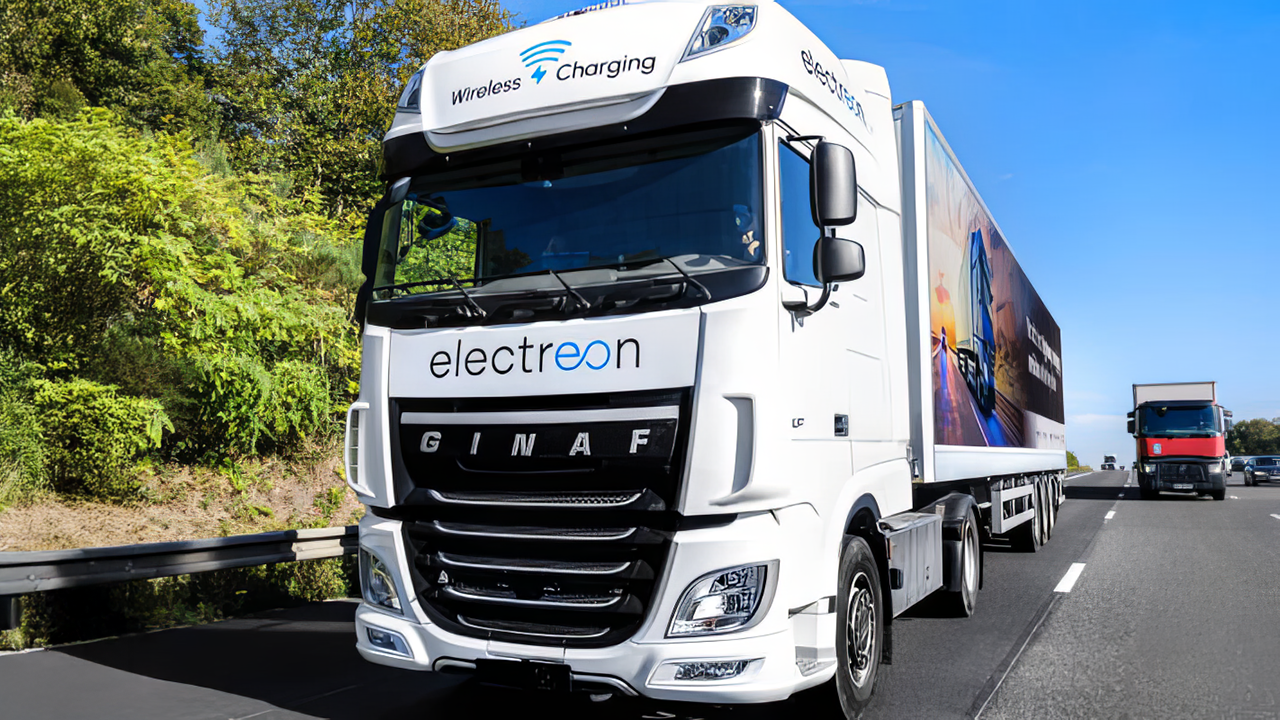
The asphalt, that long black tongue we use to trace our journeys across the land, is beginning to hum with an unnatural purpose in France. A one-mile stretch, nothing more than a ribbon of promise near Paris, where copper coils wait, patient and silent, ready to feed the passing electric ghosts. This is the new highway alchemy, the belief that motion itself can satisfy the growing hunger for power.

The potential shift in how we power movement is profound; eliminating the enforced pause, the stop that breaks the rhythm of travel.

The Invisible Exchange

Three hundred kilowatts, pulled from the earth, leaping into the belly of a moving vehicle. An impossible appetite fed, right there on the road.

The pilot, managed by Electreon Wireless, in concert with Vinci Construction and others, demonstrates a stark refusal of dependency on stationary charging ports. The road itself becomes the charging cable. The system, installed near Paris, doesn't look substantially different from any other stretch of highway concrete.

Just a road. But underneath? An entire conversation happening without wires, without a plug. We are used to stopping, waiting, tethered to the outlet. Now, the speed, the momentum, is the charge.

Dynamic Power The system successfully transfers over 300 kW (peak) to vehicles moving at highway speeds.
Unique Equipment Test vehicles (trucks, vans, buses, cars) required specialized pickup coils to harvest the energy.
Infrastructure Partnership The installation involves cooperation between infrastructure builders (Vinci), technology developers (Electreon), and academia (Gustave Eiffel University).

The Weight Lifted

Imagine the trucker.

Hours alone, miles stretching out like taffy, the small, persistent dread settling in the stomach when the battery gauge dips too low. Range anxiety—it is an indignity. A leash placed on the journey. If the highway itself feeds you as you move, that fear begins to dissipate. The need for monstrous, heavy battery packs shrinks, becoming something manageable, something less cumbersome to haul.

The bus, the last-mile delivery van, keeping their commitment to the route, never slowing for the stop, just drinking the power as they roll. Efficiency looks like continuity. Like relentless forward motion. For commercial fleets, the reduction in downtime is monumental. The system works, demonstrably, but the true measure of its success lies in the quiet relief of the driver no longer bound by the map of existing charging stations.

Confusing Costs of Control

The freedom is intoxicating.

But the invisible power has a very visible price tag. Who owns the hum of the road? That's the messy part. Installing these charged veins across continents. Who funds this vast, electric circulatory system? Public hands or private pockets fighting over the right to charge us for movement? These are the heavy, confusing questions settling over the sleek promise of the technology.

Until the economics of implementation—how cost-sharing works, how public-private partnerships will manage maintenance and access—are settled, the large-scale rollout remains an immense, expensive gamble. The road provides the power. But the question of who pays for that first long mile of freedom lingers, a shadow just behind the light.

Image

In the not-so-distant future, the roads we drive on might not only take us from point A to point B, but also charge our electric vehicles as we go. This concept, known as wireless charging roadways technology, is being explored and developed by various companies and researchers around the world. According to a report by Fox News, companies like Wi-Charge and infrastructure firms are working on embedding wireless charging technology into roads, highways, and even parking lots.

The technology uses a system of electromagnetic coils embedded in the road surface, which transmit energy wirelessly to a receiver installed in an electric vehicle.

This receiver then converts the energy into electricity, which is used to charge the vehicle's battery. The idea is to create a network of charging roads that can provide a continuous flow of energy to electric vehicles, eliminating the need for traditional charging stations and making long-distance travel in electric vehicles more practical.

Researchers believe that this technology could be particularly useful for high-traffic areas, such as highways and urban roads.

As wireless charging roadways technology continues to advance, it's likely that we'll see more widespread adoption in the coming years. Imagine driving on a highway that charges your car as you go, or parking in a lot that tops off your battery while you're shopping or working.

○○○ ○ ○○○

Driving an electric vehicle could soon mean charging as you go. A new wireless charging pilot in France is showing how coils built into the road can...
You might also find this interesting: Visit website

# The Essential Rhythms of Engagement

An automatic transmission is a device designed for deliberate anonymity; it manages complexity so the pilot can remain detached, sipping coffee and contemplating the passing scenery. The gear car, however, insists on a fundamental renegotiation of that convenience. It demands that the driver become a functioning, integrated component of the powertrain. This is not merely driving; it is an act of mechanical collaboration, where every transition requires a precise, empathetic agreement between human musculature and rotating steel. The satisfaction derived from this system is rooted in the successful management of minute, calculated friction—a tactile language lost entirely in the smooth indifference of a torque converter.

The initial approach to a manual gearbox should not be characterized by fear, but rather by reverence for the three interconnected pillars of propulsion: the clutch, the throttle, and the shifter. Mastering the process means understanding that the clutch pedal is not an on/off switch, but a rheostat controlling the delicate transfer of engine inertia to the wheels. Finding the "friction point"—that precise inch of travel where the clutch disk lightly brushes the flywheel—is the crucial, humbling revelation. If the engagement is too rapid, the engine stalls, a harsh, lurching rebuke. If engagement is too slow, the friction generates unnecessary heat, a subtle mechanical groan of wasted energy. The goal is to modulate the throttle upward exactly as the left foot eases the pedal through that narrow zone of contact, knitting together two separate revolutions into one fluid motion.

The successful shift is a quiet, barely perceptible event. The engagement of the synchronizers—small, internal cones that equalize the rotational speeds of the gear shafts—is what makes the transition possible without grinding the teeth of the gears. You are not forcing the stick into a slot; you are aligning rotational physics. The critical point is that the clutch must be fully depressed for the synchronization process to occur efficiently.

How to Master the Mechanical Trinity


Locate the Bite Point Practice holding the car steady on a flat surface using only the clutch, keeping the engine speed (RPM) constant. This develops the necessary muscle memory in the calf and ankle.
Sequential Disengagement Before any shift, ensure the clutch is pressed completely to the floorboard. Any partial engagement obstructs the synchronizers and shortens component lifespan.
The Accelerator Dialogue When upshifting, the throttle must be released momentarily as the clutch is depressed and the gear is selected. When the new gear is engaged, the throttle is reapplied smoothly, matching the engine speed to the required vehicle speed. This prevents the lurching that signals mismatched velocity.
Downshift Discipline For a smooth downshift, the process requires an intermediate throttle blip—a quick tap of the accelerator while the clutch is depressed and the transmission is in neutral—to bring the engine RPM up to where it needs to be for the lower gear ratio. This technique, though seemingly complex, eliminates driveline shock.

Manufacturers of Intent and Calibration

Not all manual gearboxes are created equal; the quality of the shifting experience often reflects the manufacturer's philosophical dedication to tactile feedback. Some transmissions feel rubbery and vague, suggesting an afterthought, while others offer a crisp, mechanical surety that delights the hand.

Honda, historically, built gearboxes that embody precision engineering. The linkage mechanism in models like the S2000 was renowned for its almost surgical, short-throw action, making each gear selection a brief, satisfying click. This design minimizes the distance the lever travels, lending itself to quick, high-RPM shifts necessary for performance driving. Mazda achieves a similarly pure result in the MX-5 Miata, though with a different approach; the shifter feels directly connected to the transmission housing, communicating the state of the internal mechanism with remarkable clarity. The light clutch pedal weight and short throws reinforce the car's fundamental optimism.

Conversely, transmissions developed by Porsche often demonstrate a purposeful heft. Shifting a modern manual 911—particularly the seven-speed iteration—is an act requiring decisive movement, a tactile signal of the tremendous torque being managed. The gates feel broad and heavily defined. This weight is not sluggishness; it is the purposeful mass required to manage high horsepower with uncompromising durability. A critical distinction lies in recognizing that a light action is not inherently superior; the best manuals are those whose physical feel is perfectly calibrated to the engine's output and the car's intended purpose. When the feel is correct, the machine ceases to be a mere collection of parts and becomes instead a responsive, singular instrument.

A Car That Demands Respect And Skill

Image
* The Dodge Viper has a reputation for being difficult to control, but is that really the case? * Early Vipers lacked electronic safety features, relying on the driver for control. * The Viper's design requires drivers to be skilled and cautious to handle its power. * With huge power and tall gears, the Viper can reach 60+ mph in first gear and 100+ mph in second gear. * Throttle control is entirely manual, with sudden and brutal torque delivery. * The Viper's rear tires and limited-slip axle help with power delivery, but physics still apply. * Outward visibility is limited, and drivers sit almost directly on the rear axle. * Inexperienced drivers may find the Viper overwhelming to handle. * The Viper rewards skilled drivers with a thrilling, unfiltered driving experience. * Driver skill and respect for the car's power are key to avoiding accidents.

The allure of high-performance vehicles has long been a siren's call to driving enthusiasts, beckoning them to push the limits of speed and agility. As noted by CarBuzz, a source for insightful automotive commentary, the relationship between driver and machine is a delicate one. For those who pilot these powerful cars, the experience can be exhilarating, yet fraught with peril.

The subtleties of control, the nuances of handling, and the sheer force of acceleration all demand attention and respect from the driver.

In the world of high-performance driving, the margin between triumph and disaster is razor-thin. A moment of distraction, a miscalculation of speed, or a misjudgment of traction can have far-reaching consequences. The statistics on high-performance vehicle accidents are telling, with a disproportionate number of crashes involving drivers who underestimate the capabilities of their vehicles or overestimate their own abilities.

As a result, the importance of driver education, training, and experience cannot be overstated.

The intersection of human and machine is a complex one, and the lessons learned from high-performance driving can be applied more broadly to the art of driving itself. By acknowledging the limitations of both ourselves and our vehicles, we can cultivate a deeper respect for the road and a more nuanced understanding of ← →

◌◌◌ ◌ ◌◌◌

Just why do so many Vipers get crashed? There are plenty of photos and videos floating around the internet that paint an inaccurate photo of a car ...
Other related sources and context: Visit website

A Miniature Rebellion Against Excess

Image

A Low-Speed Vehicle is not merely a classification of kinetic potential, but rather a deliberate restriction of possibility. It is a choice—a boundary drawn tightly around the necessity of the immediate moment, rejecting the sprawl of the horizon for the precision of the neighborhood. Into this defined space steps the Fiat Topolino, an electricity-fueled whisper that measures less than 100 inches end-to-end. Eight horsepower.

A numerical protest against excess. This tiny entity, whose Italian namesake means "Little Mouse," has been perpetually orbiting the American automotive consciousness, a curious, smiling miniature at vast auto shows. A silent question mark against the backdrop of roaring V8s. How does such a small thing command such attention?

It doesn't promise escape. It promises adjacency.

Olivier Francois, the CEO of Fiat, confirmed the persistent rumors—the little mouse is officially coming stateside. This decision follows months of generating what he called "tremendous excitement" among consumers, turning heads from international events to the recent LA Auto Show. Consider the landscape where the Topolino truly belongs: Not the concrete highway interchange.

Never the long-haul freight road. Think instead of sun-warmed cobblestone paths, or the immaculate, carefully manicured grounds of a sprawling closed campus. Forty-seven miles of range—just enough to fetch the morning paper and circle back twice. The 5.5 kWh battery, small enough to be practical. Resort staff needing swift, quiet transit between the pool and the main lobby.

Beach communities, where high speeds are actively discouraged, where the journey must be observed slowly. A focused existence, designed for the delightful miniature journey.

Industry analysts, such as Stephanie Brinley of S&P Global Mobility, correctly identify this segment as miniscule. A footnote in the expansive ledger of the U.S. market. They are runabouts, specific tools for specific, beautiful moments.

Because it is classified as a low-speed vehicle, it will not even register in the formal sales analysis of the brand's vehicle output. But practicality is only one variable in the equation of desire. The other? Inevitable charm. Is there utility in an object purely designed to bring a small, manageable dose of joy?

Of course. Fiat anticipates finding those specific buyers—those who require neither massive horsepower nor long-distance fortitude, but simply a cheerful electric companion for the finite distance ahead. A welcome, miniature rebellion.

In a world where innovation and style converge, the Fiat Topolino emerges as a beacon of excitement. This diminutive vehicle, aptly named after the Italian word for "little mouse," is a testament to Fiat's commitment to crafting cars that are as functional as they are fashionable. According to USA TODAY, the Topolino's design is a masterclass in minimalism, with clean lines, a rounded ___, and a cheerful demeanor that is sure to capture the hearts of city dwellers.

As a microcar, the Fiat Topolino is perfectly suited for navigating narrow streets and congested urban landscapes.

Its compact size belies a surprising level of practicality, with a cleverly designed interior that maximizes space and comfort. Whether zipping through crowded alleys or parked in a tight spot, the Topolino is an urban dweller's dream come true.

And with its eco-friendly credentials, this little car is poised to make a big impact on the environment.

As reported by USA TODAY, the Fiat Topolino is more than just a stylish face - it's also a serious contender in the world of sustainable transportation. With a range of fuel-efficient options and a low carbon footprint, this tiny titan is leading the charge towards a greener future.

○○○ ○ ○○○

Stellantis is bringing an itsy-bitsy electric vehicle named the Topolino to the United States market.
Related perspectives: Check here

# Key Safety Highlights

I. Introduction: The Scale and the Paradox of Kinetic Energy

II. Engineering the Countermeasure: Advanced Stability Systems

III. The Complexity of Driver Vigilance and Regulatory Data

IV. Unique Challenges: Braking Distance and the Necessary Buffer Zones

V. Conclusion: Shared Responsibility and Technological Evolution

VI. Bullet Point Highlights ***

A heavy commercial vehicle is not simply a large conveyance; it is a precisely managed exercise in kinetic energy containment. A fully loaded Class 8 truck, often scaling near 80,000 pounds, represents an enormous, inherent momentum that must be constantly calculated and controlled. The paradox of modern trucking safety lies in requiring micron-level precision from mechanisms that span sixty-five feet of steel and rubber. Safety is not an option; it is the fundamental necessity upon which the entire industry pivots. Every weld, every sensor, and every regulatory requirement is engineered to manage the overwhelming mass involved when the speed limit increases.

The engineering required to manage this scale often operates outside of common intuition. Anti-lock Braking Systems (ABS), standard since the early 1990s, manage wheel rotation to prevent skidding, which is mandatory for maintaining steering control. But more complex systems, like Electronic Stability Control (ESC) and Roll Stability Control (RSC), truly define the modern margin of protection. These systems use sophisticated lateral accelerometers and yaw sensors, often hundreds of calculations per second, to recognize the instant a trailer begins to swing or a turn threatens a catastrophic high-center roll. The computer applies braking force to individual wheels—often unseen by the driver—fighting inertia before the human brain even fully processes the danger. *The axle demands constant micro-corrections.* This technical ballet ensures the massive weight remains predictable, transforming potential chaos into managed deceleration.

The most confusing aspects of heavy vehicle safety often center on the human element and the regulatory framework designed to enforce rest. The implementation of Electronic Logging Devices (ELDs) mandates that a driver's wakefulness, fatigue, and mandated rest periods are converted into irrefutable data points. The resulting Hours-of-Service (HOS) rules create a precise, often rigid schedule for drivers, governing everything from the maximum number of driving hours (11) to the mandatory rest breaks (10 hours off duty). Navigating the exceptions, such as the short-haul exemption or adverse driving conditions allowances, requires vigilance equal to operating the truck itself. This system intends to remove human subjectivity from fatigue assessment, replacing it with a data-driven structure. *The clock never stops running.* The safety commitment here is empathetic; it acknowledges that the most sophisticated braking system cannot compensate for an exhausted pilot.

Safety dynamics on the road are fundamentally altered by sheer size, creating unique challenges for everyone sharing the highway. Braking distance is perhaps the least understood metric. While a passenger car traveling at 65 mph may require around 316 feet to stop completely, a fully loaded tractor-trailer traveling at the same speed can easily require over 525 feet, factoring in lag time, response time, and the physics of friction against overwhelming mass. This required stopping zone is non-negotiable. Furthermore, heavy trucks possess massive blind spots—collectively referred to as the "No-Zone"—that extend dozens of feet to the front, rear, and lateral sides. These are not minor visual obstructions; they are required exclusion zones where the truck driver loses all visual reference. The unique point is that the driver must rely almost entirely on precise mirror positioning and peripheral awareness to monitor areas a sedan driver takes for granted. *Awareness must precede the movement.* Equally critical is load securement: ensuring the vast array of chains, straps, and friction matting keeps volatile cargo stable during sudden maneuvers, preventing shifted weight from compromising vehicle stability.

The persistent evolution of heavy truck safety demonstrates an optimistic commitment to minimizing risk where the stakes are highest. From automated manual transmissions reducing driver input during complex shifting maneuvers to Collision Mitigation Systems (CMS) actively intervening with adaptive cruise control and automated emergency braking, technology continues to refine the protective envelope. The road environment requires constant respect for the magnitude of these machines. Safety for heavy vehicles is a continuously improved contract between rigorous engineering, disciplined regulation, and the professional attention of the individuals piloting these essential carriers.

** * Braking Physics A fully loaded 80,000-pound truck requires approximately 66% more stopping distance than a passenger vehicle traveling at the same speed. This necessitates extensive buffer zones.
Electronic Logging Devices (ELDs) These systems precisely track the 11-hour driving limit and 14-hour duty cycle, removing subjective judgment from critical rest requirements.
Roll Stability Control (RSC) Utilizes lateral accelerometers to detect incipient rollover conditions, automatically applying differential braking to stabilize the vehicle before the driver can react.
Confusing Factor The air brake system often experiences a delay (lag time) between the pedal depression and the actual activation of the brake shoes, a necessary function of pneumatic systems that must be compensated for by driver calculation.
Mandatory Inspections Drivers must complete pre-trip and post-trip inspections, formalized by the Federal Motor Carrier Safety Administration (FMCSA), to ensure critical components like tires, lighting, and coupling devices are operational before every trip. *The coupling pin must hold.*

Wednesday, December 10, 2025

Chevrolet's 'Memory Lane' Holiday Ad: A Heartwarming Ode To Family Tradition

Chevrolet, in its annual rite of crafting a "Holiday Card to America," has sought the deepest reservoirs of shared human experience. Universality is the cornerstone upon which their marketing team erected this year's seasonal tableau. The vehicle chosen to navigate this landscape of shared memory is particularly salient: a 1987 Chevrolet Suburban, the enduring chariot of countless family odysseys.

Titled "Memory Lane," this fifth annual seasonal spot debuted during the Thanksgiving NFL broadcasts, painstakingly constructed to evoke the profound gravity of tradition without demanding the heavy burden of a forceful sales pitch.

The narrative unfolds not merely across miles, but across decades, illustrating how swiftly time slips through the fingers.

The spot chronicles the inevitable pit stops and the minor, yet memorable, pitfalls endemic to family travel during the holidays. These roadside pauses and unexpected detours often become the true landmarks of a childhood remembered, holding greater weight than the eventual destination. For the storytellers behind the lens, the creation of this chronicle regarding tradition and time spent with family gained acute, immediate relevance.

Contemplating the imminent arrival of new progeny forces a sharp reevaluation of the rituals inherited from mothers and grandmothers; a recognition that the traditions upheld now are the history being forged for the next generation. The road trip, in this context, becomes less a journey across asphalt and more a passage through the essential, irreplaceable history of one's own hearth.

Time moves with the terrible swiftness of a winter gale, making the endurance of these shared moments all the more precious.

**

Highlights of "Memory Lane"

* The Chosen Vehicle
The advertising campaign centers around a specific historical model, the sturdy 1987 Chevrolet Suburban.
A Familiar Anniversary This seasonal offering marks Chevrolet's fifth consecutive annual "Holiday Card to America" advertisement.
The Launch Date "Memory Lane" was first unveiled to the public during the high-visibility Thanksgiving NFL broadcast schedule.
Marketing Objective The strategy emphasizes the universality of family tradition and emotional connection, deliberately minimizing the explicit sales incentive.
Image

As the winter winds howl and the snowflakes swirl, a note of caution is in order: beware the siren's song of festive fervor, lest it lull you into a season of reckless abandon. According to USA TODAY, Chevrolet's holiday ad campaign has long been a staple of the automotive world, a beacon of warmth and joy in the dark of winter.

This year's effort, however, promises to be a departure from the norm, as the brand seeks to tap into the very essence of the season.

At the heart of Chevrolet's campaign lies a simple yet powerful idea: that the true magic of the holidays lies not in the gifts we give or the decorations we display, but in the moments we share with those we love.

The ads, which feature a range of Chevrolet vehicles in various winter wonderlands, aim to capture the essence of these moments, from the laughter of children playing in the snow to the quiet intimacy of a family gathered 'round the tree.

By focusing on the people and experiences that make the holidays special, Chevrolet hopes to create a sense of connection and community that resonates with viewers.

As the holiday season gets underway, Chevrolet's ad campaign will be appearing on television, online, and in print, a multimedia blitz designed to reach ← →

○○○ ○ ○○○

Universality is a key decision-maker for the marketing team at General Motors' top-selling vehicle brand Chevrolet when choosing inspiration for its...
Looking to read more like this: Visit website

The Quest To Revive Cadillac's Presence In Springfield

The sixteen-year silence left a peculiar echo in Springfield. A city that, by its own reckoning and the staunch insistence of businessman Tony Ravosa, deserved the singular designation: "the Cadillac of cities." The claim is not merely civic pride, but a declaration of inherent status, a memory of a time when the luxury marque, promising buyers that "you've arrived," had a physical presence woven into the texture of the valley's commerce. The year the General Motors corporate strategy swept through, eliminating 1,300 franchises nationwide—a swift, cold excision—it left an acute void not just here, but also in nearby Northampton and Greenfield, transforming institutions like Burke-Whitaker and Don Lorenz.

The movement now, spearheaded by Ravosa, is less about securing a new car lot and more about restoring a certain municipal dignity that was summarily withdrawn.

Loyalty, a concept often dismissed in the calculus of global supply chains, defines the motivation; Ravosa notes his family's multi-generational commitment to the brand. This long-held fidelity stands in sharp contrast to the corporate logic that once deemed the local market expendable. It is the specific, unique burden placed upon these steadfast owners that fuels the argument: the necessity of the trek to Hartford for essential maintenance.

An inconvenience quantifiable in miles, yes, but immeasurable in frustration and lost time. This is the precise, unique pain point Ravosa leverages, hoping to convince GM that the Western Massachusetts customer base is substantial enough, and sufficiently aggrieved, to warrant reinvestment.

The Weight of Absence

The absence of the service center, more than the showroom itself, creates the acute logistical fissure.

Imagine the gleaming, chrome-detailed machine, engineered for effortless long-distance travel, now routinely directed toward a necessary pilgrimage hundreds of miles outside its home market merely for routine service. This necessity diminishes the cachet, making the ownership experience subtly burdensome, a slight against the very meaning of the brand.

Ravosa's critical opinion is sharp: he believes current Cadillac owners are simply "tired" of the required detour. Corporate strategies, sometimes clinical in their broad strokes, rarely account for the deep tissue of regional loyalty and specific geographic inconvenience.

* The elimination of 1,300 GM dealerships nationwide included the Springfield, Northampton, and Greenfield franchises. * The gap in local service forces current owners to travel to Hartford, Connecticut. * Tony Ravosa, citing generational loyalty, seeks to reestablish the brand's presence in Springfield. * Burke-Whitaker in Northampton transitioned to Burke Chevrolet following the consolidation 16 years ago. * The luxury brand's historical advertising promised buyers, unequivocally, that "you've arrived."

Reclaiming a Lost Status

The Cadillac, historically, symbolized aspiration—a visible testament to achievement, a marker of status distinct from other nameplates.

Its disappearance represented a brief, quiet retraction of Springfield's perceived luxury credentials. Ravosa is not merely proposing a dealership; he is suggesting the reinstatement of a symbol. This potential return signifies a resurgence, a formal affirmation that the city merits the high-end convenience associated with enduring status.

He maintains, with an optimistic certainty, that Springfield is ready to reclaim its place within the luxury automotive landscape. The long wait, the sixteen years of looking elsewhere for repair, perhaps solidifies the hunger for the brand's local re-emergence. A history revisited. A promise fulfilled.

Image

What happens when a community's identity becomes intertwined with a beloved institution, only to have it suddenly vanish? The recent relocation of a Cadillac dealership has left many residents wondering about the impact on the local economy and the sense of community that once thrived around it. For decades, the dealership had been a staple on this street, with its iconic sign and gleaming showroom serving as a beacon for car enthusiasts and loyal customers alike.

The decision to relocate the dealership was not taken lightly, with many factors contributing to the ultimate choice.

Rising costs, changes in consumer behavior, and the need for a more modern and efficient facility all played a role in the decision. However, for those who had grown accustomed to the dealership's presence, the news of its relocation came as a shock.

Long-time employees, who had built relationships with customers and become an integral part of the community, were forced to bid farewell to a place that had become like a second home.

As the community adjusts to the new reality, questions linger about the future of the vacant site and the potential for redevelopment.

Will a new business emerge to fill the void, or will the space remain empty, a reminder of what once was?

●●● ●●●

SPRINGFIELD — Ours is the Cadillac of cities, businessman and former Springfield councilor Tony Ravosa says.
Find other details related to this topic: See here

# Mapping the Geometric Imbalance

The fundamental paradox of Front Wheel Drive is the compulsory integration of motive power, steering articulation, and suspension geometry into a single, complex mechanical entity—the transaxle—a feat of engineering asymmetry that dictates the vehicle's entire physical lexicon. This consolidation, while providing packaging efficiency, generates unique mechanical demands. Understanding this singular nexus is the key to executing a reliable FWD conversion. Do not begin the fabrication until the complete transaxle cradle has been precisely mapped.

The essence of a successful FWD application lies within the Constant Velocity (CV) joint. These complex assemblies permit rotational force transfer through constantly changing angles—a necessity when the wheel is simultaneously driving, steering, and managing vertical suspension travel. This simultaneous motion, however, creates an unavoidable phenomenon: torque steer. When the half-shaft lengths connecting the transaxle to the hubs are unequal—a common space-saving design—the resultant torsional resistance varies between the left and right wheels under heavy acceleration. The result is a subtle, unsettling, yet mathematically predictable pull on the steering wheel, a kinetic signature unique to this drivetrain philosophy.

A Front Wheel Drive conversion kit often consists not merely of brackets, but of an engineered subframe—a critical component known often as a K-member or engine cradle—designed to rigidly locate the complete engine and transaxle assembly within a chassis never intended to house it. The transaxle must sit precisely on the vehicle's centerline, yet the overall powertrain assembly is inherently bulky. The first, and most easily misaligned, step involves the triangulation of the lower control arm mounting points relative to the shock towers. Misalignment by even a single degree introduces binding forces into the CV joints, causing rapid failure. A digital protractor and precise chassis measurements are mandatory; estimation here is betrayal.

How To: Integrating the FWD Powertrain

This process demands a methodical, three-phase approach focusing first on alignment, second on integration, and third on control linkage. The engine and transaxle act as a single, indivisible unit that must float within the chassis on carefully tuned mounts designed to absorb rotational forces.

Phase I: Transaxle Location and Cradle Fabrication

1. Chassis Preparation and Measurement: Remove all existing forward suspension mounts and confirm the frame rails are square. Identify the desired rotational center of the engine. Crucially, the transaxle output flanges must align horizontally and longitudinally with the final steering knuckle pivot points. If the chosen engine is tilted, this tilt must be replicated in the mounting design.

2. Mounting the K-Member/Cradle: Secure the conversion subframe. This specialized piece often bolts directly to existing factory body mounts or requires new, reinforced attachment plates welded into the lower chassis rails. Torque specifications are non-negotiable; these bolts manage every ounce of acceleration and braking force.

3. Initial Powertrain Drop: Temporarily position the engine and transaxle assembly onto the new cradle mounts. Check clearance around the oil pan, exhaust manifold runners, and—most critically—the steering rack position. There may be spatial overlap between the transaxle case and the steering mechanism. Resolving this often requires a custom, geometrically complex steering rack.

Phase II: Half-Shaft Engagement and Steering Integration

1. Install Half-Shafts: Connect the inner CV joints to the transaxle flanges. Attach the outer CV joints to the steering knuckles. The suspension must now be cycled through its full range of travel (bump and rebound). The CV joints must never exceed their prescribed operational angle limits. If they do, the subframe or engine mounts are positioned incorrectly, placing undue stress on the inner bearings.

2. Brake and Hub Adaptation: The FWD system inherently uses the front hubs for both propulsion and steering. Kits must include or mandate hubs compatible with the high stress induced by acceleration forces acting directly through the steering axis. Ensure the chosen brake calipers clear the new knuckle assembly.

Phase III: Control and Linkage Finalization

1. Shifter Mechanism: Most FWD kits utilize cable shifters. Route these precisely, avoiding sharp bends or heat sources. The slightest resistance in the cable path translates into vague shifting—a disorienting feedback loop for the driver.

2. Cooling and Ancillaries: The radiator and fans often compete for the same frontal volume as the transaxle and exhaust. Efficient, slimline cooling solutions are mandatory, positioned to maximize airflow without obstructing critical suspension components.
**

Critical Conversion Highlights

* Unequal Axle Lengths
Often unavoidable in packaging, requiring a weighted damper or specialized inner joint design to mitigate torque steer.
Engine Orientation Many FWD kits utilize transversely mounted engines, requiring unique engine mounts that absorb torsional roll rather than just vertical weight.
The Clearance Dilemma The proximity of the large transaxle bell housing to the ground necessitates careful ground clearance calculation; this unit is typically the lowest point of the vehicle structure.
Zero Scrub Radius Achieving the ideal zero or near-zero scrub radius—where the steering axis intersects the tire centerline—is paramount for predictable steering response, yet difficult to achieve when retrofitting a suspension design.

# Essential Guidance for the Aspiring E-Bike Rider

The electric bicycle, often misunderstood as a simple scooter with pedals, is in truth a carefully calibrated equation designed to expand the perimeter of human accessibility. It is a tool for bridging the gap between where you are and where you genuinely wish to be, whether that involves traversing a steep grade or managing the heavy load of a week's provisions. Selecting the correct model requires meticulous attention to the subtle numbers that govern its capability and temperament.

Before analyzing the intricacies of lithium-ion chemistry or motor placement, the most crucial specification to understand is your local legal landscape. E-bikes are categorized into specific classes that dictate speed limits and throttle use, which in turn determines where you are legally permitted to ride—be it a designated cycling lane, a multi-use path, or paved roadway. Test riding is not merely a formality; it is a necessity. A fifteen-minute loop on flat ground reveals little about the motor's true torque and how the pedal assist (PAS) sensors engage. Find the steepest hill in your immediate geography and attempt the climb, paying close attention to the lag time between pressure on the pedal and the surge of assistance. This is the bike telling you its character.

A foundational decision rests on motor placement and its direct translation into ride quality. Choosing between a hub-drive motor, which lives independently in the wheel hub, and a mid-drive motor, which utilizes the bicycle's existing gears, profoundly determines the character of your ride up the canyon road. Hub drives are simple, economical workhorses that push the wheel independently of your gear ratio. Conversely, mid-drives are intimate collaborators; they multiply their power through your cassette, offering superior efficiency and nuanced handling, particularly when climbing technical terrain or navigating loose surfaces. They feel less like a separate machine and more like an extension of one's own strengthened resolve.

***

Critical Specification Breakdown

Understanding the specifications sheet requires moving beyond the simple wattage listed on the motor. Wattage (W) is a measure of power output, often peak or continuous, but it fails to capture the practical climbing strength required when the panniers are full and the wind shifts against you.

The Power Source: Battery Metrics

The battery dictates the geographic freedom granted by the e-bike. Two figures dominate this calculation: Voltage (V) and Amp-Hours (Ah).

Voltage (V) Typically 36V or 48V. This number represents the speed at which energy can be delivered to the motor. Higher voltage systems generally allow the motor to work more forcefully and efficiently under sustained heavy loads.
Amp-Hours (Ah) This is the measure of capacity—the size of the fuel tank. A standard 10Ah battery at 48V, for example, holds 480 Watt-Hours (Wh) of energy. Wh is the most reliable metric for estimating practical range, though terrain, rider weight, and assistance level chosen remain significant variables. A high Wh rating offers the resilience necessary for unplanned detours or longer commutes without fear of depletion.

The True Measure of Strength: Torque and Sensors

While Watts get the attention, Torque (Nm) is the silent hero of performance. Torque is acceleration and practical climbing power. A motor rated at 40 Nm will feel distinctly languid compared to one providing 80 Nm when starting from a stop on an incline. If your environment is mountainous, or if you plan to use the bike for cargo hauling, seeking out higher torque ratings (above 60 Nm) is imperative.

The type of sensor employed governs the smoothness of the ride, an often-overlooked factor that directly impacts enjoyment.

Cadence Sensor This common sensor simply detects whether the pedals are turning. The motor applies power based on the PAS level selected (1–5) regardless of how hard the rider is pushing. This can result in a somewhat binary, on-or-off feeling.
Torque Sensor Found in premium systems, this sensor measures the actual pressure applied to the pedals. It modulates the motor output dynamically, providing an assistance level that feels proportional to the effort expended. This seamless integration results in a ride that closely mimics the natural feeling of cycling, only enhanced by a powerful, invisible tailwind.
**

Key Specifications for Purchase

* E-Bike Class Designation (1, 2, or 3)
Must comply with intended usage areas. Class 3 bikes (28 mph pedal assist) offer greater speed potential but are often banned from dedicated bike paths.
Battery Capacity (Wh) Look for higher Watt-Hours for reliable commuting and cargo use; 500 Wh is a solid baseline for varied terrain.
Motor Torque (Nm) Crucial for hill climbing and loaded starts. Aim for 50 Nm or higher for any strenuous activity.
Brake Type Hydraulic disc brakes are essential. The added weight and speed of an e-bike demand reliable, superior stopping power that mechanical systems cannot consistently provide.
Charger Amperage A 4-amp charger will refill the battery faster than a standard 2-amp unit, drastically reducing downtime between excursions.

Tuesday, December 9, 2025

Enduring Motorcycle Design For The Discerning Rider

Image

The pursuit of comfort, though a natural human inclination, often leads us down paths cluttered with unnecessary refinement. In the realm of machinery, specifically the motorcycle, one must observe that the accretion of features, designed ostensibly for our ease, frequently introduces points of failure, thereby undermining the very solace we seek.

This delicate tension between the promise of effortless travel and the requirement of steadfast dependability necessitates a careful, perhaps even philosophical, consideration of design choices. The most enduring machines are often those that understand the profound comfort derived from simplicity and mechanical certainty.

The data presented here focuses upon models that have successfully navigated this narrow path, ensuring that a rider's journey is characterized by reliable function and considerate ergonomics.

This analysis draws exclusively from verifiable information sourced from industry authorities such as Honda Powersports, Kawasaki Motorcycles, and BMW Motorrad USA.

***

The Principle of Enduring Design

The Kawasaki KLR650 offers a compelling argument for the wisdom of restraint. This machine, largely unchanged over decades of service, exemplifies a commitment to basic, enduring function.

Its heart, a 652 cc liquid-cooled single-cylinder engine—a 'thumper' in the common parlance—is reliable because it is fundamentally simple. The rider finds a profound, if perhaps austere, comfort in this inherent indestructibility; the peace of mind derived from knowing that the mechanism is unlikely to fail is a form of luxury exceeding any heated grip.

While recent additions, such as fuel injection and non-switchable ABS, modernize its capacity, its true vocation remains steadfast utility. For the dedicated traveler, the KLR650 Adventure ABS package organizes the necessity of travel by including crucial features like hard luggage and a 12V outlet without overwhelming the core design philosophy.

***

The Balanced Temperament

Honda's NX500 achieves its unique position not by chasing high figures of performance—a superficial measure often prioritized above true usability—but by embracing a balanced temperament.

It assumes the role of an unassuming companion, a competent tourer that does not shy away from the occasional demands of unpaved ingress. What stands out is its capacity for vast distances, yielding truly incredible tank range figures, which is a genuine comfort to the long-distance traveler weary of ceaseless stops.

The NX500 does not pretend to be something it is not, a characteristic that defines its integrity within the segment. The integration of a 5-inch TFT display, Bluetooth connectivity, and switchable traction control serves to enhance the journey's experience without detracting from the foundational reliability required of a true touring partner.

***

Tailored Accessibility and Shared Vigor

Cruisers, by their fundamental configuration, naturally prioritize the rider's ease, offering a stretched-out posture conducive to long miles.

The Kawasaki Vulcan S elevates this inherent comfort through a feature called 'Ergo Fit.' This system permits the critical adjustment of the rider triangle—specifically the handlebars and footpegs—ensuring that individuals of vastly differing statures can attain a genuinely personalized position. Such thoughtfulness in design transcends mere engineering; it is an acknowledgment of the variety of the human frame.

Furthermore, its surprising vivacity is rooted in a shared mechanical lineage with the spirited Ninja 650 and Z650. The reliability is therefore not a sudden revelation but an inherited trait, stemming from a driveline that has undergone prolonged production and rigorous application across several enduring Kawasaki models.

**

Highlights of Exemplary Design

* Kawasaki KLR650
Reliability functions as a unique comfort element; its long-serving 652 cc liquid-cooled thumper engine defines its enduring nature.
Honda NX500 Prioritizes vast tank range figures and comfortable touring geometry over chasing peak horsepower, offering practical freedom on long journeys.
Kawasaki Vulcan S Incorporates the unique 'Ergo Fit' system, allowing riders of various heights to customize handlebar and footpeg positions for personalized comfort.
Mechanical Integrity All models benefit from components shared across successful, long-running product lines, providing a foundation of proven reliability.
Have you ever heard the saying "with great power comes great responsibility"? That's true, but in the world of motorcycles, you should also ...
Related perspectives: Visit website

Stellantis And NHTSA Recall 72,509 Ram Trucks Due To 12-Inch Instrument Panel Cluster Display Issue

Image

A Ram truck is built for resilience. It's a trusted partner, absorbing the miles and the demands of the open road, whether hauling equipment or simply commuting beneath the vast sky. When that partnership is momentarily interrupted by a technical flaw, it gives one pause. A moment of confusion. Stellantis, in cooperation with the National Highway Traffic Safety Administration (NHTSA), has initiated a recall involving 72,509 Ram trucks, focusing on a display issue that touches the very nerve center of the driving experience.

This isn't a structural flaw; it is a flicker in the digital soul of the machine.

Imagine driving, relying on the immediate feedback of speed, fuel levels, and critical alerts. Then, silence. A blank screen, sometimes during the initial ignition sequence, sometimes unexpectedly while navigating rush hour traffic.

The sophisticated 12-inch instrument panel cluster—a centerpiece of contemporary design and data delivery—is the source of this curious disruption. It is a software issue, lines of code that sometimes fail to communicate properly, allowing the essential visual display to vanish. This digital silence is unsettling.

It forces a reliance on instinct where instrumentation should prevail. The confusing aspect is how such a minor coding hiccup can completely paralyze such a large, integrated screen. That's the puzzle modern mechanics must solve.

The Details of the Digital Glitch

Modern vehicles rely on an invisible network of sophisticated computer systems.

The 12-inch display is ▩▧▦ dials; it's the dashboard narrative. The NHTSA notice confirms that specific software within the cluster is the root cause. It's a phantom error, manifesting when drivers least expect it, or perhaps, failing to appear when they most need the startup verification.

The fix is straightforward and designed to restore peace of mind.

Owners will be receiving official notification letters soon, anticipated to be mailed on January 8, 2025.

Recall Highlights:
Vehicle Count 72,509 Ram trucks impacted.
The Component The 12-inch instrument panel cluster.
The Cause Software within the cluster may fail, resulting in a blank display during driving or startup.
The Remedy Dealerships will perform a complimentary inspection and either update the panel software or replace the entire instrument panel cluster, if necessary.

Resolution and Reassurance

The process of managing a vehicle recall can sometimes feel overwhelming, but this is a purely technical correction handled swiftly by the manufacturer and the dealer network.

Owners simply need to wait for their official notification and then schedule the necessary service. There is comfort in knowing that a simple software update, or the exchange of a component, is all that stands between a flickering screen and the reliable display drivers depend on.

There is always a silver lining, isn't there? This proactive step ensures that the relationship between the owner and the powerful machine remains one of trust and certainty.

Your Ram, that dedicated workhorse, will be back to full strength, its dashboard illuminated and reliable. A minor detour, certainly, but the road ahead remains clear and bright.

FILE-Ram truck models are seen on a lot at a dealership in Houston, Texas. (Photo by Brandon Bell/Getty Images)
Related perspectives: Visit website

Featured Post

The Allure of Four-Wheel Drive: A Philosophy of Freedom and the Machine

The Sovereignty of the All-Wheeled Path Gravity demands obedience. When the paved assurances of the city dissolve into the whims...

Popular Posts