
The sheer complexity of modern vehicles feels, at times, like navigating a labyrinth designed by someone who secretly despises the simplicity of motion. We accept, perhaps begrudgingly, that the deep, resonant satisfaction of a dedicated tactile button for every single function has mostly faded into history; contemporary systems are too intricate for such analog purity.
Yet, the ensuing chaos of burying essential controls—like defogging or the headlamp settings—three layers deep into a central touchscreen menu is an unwarranted intrusion, a constant disruption to the rhythm of driving. After experiencing the Lucid Air Touring, however, I found unexpected emotional relief in a specific digital execution that transcends the normal frustration associated with in-car displays.
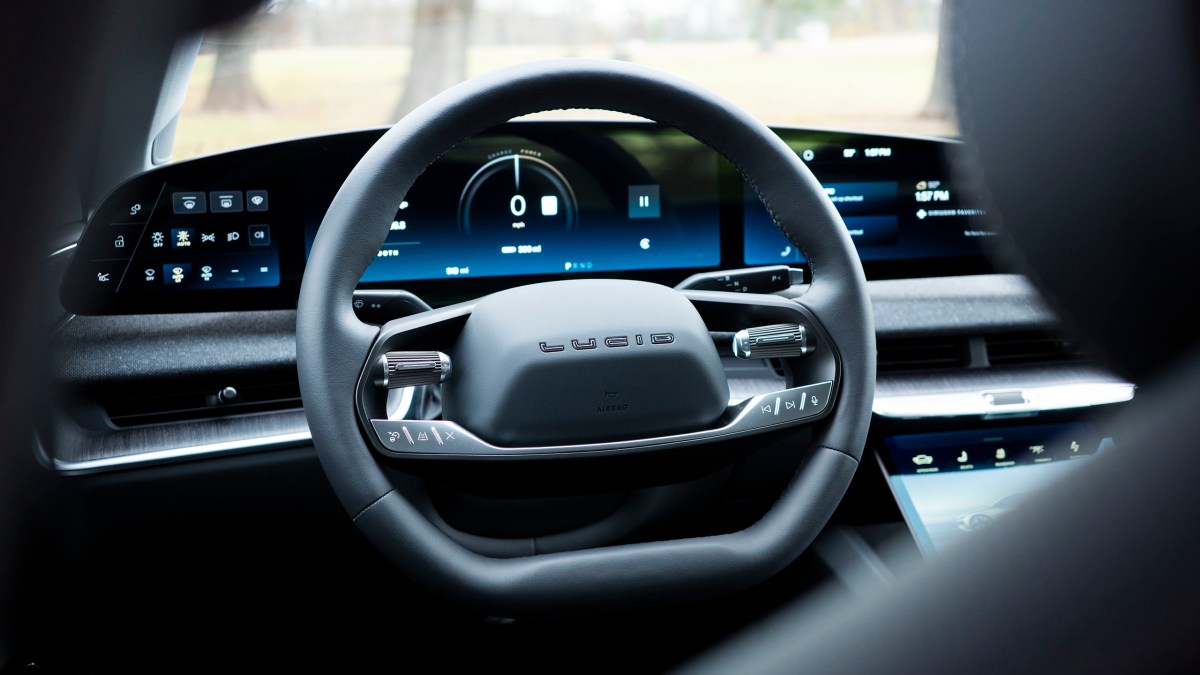
Lucid calls this localized interface the Left Cockpit Panel, and the naming convention itself emphasizes position, which is everything here.
Because the Air dedicates its right stalk exclusively to gear selection, the essential, ancillary controls usually found on stalk rings must be relocated. Instead of scattering these critical functions into a cryptic panel of under-dash buttons—a frequent industry lapse—Lucid collected them into a single, straightforward display situated perfectly to the driver's immediate left.
This panel is startlingly effective because it does not attempt to be a multi-functional hub. It is a digital rock, refusing to shift its configuration; the glyphs for lights, wipers, and environmental management are permanently resident. This design resolves an inherent automotive neurosis by defining a specific digital boundary for non-driving operations, providing unexpected order where typically there is only functional confusion.
In nearly every other vehicle configuration, that lower panel space beneath the dash centerline is treated like the receptacle for features the primary design team couldn't cleanly categorize.
It becomes the "junk drawer" of forgotten toggles: the auto high-beam switch, the elusive control for melting ice beneath the wipers, functions that feel disconnected from the central driving experience. It lacks internal logic. The Left Cockpit Panel trades that traditional scatter of plastic buttons for a clear, dedicated screen that simply displays the iconography we already understand.
The icons never move, never vanish behind a software update, and never require the driver to exit navigation to activate the cabin preconditioning. It is a pure, unique instance of digital efficiency that should be mandatory across the entire modern motoring landscape.
• Static Display Logic The screen remains permanently focused on its core tasks, behaving like physical buttons encased under glass.• Essential Ancillary Features It houses critical functions such as exterior lighting controls, windshield wiper behavior settings, and front/rear defogging.
• EV Specificity The panel also controls the opening and closing of both the charge door and the front trunk (frunk).
• Design Resolution The configuration provides a necessary home for controls displaced by the gear selector being moved to the right steering column stalk.
As I recall, I once had a conversation with a friend who had just purchased a new car. She was thrilled with the sleek design and advanced features, but there was one thing that drove her crazy - the infotainment system. She found it confusing and frustrating to navigate, and often ended up distracted while driving.
This experience got me thinking about the importance of user interface design in the automotive industry.
According to "The Drive", a leading source for automotive news and trends, the user interface design in cars has become a critical aspect of the driving experience. A well-designed interface can enhance safety, convenience, and overall driver satisfaction.
As reported by "The Drive", many car manufacturers are now investing heavily in user-centered design, incorporating intuitive controls, clear displays, and voice-activated commands to create a seamless and enjoyable experience for drivers.
The goal of automotive user interface design is to create a system that is easy to use, while also providing drivers with the information and features they need.
This requires a deep understanding of human behavior, cognitive psychology, and technology. By prioritizing user needs and behaviors, car manufacturers can create interfaces that are both functional and aesthetically pleasing.
As the automotive industry continues to evolve, it's clear that user interface design will play a critical role in shaping the future ← →
Other related sources and context: See hereScreens in cars: It's a sore subject for many , and everyone seems to have some opinion on it, whether they actually like cars or not.◌◌◌ ◌ ◌◌◌


No comments:
Post a Comment