Saturday, November 15, 2025

McLaren's Future Lineup: Embracing Electrification And Diversification In Luxury Sports Cars

Image

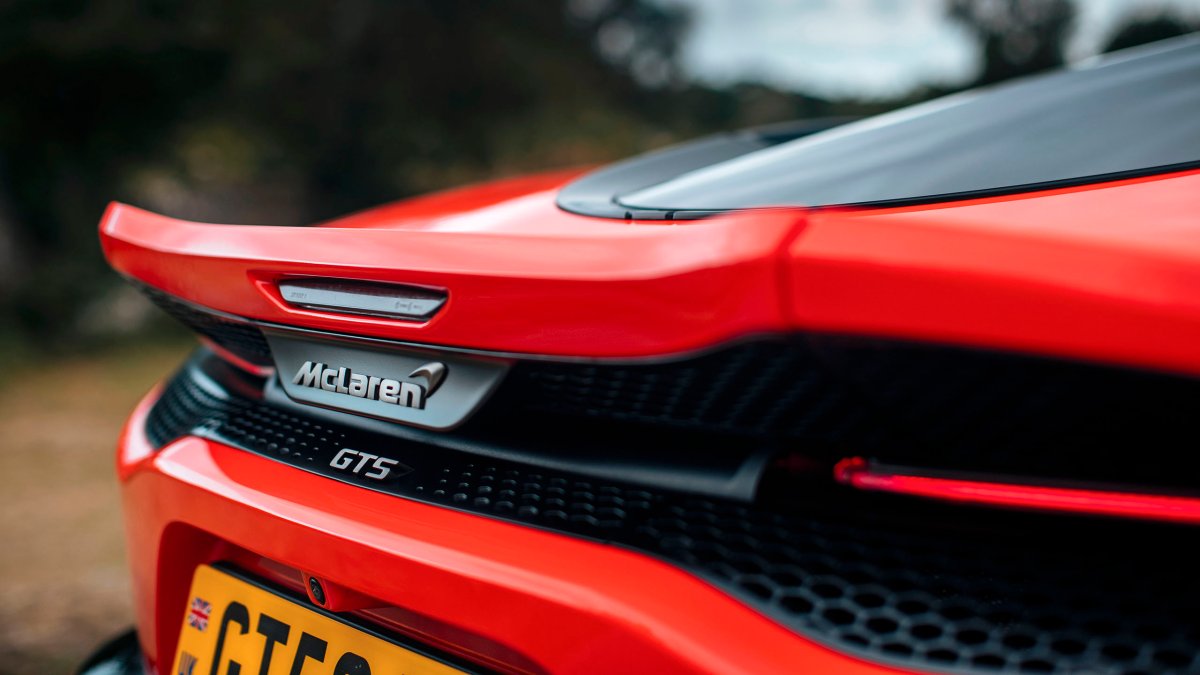
McLaren, a renowned British luxury sports car manufacturer, has been making waves in the automotive industry with its upcoming lineup of vehicles. According to a report by Automotive News, the company recently showcased a clay model of its highly anticipated SUV, codenamed P47, at a dealer meeting in the UK (Automotive News, 2023). The vehicle is expected to arrive in 2028 and features a design that embodies McLaren's new design language, including a split headlight design and a "spine" running along the roof, reminiscent of F1 or sports prototype race cars (The Drive, 2023). The P47 SUV is said to be powered by a V8 engine with hybrid assistance, mounted low and far back for optimal dynamics and design.

This powertrain configuration is consistent with McLaren's tradition of producing high-performance vehicles. In addition to the SUV, McLaren is also planning to launch a new coupe in 2027, which will pay homage to older-generation McLarens and be positioned between the entry-level Artura and 750S (The Drive, 2023). The coupe is expected to have a price tag in the low $300,000 range.

A mysterious trend is emerging in the world of luxury sports cars: the pursuit of sustainable performance. As governments worldwide implement stricter emissions regulations, manufacturers are being forced to rethink their traditional approaches to power and propulsion. One source close to the industry, as reported by The Drive, suggests that many luxury sports car brands are exploring hybrid and electric powertrains, which could potentially redefine the sector.

McLaren's foray into the SUV market is part of a broader shift in the industry, as brands seek to diversify their offerings and appeal to a wider range of customers.

The company's decision to adopt a hybrid powertrain for its upcoming SUV reflects a growing trend towards electrification, with many manufacturers investing heavily in research and development.

According to a report by Automotive News, McLaren's new SUV, codenamed P47, is expected to feature a V8 engine with hybrid assistance, mounted low and far back for optimal dynamics and design (Automotive News, 2023). The rise of hybrid and electric vehicles is also driving innovation in design and engineering.

As manufacturers seek to optimize their vehicles for efficiency and performance, they are exploring new materials, aerodynamics, and technologies.

For instance, the use of advanced materials such as carbon fiber and aluminum is becoming increasingly prevalent ← →

●●● ●●●

The long-anticipated McLaren SUV appears to have literally taken shape, as the automaker brought a clay model and shared some basic details about it...
More takeaways: Visit website

The Long Journey Of The Smallest Box

1. Introduction: Setting the stage: the nature of the SGMW joint venture and the paradox of scaling up something inherently small (the Wuling MINI EV).

2. Subheading: The Calculus of Extended Silence (Body Paragraph 1): Detailing the new battery and range specifications, treating the technical upgrade as an expansion of possible experience.

3. Subheading: Four Doors and the Geometry of Urban Absence (Body Paragraph 2): Exploring the cultural context, the unique significance of the added 96 km, and the empathy required for long drives in small boxes.

4. Highlights: Bullet point summary of critical data points.

5. Conclusion: A brief reflection on miniature mobility and memory.

***

The Long Journey of the Smallest Box

In the specific geography of China, where distances often stretch like old rubber bands and the future arrives quietly on four wheels, the SAIC-GM-Wuling (SGMW) joint venture continues its peculiar work.

They specialize in miniature electric existence. The Wuling MINI EV is not merely a car; it is, perhaps, a rolling closet of necessity, a tiny shelter against the vastness of the megalopolis. Now, for the 2026 model year, the four-door iteration receives a peculiar expansion—a stretch of range that fundamentally alters the nature of its intended journeys.

It is a long-range variant of a vehicle designed, perhaps, only to cross the street and return before sundown.

This expansion, labeled the Premium+ long-range trim, suggests a profound trust in the endurance of the small. The vehicle retains its elemental shape, yet underneath, an invisible rearrangement has occurred, changing the driver's relationship with the horizon.

When a car is so small, every additional kilometer is not just distance; it is a small, quiet rebellion against the tyranny of the nearest charging station.

***

The Calculus of Extended Silence

The critical component is the newly installed 25.1 kWh Lithium Iron Phosphate (LFP) battery pack. This chemistry allows for a different kind of operational longevity, promising a full CLTC electric range of 301 km (187 miles). This figure represents a considerable shift from the standard pack, which provided 205 km (127 miles) and remains available in entry-level models.

The difference is precisely 96 km.

What does 96 kilometers mean to someone habitually accustomed to the limitations of 205? It is not merely the ability to reach a slightly more distant suburb; it is the freedom to forget the clock for an extra hour. It is the ability to detour, to chase the fleeting memory of a specific bowl of noodles found three towns over.

This particular leap transforms the MINI EV from a hyper-local errand runner into something approaching an actual commuter, capable of handling a full week of short, repetitive trips without inducing that specific, chilling anxiety felt when the power icon turns red—a sensation comparable to realizing you left a very important, unlabeled cassette tape sitting on a park bench during a sudden afternoon downpour in Chongqing.

***

Four Doors and the Geometry of Urban Absence

The retention of the standard range alongside the debut of the 301 km Premium+ variant creates a confusing dichotomy: one model exists for maximum density, the other for minimum range anxiety.

It is an empathetic decision by SGMW, acknowledging that the needs of the urban driver are rarely linear. One driver may only need to move a large, awkward painting from the ninth floor to the third; another requires the sustained endurance to navigate the chaotic periphery of a third-tier city.

The Wuling MINI EV, in its four-door configuration, is already a study in maximizing limited volume, like fitting an entire bookshelf into a suitcase.

Extending the range in this frame means the driver experiences an expanded world view from a contracted vantage point. The additional range allows the driver to cross that unseen, psychological barrier—the one that exists just beyond 200 km—where the possibility of becoming marooned in a quiet industrial district near Wuhan abruptly vanishes.

The vehicle becomes a small vessel that promises return, regardless of where the day's strange itinerary leads.

**

Highlights of the 2026 Wuling MINI EV Four-Door Long Range

* Manufacturing Origin
SAIC-GM-Wuling (SGMW) joint venture, operating in China.
Target Model 2026 Wuling MINI EV Four-Door (Premium+ long-range trim).
New Battery Capacity 25.1 kWh Lithium Iron Phosphate (LFP) pack.
Maximum Range (CLTC Cycle) 301 km (187 miles).
Range Improvement Represents a 96 km gain over the retained standard 205 km (127 mile) offering. ***

A journey of 301 km in a car built for 50 is an abstract idea, a quiet triumph of engineering over spatial logic.

Perhaps, in this miniature expansion, we find a subtle comfort. The Wuling MINI EV demonstrates that even the smallest vessel can carry an increasingly large amount of expectation and memory, cruising past the distant sign advertising canned peaches that have not been sold in twenty years. It keeps moving, silent and assured, slightly further than it was ever supposed to go.

Image

The whispers of the automotive world carried on the wind like autumn leaves. A sense of transformation hung in the air, as if the very fabric of the industry was being rewoven. According to a report from GM Authority | General Motors News, Rumors, Reviews, Forums, the latest developments in the automotive sector hinted at a significant shift towards electrification and autonomous driving.

In the midst of this change, established players were reevaluating their strategies, while newcomers were seizing the opportunity to make their mark.

The lines between traditional manufacturers and tech companies were blurring, as the pursuit of innovation became the driving force behind the industry's evolution. As the landscape continued to shift, one thing remained certain: the future of automotive was being written in real-time, with each new development adding another chapter to the narrative.

In this era of rapid transformation, the automotive industry found itself at a crossroads, where the paths of tradition and innovation converged.

The decisions made today would shape the course of the industry for years to come, influencing not only the vehicles of the future but also the ---s of those who would drive them.

As the story of the automotive industry continued to unfold, one source remained a steadfast companion, providing insights and analysis: GM Authority | General Motors News ← →

○○○ ○ ○○○

General Motors' SAIC-GM- Wuling (SGMW) joint venture in China has just launched the 2026 Wuling MINI EV four-door with a new long-range variant in ...
Related materials: Visit website

The Esprit Nameplate Returns

Automakers are peculiar creatures of habit, yet the patterns they establish are rarely consistent. For decades, the house of Hethel has demonstrated a decided preference for crisp, new appellations, often consigning even moderately successful monikers to the archives; this occasionally resulted in thoroughly refreshed models, such as the current Emira's relationship to the venerable Evora, receiving entirely new identities.

Still, there have always been exceptions to this preference for novelty, fleeting moments where history was momentarily revived—the ill-fated, front-drive Elan of the 1990s and the strangely softened, Elise-derived Europa of the mid-2000s stand as brief markers of this impulse. When viewed against this backdrop of habitual innovation, the recent move by Lotus to secure fresh intellectual property rights for one of its most defining models, the Esprit, becomes an action of unusual significance.

The company recently submitted a comprehensive filing with the European Union Intellectual Property Office at the close of October, specifically seeking protection for the Esprit name.

This is a crucial procedural layer for any brand intent on returning to a celebrated nameplate. Crucially, the trademark covers not only the expected realm of personal transportation and related mechanical components but also the ancillary fields of games and miniature representations. While the protection of licensing revenue is a practical maneuver, perhaps the most intriguing context surrounding this filing is one of simple chronology.

Next year, the Esprit—which finally entered production in 1976—will mark its 50th anniversary, an important milestone for any machine, particularly one that anchored a specialty marque for nearly three decades.

That tenure, running from 1976 until 2004, represented more than mere persistence; it was a testament to adaptable engineering within a largely consistent architecture.

The initial iteration, an angular machine propelled by a naturally aspirated four-cylinder engine, bore little resemblance in terms of sheer thrust to the final, commanding models equipped with potent, twin-turbocharged V8s. This long-term evolution allowed the Esprit to transition from a light, angular curiosity to a high-end contender, a machine that grew increasingly luxurious and competent enough to challenge established supercars of the era.

The Esprit became an undeniable example of Lotus successfully producing more comfortable, high-performance machines, proving the versatility inherent in its foundational design.

**

Esprit Trademark Highlights

* 50-Year Anniversary
The original Esprit model, which entered production in 1976, approaches its half-century mark next year.
Decades of Definition The car enjoyed a nearly 30-year production run (1976–2004), a period of uncommon longevity for the brand.
Powertrain Evolution The model's long life saw a complete transformation, graduating from an early naturally aspirated four-cylinder engine to a final configuration featuring a twin-turbocharged V8.
Trademark Scope The filing with the European Union Intellectual Property Office covers vehicles, parts, and, notably, games and toys, suggesting a dual strategy for automotive revival and licensing protection.
Image
Looking at the history of Lotus, and you'll find that the company seems to prefer using new names for its cars as much as possible.
More takeaways: Check here

London's Congestion Charge Hikes: A Blow To Green Initiatives

Image

Eighteen pounds sterling is a sturdy sum. It's the cost of merely passing through a particular geographical boundary in the city, an action that London's governing bodies clearly prefer you did not undertake. The relationship between the capital and its motorized populace, always a tangled hedge maze of intent and infrastructure, just became significantly more thorny, particularly for those who thought they had finally located the sustainable exit.

The congestion charge, that financial deterrent meant to slow the hurried pulse of the inner zone, is slated to balloon to £18 from January 2, bringing with it a confounding promise of subsequent annual rises pegged precisely to the escalator mechanism of Tube fare increases.

The justification offered is utilitarian, rooted in preventing urban paralysis: sustaining the current framework, they calculate, would invite approximately 2,200 additional vehicles into the central zone on an average weekday.

Preventing gridlock is a necessary calculus. But policy, like gardening, often requires careful tending to its specific roots. When TfL staff assure the public that substantial incentives will remain for those who shift to cleaner transportation, the statement lands with a peculiar lack of conviction given the simultaneous retreat from existing environmental promises.

The Green Paradox

Where does one park hope when the very rules intended to encourage green decisions are recalibrated?

Early adopters, those valiant citizens who wrestled with range anxiety and often higher purchase prices for their battery-powered vehicles, are now watching their 100 per cent exemption dissolve. It is a confusing kind of reward system. They bought into the vision of cleaner air and lessened burden, yet the clean air permit is set to become only a 25 per cent discount on the daily fee for electric cars.

The rules shift underfoot.

For the workhorses of urban logistics—the electric vans and lorries that keep the city humming—the change is marginally gentler, providing a 50 per cent break. Yet, the overall shift feels less like thoughtful encouragement and more like financial harvesting. It speaks to the frustrating speed with which public policy can revoke a previously celebrated virtue.

Layered Financial Hurdles

London has evolved into a labyrinth of financial hurdles designed to manage movement.

The complexity for drivers is now immense, far exceeding the cost of the C-Charge alone. A vehicle driver navigating the city is forced into a daily audit of fees.

Congestion Charge (C-Charge) Increased to £18 daily.
Electric Car Discount Reduced from 100 per cent exemption to 25 per cent discount.
Electric Commercial Vehicle Discount Reduced to 50 per cent discount for vans and lorries.
Future Increases Annual rises tied directly to rises in Underground fares.
ULEZ Levy An additional £12.50 daily fee for vehicles that do not meet low emission standards.
Tunnel Tolls Separate tariffs for using the Silvertown and Blackwall Tunnels, ranging from £1.50 to £4 per trip.

It is critical to note that even the cleanest vehicles cannot escape the financial gravity entirely. The driver who has paid the premium for an EV to avoid the ULEZ and the C-Charge penalty now finds themselves penalized by the very success of the environmental movement. TfL's argument for necessary control is understandable—if we want the city to thrive, congestion must be managed—but the method feels less like careful stewardship and more like the simultaneous harvesting of several separate orchards, ensuring every trip extracts its pound of flesh, regardless of its carbon footprint.

In 2003, when London first introduced its Congestion Charge, the city's residents and visitors alike were skeptical about the impact of a daily fee on driving in the heart of the city. The brainchild of then-Mayor Ken ---stone, the charge was designed to reduce traffic congestion and encourage the use of public transportation.

Fast forward to today, and the Congestion Charge has undergone several changes, including a recent hike in fees.

The latest increase, which took effect in June, sees drivers paying £11. 52 per day to navigate the designated zone between 7 am and 6 pm, Monday through Friday. This represents a significant jump from the previous rate of £11. The move has been met with criticism from some business owners and commuters, who argue that the increased cost will disproportionately affect those who rely on their vehicles for work or daily errands.

However, proponents of the charge argue that it will help to reduce congestion and encourage more sustainable transportation options.

According to lbc. co. uk, the increased revenue generated by the charge will be used to fund improvements to London's transportation infrastructure. As the city continues to grapple with the challenges of urban congestion, the Congestion Charge --- a contentious issue.

• • • •

The price increase will take effect from January 2 and there will be annual increases in line with the rise in Tube fares coming in each subsequent ...
Other references and insights: See here

Friday, November 14, 2025

The 2026 Land Rover Defender

Reinvention is a tightrope walker's endeavor, particularly when the memory of the past generation holds such a rough, rectangular purity. The sheer weight of affection for the original Land Rover Defender—that beloved industrial brick, separate chassis and the honest clatter of live axles beneath a body shaped less by aerodynamics and more by geological necessity—was an immutable truth.

To shift from that cherished antiquity, trading the mechanic's greasy grin for the glossy smoothness of unibody construction and independent air suspension, well, many prophets foretold catastrophe. They were wrong. Terribly wrong. The sales figures sing a chorus far sweeter than nostalgia's lament, vaulting the new version to the bestseller list, eclipsing the old by a factor of twelve.

Five years is sufficient time for even the most celebrated triumph to demand a minor polish, a subtle adjustment to the spectacle.

For the 2026 iteration, the adjustments are whispers, not shouts, focusing on the refined geometry of light and glass. Note the flush rear lamps, now wearing smoked lenses like sunglasses indoors; the front headlight graphics subtly redrawn, a mischievous glint in the eye. New paint possibilities arrive, expanding the palette beyond the expected safari hues, now including Woolstone Green and the deep, atmospheric Borasco Grey. Inside, the digital canvas expands: a generous 13.1-inch central touchscreen now dominates the revised console, an undeniable concession to the modern necessity of expansive digital windows.

The Brute Force of OCTA

Then there is the Defender OCTA, the 626-horsepower V-8 brute demanding attention, a machine that refuses to merely sip fuel but rather demands it be delivered in tankers.

This performance SUV wears its power with textural pride: the graphite finish, textured, applied liberally to the bumpers, the hood vents, the side vents, and the prominent front undershield. An aesthetic of purposeful aggression.

Consider the shades it chooses: Borasco Grey, certainly, but also the exclusive, near-mythic Sargasso Blue—a color of deep, watery mystery reserved strictly for this halo model.

The options list hints at luxurious savagery. Chopped carbon-fiber accents for the cabin, a sharp, geometric counterpoint to the rugged interior architecture. A matte Patagonia White exterior wrap available, stark against the landscape, ready for the dust and the impossible sun. The single-minded OCTA Black edition requires little explanation: black paint, black exterior accents, black wheels, and an interior dipped fully in shadow.

2026 Defender Refinements

* Smoked lenses on flush rear lights. * Revised headlight graphic implementation.
Expanded 13.1-inch central touchscreen. * OCTA Specific Features * 626 hp 4.4-liter V-8 engine. * Textured graphite exterior finish on key components. * Exclusive Sargasso Blue paint availability. * Optional chopped carbon-fiber interior accents.

The Return of the Trial by Mud

History, bless its convoluted heart, always seeks resurrection. The 110 Trophy Edition appears, a single-year homage to the grueling, glorious, mud-splattered drama of the Camel Trophy. Remember those events, held between 1980 and 2000? Vehicles specifically equipped.

They were epic trials, advertisements for endurance. And, regrettably, for cigarettes.

Now the compass swings. The 2026 Defender Trophy competition, culminating in a spectacular final event, partners with Tusk, the vital African wildlife conservation charity. This necessary exchange: trading nicotine sponsorship for the preservation of the wild, untamed territories the Defender was built to conquer, and perhaps, now, to protect.

This pivot, a beautiful redemption. The special edition 110 celebrates the spirit of grueling competition while raising funds for conservation.

Image

The 2026 Land Rover Defender, a paragon of rugged sophistication, is set to redefine the boundaries of off-road capability and on-road refinement. As a testament to Land Rover's unwavering commitment to innovation, this forthcoming iteration promises to integrate cutting-edge technology with the iconic design that has become synonymous with the Defender brand.

From its robust chassis to its luxurious interior, every aspect of this vehicle has been meticulously crafted to deliver an unparalleled driving experience.

One of the most significant upgrades in the 2026 Land Rover Defender is its powertrain, which is expected to feature a range of electrified options, including a plug-in hybrid variant.

This not only enhances the vehicle's environmental credentials but also provides a substantial boost in performance, with instant torque and seamless acceleration.

The new Defender is likely to boast an array of advanced safety features, such as adaptive cruise control, lane departure warning, and a 360-degree camera system, ensuring that drivers can navigate even the most challenging terrain with confidence.

According to a report by USA TODAY, the 2026 Land Rover Defender will also feature a refreshed exterior design, characterized by a more angular front grille, sleeker LED headlights, and a distinctive new color palette.

○○○ ○ ○○○

Reinventing an icon is always a risky business. New Coke, the Apple III, Levi's Type 1 jeans: All crashed and burned amid a mountain of marketing ...
Alternative viewpoints and findings: Visit website

The Harmony of Human and Machine: The Nuanced Experience of E-Bike Riding

Kinetic collaboration is the silent agreement between rider and machine, where human exertion is met with regulated, calibrated electrical assistance, shifting the effort gradient of transit without eliminating the physical act entirely. This transformation is not one of brute force but of thoughtful negotiation, altering the way geography is perceived. The rider still turns the cranks; the electrical system simply ensures that certain climbs, previously associated with aching knees and a deep resignation, become merely elevations navigated with quiet persistence.

At the core of this arrangement lies the battery pack, usually composed of meticulously arranged lithium-ion cells, often the cylindrical 18650 or 21700 formats. This is the nervous system, protected by the Battery Management System (BMS). The BMS vigilantly monitors cell temperature, charge cycles, and specific voltage levels, preventing overcharging or deep discharge—events which compromise integrity. The integration is subtle. A safety cutoff, designed to protect the longevity of the chemical composition, occasionally triggers a sudden shutdown near the reservoir, reminding the user that this power is engineered, not limitless. This system ensures safety during high-demand moments, such as the quick stop at the intersection of Cedar and Grove, where maximum torque is briefly requested.

The precise placement of the motor dictates the character of the assistance. Hub motors, mounted in the wheel axle, offer straightforward propulsion, often felt as a gentle, consistent push. Mid-drive systems, conversely, occupy the crank area, functioning as an intermediary. They uniquely utilize the bike's existing gearing, translating the electrical output more efficiently across varying terrain. This allows the system to remain in its optimal RPM range, maximizing efficiency whether scaling a long grade or maintaining speed on flat ground. These advanced units employ sophisticated torque sensors, measuring the microscopic deflection in the chainring spindle as the rider applies pressure. It is this immediate, nuanced feedback loop—where the power output is calibrated to the user's exact exertion—that transforms the experience from riding a motorcycle to piloting a truly augmented bicycle.

The power classifications further define these machines, reflecting the regulatory landscape and the intended relationship between speed and effort. Class 1 E-bikes, for example, rely entirely on pedal-assist and cease assistance once the speed reaches twenty miles per hour. This limitation is a deliberate technical choice, designed to retain the essential qualities of cycling—the maintenance of momentum through effort—while simply expanding the viable range for daily travel. The long, winding commute past the old stone bridge suddenly becomes feasible, not daunting. The electricity does not impose itself; it supports. This engineered empathy, the motor only engaging when the human leg exerts its will, ensures that the collaborative effort remains balanced, keeping the essential rhythm of the ride intact.

The Luxury Brand's US Sales Plunge To Historic Lows

Image

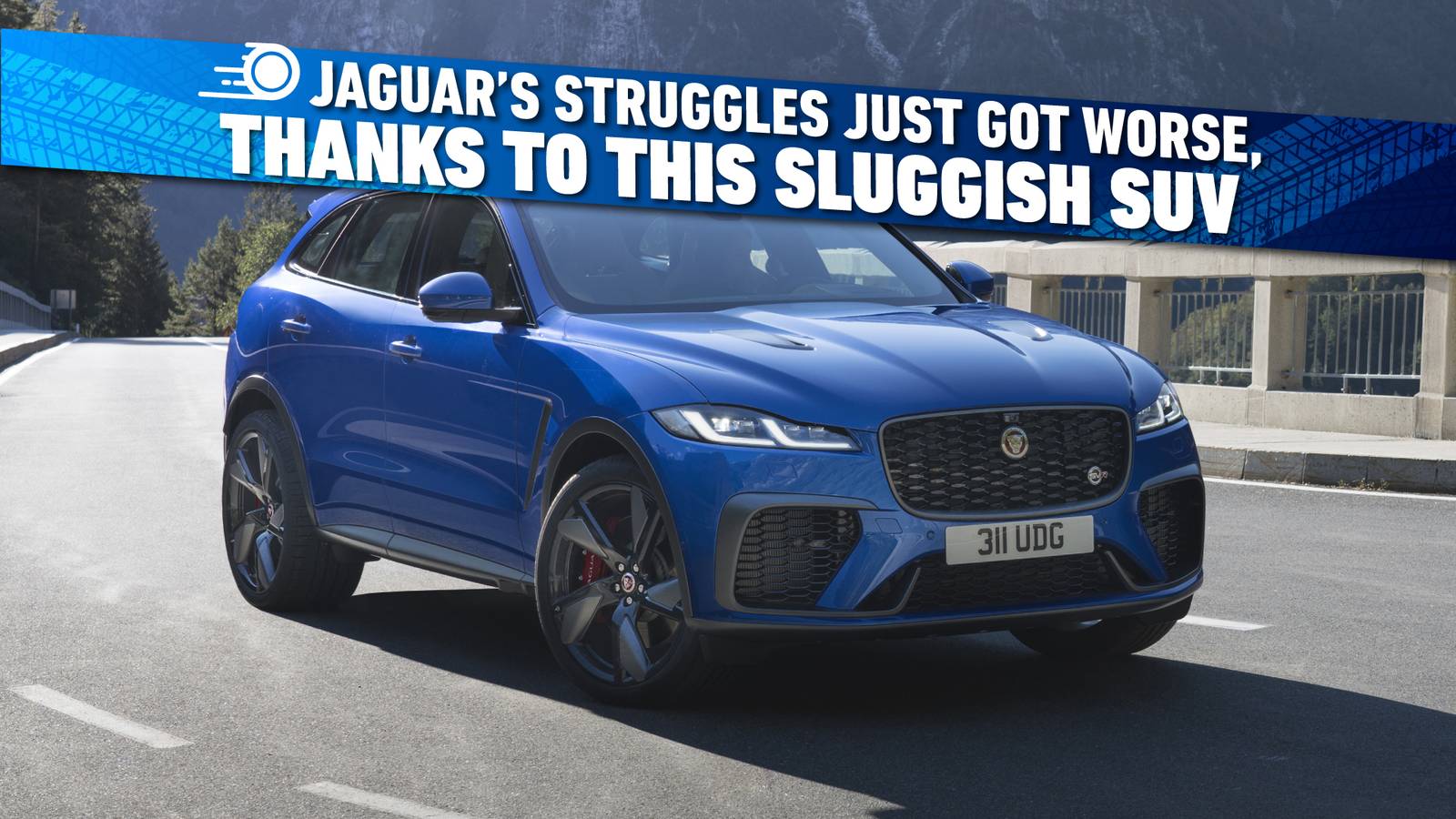
Jaguar achieved a grim milestone. A new sales record was set, but it was a record nobody wanted. This iconic British brand, a name once synonymous with sleek speed and effortless luxury, just confirmed its position at the very bottom of the US market. The hole they were already in suddenly got deeper.

The Inventory Stranglehold

The sluggish SUV, the Jaguar F-Pace, is currently the brand's only model still in production.

It is now the worst-selling vehicle in the entire US market. The numbers are blunt; they tell the whole depressing story. Over the last 45 days, US dealers managed to move a mere 304 units of the F-Pace, a vehicle starting around $70,000. It is a slow, painful drip.

Meanwhile, the available stock piles up.

There are currently 2,511 new F-Pace SUVs sitting on dealer lots across the nation. Based on this excruciatingly slow rate of sale, it will take 372 days—more than a full calendar year—to sell the current inventory. This inventory glut is crippling. It forces depreciation. It strains dealer financing. The cars are aging while they wait.

The Ghost of Coventry

This descent into commercial irrelevance has been decades in the making.

The once-great brand decayed visibly, often chasing fleeting market demands rather than trusting its own identity. Anyone who has driven a properly sorted XJ6 from the early 1970s understands the magic that was lost. Merely gazing at the flowing lines of an E-Type at sunset was enough to grasp it. Jaguar cars transcended mere mechanical specifications; they traded on a personality few rivals could touch, even with cutting-edge technology. And then they simply threw that core essence away.

Now, the identity crisis is complete.

It is genuinely difficult to confirm if they are manufacturing the F-Pace at all. Production was scheduled to cease by the end of 2024, but subsequent cyberattacks earlier this year introduced confusion regarding timelines. The baffling strategy? They are cutting the cord on their remaining gasoline vehicle lineup with the promise of relaunching in 2026 as a pure EV marque, focusing only on very expensive models.

This is a confusing move. They are stopping the only car that provides revenue, promising an elite future that may never arrive.

The Dealer Dilemma

Jaguar's struggles are not theirs alone. The business structure is critical here. Jaguar is part of JLR, or Jaguar Land Rover. They share resources: R&D, manufacturing, logistics, sales, and aftermarket support are all intertwined.

The US operations rely on 349 franchises, most of which are dual-branded, selling Land Rover alongside Jaguar.

But every brand must carry its own weight. A dealership's profit margin is not primarily built on the thin margin earned from selling a new car. The true money resides in the associated finance packages and, critically, the continuous revenue stream from aftermarket service and spares.

To earn that essential service money, the dealership must first sell the car. When Jaguar sales plummet—just 304 units in 45 days across 349 locations—the entire service machine starves. This sales stagnation risks collapsing the financial backbone of hundreds of dealers relying on the new car sales engine to fuel their long-term service profits.

The machine is stalling.

The automotive industry is facing a significant downturn in sales, with many major manufacturers reporting declines in recent months. According to a report from TopSpeed, the global car market has experienced a slowdown in demand, resulting in a substantial decrease in sales figures. This trend is attributed to various factors, including economic uncertainty, rising fuel prices, and a shift towards environmentally friendly alternatives.

As the industry struggles to adapt to changing consumer preferences, many carmakers are being forced to reevaluate their product lines and marketing strategies.

The decline in sales has also led to a surge in inventory levels, with dealerships and manufacturers alike struggling to move unsold vehicles off their lots.

TopSpeed notes that some manufacturers are responding by offering attractive incentives and discounts to customers, in an effort to stimulate sales and clear out excess inventory.

The impact of the sales slump is being felt across the industry, with some manufacturers reporting declines of up to 20% in recent months.

As the market continues to evolve, carmakers will need to innovate and adapt to changing consumer demands in order to remain competitive. This may involve investing in electric and hybrid technology, as well as exploring new sales channels and marketing strategies to reach a wider audience.

◌◌◌ ◌ ◌◌◌

Jaguar is in a hole, and that hole just got deeper when the brand broke a new sales record. The Jaguar F-Pace, the only model currently in ...
Here's one of the sources related to this article: Check here

The Elusive Presence of Motorcycles on the Road: A History of Lighting Challenges and Innovations

The largest challenge, the enduring physical dilemma of the motorcycle's illumination, is not generating light—that is merely engineering solved by tungsten filaments and subsequent gallium nitride chips. It is achieving volumetric presence. The narrow profile of the machine—a sliver moving through space—fails to offer the depth perception necessary for other drivers to accurately gauge speed or distance. Headlamps on a motorcycle risk becoming a single, dimensionless point of brightness, rather than an object approaching. It is the existential predicament of being easily missed, swallowed whole by the specter of oncoming light and the illuminated chaos of the urban sprawl. The necessary compromise is always visibility versus glare, a regulatory tightrope walk.

The history of this required brilliance is one of fragile physics and increasing voltage. Early carbide lamps, spitting volatile acetylene flame, were less about seeing and more about declaring one's dangerous trajectory in the night. The transition to electric lighting was hindered by the meager output of early dynamos, forcing manufacturers into the tyranny of the small battery and the dim glow of low-wattage bulbs. For decades, the headlamp was a necessary drain, an unwelcome electrical burden until alternators provided reliable power stability. The introduction of the sealed beam unit standardized intensity, removing the vulnerability of separate reflectors and lenses, but did little to address the psycho-visual reality of the single light source.

Now we deal in LED matrices, intricate arrays that use less current but introduce new problems of heat management and beam pattern accuracy. The regulatory systems wrestle with asymmetry. In many markets, particularly those adhering to ECE standards, the low beam is deliberately offset, throwing more light to the right shoulder—a tacit acknowledgment of the motorcycle's propensity to lean. As the rider angles into a corner, the fixed beam cuts severely into the road, leaving the apex in a momentary darkness. This is the birthplace of advanced, adaptive lighting systems, where internal servos tilt or secondary auxiliary LEDs activate based on gyroscope input. A truly radical approach to managing the lean angle; projecting light precisely where the machine momentarily is not.

* The implementation of Mandatory Daytime Running Lights (DRLs) was a direct regulatory response to the narrow profile problem, focusing not on the rider's view but on increasing the statistical likelihood of being perceived by others during daylight hours. * Many European-specification motorcycle headlamps utilize an asymmetrical dip pattern, projecting slightly higher on the right side to illuminate road signs and the curb edge more effectively than the standard, flat cut-off pattern required in North America. * Adaptive cornering lights, relying on sensors monitoring lean angle and speed, shift the beam axis or activate supplemental lamps. A technical recognition that traditional fixed lighting fundamentally fails the physics of cornering. * The voltage instability common in older, unregulated systems was often mitigated by running the headlamp in series with other circuits, ensuring that voltage spikes—a real danger—did not instantly vaporize the filament.

Bentley Unveils 2025 Remembrance Car Honouring Colleagues Lost 85 Years Ago

Bentley has unveiled a one-of-a-kind Bentayga EWB Azure created to mark Remembrance Day 2025. The bespoke SUV honors the 17 colleagues who lost their lives 85 years ago during a bombing over the Rolls-Royce and Bentley factory in Crewe and pays tribute to all who have served in the Armed Forces.

The design was developed by Bentley's in-house team, with input from its BeReady network, a group that supports veterans and reservists within the company.
According to Bentley's Director of Design, Robin Page, the annual Remembrance Car project remains one of the team's most meaningful undertakings.

Each element of this year's design reflects remembrance and gratitude, from the metallic-gold accents to the poppy embroidery stitched into the interior. The car's styling draws inspiration from the Battle of Britain while emphasizing the legacy of the people who helped power the Merlin Aero Engine during the war years.

This initiative also highlights the work of Bentley's BeReady network, one of five internal Diversity, Equity, Inclusion and Belonging groups. The network gives veterans and reservists a community within Bentley and leads the company's efforts to recognize and support the Armed Forces Covenant, for which Bentley recently earned silver status in the UK. After its debut in Crewe, the 2025 Remembrance Car will make appearances across the UK as part of local commemorations.

It will serve as the course car during the Race of Remembrance in Anglesey, an event organized by Mission Motorsport to unite service members and the wider community in reflection. The car will return to Bentley's headquarters for the 11 November remembrance observance and later appear at the Lord-Lieutenant of Cheshire Awards, continuing Bentley's tradition of honoring sacrifice through craftsmanship and community.

Related materials: Check here

The Intricate Relationship Between Engines and Gearboxes

The combustion engine, designed for speed and singular purpose, spends most of its operational life deliberately struggling, generating kinetic energy that must be immediately strangled and redirected by its necessary mechanical partner, the gearbox. This fundamental relationship is not harmonious; it is a calculated negotiation built upon the engine's severely limited usable powerband. Consider a four-cylinder mill, roaring away, capable of 7,000 revolutions per minute, yet providing sufficient twisting force to move a heavy vehicle only within a slender band between 2,500 and 5,500 RPM. The gears exist solely to translate this narrow window of optimal effort into the vast range of speeds—from creeping through a parking lot to highway velocity—required by the driver. It is an extraordinary compromise.

The critical failure point in this dynamic is the engine's relentless desire for high RPMs, where it is often loudest but least efficient in translating fuel into forward motion. The transmission, particularly in a manual system, becomes an apparatus of temporary control, utilizing specific lever ratios to artificially increase the effective torque delivered to the wheels. This is why the initial selection, first gear, must be radically high in ratio—often 15:1 or 20:1—so that a relatively weak rotation from the engine can overcome inertia and mass. The shift itself is an intimate moment of engineering, requiring the momentary matching of the differing rotational speeds between the output shaft and the engaged gear—a task performed by the synchromesh rings. They wear down, these little brass components, simply because the driver demands a smoothness that physics initially denies them.

The contemporary eight-speed automatic transmission, heavy and complex, is an admission of failure in the inherent design of the internal combustion engine. The necessity of stacking so many ratios—two or three more than were deemed necessary decades ago—is to ensure the engine rarely, if ever, leaves its most fuel-efficient zone, even during acceleration. We have designed engines that are marvelous at power production at peak RPM, then layered astonishing mechanical complexity onto them just to mitigate the energy wasted when they are asked to operate slightly outside that optimum. The sheer nerve of it. The way a continuously variable transmission (CVT), with its adjustable pulleys and belts, eliminates traditional fixed ratios altogether, often sacrifices the tangible, satisfying feedback of escalating engine speed. It feels liquid, yes, but often hollow.

Torque Multiplication The essential function of the gearbox is not speed management, but torque multiplication. Low gears amplify the engine's twisting force, making movement possible; they are leverage mechanisms, not speed mechanisms.
The Differential Split Before power reaches the driving wheels, the differential gearset must account for the difference in rotation speed between the inner and outer wheel when turning. Without this final set of bevel gears, the wheels would fight against each other, making cornering mechanically impossible.
Gear Materiality Manual transmission gears are overwhelmingly crafted from high-strength alloy steel, meticulously heat-treated, operating under hypoid oils that are designed to protect against the immense sheer forces encountered at the meshing faces of the helical-cut teeth.
Flywheel Dampening The flywheel, heavy and attached directly to the engine output, does more than provide inertia for smooth idling; it absorbs the erratic pulses of combustion explosions, delivering a smoother, more continuous rotational force to the input shaft of the transmission.

Thursday, November 13, 2025

Serious Crash On State Highway 73 Near Kirwee

What if the familiar hum of the West Coast Road, State Highway 73—a ribbon of commerce stretched across the Canterbury Plains—was irrevocably silenced just after eight o'clock? That precise moment when the routine accelerates: the delivery truck completing its route, the utility vehicle navigating the morning light.

The routine ruptured. The inescapable velocity of two vehicles meeting near Kirwee, demanding an immediate, total cessation of normalcy.

The call came through to Fire and Emergency NZ moments after the impact. A notification of collision, truck and ute, requiring urgent, complex intervention. It wasn't simply a matter of local response; it was the activation of a regional machine.

Crews were dispatched from Darfield, a short but crucial distance away, converging with the Kirwee units already mobilized—a swift, disciplined response across the flat terrain. Police arrived. Hato Hone St John personnel began their systematic deployment; not just a single response, but a layered, meticulous structure dedicated to extreme necessity.

The scale of the mobilization exceeded the expectations one might typically associate with a crash in a small locale.

Hato Hone St John sent resources demonstrating specialized precision: a first response unit, immediately on scene. An ambulance, standard equipment for transport stability. But crucially, two rapid response vehicles, the necessary doubling of capacity, guaranteeing simultaneous critical care. Above the patchwork fields and fences, the helicopter ascended, tracing a quick, purposeful route toward the scene—that distinct sound of rotor blades signaling the highest level of aid is en route.

Formal protocols engaged swiftly.

The Serious Crash Unit—investigators trained in forensic reconstruction, determining speed, trajectory, the physics of impact—was advised. Their involvement signals that the closure of SH73 would not be fleeting. The New Zealand Transport Agency (NZTA) confirmed the necessity of blocking off the route, specifically west of Ansons Road, carving a temporary, hard boundary into the traffic flow.

Emergency services work within that isolated, critical zone. The assessment proceeds, detailed and slow. An indeterminate period of closure imposed upon the rhythm of the road.

**

Incident Highlights


Time of Notification Just after 8:00 a.m.
Location Specificity West Coast Rd, State Highway 73, near Kirwee (west of Ansons Rd).
Specialized St John Deployment Included a first response unit, an ambulance, two rapid response vehicles, and a rescue helicopter.
Formal Investigation The Serious Crash Unit (SCU) was notified, indicating a detailed forensic examination of the scene is required.
Responding Agencies Fire and Emergency NZ (crews from Darfield and Kirwee), Police, Hato Hone St John, NZTA.

Image
Fire and Emergency NZ said they were notified just after 8am of a crash involving two vehicles on West Coast Rd, State Highway 73, near Kirwee.
Related perspectives: Check here

# The Choreography of Coordination

The largest challenge, and the defining characteristic of the manual transmission, is the absolute rigor of kinetic management. This is not simply about operating an apparatus; it is about merging human timing with industrial physics.

For the uninitiated, the process appears a ballet of confounding complexity, the left foot tasked with managing the single most crucial transition point in the drive—the clutch engagement. This friction disc, responsible for bridging the rotating engine to the stationary transmission input shaft, requires a precise, almost monastic discipline. Too swift, and the engine stalls, a shuddering rebuke that confirms immediate failure; too hesitant, and the clutch disc scorches, a distinct, acrid scent of expensive error drifting through the cabin. It demands attention.

The driver must simultaneously register the engine's auditory feedback, calculate the necessary rotational speeds for the next gear ratio, and execute the gear lever throw—all while modulating the accelerator and sensing the cryptic "biting point" where power is truly transferred. This complex, interdependent sequence is the initial barrier. Modern automatic systems have diligently engineered away this requirement, prioritizing smooth, uninterrupted momentum. But the manual driver seeks exactly that interruption, that moment of intellectual and physical requirement.

The Intimate Machinery

The enduring appeal of the geared car lies in its transparency. The driver is not commanding a sealed, algorithmic black box; they are manipulating a discernible, internal structure. Shift gates, whether the traditional, satisfyingly mechanical H-pattern or the more competitive dogleg configuration, are a testament to tangible engineering. The shift lever, heavy or light, connected by rods or cables, is a direct extension of the pilot's will into the car's core.

Consider the synchromesh—the component that often mystifies new students of the manual transmission. It is not enough to simply slide the gear teeth together; they must first be rotating at the same speed. The brass synchro rings are tiny, tapered clutches that equalize rotational speeds within the gearbox before the dog teeth can lock, avoiding the grating, brutal noise of a missed shift. The mechanical necessity of this brief, perfect alignment lends the transmission a unique, almost sentient quality. The car will not tolerate sloppiness. The relationship becomes reciprocal, requiring respect for the machinery's precise limitations.

The Synesthesia of the Drive

Driving a manual car transforms a commonplace journey into a sensory engagement, a form of low-level operational performance art. The experience is acutely synesthetic. The changing angle of the foot on the throttle corresponds immediately to the rise and fall of the engine note. The cool aluminum heft of the shift knob—sometimes knurled, sometimes smoothly finished—is a tangible anchor point. The vibration felt through the seat, the pedal, and the wheel clarifies the engine's instantaneous workload.

When the shift is executed with precision—the engine revs perfectly matched, the clutch released smoothly, power reapplying instantly—there is a profound and unique psychological reward. This specific form of instantaneous feedback is difficult to replicate. It is the distinction between listening to music and performing it. The driver is no longer merely a passenger choosing a destination. They are an essential functional component, a required circuit element in the kinetic equation. That connection. The subtle, specific pressure required to downshift effectively before a tight corner, the calculated double-clutching technique employed solely for mechanical sympathy. It creates a subtle, powerful bond between the operator and the artifact, a connection often lost in the silent, seamless efficiency of automated technology.

# The Spark of Invention: 1895 and Beyond

The contrast is immediate, almost jarring. Consider the silent, sculpted lines of a modern commuter e-bike, gliding effortlessly past traffic on a path smoothed by silicon chips and aerospace-grade aluminum. It is a machine of elegant efficiency, powered by lithium chemistry—a battery pack easily concealed, promising thirty miles of range with minimal rider effort.

This sleek reality obscures a chaotic, forgotten birth. Go back to the late 19th century, to the era when electricity was still a volatile, novel force, housed in workshops choked with coal smoke and the heavy odor of sulfuric acid. The pioneers of electric two-wheeled transportation faced not elegant concealment, but brutal, physical engineering challenges. Their ambition was immense. Their power source? Lead-acid batteries. The lead-acid burden. Imagine the inventor's despair, calculating the true cost of hauling eighty pounds of dense metal just to achieve a few miles of powered assistance. That heavy chemistry kept the dream tethered, nearly silent, for over a hundred years.

The true history of the e-bike begins not with corporate research but with singular, determined men applying nascent technology to a familiar chassis. The paper trail reveals the early champions.

In December 1895, a critical blueprint was sealed. Ogden Bolton Jr. of Canton, Ohio, filed US Patent 552,271. His machine was revolutionary, bypassing the complexities of chains and gears entirely. Bolton envisioned a direct-current brush-type motor mounted entirely within the rear wheel hub—an integrated design concept remarkably similar to those celebrated a century later. Bolton's invention offered two primary battery options—six or ten volts, indicating a low-power system designed for propulsion assistance, not pure velocity. The earliest hub drive. It was pure vision, constrained only by the appalling weight of his required energy supply.

Two years later, in Boston, the concept evolved. Hosea W. Libbey secured US Patent 596,727 for his "Electric Bicycle." Libbey, anticipating the need for mechanical synergy, detailed a motor mounted on the crank axle, driving the pedals. This placement, effectively a rudimentary mid-drive system, highlighted a crucial, empathetic understanding: riders needed assistance at the point of maximum mechanical leverage. Libbey was designing for hills, for sustained effort. He was designing not just a transportation device, but a solution to physical fatigue.

The Quiet Competition of Early Power

The technological environment of the 1900s was intensely competitive. Electric transportation fought daily battles against the rapidly developing internal combustion engine. Electric vehicles were quiet, clean, and reliable starters, but their range was crippled by battery limitations. The early electric bicycle, often blurring the line with the electric motorcycle, faced this inherent disadvantage.

One of the unique solutions emerged in 1901. French inventor Michael Pericles Pederson designed an electric bicycle that focused on modularity and adaptability. His design featured quick-disconnect terminals, allowing the rider to easily swap out heavy battery packs—a rudimentary approach to range extension that foreshadowed modern swappable systems. Yet, even with these efforts—the clever integration of Bolton, the mechanical empathy of Libbey, the modularity of Pederson—the electric bicycle remained largely impractical. The energy density required for true freedom simply did not exist. The materials were wrong.

The Lithium Revelation

The long slumber of the e-bike was broken not by a new chassis design, but by a chemical breakthrough. The invention of the rechargeable lithium-ion battery in the 1970s and its commercialization in the early 1990s redefined what was physically possible.

Suddenly, the weight barrier collapsed. A power source that weighed five pounds could deliver the energy output that previously required fifty. This shift in chemistry was the key that unlocked Bolton's century-old hub design and validated Libbey's concept of mid-drive assistance. The high energy-density of Li-ion meant reliable range, quick recharging, and, crucially, a package small enough to integrate discreetly into the bicycle frame.

It was not a new invention, but rather the perfection of the supporting technology. The concept had always been viable. It just needed the right energy source to realize the dreams sketched on century-old patent papers. The whisper of the modern electric motor is the echo of those struggling, brilliant engineers who knew the secret of electric mobility, but lacked the perfect vessel to carry it. The dream finally delivered.

Slate Auto's Electric Pickup Truck: Pioneering Affordable EV Repair And Maintenance

Image

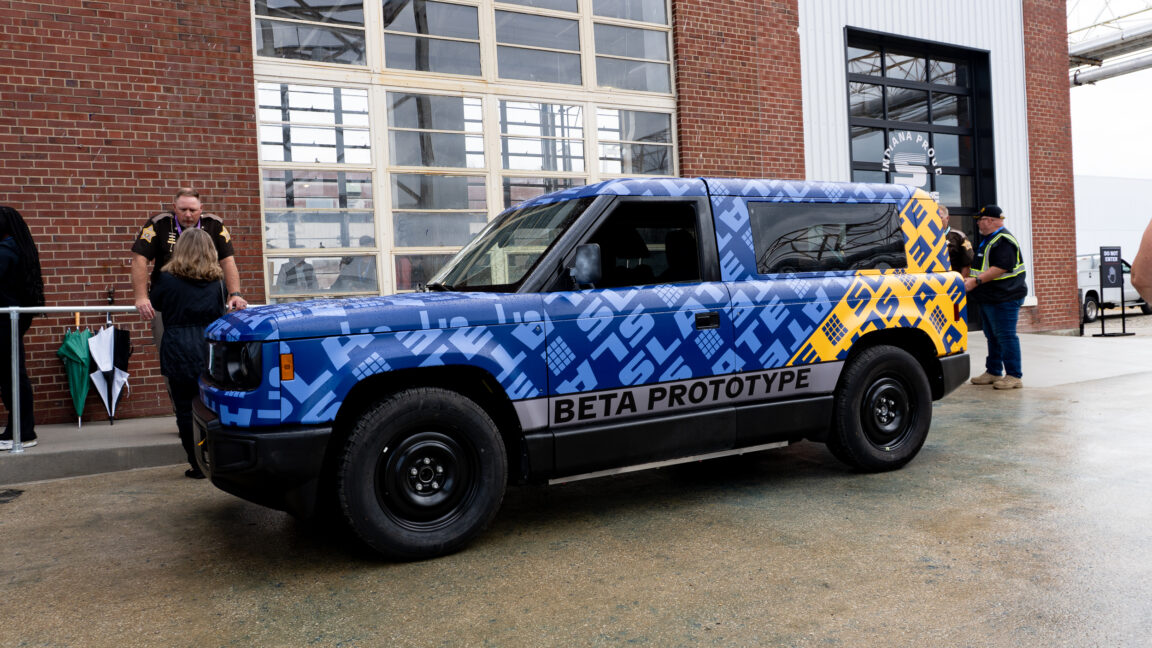
Slate Auto, a company that emerged from stealth mode earlier this year, has made headlines with its compact electric pickup truck, the Slate Truck, priced under $30,000. To achieve this competitive price point, Slate has taken a unique approach, designing the truck with a minimal number of parts - just 600 - and omitting features like paint and an infotainment system.

This strategy is a departure from industry norms, even among major players like Tesla. In addressing a crucial question about repair and maintenance, Slate has partnered with RepairPal, a network of over 4,000 service centers across the US. This partnership, announced by Slate's Chief Commercial Officer Jeremy Snyder, aims to provide customers with peace of mind and empower independent service shops to offer accessorization and service.

RepairPal locations will be able to install Slate's planned accessories, such as a kit to convert the pickup truck into a crossover. Select RepairPal sites will be equipped to work on the Slate's high-voltage powertrain. In another significant development, Slate has secured access to the Tesla Supercharger network for its customers.

Given that the Slate Truck features a NACS port, no adapter will be required, making charging more convenient.

The burgeoning electric vehicle (EV) industry has brought forth a multitude of considerations, one of which is the realm of repair and maintenance. As EVs continue to proliferate, concerns about the standardization of repair protocols and the infrastructure supporting them have grown. A report by the International Council on Clean Transportation (ICCT) highlights the need for automakers to prioritize repairability and transparency in their EV designs, citing the benefits of reduced waste and lower costs for consumers (ICCT, 2022). A key aspect of EV repair is the handling of high-voltage batteries, which require specialized training and equipment.

The National Institute for Automotive Service Excellence (ASE) has developed certification programs for technicians working with EVs, ensuring that they possess the necessary skills to safely and effectively diagnose and repair these complex systems (ASE, 2020). Some manufacturers, such as Tesla, have established their own networks of authorized service providers, while others have opted for partnerships with independent repair shops.

The proliferation of EVs has also spurred innovation in the realm of repair and maintenance.

Companies like RightHand Robotics are developing advanced robotic systems designed to streamline and improve the efficiency of EV repair processes (RightHand Robotics, 2022).

• • • •

Earlier this year, Slate Auto emerged from stealth mode and stunned industry watchers with the Slate Truck , a compact electric pickup it plans to ...
Looking to read more like this: See here

Rivian's Affordable EV Launch And The Future Of The Electric Vehicle Market

Image

Rivian, an American electric vehicle (EV) manufacturer, has been making waves in the automotive industry since its inception. Led by CEO RJ Scaringe, the company had one of the world's biggest Initial Public Offerings (IPOs) in recent history, with shares rising as much as 53% in its Nasdaq debut (Source: [1]). Rivian's current product lineup includes the R1T electric full-size pickup truck and R1S full-size electric SUV, which have saved attention for their impressive specs.

However, their high sticker prices, exceeding $70,000, make them unattainable for many drivers (Source: [2]). The company's new affordable EV, the Rivian R2, is expected to challenge Tesla's popular Model Y in 2026. According to Rivian, the R2 midsize electric SUV will start at around $45,000, making it a more affordable alternative to its first models (Source: [3]). The R2 and R3 electric SUVs will include many of the same tech features and capabilities that earned the admiration of auto enthusiasts.

Tesla, for instance, originally manufactured high-priced performance luxury electric vehicles like the Tesla Roadster, before launching more affordable models like the Model Y and Model 3 ← →

The electric vehicle (EV) market has experienced significant growth recently, driven by increasing consumer demand for environmentally friendly and sustainable transportation options. According to a report by the International Energy Agency (IEA), global EV sales reached 2 million units in 2020, up from 550,000 units in 2016 (Source: [1]). This growth is expected to continue, with many countries investing heavily in EV infrastructure and incentivizing consumers to adopt electric vehicles.

In the United States, for example, the federal government offers a tax credit of up to $7,500 for the purchase of an EV, while many states offer additional incentives, such as rebates and exemptions from certain fees (Source: [2]). One of the key trends driving growth in the EV market is the increasing competition among automakers.

As more companies enter the market, prices are expected to decrease, making EVs more accessible to a wider range of consumers.

According to a report by BloombergNEF, the average cost of EV batteries decreased by 87% between 2010 and 2020, making EVs more competitive with internal combustion engine vehicles (Source: [3]). This trend is expected to continue, with many automakers announcing plans to invest heavily in EV technology and production.

◌◌◌ ◌ ◌◌◌

Rivian (NASDAQ: RIVN) is one of the few American car manufacturers aside from Tesla that exclusively produces EVs.
Related materials: Visit website

# How to Navigate the Mobility Fracture 1. Re-evaluate the Concept of Range.

I admit it. I made a profound miscalculation regarding the sheer velocity of the transition. We conceptualized the shift toward autonomy and electrification as a slow, gradual curvature—a decades-long phase-out of the internal combustion engine. This was incorrect. What we are witnessing is not a curve; it is a fracture.

The vehicle of the 21st century is no longer a machine built around the transfer of mechanical force. It is a highly optimized, mobile server farm, encased in carbon fiber and programmed for efficiency. To prepare for this new epoch of mobility, one must understand that the primary currency has shifted from petroleum to petaflops. Your personal transport is rapidly evolving into a sentient node, constantly processing environment and driver intent.

For decades, the metric was the size of the fuel tank. That metric is defunct. The new anxiety is not merely *range anxiety*—the fear of a depleted battery—but *infrastructure anxiety*. How quickly can the stored energy be replenished? Solid-state battery technology promises radical energy density improvements, challenging the traditional constraints of lithium-ion chemistry, yet widespread deployment remains constrained by material science and manufacturing scale. The critical factor is thermal management. A system that can maintain optimal battery temperature is intrinsically more valuable than the motor it powers. Understand the difference between kilowatt-hours and actual miles attainable under varied climate and load conditions. The manufacturer's stated range is often a numerical fantasy. The true figure lies in the efficiency of the charge acceptance rate. Investigate the 800V architecture systems; they are the key to minimizing charging time, turning a necessary 45-minute stop into a 15-minute pause.

2. Understand the Ethical Calculus of Autonomy.

Levels 4 and 5 autonomy—the removal of the need for human intervention—are defined not just by sensor suites, but by decision matrices. The psychological barrier of relinquishing control is legitimate. People trust steel more than silicon. The system uses Lidar, Radar, and sophisticated camera arrays, fusing these inputs to construct a dynamic digital model of reality. But who programs the priority? The infamous trolley problem, once a philosophical exercise, is now digitized, built directly into the firmware. When facing an unavoidable incident, the vehicle's operating system must make an instant, ethical judgment call regarding asset protection: prioritize the occupants, the surrounding infrastructure, or pedestrian safety? Learn where your chosen vehicle manufacturer places its moral priority. It is not an abstract query. It is a pre-determined outcome.

3. Recognize the Paradigm of Access over Ownership.

The fundamental definition of private ownership is dissolving. In dense urban areas, Mobility as a Service (MaaS) platforms will render private vehicle possession economically irrational. Why shoulder the cost of depreciation, insurance, and the astronomical fee of downtown parking when a fleet of autonomous, dynamically routed vehicles can deliver you within moments? This shift necessitates a complete restructuring of the urban core. Massive, empty parking garages. A forgotten infrastructure. The next generation of travelers will subscribe to mobility, not purchase an asset that depreciates upon exiting the dealer's lot. Your task is to analyze your usage patterns. If your vehicle sits idle more than 95% of the time, you are subsidizing inefficiency. Prepare for data liquidity.

**

Key Preparation Highlights

* Prioritize Thermal Management
Study the specific battery cooling and heating mechanisms of any electric vehicle considered. This is the long-term integrity factor.
Decipher the Sensor Stack Learn the difference between passive camera vision (reliant on machine learning) and active Lidar/Radar mapping (reliant on direct measurement). Reliability hinges on redundancy.
Analyze Insurance Metrics Anticipate actuarial science shifting from assessing driver risk to assessing software risk. The liability rests on the code, not the human operator.
Evaluate Subscription Potential Calculate the true cost of asset depreciation versus the cost of MaaS subscriptions in your metropolitan area.
Identify Charging Capacity The infrastructure bottleneck remains real. Do not focus solely on miles per charge, but on miles added per minute of charging.

Wednesday, November 12, 2025

Lucid Group Accelerates Autonomous Vehicle Development With NVIDIA Partnership

Image

It wasn't enough to just build a slick electric sedan, low-slung and humming across the desert highways of Arizona. The machines must now build the machines. Lucid Group, based in Casa Grande, decided that sheer speed wasn't the only metric; they needed smart speed. This new partnership with NVIDIA isn't just about the computer chip under the hood of the car.

It's about the silicon inside the very walls of the Advanced Manufacturing Plant. They are installing the kind of digital intelligence that promises to reinvent how vehicles assemble. Predictive analytics, a cold, necessary logic, will optimize supply chain flow. Intelligent robotics—metal hands calculating stress points and predicting equipment failure before the human eye even registers the tremor.

The stated goal is a straightforward corporate mantra: accelerate production, reduce costs. The quiet period before the November 5th earnings call, a standard procedure, shielded officials from discussing how this technological shift impacts the human employees currently scaling up production, who recently launched a second shift for the incoming Lucid Gravity SUV.

The driverless dream, that high-stakes gamble every luxury automaker seems willing to take, compels the next step.

Lucid joins the growing cavalcade, aiming squarely for a fully autonomous vehicle for private consumers. Not just fancy driver assistance features, but the real deal, relying on NVIDIA's autonomous driving infrastructure to power self-driving features in several upcoming models. The shift is systemic; the vehicle evolves into what NVIDIA CEO Jensen Huang termed a "software-defined supercomputer on wheels." This partnership, in the words of Lucid CEO Marc Winterhoff, is intended to produce the "smartest and safest" autonomous vehicles on the road.

Tesla's long shadow remains. Mercedes-Benz entering the fray. Lucid asserts its position in this rapid technological competition, striving to uphold American innovation leadership in autonomous mobility, cementing the luxury proposition squarely within the realm of the algorithm.

**

Key Developments at Lucid Group


Autonomous Goal Lucid aims to develop a fully autonomous vehicle for regular consumers, utilizing advanced NVIDIA architecture.
Factory AI Integration Deployment of artificial intelligence at the Arizona facilities.

Intelligent robotics. Predictive analytics for efficiency.
Production Scaling The Casa Grande plant recently initiated a second manufacturing shift to increase output for the Lucid Gravity, a full-sized electric SUV.
Competitive Landscape Lucid joins automakers including Tesla and Mercedes-Benz in the pursuit of privately owned autonomous vehicle technology.

The hum of electric motors, a gentle whisper of progress, as autonomous vehicles glide effortlessly across the landscape. The marriage of autonomy and electric powertrains, a union that promises to revolutionize the way we move. In this brave new world, the internal combustion engine, with its noxious emissions and clunky mechanics, is a relic of a bygone era.

As the technology continues to advance, the possibilities seem endless.

Imagine a future where vehicles navigate congested city streets with ease, their advanced sensors and AI-powered brains working in tandem to avoid accidents and optimize traffic flow. The environmental benefits are clear: a reduction in greenhouse gas emissions, a decrease in air pollution, and a quieter, more peaceful urban environment.

Companies are investing heavily in the development of autonomous electric vehicles, with many expecting them to become a reality on public roads in the near future.

The impact on society will be profound. No longer will we be tied to the drudgery of driving, our time freed up to pursue more leisurely pursuits. The elderly and disabled, once confined to their homes, will be able to move about with ease, their independence restored.

The autonomous electric vehicle, a symbol of innovation and progress, is poised to transform the way we --- and ← →

• • • •

Lucid Group aims to develop a fully autonomous vehicle for private use and introduce artificial intelligence in its factories via a new partnership ...
You might also find this interesting: Check here

The Electrification of Work: How EVs Are Transforming Corporate Routines and Energy Management

The faint, persistent hum emanating from the Level 2 charging stations often seems to be the quietest sound in the corporate parking structure, an acoustic reminder of energy being carefully transferred, a measure of preparation for the next day's duties. This integration of the electric vehicle into the working life is not merely a technological upgrade but a subtle reorganization of professional routines and expectations. The requirement for reliable, sustained energy has introduced a new metric to the workday, shifting the traditional anxiety of the empty fuel tank to the more prolonged, silent negotiation for access to shared power resources.

The logistics of workplace charging present unique operational challenges far removed from simple wall outlets. Corporations are increasingly required to adopt robust load management systems—software that intelligently distributes a finite electrical capacity across numerous vehicles without overloading the building's power grid. This technical necessity transforms facilities management into a nuanced exercise in energy arbitration, ensuring that the marketing manager needing a top-up for a client visit receives adequate power without tripping the breakers that serve the finance department. There is, consequently, a newfound professional etiquette surrounding the charging port: the silent agreement on unplugging a fully charged vehicle for a waiting colleague, or the specific use of internal communication channels to announce a spot opening. This quiet dance of resource sharing is a vital, if unwritten, component of modern office cooperation.

For the field professional—the engineer visiting multiple sites or the sales representative traversing vast distances—the EV fundamentally alters the pacing of their work. The time previously allocated to stopping for fuel is now often assimilated into other tasks: a passive top-up during a lengthy client meeting, or an overnight charge at a strategically chosen hotel. This shift demands foresight, requiring the worker to integrate charging station availability into the critical path of their scheduled appointments. Furthermore, many companies now integrate telematics and specific fleet management software that not only monitors battery state but also guides drivers toward discounted charging networks. This technological oversight transforms the professional vehicle from a mere tool of transport into a highly managed node within the corporate energy ecosystem, optimizing routes based on kWh usage rather than simply mileage.

The economic motivations for corporate electrification are layered, extending beyond generalized environmental mandates. For many organizations, the shift is driven by the immediate cost reduction associated with eliminating fuel purchase volatility and maximizing government tax incentives and rebates designed specifically for commercial charging infrastructure installation. Furthermore, the capacity to capture and report on Scope 3 emissions (those generated by the value chain, including employee commutes) is a necessary metric for contemporary sustainability reporting, making comprehensive workplace charging a strategic asset. The maintenance profile of electric fleets is also significantly lower, often involving only scheduled tire and brake inspections, allowing companies to reallocate maintenance budgets towards specialized diagnostic training for their technical staff.

Highlights of Workplace EV Integration:

Load Management Systems Essential installations that actively balance the power demand of multiple concurrently charging vehicles, preventing localized grid overloads.
"Charging Desks" Specific corporate policies detailing time limits (e.g., four hours maximum on a Level 2 port) to ensure equitable access among employees.
Vehicle-to-Grid (V2G) Pilots Advanced testing in several major utility areas exploring the potential for dormant company fleet vehicles to sell stored energy back to the grid during peak usage hours.
Taxable Benefit Reporting Accurate tracking of energy consumed by employee vehicles on company property is required for regulatory compliance concerning fringe benefits in many jurisdictions.
Silent Commuting Advantage The low operational noise profile of EVs significantly reduces driver fatigue, a specific benefit noted by commercial drivers operating in dense urban environments.

Trucks Carry Uranium Ore From Pinyon Plain Mine Across Navajo Nation

Image

The nuclear uranium mining industry has been a contentious issue for decades, with proponents arguing that it provides a crucial source of fuel for nuclear power plants, which generate a significant portion of the world's electricity (World Nuclear Association, 2022). According to USA TODAY, the industry has experienced a resurgence recently, driven in part by growing demand for clean energy and government initiatives aimed at reducing carbon emissions (International Energy Agency, 2020). However, critics argue that the industry poses significant environmental and health risks, including the potential for radioactive contamination of water sources and soil (Buka, 2016). One of the most significant challenges facing the nuclear uranium mining industry is the issue of waste disposal.

Nuclear waste --- radioactive for thousands of years and requires specialized storage facilities to prevent environmental contamination (Nuclear Energy Institute, 2022). The lack of a comprehensive waste disposal strategy has been a major concern for regulators and communities near mining sites (Federal Nuclear Waste Management, 2019). The industry has faced criticism for its lack of transparency and accountability, particularly in cases where mining companies have been accused of violating environmental regulations and neglecting the health and safety of local communities (Environmental Defense Fund, 2019).

●●● ●●●

TUBA CITY ― Brown Preston was in his early 20s when he and six of his relatives took jobs at a uranium mine in Uravan, Colorado.
Other references and insights: Check here

The Mechanical Poetry of Manual Transmissions

The manual transmission is not merely a torque multiplier; it is an orchestrator of kinetic flow, a calculated mechanical agreement between engine output and differential input, constantly negotiating the persistent physical laws of inertia and friction. This mechanical dialogue hinges fundamentally on the synchronizer, that crucial brass cone clutch tasked with rapidly matching disparate rotational speeds before the dog clutch can physically engage the gear. Precision tolerances here dictate the driver experience—the satisfying *thunk* of a perfect shift, or the grinding, agonizing protest of mismatched revolutions. That sound—a mechanical grievance, a failure of diplomacy between the cones.

Nomenclature in this highly specialized industrial sector rarely aims for poetry; it is functional, often proprietary, and intensely protective. Consider the history embedded within the name ZF, the *Zahnradfabrik Friedrichshafen*—Gearwheel Factory, Friedrichshafen. Pure function translated into a legal corporate identity, the name itself a technical specification. Getrag, similarly efficient in its German abbreviation (Getriebe und Aggregate). Yet, when a piece of engineering transcends the workshop and becomes a marketable component, the corporate identifier often shifts toward the consumer-facing acronym. Porsche's *Doppelkupplungsgetriebe*, a sophisticated dual-clutch system, was immediately branded PDK. The technical abbreviation, precise and legally owned—a powerful marketing tool. Remember the BorgWarner T-10, foundational to early muscle cars. Four forward speeds. The name told you everything essential.

The engineering necessary for quiet operation mandated the shift from highly efficient spur gears—straight-cut teeth, extremely loud, used almost exclusively in racing—to the ubiquitous helical gear profile. This angled tooth profile ensures that two teeth remain in contact momentarily during the transfer of load, dampening the noise. A subtle, necessary concession to human comfort. Sacrificing minor mechanical efficiency for auditory peace. Some early transmissions, like those found in certain 1930s vehicles, lacked the synchro on first gear entirely—a deliberate design choice that demanded a full stop or mandated the complex dance of double-clutching to downshift. A driver's specific skillset was necessary.

Think about the unique character of specific gearboxes—the Getrag 265, often found in high-performance German cars, known for its durable case and internal architecture designed to withstand sustained torque loads. Or the complex reverse gear lockout found in contemporary manual cars, designed to prevent the catastrophic engagement of reverse at speed—not just a software mandate, but a physically blocking pin or solenoid, guarding against human error. The driver's tactile connection is the final legal seal on the contract. That cold, metallic feel of the shifter moving through the gate in an older Ferrari F40—often described as industrial, requiring deliberate, heavy inputs. High pressure systems. Real components communicating their effort through your hand.

Tuesday, November 11, 2025

The Subtle Art of Motorcycle Control

The necessary movement—a precise, quarter-inch rotation—came not from brute force but from a sustained mental negotiation with the throttle's rubber texture. This constant feedback loop, the subtle vibration transmitted from the engine mounting points directly into the palms, dictates the true boundary of ability; it is less about limb function and more about reception. How much mechanical noise can one truly process before the information overwhelms? A conventional rider might never consider the physics of the lever throw, the specific distance required to disengage the clutch plates entirely. It is simply done. Yet, for those transitioning to two wheels, or returning after a critical physical change, this calculation becomes the primary focus.

For those whose ability to modulate the foot controls is structurally complicated—say, the need to manage a traditional gear shift lever or rear brake pedal—the technical solutions are exact, almost clinical. Consider the installation of a left-hand rear brake lever. This conversion, standard on many scooters but customized for a geared motorcycle, requires routing a secondary hydraulic line to the handlebars. The modification repositions a critical braking function, eliminating the need for ankle movement. Furthermore, the adoption of centrifugal automatic clutch systems, such as the widely used Rekluse Core EXP, allows a rider to operate a standard geared transmission without manually engaging the clutch lever during starting or stopping. The lever remains for manual override, but the low-speed stability changes drastically. The machine accommodates the specific physiological need, a reversal of the expected dominance. This conversion fundamentally alters the initial skill requirement: balance is still paramount, but the cognitive load associated with simultaneous modulation of four distinct inputs is instantaneously halved.

The true complexity of 'ability' on a motorcycle often resides in the peripheral, not the central, physical task. It is the management of the optical flow. Riders, regardless of physical constraint, must master the confusing and counterintuitive aspect of target fixation—the unconscious tendency to steer precisely toward the object or hazard that has captured one's gaze. This is not a physical limitation; it is a neurological trick that must be overridden through conscious effort. Furthermore, the sustained attention span required for long-distance travel is a distinct measure of competency, independent of leg strength or hand dexterity. It is often forgotten that the sustained ability to assess rapidly changing surface friction—gravel patches, bridge expansion joints, sudden rain streaks—is arguably the highest form of riding skill. It requires a persistent, demanding form of mental clarity. The body must perform, yes, but the brain must never tire of calculating coefficients.

Harley-Davidson Unveils Bagger World Cup: A High-Speed Racing Series For Heavyweight Cruisers

Image

I confess, I had misjudged the sheer gravity of it. Not just the weight of the steel, all six hundred and seventeen pounds balanced low, but the velocity of the idea itself. A factory-backed declaration that the long-haul cruiser—the machine built for endless highway solace—would now exist solely for high-speed confrontation on the asphalt of global circuits.

Harley-Davidson, at EICMA 2025, pulled back the sheet metal on this vision, dropping the details for the Bagger World Cup. The series, set to launch in 2026, is an unprecedented global venture.

It is dedicated exclusively to these high-performance baggers, enormous beasts that somehow achieve over 200 horsepower. Imagine the strain on the frame, the furious labor required to bring a bike built on the Grand American Touring platform up to speeds exceeding 186 mph. It is confusing, the duality of comfort and merciless speed.

Six rounds. Twelve frantic races in the inaugural season.

The Touring Machine Transformed

The race prototype shown in Italy—a purpose-built Road Glide—wore the official championship logo, an evolution of the iconic Bar and Shield, integrated into an exclusive livery. This machine is a foundation of mass and power, a paradox rolling on specialized tires.

Factory Racing engineered it for nothing less than absolute speed. It moves from touring companion to track weapon, demanding an intense, strange commitment from every rider who dares sling such a weighty, unforgiving thing through a tight apex. The sight of it next to a lean MotoGP machine must be something to behold.

The sheer physical torque.

Kolja Rebstock, H-D's senior vice president for international markets, noted the immediate, almost aggressive uptake by competitors. The announced structure anticipates six to eight teams, hosting twelve to sixteen riders, total. The early agreements meant almost half the grid was committed straight away.

A palpable momentum surrounding this heavy endeavor. A clear signal.

Momentum, Weight, and Velocity

These races will not be standalone events. They will run alongside six MotoGP Grands Prix, placing the rumble and drag of American iron directly adjacent to the pinnacle of lightweight European racing technology.

The heat coming off those engines, the sound reverberating through the paddock. It is a spectacle of weight versus finesse. A necessary, visceral tension. The dedicated focus of the teams. They take this massive structure and make it fly.

Key Series Details
Launch Year 2026
Prototype Reveal EICMA 2025 (Race-prepped Road Glide)
Series Integration Runs alongside six MotoGP Grands Prix.
Total Races 12 (two races per round).
Bike Weight (Approx.) 617 lb.
Power Output Exceeds 200 horsepower.
Top Speed (Projected) Over 186 mph.
Grid Capacity Designed for 6 to 8 teams, 12 to 16 riders.

The Harley-Davidson Bagger Racing Series has taken the motorcycle world by storm, offering a unique blend of high-speed thrills and rugged, American-made machinery. This series, which features specially modified Harley-Davidson touring motorcycles, has captured the hearts of fans and riders alike with its intense competition and raw, unbridled power.

At its core, the series is about more than just speed - it's about the art of bagger racing, where riders push their machines to the limit, navigating treacherous tracks and testing their skills against the best of the best.

From the roar of the crowd to the rumble of the engines, the Harley-Davidson Bagger Racing Series is an experience unlike any other.

Riders from all over the country gather to compete in this adrenaline-fueled spectacle, each one determined to claim the top spot on the podium. With its roots in the rich history of American motorcycle culture, the series has evolved into a premier event that showcases the skills of the world's top riders and the capabilities of Harley-Davidson's legendary motorcycles.

According to "Powersports Business", which provided details on this topic, the series has seen significant growth in popularity over the years, with a loyal fan base and increasing participation from top riders.

◌◌◌ ◌ ◌◌◌

Harley-Davidson announced new details around its Bagger World Cup at EICMA 2025 , revealing the series' official logo, debuting a prototype race ...
You might also find this interesting: Check here

When 'New' Isn't: The Blurred Lines Of Vehicle Titles And Consumer Deception

The pervasive myth in auto commerce—one frequently discussed at the edges of the finance office—is that the value of a vehicle is purely tied to the immediate accumulation of miles. That somehow, the first time the tires rotate off the dealership lot, the car suffers irreparable, intrinsic harm. This reasoning misses the fundamental legal distinction entirely.

A vehicle's designation as truly "new" rests solely on the state of its title. Michigan law holds fast: a car becomes legally "used" the moment it is loaned out, repurposed for dealership service, or titled to anyone other than the eventual retail customer. The argument that manufacturer warranty programs categorize these cars differently for internal service purposes does not negate the necessity of consumer transparency.

It is the simple, core requirement of the sale: disclosure.

The sudden, decisive action taken against LaFontaine Chevrolet Buick GMC was less about a single slip-up and more about the apparent disregard for this clear legal boundary. The Michigan Department of State suspended the license swiftly, citing the immediate danger these alleged misrepresentations posed to customers seeking a genuinely new product.

Nearly thirty vehicles were reportedly involved—cars that had already lived small, bustling lives traversing the local community, carrying hurried travelers, accumulating untold, documented incidents within their service histories. The dealership's claim that this was merely a "paperwork snafu" rooted in "confusing" technical manufacturer loopholes seems weak when juxtaposed against the clarity of state titling law.

A complex industry, yes. But the fundamental contract of trust remains beautifully uncomplicated.

This wasn't their first encounter with regulatory scrutiny. They had already been operating under the weight of probation for previous, lesser violations. The weight of that prior history—a mere $3,000 fine that clearly failed to produce lasting results—likely influenced the rapid move toward suspension.

That sense of betrayal the consumer feels, expecting the certainty of an untouched vehicle, only to find it held a secret past of six months in the loaner fleet. That expectation matters. Furthermore, this pattern extended to affiliated enterprises; only months prior, their sister Hyundai location in Livonia was cited for issues ranging from title errors to inaccurate odometer readings.

The state's requirement is precision. An accurate title. A genuine expectation met.

**

Regulatory Highlights and Confusing Aspects

* The Title Line
Michigan law dictates that any car used as a demonstration or service loaner must be legally categorized and sold as a used vehicle, regardless of low mileage.
The Dealer's Defense LaFontaine claimed confusion over internal OEM (Original Equipment Manufacturer) warranty programs which occasionally label these fleet vehicles as "new" for specific servicing protocols, suggesting regulatory nuance caused the error.
A Precedent of Concern The dealership was already operating under probation following prior violations.

A clear warning unheeded.
Immediate Suspension The state invoked strong measures, characterizing the operation as an "immediate danger" to consumers rather than pursuing a slower civil penalty process.
Family History The sister Hyundai store faced serious allegations related to fraudulent practices, including odometer misrepresentations, underscoring a perplexing, recurring lack of administrative rigor within the broader organization.

Image

The auto industry is one of the most heavily regulated sectors in the world, with a complex web of laws and regulations governing everything from safety standards to environmental impact. As a result, regulatory compliance is a top priority for automakers, who must navigate a constantly evolving landscape of rules and guidelines to avoid costly fines and reputational damage.

According to Yahoo News, recent changes to emissions standards have forced many manufacturers to rethink their production strategies and invest in new technologies.

One of the biggest challenges facing automakers is ensuring that their vehicles meet stringent safety standards, which vary from country to country.

This requires a deep understanding of regulatory requirements, as well as a commitment to testing and validation. Failure to comply can have serious consequences, including costly recalls and damage to a company's reputation. In addition to safety standards, automakers must also contend with regulations governing fuel efficiency, cybersecurity, and environmental impact, making regulatory compliance a daunting task.

Yahoo News reports that some manufacturers are turning to advanced analytics and artificial intelligence to help them stay ahead of the regulatory curve.

Despite the challenges, many automakers are rising to the task of regulatory compliance, investing heavily in new technologies and processes to ensure that their vehicles meet the latest standards.

○○○ ○ ○○○

A massive GM dealer in Michigan just got its lights punched out by state regulators , who claim the place was peddling used-up loaner rides as ...
Other related sources and context: Check here

Featured Post

The Allure of Four-Wheel Drive: A Philosophy of Freedom and the Machine

The Sovereignty of the All-Wheeled Path Gravity demands obedience. When the paved assurances of the city dissolve into the whims...

Popular Posts