
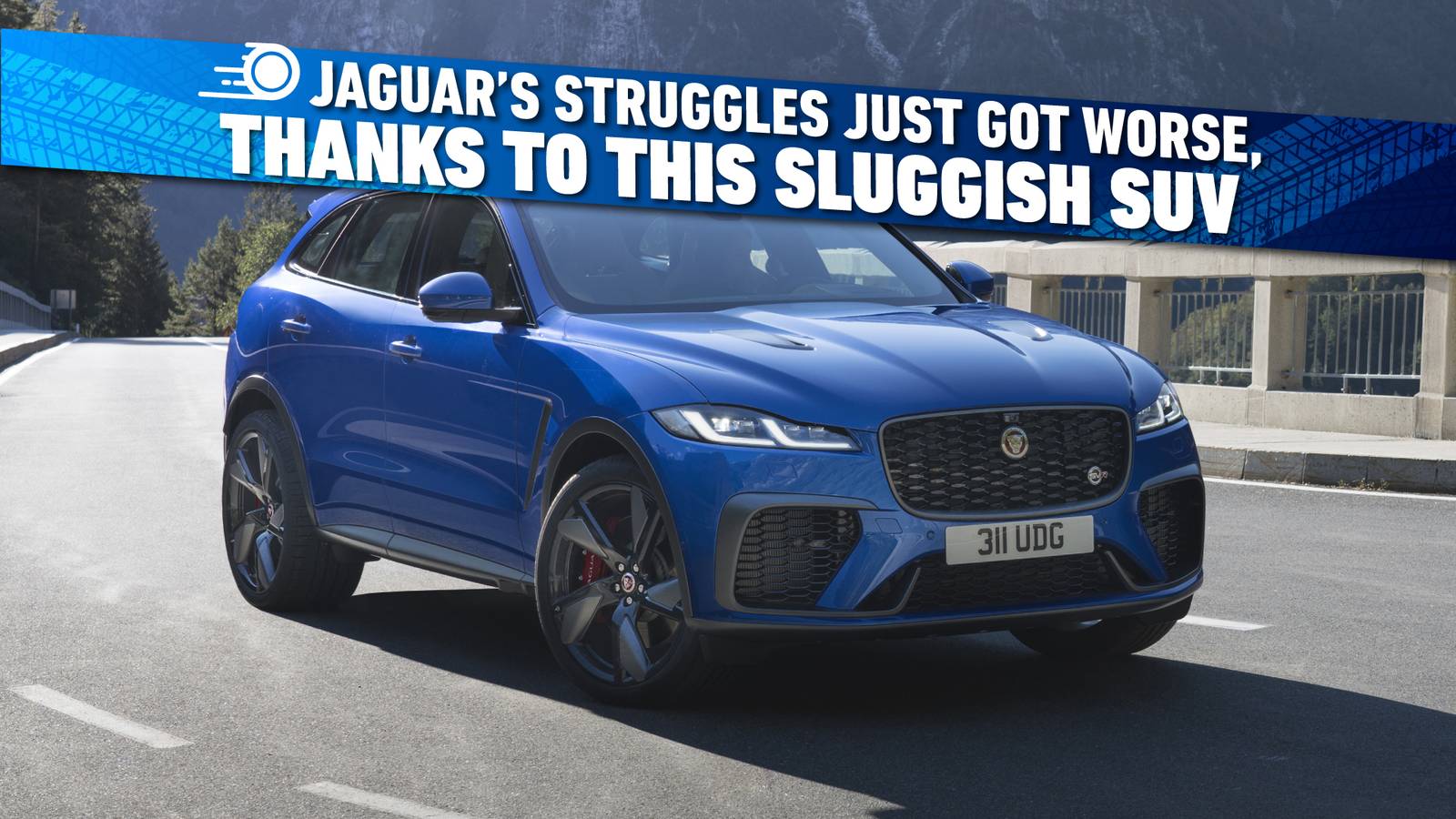
Jaguar achieved a grim milestone. A new sales record was set, but it was a record nobody wanted. This iconic British brand, a name once synonymous with sleek speed and effortless luxury, just confirmed its position at the very bottom of the US market. The hole they were already in suddenly got deeper.
The Inventory StrangleholdThe sluggish SUV, the Jaguar F-Pace, is currently the brand's only model still in production.
It is now the worst-selling vehicle in the entire US market. The numbers are blunt; they tell the whole depressing story. Over the last 45 days, US dealers managed to move a mere 304 units of the F-Pace, a vehicle starting around $70,000. It is a slow, painful drip.
Meanwhile, the available stock piles up.
There are currently 2,511 new F-Pace SUVs sitting on dealer lots across the nation. Based on this excruciatingly slow rate of sale, it will take 372 days—more than a full calendar year—to sell the current inventory. This inventory glut is crippling. It forces depreciation. It strains dealer financing. The cars are aging while they wait.
The Ghost of CoventryThis descent into commercial irrelevance has been decades in the making.
The once-great brand decayed visibly, often chasing fleeting market demands rather than trusting its own identity. Anyone who has driven a properly sorted XJ6 from the early 1970s understands the magic that was lost. Merely gazing at the flowing lines of an E-Type at sunset was enough to grasp it. Jaguar cars transcended mere mechanical specifications; they traded on a personality few rivals could touch, even with cutting-edge technology. And then they simply threw that core essence away.
Now, the identity crisis is complete.
It is genuinely difficult to confirm if they are manufacturing the F-Pace at all. Production was scheduled to cease by the end of 2024, but subsequent cyberattacks earlier this year introduced confusion regarding timelines. The baffling strategy? They are cutting the cord on their remaining gasoline vehicle lineup with the promise of relaunching in 2026 as a pure EV marque, focusing only on very expensive models.
This is a confusing move. They are stopping the only car that provides revenue, promising an elite future that may never arrive.
The Dealer DilemmaJaguar's struggles are not theirs alone. The business structure is critical here. Jaguar is part of JLR, or Jaguar Land Rover. They share resources: R&D, manufacturing, logistics, sales, and aftermarket support are all intertwined.
The US operations rely on 349 franchises, most of which are dual-branded, selling Land Rover alongside Jaguar.
But every brand must carry its own weight. A dealership's profit margin is not primarily built on the thin margin earned from selling a new car. The true money resides in the associated finance packages and, critically, the continuous revenue stream from aftermarket service and spares.
To earn that essential service money, the dealership must first sell the car. When Jaguar sales plummet—just 304 units in 45 days across 349 locations—the entire service machine starves. This sales stagnation risks collapsing the financial backbone of hundreds of dealers relying on the new car sales engine to fuel their long-term service profits.
The machine is stalling.
The automotive industry is facing a significant downturn in sales, with many major manufacturers reporting declines in recent months. According to a report from TopSpeed, the global car market has experienced a slowdown in demand, resulting in a substantial decrease in sales figures. This trend is attributed to various factors, including economic uncertainty, rising fuel prices, and a shift towards environmentally friendly alternatives.
As the industry struggles to adapt to changing consumer preferences, many carmakers are being forced to reevaluate their product lines and marketing strategies.
The decline in sales has also led to a surge in inventory levels, with dealerships and manufacturers alike struggling to move unsold vehicles off their lots.
TopSpeed notes that some manufacturers are responding by offering attractive incentives and discounts to customers, in an effort to stimulate sales and clear out excess inventory.
The impact of the sales slump is being felt across the industry, with some manufacturers reporting declines of up to 20% in recent months.
As the market continues to evolve, carmakers will need to innovate and adapt to changing consumer demands in order to remain competitive. This may involve investing in electric and hybrid technology, as well as exploring new sales channels and marketing strategies to reach a wider audience.
Here's one of the sources related to this article: Check hereJaguar is in a hole, and that hole just got deeper when the brand broke a new sales record. The Jaguar F-Pace, the only model currently in ...◌◌◌ ◌ ◌◌◌



No comments:
Post a Comment