Saturday, December 27, 2025

Japan's Isuzu Motors Prepares For A Future Of Autonomous Logistics

Image

Life is a lot like watching a massive Siberian crane prepare for its migration. There is this hesitation, this moment where the great creature must trust an invisible current—the wind—to carry its heavy existence thousands of miles. That precise moment of letting go is exactly where Isuzu Motors finds itself now, not with feathers and altitude, but with steel, sensors, and the vast, demanding ribbon of the Japanese expressway.

They are preparing a self-driving heavy-duty truck for trial runs, a significant logistical journey linking Tochigi Prefecture and Aichi Prefecture, specifically along a critical expressway section. This effort is not merely about moving spare parts; it's about gracefully navigating a profound societal change, gently nudging the future of logistics toward the inevitable ease that automation promises amid serious driver shortages.

The truck itself is a beautiful, complicated piece of mechanical hope, born from a deep collaboration between Isuzu and the brilliant engineers at Applied Intuition Inc., a U.S. startup specializing in autonomous vehicle development.

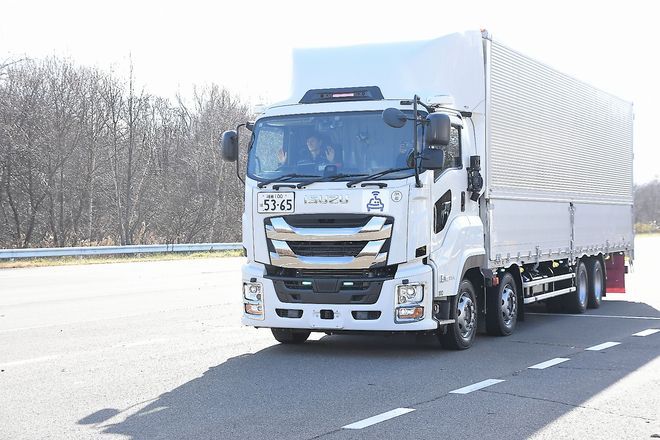
We saw a glimpse of this intelligence in Mukawa, Hokkaido, where the truck utilized LiDAR, that sophisticated laser light technology, to truly *see* the world—registering every approaching vehicle and sensing the environment with a measured precision our own tired eyes rarely achieve. It executed a pass and changed lanes smoothly.

But here is the tender part, the moment of necessary human grace: A human driver remains inside. They serve as the constant sentinel, keeping watch over the operating conditions, ready to take the wheel in an instant if an anomaly should arise. As Isuzu senior executive officer Hiroshi Sato observed, their technology already copes fully with typical traffic scenarios; the continued development is aimed at handling those cases that may arise on rarer occasions.

Why this elaborate technological ballet?

Because the reality is heavy: Japan faces a serious, accelerating shortage of commercial drivers. Automation, in this context, is not a distant science fiction luxury; it is an immediate economic necessity, a practical solution to a physically strenuous problem. This rigorous test operation will stretch from January through the spring next year, meticulously documenting every kilometer the vehicle drives itself.

It is a methodical, essential march toward greater capacity and, ultimately, a lighter burden on the dedicated individuals who keep our world moving. We are simply trying to help the road carry its weight.

The allure of a world where roads are traversed by vehicles unencumbered by human hands has long fascinated me. As I ponder the implications of this technology, I am reminded of a recent report by The Asahi Shimbun, which highlighted the strides being made in self-driving truck technology testing. In the United States, companies like TuSimple and Aurora are leading the charge, collaborating with major trucking firms to put their autonomous vehicles through rigorous testing on public roads.

One of the most significant advantages of self-driving trucks is their potential to revolutionize the logistics industry.

With the ability to operate around the clock without the need for rest breaks, these vehicles could dramatically increase efficiency and reduce costs. By minimizing the risk of human error, they could also make roads safer for everyone.

According to The Asahi Shimbun, several Japanese companies, including Honda and Nissan, are also investing heavily in the development of self-driving truck technology, with the goal of deploying fleets on highways in the near future.

As I consider the possibilities presented by this technology, I am struck by the notion that the boundaries between human and machine are becoming increasingly blurred.

While some may view this as a threat, I see it as an opportunity for growth and innovation.

○○○ ○ ○○○

A self-driving truck, rolled out by Isuzu Motors Ltd. to media representatives, steers itself autonomously in Mukawa, Hokkaido, on Nov.
Alternative viewpoints and findings: See here

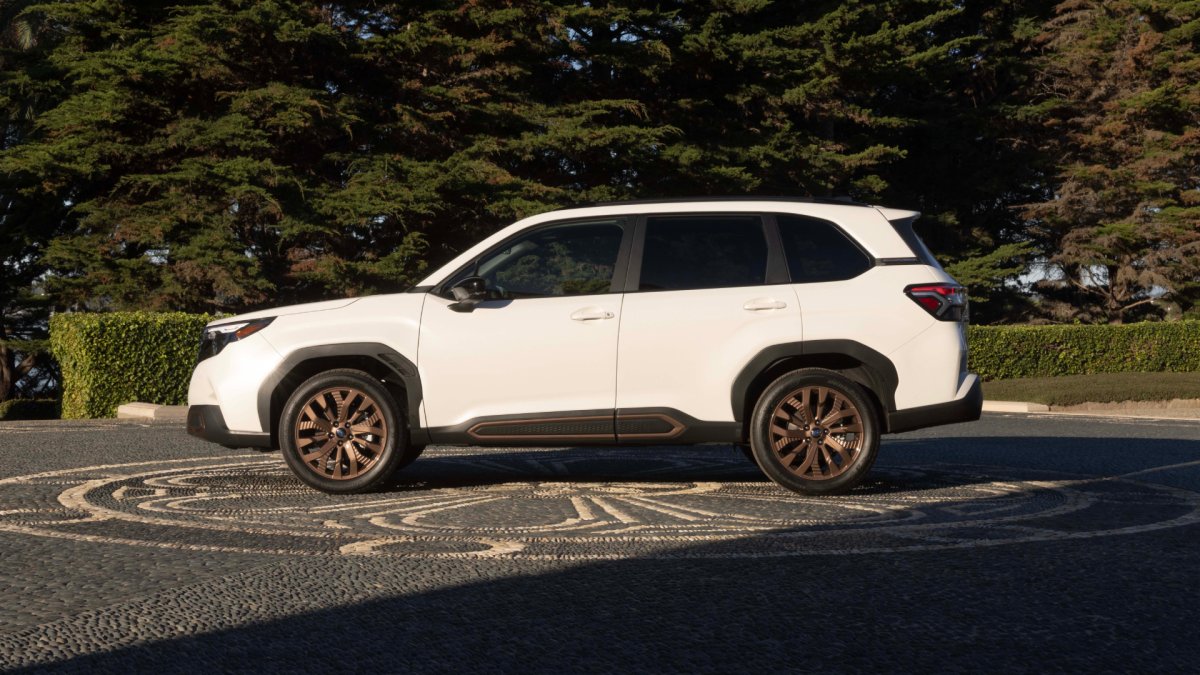
Subaru's Quiet Revolution: The 2025 Forester Hybrid Redefines Outdoorsy

The modern mandate for a crossover seems to be the adoption of aggressive posturing, a commitment to the loud gospel of mud-flecked victory, even if one's daily orbit only touches manicured asphalt. Capability, it appears, must now be shouted from the roof racks. In this landscape, where the primary objective is often the visual subjugation of nature rather than its appreciation, the 2025 Subaru Forester Hybrid slips into the fray not with a roar, but with a nearly imperceptible whisper.

Subaru has historically traded on the quiet certainty of all-wheel drive—a distinction that once defined them entirely, but which now merely adds literal and figurative weight to the vehicle. The opportunity to redefine "outdoorsy" as "respectful" was waiting to be claimed, and the Forester Hybrid steps gently into this vacuum, proposing a profound alternative to the competition's clamor. This machine makes sense; it is a late, yet timely, arrival to a compact hybrid segment already crowded with necessity.

The initial engagement with the Forester Hybrid is undeniably strange—a sensation akin to finding the library silent after having spent a decade in the noisy main hall.

Subarus are intrinsically linked to the distinct, rhythmic sonic signature of the flat-four engine, a beloved, mechanical declaration of identity. Thus, to power up the Forester Hybrid and be greeted by an absolute, profound *nothing* is genuinely unsettling. It dismantles the learned expectation. One listens for the familiar thrumming, only to encounter a void where the low-frequency vibrations should be.

This confusing lack of sound is perhaps the vehicle's most unique, empathic feature; it chooses not to add to the existing tapestry of modern noise pollution, operating instead on a plane of almost secretive efficiency.

The Paradox of Borrowed Strength

Given the established, cooperative relationship between Subaru and Toyota, one might naturally assume this newly available hybrid system is merely a straightforward, prefabricated transfer of technology, plucked efficiently from the RAV4 parts bin.

Such lazy assumption, however, overlooks Subaru's specific engineering stubbornness. The system deployed here is uniquely mated to the 2.5-liter boxer-four architecture—a choice that ensures the core of the Subaru identity remains, albeit enhanced by the electric motor's contribution. That electric motor, rated at 88 kilowatts, works in tandem with the combustion engine to yield a combined peak output of 194 horsepower.

While the torque figure remains unquantified by Subaru, the effect is noticeable: the engine's native 154 pound-feet is generously augmented by electric impulse, creating a forward momentum substantially greater than the 178 lb-ft offered by the non-hybrid 2.5-liter Forester. The combination is one of quiet, unconventional force.

The Comfort of Non-Conquest

The classic design tension for the Forester has always been managing high ground clearance without yielding entirely to a tippy, high center of gravity.

The hybrid variant successfully preserves this delicate balance. Yes, the addition of the battery and motor increases the overall curb weight, but the chassis engineering exhibits a commendable ability to mute the typical impacts of travel. Unlike the company's own performance models or the aggressively specialized Wilderness trim—which demand that the driver contend with the stiff, noise-generating compounds of off-road tires—the Hybrid offers a civilized retreat.

It is simply comfortable, and in many instances, it achieves a remarkable reduction in cabin volume compared to its standard gasoline counterpart. This Forester, then, is not designed for pounding the landscape into submission; it is designed to observe it with minimal disturbance. It steps lightly, carrying the burden of its increased weight with impressive, unassuming grace.

Image

Like a well-oiled machine, the automotive industry churns out new models, each one a testament to human ingenuity and our relentless pursuit of innovation. The latest crop of vehicles is no exception, boasting sleek designs, advanced safety features, and impressive fuel efficiency. But, just as a car's true character is revealed on the open road, a product's worth is only truly measured by its performance in the real world.

In the realm of automotive product reviews, there's a delicate balance between form and function.

A car's aesthetic appeal can be undeniably captivating, but it's the nitty-gritty details – the responsiveness of the steering wheel, the smoothness of the transmission, and the overall driving experience – that truly make or break a vehicle.

It's here that reviews like those found in "The Drive" prove invaluable, providing prospective buyers with a candid look under the hood, so to speak.

By delving into the specifics of each model, reviewers help consumers make informed decisions, separating the wheat from the chaff in a crowded market. For those in the market for a new set of wheels, navigating the sea of options can be a daunting task.

That's why trusted sources like "The Drive" are essential, providing in-depth analysis and expert opinions on the latest models.

◌◌◌ ◌ ◌◌◌

Being outdoorsy is all the rage with modern cars. It's no longer enough to offer off-road capability; you have to be loud about it, too.
Other references and insights: See here

The Enduring Allure of the Manual Transmission

The manual transmission, often simply called the stick shift, represents a direct, tactile interface between human intention and mechanical result—a necessity where the driver actively manages torque delivery by selecting appropriate gear ratios via a clutch pedal and a central lever. Its history is inseparable from the history of the automobile itself, marking an evolution from crude, unsynchronized designs that required significant skill (and ear protection) to highly refined modern systems. This mechanical lineage is not merely a technical footnote; it is a global narrative profoundly shaped by performance engineering, national driving traditions, and the enduring, slightly irrational human desire for physical mastery over a complex machine. It is fundamentally a kinetic conversation with the road.

The origins of this system date back to the earliest motorized conveyances. Louis Renault developed one of the foundational sliding gear transmissions in 1898, a system brutally effective but utterly unforgiving. Crucially, early gearboxes operated without synchromesh—the mechanism that matches the speed of the engine shaft and the gear being selected—and were famously termed "crash boxes." Successfully engaging a gear in these pre-war marvels demanded extraordinary precision: a perfect, measured rev-match during the shift, known as double-clutching. This challenge led to idiosyncratic layouts, long before the standardized H-pattern became the global norm. Early heavy transport and specialized vehicles often featured complex quadrant gates or non-intuitive arrangements, sometimes even placing reverse gear next to first, requiring specialized cognitive mapping just to exit the driveway. The early manual transmission wasn't just a component; it was an exclusive membership card.

What defines the enduring appeal of the stick shift isn't the efficiency (modern dual-clutch automatics often surpass human shifting speed and fuel economy), but the peculiar intimacy of the action. It is the moment the left foot finds the clutch's friction point, followed by the decisive, guided movement of the lever into the gate. This engagement transcends mere travel. In places where small, high-revving engines dominate, such as older European city cars—think a classic Fiat 500 or a high-strung Mini Cooper—the manual became a prerequisite for adequate velocity, demanding a continuous, almost percussive interaction between the driver's left hand and both feet. The complex skill of heel-and-toe downshifting, the simultaneous braking and blipping of the throttle to maintain chassis balance, is an athletic feat born purely of the manual design. It requires genuine commitment.

Today, while automatics dominate the mass market across North America and increasingly in Europe, the manual gearbox has cemented its role as a deliberate, specialized choice. It persists in specific performance contexts, offering a distinct, analogue reward—a feature, not a limitation—in vehicles like certain lightweight sports cars or highly focused track machines. Furthermore, in many developing economies, the manual remains the standard due to its simplicity, lower production cost, and robust reliability in harsh conditions. The survival of the stick shift, despite its functional obsolescence in many commuting scenarios, speaks to a deeply ingrained preference for unmediated control. It is a refusal of the passive experience, a stubborn, beautiful insistence on the human element in an automated world. The shifting lever, standing proudly between the seats, a mechanical artifact waiting for its conductor.

Friday, December 26, 2025

5 Refresh Navigates Legacy And Innovation

Image

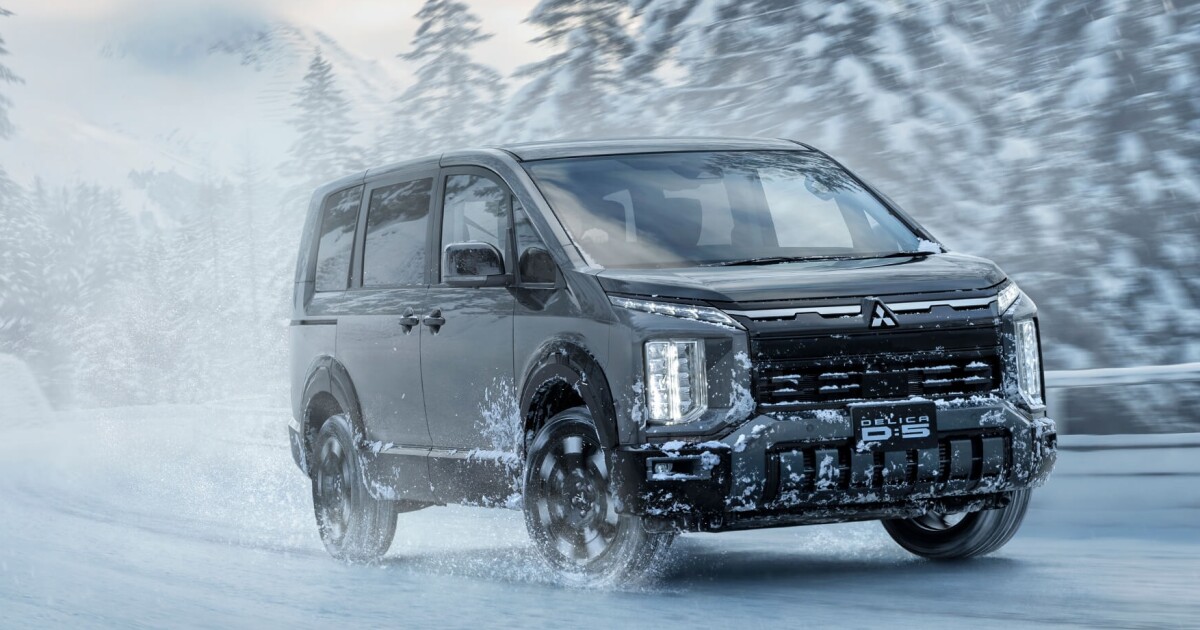
The greatest challenge facing the updated Mitsubishi Delica D:5 is not the difficult terrain it must conquer, but the immense weight of the legacy it must carry. These small, rugged boxes, initially designed for strictly pragmatic transport, acquired a subtle spiritual dimension for a global cult following; they became the ultimate symbol of unfettered, tiny movement.

Mitsubishi declared this refreshed D:5 "the strongest ever," yet strength is always subjective when measured against the sheer emotional gravity evoked by its legendary ancestors—the Star Wagon 4WD, the Space Gear, or the ultra-specific Chamonix trim level. For enthusiasts in the United States, this connection is often defined by *anemoia*, that specific ache of nostalgia for an experience they never actually had firsthand.

The most coveted Delicas were absent from U.S. showrooms during their primary production runs. We only see them now, driving through the American West or parked by the remote coastlines, having finally reached the sacred 25-year threshold necessary for legal importation.

This newest iteration of the D:5 is not the full generational overhaul many enthusiasts were eagerly anticipating—that last significant shift happened way back in 2007. The current model thus occupies a confusing middle space between its history and the immediate future, especially after Mitsubishi showcased the sharp, futuristic D:X Concept in 2023. What we receive now is a highly capable refresh, emphasizing subtle but crucial shifts in engineering and aesthetics.

The most immediate change involves the van's facial architecture. Where the previous D:5 styling presented an overly slatted, somewhat open expression, the new front-end is more complex, layered, and tightly controlled. The grille employs alternating shades and visual depths to transform the large rectangular opening into a disciplined series of dashes.

This updated look is matched with mechanical improvements; the vehicle gains specific on- and off-road performance enhancements, proving it has already logged serious testing time to earn its renewed, rugged appearance.

The Delica's enduring appeal transcends simple utility; it is a unique global phenomenon rooted in a specific demand: genuine 4x4 capability delivered in a small, versatile package.

It is the preferred vessel for overlanders who require ground clearance typically reserved for dedicated SUVs, but who cannot sacrifice the high roof and compact footprint of a minivan. This challenging duality—minivan practicality fused with robust off-road prowess—is what confuses standard market categorization and cements its enduring, unique status.

It is a workhorse that, quite accidentally, became stylish, resonating deeply with avid road warriors in Australia, the UK, and across North America who value authentic capability over market trends.

The Delica D5 update is a cosmetic and equipment refresh, occurring before a potential full generational overhaul teased by the 2023 D:X Concept.

* The van gains enhanced on- and off-road performance to match its revised, toughened aesthetic. * The new grille design replaces overly slatted sections with a more layered structure, utilizing alternating shades to create a textured, dashed pattern. * Much of the vehicle's current North American following is built upon imported Star Wagon and Chamonix models, which only became legally accessible upon reaching the 25-year importation standard.

The Mitsubishi Delica, a stalwart of the Japanese automaker's lineup, has been a favorite among families and adventure-seekers alike for its versatility and rugged charm. The latest update to this beloved minivan promises to breathe new ___ into its design, with a focus on modernizing its aesthetic and technological features.

Sleek new headlights and a revamped front grille are just a few of the exterior changes that Mitsubishi has in store for the Delica. But it's not just about looks - the company has also made significant strides in upgrading the vehicle's safety features, including the addition of advanced driver-assistance systems. These new features are designed to provide drivers with an extra layer of protection on the road, whether they're navigating crowded city streets or venturing off the beaten path.

As the automotive landscape continues to evolve, Mitsubishi is positioning the updated Delica to remain a top contender in the minivan market.

With its unique blend of style, functionality, and capability, this vehicle is poised to continue winning over fans around the world. Information for this article was obtained from "New Atlas".

◌◌◌ ◌ ◌◌◌

Mitsubishi teased an update of its legendary, small, rugged Delica van a couple months back at the Tokyo Motor Show.
Other related sources and context: Check here

A Recall Born Of Subtle Corruption: Acura ILX Vehicles Affected By Faulty Brake System

Image

The necessary friction often reveals itself only in its absence. A moment comes when the foot demands resistance and finds something less substantial. Seventy thousand such moments were discovered waiting in the mechanism of certain automobiles.

The National Highway Traffic Safety Administration set the process in motion, responding to the reports of drivers.

Complaints of a softer pedal, of distance lengthening under duress. Honda announced the recall, specific to the model-year 2016 through 2020 Acura ILX vehicles operating across the United States. This was not a large failure but a small slow corruption of essential geometry. The fix is certain. The path forward is clear.

The Subtle Corruption

The issue lies hidden within the brake master cylinder.

Not a brute failure but a chemical betrayal. Technicians located the origin: residual plasticizer. A small and unwelcome remnant released from the brake fluid reservoir hose itself. This plasticizer, leaching unseen into the fluid, began its slow work upon the system's heart.

It contaminated the fluid and caused the brake master cylinder secondary cup seal to swell.

That seal, vital to the hydraulic integrity of the system, began to deform. In the presence of radiant heat from the engine—heat that further expanded the compromised seal—the system faltered. The hydraulic fluid found a path of escape. It bypassed the seal during slow, steady applications of the brake pedal.

Measure and Distance

The immediate consequence of this bypass is the softening of the pedal feel.

The driver encounters reduced firmness. More critically, the stopping distance is increased. The physics of necessity demand precise measurement and when the distance required to halt the motion is extended, the risk of collision climbs. These are machines of speed and weight and their stopping ability must be absolute.

Honda encourages every owner of the affected ILX vehicles to act upon the notification received.

This is a matter of prevention. The repair requires a trip to an authorized dealer. Owners may ascertain the status of their vehicle by visiting the portal at recalls.acura.com or by calling the dedicated line: (888) 234-2138. The vehicle waits for the correction. The proper friction awaits its return. The road stretches ahead.

A darkness gathers on the horizon of the open road, a specter of mechanical failure that threatens to beset the unwary traveler. A recall of automotive brake systems has been issued, a stark reminder that even the most seemingly stalwart of vehicles can harbor hidden vulnerabilities. The brake system, that most crucial of safety features, has been found to be compromised in certain models, its integrity breached by some hidden flaw.

The National Highway Traffic Safety Administration has been alerted to the problem, and a recall has been initiated to rectify the situation.

Owners of affected vehicles are being notified, urged to bring their cars in for repair, that the faulty brake components might be replaced. It is a prudent measure, one that seeks to mitigate the risk of accident, to safeguard the ___s of those who ride the highways.

The manufacturers, too, have been put on notice, their reputations at stake, as they strive to rectify the problem, to restore the public's trust. In the end, it is a cautionary tale, one that serves as a reminder of the fallibility of even the most advanced of machines.

The recall of automotive brake systems is a stark reminder that safety is a fragile thing, that vigilance is always required, lest disaster strike.

• • • •

The National Highway Traffic Safety Administration (NHTSA) officially start car recalls after receiving complaints from consumers.
More takeaways: Visit website

# Manual Transport Insights

The third pedal, situated awkwardly left of the brake, dictates a relationship with the machine that modern convenience has nearly abolished, yet its persistence reveals a peculiar human need to mediate power directly.

The manual transmission is not merely a method of kinetic transfer; it is, rather, an ongoing philosophical negotiation between the driver's will and the internal combustion engine's inherent desire to stall. The highly misunderstood clutch, that friction device comprised of pressure plates and disks containing organic materials, acts as the essential mediator, temporarily decoupling the crankshaft from the drivetrain. This singular moment of disengagement allows the meticulously machined helical artifacts—the gears—to slide into their appropriate positions, where the synchromesh rings perform the crucial, often-unappreciated task of equalizing the rotational speed between the collar and the gear hub before the engagement can be completed. A successful shift is less about speed and more about finesse, a quiet agreement between components where the driver accepts full accountability for torque manipulation. The process fundamentally transforms acceleration from a linear input into a managed, rhythmic progression requiring predictive cognition often absent when relying on automated hydraulic valves and planetary gearsets.

What the shift from three pedals to two truly eliminates is not just physical labor, but the precise attention required for anticipation, placing the driver within a closed-loop feedback system. Driving a manual, particularly when navigating significant inclines or carrying heavy loads, necessitates a persistent prediction of engine load, demanding that the driver calculate the torque requirements three seconds before they become critical. Consider the esoteric dance of the "heel-and-toe" downshift: this demanding maneuver, where the driver brakes with the left side of the right foot while simultaneously "blipping" the throttle with the heel or outer edge of the same foot, is a necessary technique for matching engine speed to the transmission speed before the clutch is released. This highly specific motor control, often misinterpreted as mere performance theater, is actually a precise mechanism for preventing unsettling chassis weight transfer and maintaining equilibrium as the vehicle slows, transforming the act of deceleration from a passive resistance into an active, managed event.

The adherence to the manual paradigm also reveals deep cultural and operational realities far removed from enthusiast circles. In vast sectors of global transport, particularly involving heavy machinery and specific forms of micro-transport, the manual gearbox remains the undisputed champion due to its inherent simplicity, robustness, and superior torque control. Class 8 commercial tractors (semi-trucks), for example, frequently employ 13-speed or 18-speed transmissions; these systems utilize a "range selector" and a "splitter" to effectively double or triple the available gear ratios, which is absolutely vital for maintaining momentum and engine temperature control while managing Gross Combined Weight Ratings (GCWR) over severe mountain passes. Furthermore, specialized agricultural and deep-earth mining equipment relies heavily on complex manual Power Take-Off (PTO) systems because human oversight and fine manipulation of force are superior for variable, high-resistance tasks where continuous velocity is secondary to controlled, heavy-duty power application.

** * Synchromesh Necessity Modern manual transmissions utilize brass or bronze synchromesh rings to frictionally equalize the rotational speed between the main shaft and the selected gear before dog teeth engagement, thereby preventing the grinding noise characteristic of older, non-synchromesh transmissions (like early commercial trucks or some vintage motorcycles).
Cogitative Load and Safety Studies indicate that the increased cognitive load and the necessity of keeping one hand occupied on the shift lever while the other steers significantly reduces the frequency of driver engagement with non-essential secondary tasks, such as handling mobile electronic devices.
Heavy-Duty Ratio Management The sophisticated 18-speed transmissions used in heavy transport are essentially nine ratios with a high/low range, allowing the driver unparalleled control over engine RPM and maintaining the optimal efficiency window (the "sweet spot") while hauling maximum legally permitted weight.
Unique Torque Transfer The sequential, manual gearbox used in many large-capacity utility motorcycles and certain three-wheeled transport carriers (like the ubiquitous auto rickshaw) offers a more robust and easily repairable torque delivery system specifically suited to stop-start operation and high heat in congested urban environments.

A Driver's Intimate Relationship with the Machine

The most useful discipline one can cultivate before the ignition key ever turns is the Pre-Trip Inspection, a silent, meticulous contract signed between the operator and the sheer momentum of the machine. This is not a rushed survey; it is an anthropological study of metal fatigue and pressurized air. One must kneel, observing the subtle sheen of lubricant where none should be, feeling the tension of the belts, identifying the specific, unique sound the air system makes as it reaches 120 PSI. The mandated checklist, often dismissed as administrative burden, serves as a barrier against catastrophic physics. A slack adjuster out of true, a compromised tire sidewall—these are small variances that scale exponentially at highway velocity. The consequences are definitive, often immediate. Negligence is not tolerated by 80,000 pounds.

The actual work of heavy hauling is fundamentally a navigation of time and waiting, a paradoxical blend of urgency and enforced stillness. Though the objective is constant movement, the reality involves hours spent idling near loading docks, anticipating a signature or a lift ticket. This is the confounding aspect of the industry: the driver is a highly paid professional asset whose utility is frequently suspended by the logistics of others. Load boards present an appealing map of open road autonomy, but the experience delivers structured confinement, demanding adaptability to fluid schedules and arbitrary delays. There are critical opinions about the efficiency of receiving infrastructure, which often seems designed without acknowledging the enormous cost of driver detention. It is during these periods of enforced pause that one truly begins to calculate the cost of sitting, the weariness settling in the cab.

Understanding the truck itself requires moving past simple controls and recognizing its mechanical language. The complexity of the transmission, especially non-synchronized models, demands respect, not brute force; one learns to match revs with the weight being pulled, sensing the slight decline in RPM required before a shift can happen without grinding protest. Unique to this profession is the distinct, sharp aroma of hot brake lining after descending a long, steep grade—a scent indicating excessive friction, a dangerous reliance on service brakes rather than the deliberate application of the engine brake, or Jake brake, which transforms the engine into an air compressor. The successful driver learns to manage the mass, not merely propel it. The persistent vibration in the seat cushion. Even small adjustments to the fifth wheel locking jaws require intimate attention. The road is unforgiving, but the effort to master these nuances is, unexpectedly, optimistic—a quiet assertion of human control over immense physical force.

McLaren Faces Potential Disqualification From Las Vegas Grand Prix Over Technical Issue

Image

McLaren faces a potential disqualification from the Las Vegas Grand Prix due to a technical issue with both cars.

The issue relates to the thickness of the rear skid block on Lando Norris' and Oscar Piastri's MCL39s.

The cars failed to meet the required thickness of 9mm, as per Article 3. 5. 9 e) of the 2025 F1 technical regulations.

The regulation states that the thickness must be 10mm ± 0. 2mm and uniform when new.

A minimum thickness of 9mm is accepted due to wear, but conformity is checked at specific points.

The extent of McLaren's failure to meet the requirement is not yet known.

A similar breach by Nico Hulkenberg's Sauber at the 2025 Bahrain Grand Prix resulted in disqualification.

If McLaren is disqualified, it could significantly impact the title battle, with Norris currently leading Piastri by 30 points.

The situation will be closely monitored as the stewards investigate and make a decision.

The world of Formula 1 racing is no stranger to scandal, with controversy often erupting over issues such as technical breaches, team orders, and driver behavior. One of the most infamous scandals in recent memory is the "Spygate" affair, which involved McLaren's theft of intellectual property from rival team Ferrari. The incident led to a protracted and complex investigation, ultimately resulting in McLaren being fined $100 million and forced to withdraw from the championship.

This high-profile case highlights the cutthroat nature of Formula 1, where teams will stop at nothing to gain a competitive edge.

In addition to technical breaches, team orders have also been a source of controversy in Formula 1. The most notable example is the 2002 Austrian Grand Prix, where Ferrari drivers Rubens Barrichello and Michael Schumacher were accused of colluding to secure a 1-2 finish. The incident sparked a heated debate about the legitimacy of team orders, with some arguing that they undermine the integrity of the sport.

The FIA has since introduced regulations to prevent teams from instructing drivers to alter their racing behavior, but the issue --- a contentious one.

The intense pressure to perform in Formula 1 can also lead to reckless behavior from drivers, which can have serious consequences.

●●● ●●●

McLaren has been summoned to Formula 1 stewards because both of its cars are in an alleged breach of a technical requirement after the Las Vegas ...
You might also find this interesting: Check here

# The Geography of Automotive Desire

I once stood on the edge of a vast, dusty Utah landscape, watching a series of specialized four-wheel-drive vehicles navigate an improbable incline. Most were painted in the expected palette of competence—charcoal greys, matte blacks, or practical whites—colors that seem to whisper, "I am a tool, designed for function, not fanfare." But then, grinding slowly over a massive boulder, came a specific model (perhaps an older generation Jeep Wrangler Rubicon) painted a searing, unapologetic hue: bright, almost citrus yellow. The sight was startling; the technical prowess of the machine, all locking differentials and articulated suspension, was wrapped not in camouflage, but in pure, joyful visibility. That vehicle, climbing the impossible, was proof that the necessity of mechanical capability and the sheer exuberance of human expression do not merely coexist in the world of rugged travel; they collide with brilliant, sometimes confusing force.

Four-wheel drive (4WD) systems are engineering marvels dedicated to traction management, distributing torque to all four wheels simultaneously, often incorporating low-range gearing for maximum leverage over difficult terrain. The primary function is mathematical, focused entirely on maintaining grip when adhesion is minimal. Color, conversely, operates purely in the realm of psychology and physics; it is the visual interpretation of light reflecting off a surface. The great, confusing question posed by the serious off-road community is this: Why does the aesthetic matter so intensely when the mechanical demands are so crucial? The choice of color is not simply superficial; it is an internal map projected onto the exterior shell.

The typical consumer approach to durable, capable machines often favors visual anonymity. Data consistently shows that global vehicle sales are heavily skewed toward achromatic tones—white, black, and silver/grey consistently account for over 75% of new cars sold worldwide. These colors offer high perceived resale value and minimal visual commitment. They are the sartorial equivalent of a well-made uniform. Yet, when manufacturers design highly specialized, off-road-focused trims—those designated specifically for true articulation and endurance, such as Toyota's TRD Pro series or Ford's revived Bronco—they frequently introduce highly saturated, limited-run color options. These hues exist specifically to defy the market norm and signal specialized intent.

The function of these unique shades is critical. These colors act as badges of honor, distinguishing the highly capable niche product from its commuter siblings. They are not merely colors; they are statements of operational purpose.

The Palette of Capability

Certain colors are historically tied to specific levels of off-road dedication, and these specialized pigments often carry complex production requirements or are limited to specific model years, elevating their perceived value in enthusiast circles. The commitment to a highly visible, unconventional color demonstrates that the owner purchased the vehicle with a conscious, expressive intent, often signaling a deep understanding of the machine's potential use, rather than mere suburban practicality.

Here are examples of unique colors linked directly to high-capability off-road vehicle lines:

Toyota's Voodoo Blue A brilliant, deep cyan color often associated exclusively with the TRD Pro trim across models like the 4Runner and Tacoma. Its brightness counters the typical muted tones of the wilderness, making the vehicle highly visible, a practical asset in deep forest or desert environments.
Jeep's Tuscadero An unexpected, vibrant metallic magenta offered briefly on the Wrangler. This highly polarizing color is a unique example of manufacturer pushing aesthetic boundaries for a vehicle synonymous with rugged tradition.
Ford's Cyber Orange Metallic Tri-Coat A high-impact color used heavily in the marketing and release of the new Bronco. It communicates excitement and novelty, separating the rugged design from its historic military associations.

The underlying confusion is delightful: Why does a vehicle designed to be covered in dirt often look best in a color designed to be pristine? Perhaps the answer lies in understanding that 4WD provides freedom, and freedom demands expression. The robust engineering—the heavy-duty axles, the transfer cases, the fortified chassis—is the license. The eccentric color is the signature. The capacity to cross a continental divide is a deeply personal achievement, and it makes perfect sense that the vessel chosen for that journey should be as unique as the destination on the driver's mind.

Thursday, December 25, 2025

The Confusing Reality of Automated Vehicle Marketing

When confronting the realm of automated vehicles, disregard the sleek marketing copy. It means nothing. A primary tip: understand that the industry uses the Society of Automotive Engineers (SAE) J3016 standard, but consumers rarely see those confusing L0 to L5 levels. Look instead for disclaimers. If a car promises "Full Self-Driving," check the fine print; the legal reality often resides somewhere around Level 2+, demanding constant driver vigilance. That unsettling gap, the space between the promise and the reality, is where the confusion begins, like trying to remember the exact melody of a song you loved in high school—you know the feeling, but the notes keep slipping away. Never assume. Verify the Operational Design Domain (ODD) of any system. Does it only work on pre-mapped highways? Does heavy rain confuse its perception algorithms? These are the real metrics, not the badge on the fender promising total freedom.

The names attached to these systems are less a clear designation and more a collection of half-whispered secrets floating in the neon light. Consider General Motors' 'Super Cruise,' which allows for true hands-off operation on specific geo-fenced routes, a Level 2 system that feels tantalizingly close to Level 3. Compare this to Ford's 'BlueCruise,' functionally similar, bound by the same cartographical limitations. These proprietary names suggest effortless, thoughtless travel, yet they mask a crucial, almost poetic responsibility: the driver must remain perpetually ready to intervene. This duality, the car driving itself but requiring the human mind hovering nearby, is exhausting. It is the confusing aspect of our technological evolution; we are stuck between the driver's seat and the empty passenger seat.

Then there are the names that imply total replacement but legally provide only assistance. Instances have occurred—a vehicle running a red light, for example—because the driver assumed the system was capable of navigating complex city intersections alone, a tragic misunderstanding born of overly ambitious branding. The nomenclature itself is often dangerous. However, the landscape is shifting subtly. Mercedes-Benz introduced 'Drive Pilot,' achieving true SAE Level 3 conditional automation in specific jurisdictions, like parts of Nevada and Germany, under precise, slow-moving traffic conditions. This is the first tangible shift: the liability moves, momentarily, from the human driver to the corporation. It is a small, quiet change, perhaps less dramatic than finding a vinyl record you thought you lost years ago, but profound nonetheless. We still struggle with the fundamental terminology, oscillating between 'Advanced Driver Assistance Systems' (ADAS) and true 'Autonomous Vehicles' (AVs). Most systems sold today are merely ADAS. They are helpful co-pilots, perhaps, like a silent friend sitting beside you, offering advice but never taking the wheel completely. When will we stop needing to look over our shoulder, wondering if the machine truly understands the geometry of a wet intersection? It is the waiting, perhaps, that is the most difficult part.

# How to Embrace the Unique Abilities of Your EV

The secret life of the common houseplant suggests that true readiness isn't about hydration; it's about anticipating the perfect moment to shed a microscopic piece of dust onto the carpet, thereby signaling an impossible freedom. We often approach electric vehicle ownership with the nervous energy of someone convinced they have forgotten their keys, even as the fob rests securely in their pocket. This journey into the quiet hum of electric mobility is not merely a purchase; it is a profound behavioral realignment. You are unlearning decades of combustion conditioning, trading the familiar anxiety of the low fuel light for the calmer mathematics of kilowatt-hours. The ability of an electric car is defined less by its horsepower rating—though the instantaneous acceleration is undeniable fun—and more by the beautiful, silent way it insists you pay attention to the world outside your window. This is how you learn to harness the surprising, immediate power waiting beneath your right foot.

The immediate shock of true electric capacity usually arrives at the first green light. You are accustomed to the sequential build-up of power—the engine revolutions climbing, the gear shifts, the mechanical plea for speed. With an EV, the maximum torque is available at zero RPM. Think of that: the moment you decide to move, the car complies fully, without hesitation or lag. There is no waiting for the power band to arrive. This rapid response is the machine saying, "I have decided we are moving now," and then you simply go. This surge can feel entirely unlike anything you've driven before, a strange, smooth whoosh that throws physics into sharp relief. Many drivers initially modulate the pedal too heavily, expecting the delay that never comes. This is not reckless driving; this is merely discovering the profound truth that you no longer have to request speed from the machine; you simply command it.

Furthermore, the mechanical generosity of regenerative braking is a unique EV skill that demands a small, wonderful mental shift. Instead of pouring energy off as useless heat when you slow down, the EV uses the motors in reverse, recapturing kinetic energy and sending it back to the battery. This allows for "one-pedal driving" in most environments, where lifting off the accelerator slows the car efficiently. It feels like an intimate conversation with momentum itself. You quickly learn the precise spot where the highway exit ramp begins its slow, downward curve, and you anticipate the energy recapture, playing a small, sustainable game with friction. The maintenance requirements shrink dramatically because you have removed the complicated, weeping heart of the engine—no oil changes, no spark plugs, no transmission fluid flushes. The time you once spent waiting in that fluorescent-lit lounge for an oil change can now be dedicated to perfecting the art of staring intensely at pigeons, a highly underrated activity.

Mastering the Launch Practice gentle acceleration from a stop sign until the immediate surge feels intuitive rather than aggressive. Understand that 100% of available torque is ready the second the wheel turns, unlike traditional engines that need to wind up.
The Regenerative Rhythm Commit to treating the accelerator pedal as both the throttle and the primary brake. Learn the sweet spot where lifting your foot recaptures the maximum charge without resorting to the physical brake pads. This extends range and substantially minimizes brake wear.
Unlocking the Absurdity of the Frunk The Front Trunk (Frunk) is a delightful, empty space where the internal combustion once lived. Utilize this secure, temperature-insulated compartment for its highest purpose: emergency picnic blankets, specialized ice cream delivery containers, or oddly shaped sporting equipment.
Embracing Silent Cruising Recognize that the near-silent operation changes your situational awareness. Since the sound of the engine is no longer masking the exterior world, you will hear ambient noise and traffic patterns differently. This requires adjusting the internal volume of your nervous system downward, promoting a calmer, more reflective driving experience.
Vehicle-to-Load (V2L) Potential If your model supports V2L, understand that your car is a massive, mobile power bank. This capability means you can run a coffee maker at a campsite or power critical household items during a short outage. Your vehicle is not just transport; it is a temporary extension of your electrical infrastructure, a surprisingly empathetic resource in unexpected circumstances.

This technological pivot is about recognizing that efficiency is inherently joyful. It is finding relief in the quiet subtraction of complexity. You don't need to be a seasoned electrical engineer to appreciate the profound truth that your vehicle is quieter, faster, and requires less attention from mechanics. All you need is the willingness to look at the odometer and realize you've somehow traveled 300 miles using only the invisible flow of electrons, and know that you did it without spilling a single drop of petrochemicals. This ability to move through the world cleanly, quickly, and with an almost absurd ease is the defining magic of the electric car, a genuinely silly and wonderful advantage we are all learning to use.

# The Fragmented Grid of Classification

...the current dissipates exactly at the twenty-mile-per-hour threshold, an almost arbitrary mechanical cutoff that immediately reclassifies the machine. It ceases being merely a bicycle, a tool of effortless human power augmented by lithium cells, and becomes, in the eyes of the law, something else entirely—a motorized vehicle skirting the edge of registration requirements. The sudden cessation of motor assist is not merely technical; it is legislative.

This immediate differentiation speaks to the heart of the electric bicycle's conflicted existence, a vehicle that offers unparalleled access and freedom but whose speed capability necessitates a stringent, often fragmented, legal framework. The complexity stems from the motor's capacity to exceed speeds traditionally maintained by human effort alone, forcing regulators to draw lines in the asphalt. The definition of an e-bike, globally and locally, is inextricably linked to the precise moment its electrical assistance must cease functioning. It is a necessary friction.

The relationship between an e-bike and its top speed is rarely defined by the motor's maximum physical capacity, but by the programmed limits imposed to meet jurisdictional standards. In the United States, a tri-part classification system emerged, establishing clear regulatory lanes that mandate specific speed ceilings. Class 1 bikes, for instance, are the purest expression of augmentation, offering pedal assistance up to 20 mph, at which point the motor must yield. They are often permitted where traditional bicycles ride, on pathways and trails.

The perplexing Class 3 category pushes the assisted speed ceiling higher—to 28 mph—but mandates that assistance is provided *only* when the rider is actively pedaling. This differentiation is critical: the presence of a throttle, which allows motor power without pedaling, instantly drops an e-bike into the Class 2 designation (capped at 20 mph, regardless of the rider's effort). These 28 mph Class 3 machines typically require a speedometer, a telling detail emphasizing their separation from unpowered cycling, acknowledging their high velocity potential. It is the legal speed of assisted movement, not the potential speed of the machine rolling down a hill.

Kilometers per Hour and Continuous Power

Across the Atlantic, the European Union employs a far simpler, though perhaps more restrictive, standard known as EPAC (Electrically Power Assisted Cycles), codified by EN 15194. This regulation sets a maximum assisted speed of 25 kilometers per hour—approximately 15.5 mph—paired with a maximum continuous rated motor power of 250 watts. The power limitation is often misunderstood; it refers to the *sustained* output, not the peak power the motor can momentarily provide during acceleration.

The 25 km/h boundary ensures these machines are treated uniformly, often legally equating them to standard bicycles, avoiding the need for vehicle registration, insurance, or special licenses. This strict adherence to lower speed and power standards facilitates seamless integration into existing cycling infrastructure, minimizing conflicts with slower users. Think of the unique Dutch cycle paths, where such limitations ensure harmonious flow. The lower velocity ensures the fundamental character remains that of a bicycle, albeit one greatly benefiting from mechanical empathy. The 250-watt constraint ensures gentle, manageable assistance. A whisper of power, exactly.

Speed Modifiers and Human Engagement

The speed achieved by any e-bike is not solely dictated by its pre-set software limit but remains profoundly linked to human input. For example, a Class 3 bike traveling 28 mph stops assisting precisely at that speed, yet the cyclist, due to aerodynamic posture and sheer physical effort, can easily push the bike beyond 30 mph. This sustained human effort becomes the new limiting factor, decoupling the machine's potential from its assisted regulation.

Conversely, many e-bikes are built for robust performance far exceeding legal limits, particularly those designated for off-road or private property use—machines sometimes categorized as "speed pedelecs" or unregistered vehicles, often capable of 45 km/h or more. These units are frequently sold with factory settings that allow modification—the ability to electronically "unlock" the true motor potential. This feature, though strictly illegal for on-road use in regulated markets, highlights the technological ease with which speed limits can be bypassed, demonstrating the industry's capacity to outpace regulation. This technological temptation requires constant vigilance from governing bodies, ensuring the designated speed of travel maintains public safety. The motor is capable; the law is clear.

The High Cost Of Capability: How Powerful Trucks And SUVs Drive Up Insurance Premiums

When the speed of a sports car is caged within the shell of a utility vehicle, or when a tool becomes a titan of technology, who pays the ultimate price? We spend weeks weighing payload capacity, debating the true necessity of robust off-road packages, and imagining the possibilities of the open road. Yet, the cold mathematics of insurance premiums often delivers the harshest verdict on these capabilities.

The data for 2026, compiled by Insure.com, offers a fascinating, if painful, study in logistics and velocity, detailing exactly which trucks demand the most coin merely to exist on the asphalt.

Consider first the electric leviathan. This is not merely a pickup; it is nine thousand pounds of battery cells, steel, and startling performance.

Packing power that can soar to a thousand horsepower, this brute hits highway speed in roughly three seconds. A silly, terrifying reality for something so immensely heavy. Insurance actuaries, cautious souls by nature, find such figures deeply unsettling. The combination of its six-figure purchase price, cutting-edge battery architecture, and the complex, novel electronics ensures repair costs remain astronomical.

New technology means unknown factors. Unknown factors mean high rates. A simple reality. When a minor collision involves troubleshooting specialized wiring harnesses and replacing components still rare in the repair world, the premium surges, reflecting the true cost of embracing the vanguard.

Then there is the glorious, unnecessary speed of the combustion engine kings.

Ram's supercharged TRX, the loud answer to the high-performance pickup segment, is powered by a supercharged 6.2-liter V8, delivering 702 horsepower directly to the earth. It is a sprinting machine disguised as a full-size truck. We buy these for the thrill of capability, but often for the rush of acceleration, too. This attraction to spirited driving—which actuaries see as inherent risk—is factored into every spreadsheet.

The specialized components required for its performance suspension and robust powertrain are decidedly not sourced cheaply when repairs loom. At $271 every single month for coverage, the cost confirms that you are paying dearly for the privilege of owning a machine built to defy reasonable expectations.

Not all expensive trucks rely on muscle car antics, however. The high-capacity Super Duty lineup earns its position on the list through sheer, brutal physical scale and utility.

They dominate the road through capability, designed to haul the heaviest loads and manage massive trailers. Their size translates directly into higher costs; more material, larger componentry, and often specialized labor or facilities are required for collision repair. The patterns are clear across the 2026 data: whether driven by overwhelming size, highly specialized performance tuning, or bleeding-edge (and expensive) electric technology, capability exacts its price.

Choose your poison. But always check the insurance scroll before signing the contract.

**

Key Cost Drivers for 2026 Truck Insurance Premiums

* Electric Innovation
Models featuring novel battery architecture and advanced electronics require specialized repair, leading to higher liability thresholds and replacement costs.
Mass and Momentum The electric beast (9,000+ pounds, up to 1,000 HP) commands rates due to the sheer kinetic energy involved in collisions and the cost of sophisticated, weighty materials.
Performance Tuning The Ram TRX, delivering 702 horsepower from its supercharged 6.2L V8, attracts premiums influenced by the high cost of its specialized performance suspension and the statistical profile of drivers seeking high velocity.
Scale and Utility Heavy-duty trucks, such as the Super Duty lineup, see elevated rates driven by their physical size and capability, increasing standard repair complexity and parts costs.
Monthly Premium Example Coverage for the Ram TRX registers around $271 monthly, confirming the high premium paid for raw performance capability.
Image

The behemoths of the road, those lumbering leviathans that command respect and inspire awe, are not for the faint of heart - nor are they for the shallow of wallet. The most expensive trucks to insure are a select group, comprised of bespoke behemoths and luxurious land-yachts that ride roughshod over the competition.

According to a report by _Forbes_, the top five most expensive trucks to insure in the United States are the bespoke creations of American automakers, with the Ford F-650 Super Duty taking the top spot, its hefty price tag and opulent features making it a costly proposition for insurance companies.

The Chevrolet Silverado 3500HD and the Ram 3500 are also among the most expensive trucks to insure, their impressive capabilities and lavish interiors making them prized possessions for those who can afford them.

These trucks are not just modes of transportation, but status symbols, and as such, they come with a hefty insurance premium.

The cost of insuring these vehicles can be staggering, with some owners paying upwards of $5,000 per year in premiums, a figure that is not for the faint of heart. _Kelley Blue Book_ is a source for this article, providing valuable insights into the pricing and features ← →

●●● ●●●

Shopping for a truck means thinking about payload capacity, towing ratings, and whether you really need those off-road capabilities or just want ...
Here's one of the sources related to this article: See here

Pushing the Boundaries: How Rear-Wheel Drive Grounds Speculative Fiction

I. Introduction: The Symbiotic Relationship * Defining the unexpected intersection of mechanical reality and creative freedom. * Emphasizing how grounding the fantastic requires understanding foundational physics. II. Rear-Wheel Drive: The Essence of Push
Technical overview of RWD power application, weight transfer, and handling characteristics.
The psychological difference control, risk, and tactile feedback. III. RWD as a Storytelling Catalyst * Translating mechanical limitations (oversteer, stability) into narrative tension (loss of control, intentional risk-taking).
Historical context RWD's connection to classic power and rebellion tropes. IV. How To Integrate RWD Dynamics into Science Fiction
Practical steps for world-building using RWD mechanics for atmosphere and verisimilitude in vehicle design and action sequences.
Unique SF examples grounding hovercraft failures and post-apocalyptic locomotion in known physics. V. Conclusion and Highlights * A look toward grounding future fiction in the comforting certainty of terrestrial physics. ***

There is a quiet, powerful satisfaction that comes from recognizing the familiar geometry of the world woven into the most fantastic tapestry. When crafting a universe meant to soar beyond our understanding, the most successful narratives often remain tethered to the beautiful certainties of terrestrial physics. The concept of rear-wheel drive (RWD), a seemingly simple engineering choice—delivering power to the back wheels while the front wheels handle steering—is far more than a specification sheet entry; it is a foundational lesson in dynamics, control, and inherent risk. For the writer of science fiction, understanding this mechanical reality provides the perfect toolkit for building tension and ensuring authenticity, even when dealing with interstellar vehicles.

The mechanical reality of RWD defines a specific relationship between the driver and the machine. Unlike front-wheel drive (FWD), which generally pulls the vehicle, RWD actively pushes it. This fundamental difference affects everything from acceleration under load to cornering limits. In high-power scenarios, or when weight shifts rearward, the front wheels feel lighter, providing the tactile sensation of a machine eager to leave the physics of the road behind. This capacity for intentional slip, where the rear end can be guided into an oversteer state, demands a finesse that translates directly into character competence and storytelling depth. A character piloting a vehicle designed this way is not merely a passenger; they are actively managing an equilibrium that flirts with chaos.

RWD as Narrative Tension

To master the story of control, one must first understand the physics of losing it. Imagine a street racer in a cyberpunk dystopia, fleeing the authorities through slick, neon-drenched alleys. If that vehicle is RWD, the tension of the scene shifts dramatically. The character must constantly account for the physical impulse of the power plant attempting to overtake the steering axis. A sudden application of torque isn't just speed; it's a gamble that the car won't spin out. This mechanical fragility is a mirror for the protagonist's own stability. When the vehicle slides into a precise, controlled drift to make a impossible turn—a feat inherently easier and more dramatic in RWD setups due to the directed power to the drive wheels—that moment isn't just cool spectacle; it's a physical manifestation of skill and deliberate risk-taking, the precise moment where a character proves their mettle by mastering the inherent danger.

We see the subtle influence of RWD dynamics even when the vehicle lacks wheels entirely. Consider the design of post-apocalyptic convoys or planetary rovers built for harsh, unpredictable terrains. If a writer details a heavy hauler attempting to climb a steep, rocky grade, attributing the locomotion to a powerful, rear-mounted propulsion unit—whether jet-assisted or geared—you are implicitly leveraging RWD dynamics. The system is engineered to put weight over the drive mechanism for maximum traction (the push). Conversely, in a zero-gravity combat scenario, if a ship pivots solely using powerful maneuvering thrusters located near the stern, any sudden lateral burst introduces a rotational vector similar to oversteer on ice. By using real-world mechanical behaviors as the foundation, you create a universe where the laws of physics feel immediate and consequential. The reader instinctively understands the peril because the behavior is grounded in familiar, gravitational constraints.

How To Ground Science Fiction Through RWD Mechanics

Applying the principles of rear-wheel drive effectively in science fiction involves more than simply naming the drivetrain. It requires integrating the inherent *feeling* and *limitation* of the system into the story's geography and character actions.

1. Define the Physics of Failure: If your futuristic vehicle relies on magnetic levitation (maglev) or anti-gravity, consider the emergency fallback. When the primary system fails, does the vehicle default to armored wheels and a robust terrestrial engine? If so, making that fallback RWD immediately introduces control challenges. A character who spent the entire story gliding effortlessly must now wrestle with torque and traction. The sudden shift in required skill emphasizes the catastrophic nature of the failure. 2. Incorporate Environmental Challenges: Use the landscape to exploit RWD limitations. Driving across a low-gravity moonscape or a dusty Mars plain requires careful management of power application to avoid immediate spin-out. The "push" dynamic ensures that any loose surface demands patience and deliberate throttle modulation. A long, powerful RWD jump in a dune buggy across a canyon is inherently more terrifying and requires more stabilization effort than a FWD equivalent, making the character's successful execution a clear indicator of their expertise. 3. Utilize Weight Distribution for Character Detail: If your protagonist's smuggling rig or deep-space hauler has a massive engine block positioned behind the cab (a classic mid-engine RWD configuration), this isn't just for looks. It defines the payload capacity, the turn radius, and the sound profile. The physical rumbling emanating from the rear translates into a tangible presence that follows the driver—a constant reminder of the raw power they command. This provides sensory details that deepen the immersion far beyond mere description. The vehicle becomes a living, demanding partner.

Highlights: Integrating Reality into the Fantastic


RWD and Oversteer Use the dynamic tendency to slide the rear wheels as a physical metaphor for a character losing emotional or professional control.
Historical Echoes Leverage RWD's association with classic "muscle" and high-performance machines to instantly imbue a futuristic vehicle with a sense of raw, untamed power.
Physics of the Fail-Safe When anti-gravity systems collapse, defaulting to a ground vehicle that pushes (RWD) introduces immediate, familiar, and challenging traction mechanics.
Sensory Grounding Focus on the sound and feel of the torque transfer—the low growl that signals the engine is actively forcing the movement, providing an anchor to reality within a speculative setting.

Wednesday, December 24, 2025

The Art of Motorcycle Selection: A Harmonious Union of Rider and Machine

Currently, in large portions of Southeast Asia and increasingly within congested European city centers, motorcycles and scooters account for over 75% of private motorized vehicles registered. This seismic percentage shift is not arbitrary; it is a quiet testament to spatial efficiency, adaptation, and the enduring preference for maneuverability. To approach the world of motorcycles is not merely to select an engine displacement or a set of fairings; it is to engage with geometry, history, and a specific philosophy of motion simultaneously. The initial, crucial step in this education—this *how-to*—involves listening. What story does the engine wish to tell you, and what physical constraints must you offer in return?

We must consider the specific, deliberate pulse of the machine. A Ducati, for example, is inherently defined by its L-twin architecture and Desmodromic valve actuation—a mechanical signature that is far from quiet but profoundly rhythmic. It is a machine asking for sharp attention, demanding precision in its dance through corners. This is a visceral engineering choice, Italian intensity encapsulated in rigid frames and unforgiving throttle response. Contrast this with the meditative, almost predictable thrumming of a single-cylinder Royal Enfield; these machines, tracing their lineage back through decades, were designed not for the velocity of a specific moment, but for the sustained integrity of long, slow passages across difficult, unpredictable terrain. They are inherently patient.

Choosing a motorcycle is, above all, selecting a particular posture. The "rider triangle"—the spatial relationship between the foot pegs, the seat, and the handlebars—dictates your entire relationship with the road and the surrounding world. If you find yourself drawn to the engineered robustness of a BMW R 1250 GS, a machine favored by those who need to carry their entire world, including camping equipment and intellectual curiosity, with them, you are choosing an upright, commanding perspective. This chassis is built for distance and unexpected gravel, emphasizing suspension travel over low center-of-gravity. Its parallel-twin engine, often mounted longitudinally, provides a broad torque curve that forgives many momentary lapses.

However, if the streamlined elegance of a modern classic speaks more truthfully to your sensibilities, perhaps a Triumph Bonneville or a specific iteration of a Moto Guzzi V7 demands attention. You are selecting something lower, closer to the immediate texture of the asphalt, connected to an older, simpler philosophy of movement. Notice the subtle geometry of the fuel tank. Observe the way the light catches the chrome fenders, a detail retained across generations of production. This inherent aesthetic matters. For the aspiring rider, the *how-to* is less about mastering friction zones and more about finding a machine whose design intention resonates with the geography of your own daily life. We seek a resonance, a predictable mechanical harmony. Which engine sound feels like coming home? That is the answer you must pursue.

Aston Martin's 2026 F1 Transformation: Navigating The Challenges Of Becoming A Full Works Team

The Silverstone outfit is preparing for a transition unlike any other in its recent history. Gone are the days of receiving the engine package, neatly specified and ready for integration. 2026 marks the arrival of Honda, signifying a dramatic and necessary elevation to full works team status. This is not a simple swap of livery or supplier; this demands an entire reformation of the technical department, requiring deep, synchronized efforts between the chassis architects in the UK and the power unit engineers in Japan. It is the defining shift from operating as a respected client to becoming a collaborative partner where the margins for error are drastically reduced.

Lawrence Stroll, the controlling shareholder, understands the inherent complexity.

He saw the rare convergence of radical regulation changes—a complete reset for the grid—and the opportunity to secure a bespoke power unit partner. That moment, he realized, mandated a complete commitment, financially and technically. Designing a Formula 1 chassis to maximize a specific hybrid unit is vastly different from designing one to accommodate a customer engine; the difference lies in the minute details of weight distribution, cooling architecture, and mounting points—hundreds of interdependent variables.

The Canadian billionaire's insistence on patience cuts to the heart of this intricate process. Rush the foundation, and the structure will inevitably fail.

This new reality requires a controlled, measured approach, acknowledging that instantaneous track success is an unreasonable expectation. The 2026 regulations will introduce an all-new generation of power units focused heavily on sustainable fuel and increased electrical energy deployment, a challenge for every manufacturer, let alone a newly formed alliance.

Aston Martin will be co-developing an unknown entity in a landscape of shifting technical parameters. It means the team must trust the process, allowing time for the deep technical roots between Silverstone and Sakura, Japan, to take hold before expecting immediate harvest. This measured approach defines their path forward.

Core Strategic Requirements


Works Team Integration For the first time, Aston Martin is entirely responsible for the chassis design specifically optimized for a unique power unit, eliminating the compromises inherent in customer agreements.
The 2026 Reset The regulatory overhaul offers an unprecedented opportunity to compete on technical foundation rather than simply refining existing packages.
Deep Technical Patience Success requires continuous synchronization between the chassis and power unit design teams—a relationship measured in years of shared development, not in race weekends.
New Energy Formula Adapting simultaneously to an all-new Honda hybrid PU and the substantial regulatory changes governing fuel mix and kinetic recovery systems.

Image

I must admit, my initial foray into the world of Formula 1 teams was marred by a critical oversight - I underestimated the Aston Martin F1 Team's impact on the sport. Founded in 2020 as the rebranded Racing Point F1 Team, this British outfit has been making waves with its ambitious approach and commitment to excellence.

With a storied history in the world of motorsport, Aston Martin's return to F1 has been met with great fanfare, and the team's determination to challenge the established order has been evident in its performances on the track.

The team's resurgence has been fueled by a combination of savvy technical decisions and strategic partnerships.

Under the leadership of team principal Mike Krack, Aston Martin has invested heavily in its infrastructure, boasting state-of-the-art facilities and a talented pool of engineers and technicians. The team's driver lineup, featuring the likes of Lance Stroll and Fernando Alonso, has also been bolstered by the addition of experienced personnel, providing a potent mix of youth and expertise.

As the team continues to evolve and adapt, its sights are firmly set on challenging the dominant forces in F1. As I reflect on the Aston Martin F1 Team's trajectory, it's clear that this is a team on the rise.

●●● ●●●

Aston Martin F1's future may be dressed in racing green, but its ambitions are painted in bold red and white.
Alternative viewpoints and findings: Visit website

Tuesday, December 23, 2025

A Revolutionary Electric SUV That Defies Expectations

Image

The modern landscape of motoring is defined by excess. Electric sport utility vehicles now dominate the upper ranges, heavy machines demanding vast power. These vehicles arrive with specs that seem absurd, industrial power ratings coupled with vehicle weights capable of crushing pavement. Their acceleration figures mimic NHRA dragsters.

The costs start high, north of sixty thousand dollars, and rapidly ascend. Yet the Lucid Gravity arrives in this arena of extreme numbers and makes a quiet kind of sense. It is a machine of engineered grace, capable of traversing 301 to 450 miles on a single EPA charge. Its peak DC fast-charging rate reaches 400 kilowatts.

It packages comfort for seven passengers with a refined balance and nuance that the sheer math of its mass would seem to forbid.

Power and Distance Achieved

The Gravity's profile is long and low. This design cheats the wind. It hides the bulk. It contributes directly to the vehicle's physics-defying numbers. The entry-point Touring model provides 560 horsepower, enough to propel the machine to 60 mph in 3.8 seconds. Simple quickness.

But the mid-tier Grand Touring engine delivers 828 horsepower. A terrible swiftness for a vehicle of this carriage. It hits the mile-a-minute mark in 3.1 seconds and clears the quarter-mile stretch in 10.9 seconds.

The mid-tier Grand Touring range reaches 450 miles. This figure knocks on the door of the 460 miles claimed by the Cadillac Escalade IQ. A unique efficiency is found here.

The Gravity achieves this distance while requiring only sixty percent of the battery capacity carried by the competitor. Less burden carried. Greater distance traveled.

The Cab and the Glass

The interior is a friendly place. Warmth where technology often yields only cold light. Editors observed the cabin was Classy. The design and materials modern, yet never clinical.

Seven souls can ride in comfort. The optional third row is genuinely useful for adults. No mere marketing illusion. There remains a quiet desire for more physical levers, more switches that the hand can find without looking.

The eye is drawn high. The massive windshield arches up and over the driver and front passenger in a single, continuous pane.

A polarizing stylistic impression. It turns off some drivers. It is a view that makes you curse the sun. Should a stone strike it, requiring replacement, you would break down in tears at the projected cost. A steep price for the expansive view.

Balance and the Skidpad

This high-style linebacker knows how to dance.

That was the unanimous finding. Available rear-wheel steering aids the maneuver. But true balance is the essential factor. Test drivers noted its behavior. Rare that any vehicle this big remains so unerringly neutral. It does not wish to understeer. Around the skidpad, shockingly, the Gravity requires countersteer. The machine pushes the rear end out.

A heavy object behaving like a smaller thing. It knows the road. The vehicle finds its equilibrium.

The Lucid Gravity Electric SUV emerges from the desert haze, a behemoth of sleek lines and razor-sharp angles. Its aluminum chassis, forged in the fiery depths of innovation, provides the foundation for a vehicle that defies categorization. With a low-slung profile and expansive greenhouse, the Gravity appears both menacing and majestic, a testament to the design prowess of its creators.

As one approaches the Gravity, the doors swing open with a soft whisper, revealing an interior that is at once a shrine to minimalism and a bastion of technological wizardry.

The dashboard, a sweeping expanse of glass and aluminum, seems to float before the occupants, a canvas for the 360-degree display that serves as the vehicle's nervous system.

The rear seats, configured in a 2+2+2 layout, promise ample space for passengers, while the cargo area, with its flat floor and generous dimensions, beckons to those who would load it with the detritus of adventure.

The Gravity's powertrain, a tri-motor setup producing 1,111 horsepower, is a marvel of modern engineering, capable of propelling the SUV from standstill to 60 mph in a blistering 3. 5 seconds.

◌◌◌ ◌ ◌◌◌

The number of luxury electric SUVs is growing, as are the figures that define them. The specs can be absurd, with industrial power ratings, ...
Other references and insights: Check here

The Unseen Revolutions of Automotive Innovation

The persistent myth suggests automotive innovation is a steady, linear progression, a predictable march from the Model T to electric autonomy. This fails to capture the true nature of development. Advancement is instead a series of sharp, recursive jumps, often catalyzed by crises, niche applications, or highly unusual material science breakthroughs that ripple outward. The focus is usually placed on speed or horsepower, but the truly transformative shifts occur in unseen areas—metallurgy, electronic architecture, and the sociological understanding of proximity and motion. What appears routine today—interlocking layers of polycarbonate lenses, laser-welded body panels, complex thermal management systems—was once the stuff of pure speculative design, often borrowed from aviation or computational physics.

Consider the unexpected impact of the ceramic catalytic converter, introduced widely in the 1970s following stringent emissions mandates. This seemingly mundane component, employing rare earth materials like palladium and rhodium, fundamentally altered the relationship between internal combustion and the atmosphere, shifting the engineering focus from pure output to precise, controlled combustion efficiency. Similarly, the widespread adoption of the Controller Area Network (CAN bus) protocol in the 1980s, initially developed by Robert Bosch GmbH, was not an advancement in the engine itself, but in the internal communication of the vehicle. It allowed microcontrollers to talk to each other reliably, moving the car from a collection of isolated mechanical systems to an integrated, distributed computing network capable of managing anti-lock braking (ABS) and electronic stability control (ESC)—systems that critically save lives by redefining the physical limits of traction. These are shifts in complexity, redefining the very definition of driving competency.

The current era is characterized by an explosion of sensor fusion and material specialization, moving beyond traditional steel and aluminum. Unique examples abound: the sophisticated geometry of Michelin's Tweel airless tire technology, eliminating sudden pressure loss while maintaining load-bearing capacity through deformable spokes; or the development of amorphous metal gearbox components used in high-end electric vehicles, offering significantly reduced friction losses compared to conventional gears. Furthermore, the integration of LIDAR systems, originally expensive military technology, now allows vehicles to map their environment in three dimensions with exceptional precision, creating a digital twin of the road that supersedes human perception in reliability, especially in conditions of low visibility. The vehicle transforms into a highly mobile, networked data center, constantly processing terabytes of environmental information. This redefines not just transport, but the very geography of travel.

CAN Bus Architecture A non-sequential, highly robust communication protocol defining modern vehicle electronics and enabling complex safety features like ESC. It is the silent language of the contemporary automobile.
Ceramic Catalysis The use of rare earth elements (e.g., Rhodium) within porous ceramic matrices to chemically neutralize pollutants, fundamentally redefining combustion's environmental cost.
Active Aerodynamics Systems that physically adjust airflow surfaces (spoilers, diffusers) in real-time based on speed and cornering forces, optimized not merely for top speed but for subtle, dynamic stability during aggressive maneuvers.
Silicon Carbide (SiC) Inverters The integration of SiC semiconductors in power electronics, particularly in high-performance electric vehicles, dramatically reducing energy loss during the conversion of DC battery power to AC motor power. This small chemical change yields significant range and efficiency benefits.
Laser Welding Precision body assembly techniques replacing traditional spot welding, leading to lighter, stiffer chassis structures, a silent contributor to crashworthiness and handling performance.

These advancements demonstrate that the vehicle is no longer a simple machine focused solely on converting fuel to motion. It is an empathetic extension of the driver's intent and an autonomous guardian against external hazards. The focus has shifted from the metal shell to the informational shadow it casts—the way it understands speed, friction, and proximity. We move toward vehicles designed not just to travel, but to understand the kinetic narrative of the journey, ensuring that movement remains a source of connection and effortless freedom, rather than a confrontation with physics. This pursuit of efficiency and cognitive awareness—the car as thinking entity—is a beautiful, necessary evolution.

China's Self-Driving Car Future Hits The Brakes: Regulatory Hurdles Stall Autonomous Vehicle Rollout

The phantom of the perfect algorithm, stalled at the curb. A chrome shell, designed to glide through the seamless, autonomous future, waits instead, immobile, under the meticulously regulating gaze of bureaucracy. The initial ambition—a roaring engine of economic prophecy that promised mass-market sales by year's end, an objective set nearly five years prior—has been carefully, intentionally throttled.

China's enthusiastic embrace of the self-driving future, announced with such conviction earlier this year, has met the confounding reality of asphalt, kinetics, and legal liability.

The Ministry of Industry and Information Technology, acting not as a catalyst but as a cautious editor of reality, has narrowed the path forward to a precise, almost surgical degree.

Only two manufacturers, Beijing Automotive Group and Changan Automobile, received the necessary permissions, and even these are framed less as commercial licenses and more as highly controlled laboratory experiments conducted at high speed. It is a peculiar privilege: the ability to run automated taxicabs, but only across three very specific lengths of highway in their respective hometowns of Beijing and Chongqing. The vast, chaotic network of urban streets remains firmly off-limits, requiring the messy, imperfect judgment of a human driver.

What is a car, truly, without the freedom to select its own trajectory?

This limited permission introduces a defining existential crisis for the machine mind. The most striking, and perhaps most confusing, restriction involves the simple lateral shift: under computer control, these newly approved autonomous vehicles are forbidden the simple audacity of changing lanes. They are mandated to follow a straight line, perpetual passengers in their own destiny.

It is a strange, halting birth for the algorithmic future, a careful recognition that objectives can sometimes outrun capacity. This cautious approach demonstrates a deeper understanding of the inherent complexities, treating the automated vehicle not as a guaranteed success, but as a fragile, valuable construct requiring observation before release into the wild.

**

Regulatory Constraints on Early Deployment

* Limited Authorization
Only Beijing Automotive Group and Changan Automobile received initial approvals for public operation.
Geographic Specificity Self-driving taxis are confined to three specific stretches of highway within each company's home city (Beijing and Chongqing).
No Autonomous Lane Changes Vehicles operating under computer control are strictly prohibited from executing lane changes.
Human Oversight Mandatory On any road outside the designated testing stretches, a human driver must maintain direct control of the vehicle.
Objective Reset The limited programs acknowledge that the initial national goal—mass production for public sale by the end of this year—was overly ambitious.
Image

The advent of self-driving cars promises to revolutionize transportation, but it also raises a multitude of regulatory challenges. As these autonomous vehicles take to the roads, governments and regulatory bodies are grappling with how to ensure their safe deployment. One of the primary concerns is liability: who is responsible in the event of an accident - the manufacturer, the software developer, or the passenger?

This question is complicated by the fact that self-driving cars are capable of complex decision-making, often in a split second, making it difficult to pinpoint fault.

The lack of clear regulations has led to a patchwork of approaches across different states and countries. In the United States, for example, some states have implemented strict testing requirements, while others have taken a more laissez-faire approach. This inconsistency creates uncertainty for manufacturers, who must navigate a complex web of regulations in order to bring their products to market.

The absence of federal guidelines has hindered the development of a cohesive national framework, leaving many to wonder when - or if - self-driving cars will become a mainstream reality.

As the industry continues to evolve, it is clear that regulatory clarity is needed. For those seeking to stay informed on the latest developments in self-driving car regulation, nytimes. com provides valuable insights and updates on the evolving landscape.

• • • •

Early this year, Chinese automakers enthusiastically announced that they would soon be mass-producing and selling self-driving vehicles.
Related perspectives: Visit website

# Technical Velocity and the Human Factor

The subtle, high-pitched *whir* of the brushless motor, barely audible above the urban drone, promises an effortless velocity, transforming familiar inclines into sudden, manageable flatness. This machine, the electric bicycle, is not merely a conventional bicycle with an added feature; it represents a paradigm shift in personal kinetic energy, necessitating a radical reappraisal of road behavior, rider expectation, and the physics of sudden deceleration. The quiet confidence of 750 watts propelling a 60-pound vehicle alters the dynamic utterly. We are navigating familiar pathways at unfamiliar speeds, often without the auditory warning traditionally associated with motorized transport.

The crucial safety conversation begins with classification, the rigid technical delineation that governs maximum velocity and operational legality. Class 1 e-bikes, limited to 20 mph and reliant solely on pedal assist, often mimic the pace of highly conditioned conventional cyclists, integrating smoothly into established bike lanes. Class 2 retains the 20 mph limit but permits throttle activation—a critical difference, introducing acceleration potential without immediate pedal input. Then there is the Class 3 designation, pushing the pedal-assisted limit to 28 mph, an intense road speed that demands heightened attentiveness and often restricts the bike's use to road lanes, bypassing shared-use paths. Knowing the class of the machine beneath you is not bureaucratic fastidiousness; it is immediate self-preservation.

The greatest challenge inherent to e-bike safety lies in the kinetic equation: increased mass combined with increased speed. Stopping distances lengthen exponentially. A conventional bike relies on the rider's output and gravity; the e-bike carries a battery pack and motor, adding substantial weight that demands superior braking systems. It is silly, perhaps, to realize that one's sudden mastery of the steep hill—that joyous, unexpected burst of power—requires proportional humility when approaching the sharp corner at the bottom. The mechanical brakes adequate for a 25-pound conventional bike often prove grossly insufficient for a Class 3 model traveling near 30 mph.

This is where technical nuance becomes safety imperative. Many high-quality e-bikes feature hydraulic disc brakes, offering modulated, sustained stopping power that resists fade better than their mechanical counterparts. Furthermore, many systems incorporate motor cut-off sensors integrated directly into the brake levers; the millisecond the lever is engaged, the electric assist ceases. This redundancy ensures that the propulsion system cannot fight the deceleration attempt. The unique engineering of battery placement, generally low and central for optimal handling, aids stability but does not negate the requirement for anticipating deceleration far sooner than one might on a non-motorized cycle.

Visibility and the Paradox of Quiet Speed

The silence of electric power is a sophisticated menace in congested environments. The absence of engine noise eliminates a primary signal relied upon by pedestrians and vehicular traffic alike. We often forget how much of road safety depends on auditory cues—the crunch of gravel, the hiss of pneumatic tires, the subtle grunt of acceleration. The e-bike glides, sometimes at high speed, achieving proximity before perception.

This mandates a proactive approach to rider visibility that goes beyond mandated reflectors. High-powered integrated lighting systems—often drawing directly from the main battery—are crucial. Advanced units feature integrated brake lights that illuminate brightly upon deceleration (regardless of time of day), and some even incorporate turn signals, acknowledging the motor vehicle speeds they sometimes attain. It is the cyclist's responsibility to compensate for the auditory void with visual assertiveness. One must signal with exaggerated clarity, almost theatrical in its intensity.

Operational Context and Necessary Attention

Operational safety requires a nuanced understanding of jurisdiction. Many municipalities treat Class 1 and 2 e-bikes similarly to conventional bikes on shared paths, but Class 3 is frequently prohibited, a rule stemming directly from the risk associated with higher speed differentials between users. Accident frequency increases when there is a significant disparity in user speed on a single path; a collision between a person running at 8 mph and a vehicle traveling at 28 mph is physically devastating.

The helmet conversation shifts, too. While many jurisdictions do not mandate helmets for adult conventional cyclists, Class 3 operation often triggers mandatory helmet laws due to the higher achievable speeds and thus the greater potential energy transferred in an impact. The shift from human-powered recreation to low-level motorized transport demands a commensurate elevation of protective gear and focused attention. One is no longer merely cycling; one is piloting a lightweight vehicle capable of surprisingly rapid transit. This requires constant vigilance, not just of immediate obstacles, but of the environment's periphery. The reward, of course, is the sheer joy of effortless motion—the wind rushing past, the cityscape shrinking behind you—but that liberation must be constantly tempered by technical understanding.

Featured Post

The Allure of Four-Wheel Drive: A Philosophy of Freedom and the Machine

The Sovereignty of the All-Wheeled Path Gravity demands obedience. When the paved assurances of the city dissolve into the whims...

Popular Posts