
The modern mandate for a crossover seems to be the adoption of aggressive posturing, a commitment to the loud gospel of mud-flecked victory, even if one's daily orbit only touches manicured asphalt. Capability, it appears, must now be shouted from the roof racks. In this landscape, where the primary objective is often the visual subjugation of nature rather than its appreciation, the 2025 Subaru Forester Hybrid slips into the fray not with a roar, but with a nearly imperceptible whisper.
Subaru has historically traded on the quiet certainty of all-wheel drive—a distinction that once defined them entirely, but which now merely adds literal and figurative weight to the vehicle. The opportunity to redefine "outdoorsy" as "respectful" was waiting to be claimed, and the Forester Hybrid steps gently into this vacuum, proposing a profound alternative to the competition's clamor. This machine makes sense; it is a late, yet timely, arrival to a compact hybrid segment already crowded with necessity.
The initial engagement with the Forester Hybrid is undeniably strange—a sensation akin to finding the library silent after having spent a decade in the noisy main hall.
Subarus are intrinsically linked to the distinct, rhythmic sonic signature of the flat-four engine, a beloved, mechanical declaration of identity. Thus, to power up the Forester Hybrid and be greeted by an absolute, profound *nothing* is genuinely unsettling. It dismantles the learned expectation. One listens for the familiar thrumming, only to encounter a void where the low-frequency vibrations should be.
This confusing lack of sound is perhaps the vehicle's most unique, empathic feature; it chooses not to add to the existing tapestry of modern noise pollution, operating instead on a plane of almost secretive efficiency.
The Paradox of Borrowed Strength
Given the established, cooperative relationship between Subaru and Toyota, one might naturally assume this newly available hybrid system is merely a straightforward, prefabricated transfer of technology, plucked efficiently from the RAV4 parts bin.
Such lazy assumption, however, overlooks Subaru's specific engineering stubbornness. The system deployed here is uniquely mated to the 2.5-liter boxer-four architecture—a choice that ensures the core of the Subaru identity remains, albeit enhanced by the electric motor's contribution. That electric motor, rated at 88 kilowatts, works in tandem with the combustion engine to yield a combined peak output of 194 horsepower.
While the torque figure remains unquantified by Subaru, the effect is noticeable: the engine's native 154 pound-feet is generously augmented by electric impulse, creating a forward momentum substantially greater than the 178 lb-ft offered by the non-hybrid 2.5-liter Forester. The combination is one of quiet, unconventional force.
The Comfort of Non-Conquest
The classic design tension for the Forester has always been managing high ground clearance without yielding entirely to a tippy, high center of gravity.
The hybrid variant successfully preserves this delicate balance. Yes, the addition of the battery and motor increases the overall curb weight, but the chassis engineering exhibits a commendable ability to mute the typical impacts of travel. Unlike the company's own performance models or the aggressively specialized Wilderness trim—which demand that the driver contend with the stiff, noise-generating compounds of off-road tires—the Hybrid offers a civilized retreat.
It is simply comfortable, and in many instances, it achieves a remarkable reduction in cabin volume compared to its standard gasoline counterpart. This Forester, then, is not designed for pounding the landscape into submission; it is designed to observe it with minimal disturbance. It steps lightly, carrying the burden of its increased weight with impressive, unassuming grace.
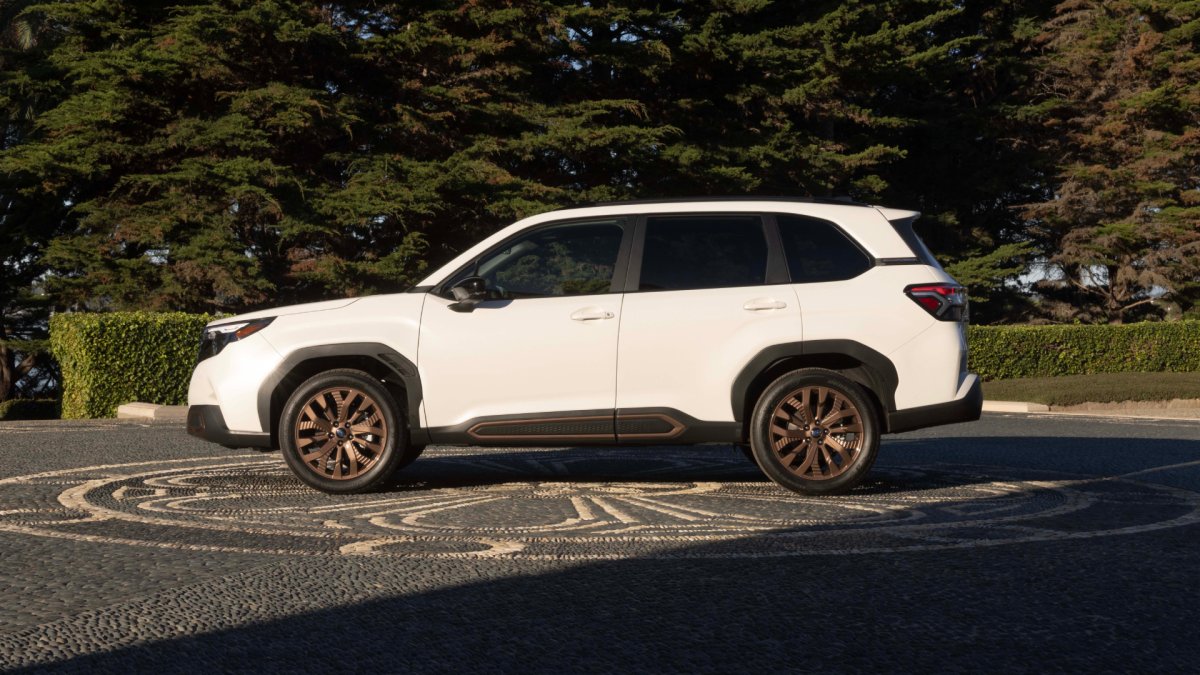
Like a well-oiled machine, the automotive industry churns out new models, each one a testament to human ingenuity and our relentless pursuit of innovation. The latest crop of vehicles is no exception, boasting sleek designs, advanced safety features, and impressive fuel efficiency. But, just as a car's true character is revealed on the open road, a product's worth is only truly measured by its performance in the real world.
In the realm of automotive product reviews, there's a delicate balance between form and function.
A car's aesthetic appeal can be undeniably captivating, but it's the nitty-gritty details – the responsiveness of the steering wheel, the smoothness of the transmission, and the overall driving experience – that truly make or break a vehicle.
It's here that reviews like those found in "The Drive" prove invaluable, providing prospective buyers with a candid look under the hood, so to speak.
By delving into the specifics of each model, reviewers help consumers make informed decisions, separating the wheat from the chaff in a crowded market. For those in the market for a new set of wheels, navigating the sea of options can be a daunting task.
That's why trusted sources like "The Drive" are essential, providing in-depth analysis and expert opinions on the latest models.
Other references and insights: See hereBeing outdoorsy is all the rage with modern cars. It's no longer enough to offer off-road capability; you have to be loud about it, too.◌◌◌ ◌ ◌◌◌


No comments:
Post a Comment