Saturday, December 20, 2025

A New Standard In Affordable Electric Vehicles

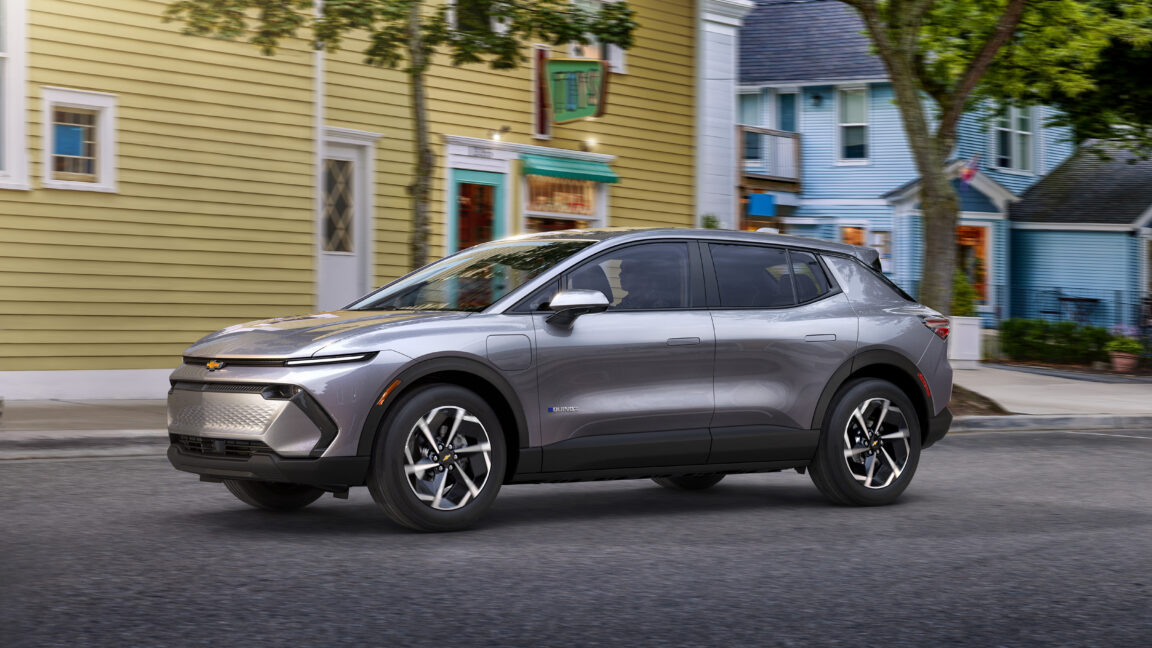
The Chevrolet Equinox EV: A New Standard in Affordable Electric Vehicles The Chevrolet Bolt, launched in 2017, was a game changer in the electric vehicle (EV) market, offering an affordable and longer-range option for consumers. Although it had its drawbacks, such as slow charging and uncomfortable seats, it paved the way for future EV models.

One of its successors, the Chevrolet Equinox EV, has raised the bar with its impressive features, comfort, and convenience. A Roomier and More Comfortable Ride The Equinox EV is a significant upgrade from the Bolt, boasting a larger size - 190. 6 inches long, 77 inches wide, and 64. 8 inches tall. This compact SUV offers ample space for passengers and cargo, with 26. 4 cubic feet of cargo volume behind the rear seats and 57. 2 cubic feet with the seats folded down.

The suspension system effectively absorbs road bumps, ensuring a smooth ride. Impressive Electric Range and Performance The Equinox EV's electric motor produces 220 hp and 243 lb-ft of torque, providing a peppy driving experience. During testing, the vehicle achieved an estimated 311 miles of range on a full charge in below-freezing weather.

Image

The electric vehicle (EV) market has experienced significant growth recently, driven by increasing consumer demand for environmentally friendly and cost-effective transportation options. As governments worldwide implement stricter emissions regulations, automakers are investing heavily in EV technology to meet the new standards.

This shift towards electrification has led to a surge in new EV models, offering consumers a wider range of choices than ever before.

One of the key challenges facing the EV industry is the development of charging infrastructure. As the number of EVs on the road continues to grow, the need for convenient and accessible charging points becomes increasingly important.

Many countries are investing in the expansion of public charging networks, and some automakers are even offering complimentary charging services to their customers.

However, despite these efforts, charging infrastructure --- a concern for many potential EV buyers, who worry about the availability of charging points on long road trips.

Despite these challenges, the future of electric vehicles looks bright. Advances in battery technology have led to significant improvements in range and efficiency, making EVs a more practical option for daily driving.

Many governments offer incentives for EV adoption, such as tax credits or rebates, which can help offset the higher upfront cost of an EV.

●●● ●●●

There's a lot of goodwill out there for the Chevrolet Bolt . As maybe the first properly affordable longer-range electric car on the market, the ...
Alternative viewpoints and findings: Check here

General Motors Accelerates Electric Vehicle Development With Focus On Speed And Innovation

Image

General Motors (GM) is accelerating its electric vehicle (EV) development, with a focus on reducing production timelines. According to Al Oppenheiser, GM chief engineer, the company achieved this with the GMC Hummer pickup truck, cutting two years from the development cycle [1]. This project, dubbed "Project O" for "unobtainium," was initially considered impossible.

Oppenheiser, who led the Hummer EV development after 14 years as the chief engineer for the Camaro, aimed to make electric cars exciting and grow GM's EV portfolio in line with CEO Mary Barra's strategy [1]. The success of the Hummer EV led to the development of subsequent EVs, including the Cadillac Escalade IQ and IQL, which were completed even faster than the Hummer. Oppenheiser expressed his astonishment at achieving this goal, stating that the company has now adopted this accelerated vehicle development process for all programs [1]. This approach prioritizes being first to market, as emphasized by Oppenheiser: "it is much better to be first to market than a follower.

So that's our mission, introduce things fast." The development of the Escalade IQ and IQL reflects GM's commitment to electric vehicles, as outlined by CEO Mary Barra.

The electric vehicle (EV) development process is a multifaceted endeavor that requires a harmonious blend of innovative technology, strategic planning, and collaborative effort. As the automotive industry continues to shift towards a more sustainable future, manufacturers are investing heavily in EV research and development, with a focus on improving battery efficiency, reducing production costs, and enhancing overall performance.

According to a report by USA TODAY, the EV market is expected to experience significant growth in the coming years, with many experts predicting that electric vehicles will become increasingly mainstream [1]. One of the key challenges facing EV developers is the need to balance performance, range, and affordability.

As consumers become increasingly environmentally conscious, they are demanding vehicles that not only reduce their carbon footprint but also provide a seamless driving experience.

To meet these expectations, manufacturers are leveraging advancements in battery technology, aerodynamics, and lightweight materials to create EVs that are both efficient and exhilarating to drive.

As noted by industry experts, the development of EVs requires a fundamentally different approach than traditional internal combustion engine vehicles, with a focus on optimizing electric powertrains and battery management systems [2]. As the EV development process continues to evolve, manufacturers are exploring new strategies to accelerate production and reduce costs.

◌◌◌ ◌ ◌◌◌

When GM chief engineer Al Oppenheiser was tapped to develop the electric GMC Hummer pickup truck , he was given an aggressive timeline that seemed ...
Related perspectives: Check here

The Timeless Allure of Rear-Wheel Drive.

The pressure was a whisper, sudden and insistent, moving from the firewall, down the spine of the transmission tunnel, concentrating all its urgent energy exactly where the driver was not. Not in the turn, not in the brake dust, but precisely where the tires met the tarmac, asking for revolution. It is the physics of a push, not a drag. This architecture—Rear-Wheel Drive (RWD)—is the oldest conversation the internal combustion engine ever had with the road, a foundational dance perfected by Karl Benz's Patent Motorwagen in 1886. The engine sits up front, an earnest, metallic heart, but the power, the actual motive force, travels backward via the driveshaft, culminating in the differential, that masterpiece of planetary gear geometry designed to let the outside wheel travel farther than the inside wheel during a corner—a necessary betrayal that allows the turn.

To understand RWD is to first appreciate load distribution, an asymmetrical separation of responsibilities that achieves unexpected harmony. *How to maximize its effect:* Maintain a near-perfect 50/50 weight balance, achieved because the heaviest components (engine and powertrain elements) are purposefully spread across the chassis length. This separation of tasks is key: the front wheels perform the entire steering responsibility; they are never burdened by applying significant torque. This results in "purer" steering feedback—the wheel transmits only road texture and directional input, unadulterated by engine load, thereby eliminating the directional pull known as torque steer. When accelerating, the law of inertia dictates that weight shifts dramatically toward the rear axle, increasing the downward force and therefore the traction precisely when it is most needed to propel the vehicle forward. This natural load transfer is the confusing, yet profoundly elegant, dynamic that allows for controllable oversteer—the rear end gently stepping out, manageable, unlike the inherent push (understeer) characteristic of most Front-Wheel Drive systems. It is the technical difference between pulling a heavy object and pushing it.

The future, packaged in lithium-ion cells, arrived quietly and did not discard RWD. Instead, the electric motor—compact, modular, and lacking a massive driveshaft tunnel requirement—often finds its home nestled directly above or between the rear axle components. *How to interpret this shift:* RWD is regaining prominence in the electric age, not as a legacy component, but as an elegant and efficient packaging solution for vehicles like the Tesla Model 3 Standard Range and many variants of the Porsche Taycan. This single rear-motor configuration capitalizes precisely on the same acceleration weight transfer dynamic noted above. The perplexing part is the simplicity: the motor provides instant, precise torque, making the mechanical differential almost redundant in some advanced setups where electronic torque vectoring handles the rotational speed difference through precise, individual wheel braking. The low, central weight of the battery pack further stabilizes the chassis, often mimicking the ideal 50/50 balance of its internal combustion predecessors. This resilience of architecture, surviving the transition from gasoline to electron, is a profound statement about foundational design; the way power meets the ground, it turns out, is timeless.

# The Mileage Maze: Standard vs. Actual

Your vehicle is not just metal and glass. It is a financial instrument. A mobile profit center. Treat it like a highly compensated employee, or watch the opportunity—and your money—vanish. Discipline in documentation is the first rule of operational integrity. You must define the boundaries between personal and professional movement with absolute clarity. Failure to do so exposes you to unacceptable tax burdens and crippling liability.

The moment you integrate your car, van, or truck into your work, the rules change fundamentally. You assume responsibilities far beyond standard commuter requirements. For professionals whose work involves extensive travel—such as independent healthcare providers traveling between patient homes, or specialized contractors moving unique, high-value equipment—the precise calculation of operational costs can shift your entire profitability margin. This is not about approximation. It is about verifiable data capture. It requires commitment.

***

This is where many business owners stumble. They guess. They estimate. Don't. You have two primary options for deducting vehicle expenses, and selecting the wrong one costs real money. *Significant* money.

The Standard Mileage Rate is the simpler route. The IRS sets a specific rate per business mile driven, updated yearly. This rate covers the costs of depreciation, maintenance, gas, and insurance—all bundled into one calculation. It is fast. It is clean. But it might not be the most lucrative choice if your vehicle possesses unique characteristics.

The Actual Expense Method is the high-maintenance option. It requires logging every drop of fuel, every oil change, every parking receipt. But for vehicles that incur extraordinary costs—think specialized equipment installation, unusually high-cost commercial insurance due to cargo risk (e.g., a field technician carrying isotope detection gear), or highly accelerated depreciation—this complexity is mandatory. You track the total costs of operation, then deduct the percentage directly attributable to business use.

* A self-employed tutor driving an efficient compact car generally uses the Standard Rate. * A custom cabinet maker with a specialized box truck requiring commercial financing and specific tool shelving repairs *must* analyze Actual Expenses.
**

Tracking The Non-Negotiable Imperative

Your memory is flawed. The calendar is unforgiving. You must establish an impermeable logging system from Day One. Business miles must be differentiated from personal miles. This distinction is critical for audit defense.

Essential Tracking Elements:
Date of Travel Exact date. No generalization.
Total Mileage Starting odometer reading and ending odometer reading for the trip segment.
Destination and Route Specific location, not just "the city."
Business Purpose Specific justification. For example: "Meeting with client X to finalize Q3 contract documentation." Not simply "Client meeting."

Unique electronic tools simplify this often-confusing aspect. Modern GPS trackers link directly to OBD-II ports, categorizing trips automatically via smart phone interaction. These systems eliminate the risk of handwritten log errors. Does your daily commute from home to your primary office count? Almost never. What if your home is your primary place of business? See the complication? It's specific.

**

Commercial Exposure The Insurance Gap

Most personal auto policies are designed solely for personal use. Introducing a commercial element, even a small one, voids specific clauses of the standard contract. If you use your personal car to deliver products, transport paying clients (rideshare activity), or conduct site inspections for construction projects, your standard insurance may deny a claim entirely following an accident.

It is a silent, terrifying vulnerability.

You need to consult your insurance carrier regarding a Business Use Endorsement or a dedicated Commercial Auto Policy. The former is often sufficient for light, infrequent business use (like driving to different business locations). The latter is mandatory for professional drivers, fleet operators, or anyone whose vehicle is fundamentally integral to the revenue generation (e.g., food delivery couriers, mobile grooming services). The liability stakes are too high to ignore.

* A specialized artisan courier, regularly delivering unique, fragile, high-value art pieces, will need significantly higher cargo and general liability coverage than a salesperson carrying brochures. The risk profile shifts based entirely on the unique contents and purpose. Analyze your unique exposure. Protect the asset. Protect yourself.

Friday, December 19, 2025

# How To Account for Pigment Dynamics in EV Selection

The modern electric vehicle (EV), this smooth, largely silent, computational platform masquerading as transportation, places upon the prospective owner a subtle yet profound burden: the calculation of externalities. We think we are merely selecting a hue—a deep, obsidian black perhaps, or the crisp, high-reflectance of ceramic white—but what we are truly selecting is a measurable, verifiable input variable into the car's most critical operational system: thermal management. This is not the gasoline era, when choosing a flamboyant canary yellow merely incurred the visual judgment of one's peers and perhaps a slightly higher insurance premium for attracting undue police attention. This is about range anxiety, specifically the anxiety derived from the necessity of running the climate control compressor hard, the range drain that is not insignificant, especially during that initial cool-down phase after the vehicle has been left to solar-cook in the midsummer sun (a phenomenon DFW would probably classify as the true existential dread of the suburban condition).

The fundamental, if highly reductive, instruction here is deceptively simple: understand the albedo, that pesky measure of diffuse reflectivity. Darker colors (specifically those with high Solar Absorptance) translate directly into increased radiant heat gain. This absorbed energy is then transferred by conduction and convection to the cabin interior and, crucially, to the sensitive battery pack casing located just millimeters beneath the floor pan. While sophisticated liquid cooling loops manage the battery pack itself, minimizing external heat soak is always optimal, and every degree subtracted from the initial thermal load is a fractional boost to available propulsion energy. Choosing the darkest permissible non-metallic shade of gloss black, for instance, immediately commits you to greater reliance on the HVAC system, potentially decreasing usable range by 3 to 5 percent in peak summer conditions, depending heavily on the geographical locale (Phoenix versus Seattle being very different thermal universes). It's an efficiency tariff levied purely by light physics.

Therefore, Step One in the color calibration process is a purely thermodynamic assessment: if you live in a location defined by prolonged, aggressive sunlight—if the sun is a brutal, high-output energy source rather than a comforting suggestion—then the default selection criterion defaults to the highest practical reflectivity. This usually means white, or perhaps a very light silver with high mica content (the particulate suspended in the paint that ensures the light doesn't just absorb, but bounces back in wonderfully diffuse, complex ways). Consider the paint itself a proactive layer of thermal resistance. The sheer difficulty of achieving deep, lustrous color that is also thermally benign—

The Manufacturing and Complexity Penalty

The choice also extends beyond operation and deep into the very heart of the assembly plant, which is Step Two. The paint shop, that vast, robotically precise chamber of volatile organic compounds (VOCs) and massive curing ovens, is the single most energy-intensive process in vehicle manufacturing. To achieve that satisfying, deep red (often called "multicoat" or similar proprietary terms), the robotic arms must apply multiple, thin layers, sometimes four or five, each requiring energy-intensive flash-off and curing stages. This complexity and energy demand are precisely why early iterations of highly efficient EVs (like the ubiquitous early Tesla Model 3s) featured an almost Soviet-era minimalist palette—often just black, white, and a gray that felt, to the meticulous observer, almost apologetic. Simplicity in color selection directly correlates to efficiency in resource expenditure at the factory level.

If you opt for a special, vibrant tri-coat color—a deep cerulean blue with subtle metallic flecks that absolutely

*pops* under streetlights—you are implicitly endorsing the higher upfront manufacturing energy cost. Is this trade-off worthwhile? Absolutely, especially if that color brings you a specific, unique kind of joy. That specific, non-replicable aesthetic satisfaction should be considered a kind of utility in its own right, a necessary emotional ballast against the often sterile environment of cutting-edge technology. The *How To* here is acknowledging that selecting a complex color is merely shifting the efficiency expenditure: sacrificing a fraction of operational range efficiency for a dose of pre-delivery manufacturing energy expenditure, balanced against the psychological efficiency derived from owning something that truly pleases the eye. This calculation, however minute and confusing, must be made.

The Aesthetics of Non-Color

Finally, Step Three involves the consideration of the non-traditional finish, specifically the contemporary fascination with matte or satin finishes. These highly porous surfaces, achieved through specialty clear coats that diffuse light rather than reflect it specularly, introduce a confusing new variable. While they might reject certain wavelengths, their delicate nature mandates specialized cleaning protocols—no automatic car washes, please—and complicates minor repair. This choice is primarily aesthetic, serving as a visual statement of intentional, almost defiant, non-gloss. It says, "I understand reflectivity, but I prioritize texture." The optimistic observation here is that manufacturers are continuously developing new pigment matrices and film wraps—some of which are startlingly sustainable and lightweight—meaning the binary choice between thermal efficiency (white) and visual delight (deep colors) is steadily dissolving, leading us toward a future where our cars can be both incredibly efficient

*and* stunningly, wonderfully violet.

The Intersection Of Automotive Education And Modern Technology

The arrival of the automobiles—a 2022 Infiniti QX60 and a Nissan Pathfinder—at Baldwin Prep Academy is less an act of simple charity and more a complex transfer of contemporary mechanical knowledge. These vehicles, donated by the Bullard Automotive Group of Mobile, are metallic textbooks. They offer an immediate, tangible curriculum for the almost 70 students enrolled in the automotive program.

Unlike the typical fate of educational vehicles, which are often older, battle-scarred specimens already whispering tales of neglect, these are machines of the immediate moment. They possess the confusing purity of newness, forcing students to master diagnosis based not on mileage-induced failure, but on the potential for future breakdown within complex operational systems.

This sudden influx of pristine modernity is an unexpected opportunity, a chance to grapple with current technology before it descends into the predictable chaos of the aftermarket.

The Curriculum of Current Complexity

To dismantle a brand-new Pathfinder is to learn the very language of the manufacturer before any component has had time to register fatigue.

The mechanics of 2022 models are intricately linked to sprawling sensor networks and control modules, demanding a digital fluency that previous generations of mechanics rarely required. These gifted cars require specialized patience. For these students, the hood is not merely a cover; it is the sealed entry point to a future employment landscape defined by continuous software updates and hybrid complexities.

The academy's focus shifts from remedial repair to proactive mastery, a critical, unique distinction in vocational training. This is a very specific type of hope, packaged in utility-vehicle dimensions.

The Strange Ecology of Attention

This focused exchange of expertise and hardware occurs concurrently within a dizzying kaleidoscope of other societal appetites.

The digital ether that delivers instruction manuals also hums with the noise of fleeting commercial desires. While 70 students contemplate the Infiniti's navigation system, the public stream is awash with the temporary allure of deeply discounted goods—the iPad offered at an all-time low price, the seasonal savings on KitchenAid mixers, and Craftsman favorites slashed by half.

The world is simultaneously craving maintenance and demanding immediate consumption.

What connective thread links the specific gravity of automotive training with the triumphant, physical precision of the NCAA women's volleyball national championship? Texas A&M and Kentucky secured their advanced status after thrilling semifinals at the T-Mobile Center, a moment of acute competitive focus far removed from the Mobile garage bay.

Even further afield, the celebrated Golden Globes first-time nominees luncheon provided a different type of spectacle, where established figures like Dwayne Johnson and Kevin Hart paused to savor the career achievement. This is the confusing, simultaneous flow of American existence: the acquisition of mechanical skill, the momentary pause for celebratory fame, and the persistent, cyclical urge to acquire the discounted object.

All these incidents are real; all require attention; only one, perhaps, represents the construction of a reliable future, bolt by bolt.

Image

The landscape of vocational training is dotted with programs that aim to equip students with practical skills, and the automotive sector is no exception. Three major challenges facing automotive vocational training programs are the need for updated curriculum, the shortage of qualified instructors, and the requirement for expensive equipment.

These challenges can hinder the effectiveness of the programs, ultimately impacting the quality of education and the readiness of graduates to enter the workforce.

For instance, an outdated curriculum may not adequately cover the latest technological advancements in the automotive industry, such as electric vehicles and autonomous driving systems.

Instructors with industry experience are crucial in providing students with relevant knowledge and hands-on training, but attracting and retaining such talent can be a challenge.

According to Yahoo News, the demand for skilled automotive technicians is on the rise, driven in part by the increasing complexity of modern vehicles.

As a result, automotive vocational training programs must adapt to meet the needs of the industry. By addressing the challenges mentioned earlier and staying up-to-date with industry developments, these programs can produce highly skilled graduates who are well-equipped to succeed in the workforce.

●●● ●●●

A 2022 Infiniti QX 60 and a Nissan Pathfinder, "new" cars to the almost 70 students in the Baldwin Prep Academy automotive program, donated by the ...
Other related sources and context: Visit website

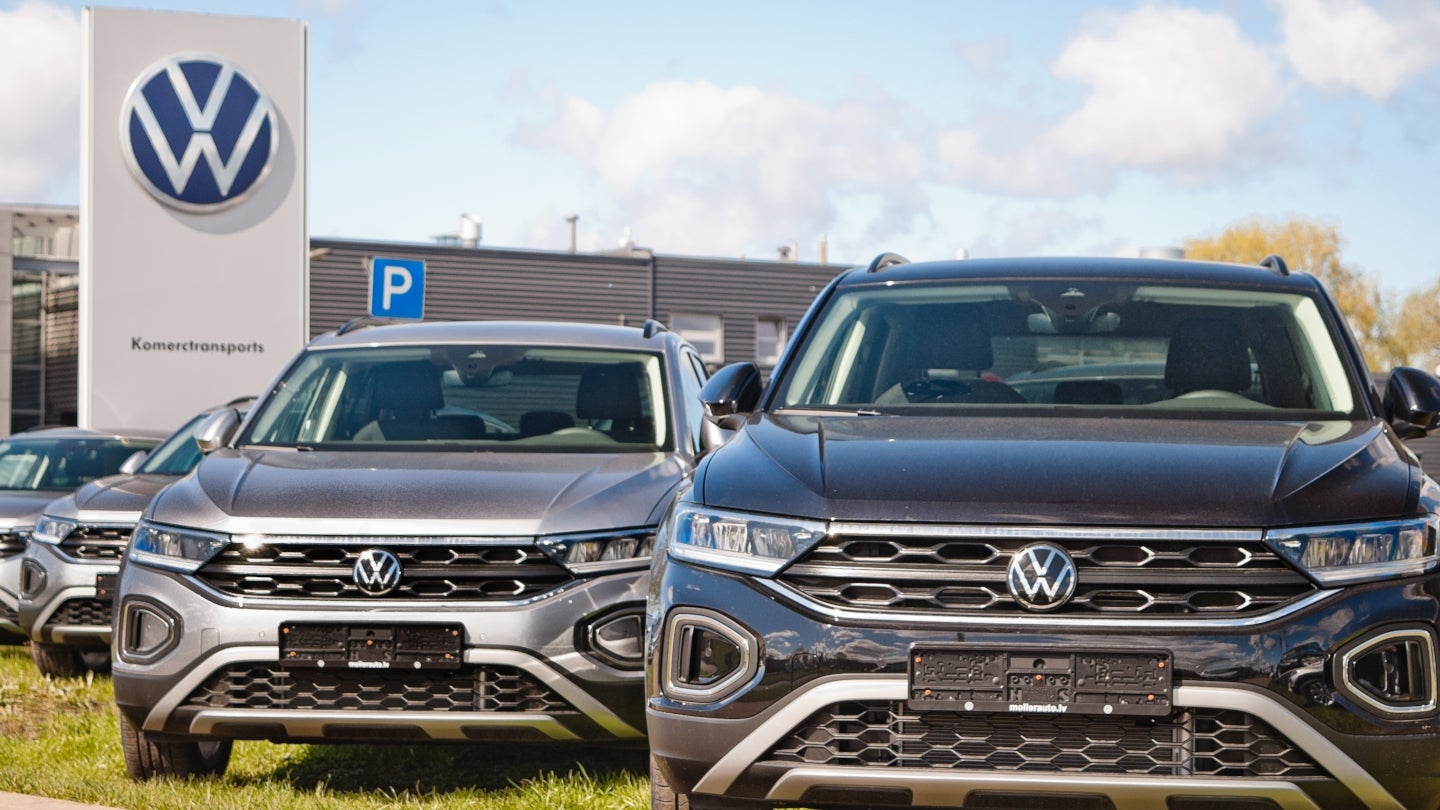
Volkswagen's Path To Fiscal Discipline And Global Competitiveness

Image

The current mandate from Volkswagen's top management focuses on rigorous fiscal streamlining, responding directly to heightened global competition and a demanding market landscape. Chief Executive Oliver Blume has established a trio of priorities for the massive automotive group: leadership, focus, and finances.

This strategic pivot signals that consistent, disciplined cost reduction is not a temporary measure but a foundational element required for long-term competitiveness. The effort aims to extract greater value from existing resources, demanding an internal assessment of efficiency across every single brand and operation, from Wolfsburg to Chattanooga.

The Physics of Investment Reduction

When an organization the size of Volkswagen—a complex universe containing everything from Å koda to Porsche—declares it must become leaner, the implications cascade across engineering floors and procurement desks globally.

Chief Financial Officer Arno Antlitz articulated the necessity of "stricter cost management and investment discipline." This discipline is immediate and visible in the revised capital expenditure plans. Previous cycles had earmarked colossal sums: €180 billion for the 2024–2028 window and €165 billion for 2025–2029. The latest rolling five-year framework marks a definitive reduction from those prior intentions.

Money, it turns out, is easily embarrassed; it prefers to be deployed where it makes the sharpest impact.

The task is less about simple subtraction and more about architectural redesign. Antlitz emphasized the urgent need to lift profitability within electric vehicle manufacturing—a critical, often resource-heavy, segment. Cutting fixed and manufacturing costs is paramount, a process that requires looking past the large numbers and focusing on the million tiny variables: the standardized bolt, the shared platform architecture, the less glamorous internal software stack.

Directing investment only towards meticulously selected future technologies means saying *no* to projects that previously might have seen funding. A tighter ship. A happier balance sheet.

Seeking Synergy and Shedding Complexity

The ambition for reduced complexity within the Group suggests that Volkswagen has acknowledged the organizational drag caused by historical sprawl.

Antlitz specifically called for "more Group synergies" and "less complexity." Imagine the sheer inventory management required when dozens of subsidiary brands are operating globally, each perhaps using a slightly different shade of internal door handle or an almost-identical wiring harness. Finding one perfect, standardized component that serves ten different marques requires incredible coordination, a kind of internal peace treaty among engineers.

This is not just efficiency; it is an organizational art form.

Another strategic pillar involves strengthening the market position outside Europe, specifically highlighting the United States. While VW maintains robust historical sales in its home continent, expanding and solidifying its footprint across the Atlantic is crucial for insulating the company from regional economic fluctuations.

This focus necessitates ensuring that the products—the ID. Buzz, perhaps, or a robust new Atlas—are perfectly tailored to local demands, eliminating any wasteful mismatch between production and preference. Less clutter everywhere. It is an optimistic search for the sweet spot where global scale meets local precision.

As the automotive industry navigates a complex landscape of electrification, regulatory pressures, and shifting consumer demands, Volkswagen is taking a pragmatic approach to cost management. The German giant has announced plans to implement a series of cost-cutting measures aimed at bolstering its competitiveness and streamlining operations.

By focusing on efficiency and resource allocation, Volkswagen aims to free up resources for investment in growth areas, such as electric vehicle development and digitalization.

One key area of focus for Volkswagen's cost-cutting efforts is its manufacturing operations. The company plans to simplify its production processes, reducing complexity and improving plant utilization.

This will involve consolidating production lines, reducing the number of variants, and implementing more efficient workflows.

Volkswagen will scrutinize its supply chain, renegotiating contracts and seeking better terms from suppliers. By driving out unnecessary costs and optimizing its operations, Volkswagen expects to achieve significant savings.

The cost-cutting measures are part of Volkswagen's broader strategy to adapt to a rapidly changing market.

As the company transitions towards electric mobility and connectivity, it must balance investment in new technologies with the need to maintain profitability. By taking a proactive approach to cost management, Volkswagen is positioning itself for long-term success.

◌◌◌ ◌ ◌◌◌

Volkswagen's top management has signalled that cost reductions will remain a core focus, as the German carmaker responds to intensifying competition...
Here's one of the sources related to this article: See here

The Calculus of Quickness

The ambition to conquer distance swiftly is an ancient ache, yet the means to satisfy it arrived in sudden, glittering bursts. Consider the case of 1899, a muddy April day near Paris, when the world witnessed a boundary dissolve. A Belgian racing driver, Camille Jenatzy, piloted a revolutionary torpedo-shaped electric vehicle, *La Jamais Contente* (The Never Satisfied). It was an electric machine, sleek and severe in its purpose. The speed achieved—65.8 miles per hour—was not merely a number, but the first documented moment when a land vehicle surpassed 100 kilometers per hour. This incident marked the precise point where velocity transitioned from a horse's gallop into a manufactured, engineered phenomenon, defining the century ahead with the promise of displacement.

Speed is the negotiation between power and resistance; it is the fundamental relationship defining the road experience. The engine's output, measured in horsepower or kilowatts, battles the unyielding triad of rolling resistance, internal mechanical loss, and, most critically, aerodynamic drag. Drag resistance does not increase steadily; it grows according to the square of the velocity. Doubling the speed requires not twice, but four times the power simply to maintain the accelerated pace against the air's refusal to part. It is a stunning, quadratic challenge engineers face daily.

Inertia, the tendency of any mass to remain in its state of rest or uniform motion, is equally demanding. Kinetic energy—the energy an object possesses due to its motion—is proportional to the square of the speed. This means that a vehicle traveling at 80 mph possesses four times the kinetic energy of the same vehicle moving at 40 mph. This increase is a tangible fact impacting every mechanical component, demanding sophisticated materials, rigid chassis construction, and cooling systems designed to manage intense thermal loads. Braking systems, too, must dissipate this tremendous energy, often converting thousands of foot-pounds of motion into heat within mere seconds.

Controlled Velocity and Human Response

The management of high velocity demands precision far exceeding simple throttle input. The human perception of speed alters significantly the faster we travel; peripheral vision narrows, and the processing time required to react to external stimuli decreases sharply. It requires an optimization of the vehicle's feedback systems—the tightness of the steering rack, the feel of the brake pedal, and the firmness of the suspension damping—all working in concert to translate complex physics into intuitive, reliable driver input. This is the silent conversation between person and machine: a trust built on predictable dynamics.

The quest for maximum velocity necessitated unique design solutions beyond engine refinement. Early attempts at breaking land speed records quickly revealed that sheer power was insufficient without meticulous shaping. Engineers adopted teardrop profiles and fully enclosed wheel wells, designs pioneered by men like Frank Lockhart and Sir Malcolm Campbell, realizing that the air itself was the primary adversary. The unique challenge was creating stability at speeds where minor atmospheric shifts could exert tremendous, unpredictable forces on the vehicle's body. The smallest vibration becomes a dangerous harmonic.

Unique Aspects of High-Speed Engineering

The very texture of speed has required specific, often overlooked, engineering innovations designed to keep the experience manageable and survivable.

Tire Composition Tires operating at high speeds (above 150 mph) generate immense heat due to continuous flexing and friction. Specialized compounds, often incorporating nylon or aramid fibers, are required to prevent catastrophic delamination, a unique failure mode where the tire structure separates due to heat and centrifugal force.
Active Aerodynamics Modern vehicles deploy adjustable spoilers and diffusers that dynamically shift position. These components manage downforce—the vertical force pressing the car onto the road surface—changing the vehicle's grip profile depending on whether the driver is accelerating, cornering, or braking.
The Sensation of Downshift The precise timing and mechanical structure of modern gearboxes allow near-instantaneous ratio changes, crucial for keeping the engine within its peak power band. This engineered moment ensures continuous, unrelenting acceleration, maintaining momentum where any delay would yield significant loss of velocity.

Highlights of Performance Dynamics


The Barrier of Sound While jet propulsion typically dominates supersonic speed, the specific aerodynamic heating and pressure management needed for a land vehicle to achieve and exceed Mach 1 (approximately 761 mph) required unique structural metallurgy to withstand the extreme air compression effects.
Quadratically Increasing Drag Power demand scales exponentially with speed, making the difference between 180 mph and 200 mph far more mechanically challenging than the difference between 80 mph and 100 mph.
Hydroplaning Thresholds As speed increases, the ability of tire treads to evacuate water decreases sharply, leading to hydroplaning—a temporary and often sudden loss of traction as the vehicle rides upon a wedge of water. This precise threshold defines safety margins on wet surfaces.

Thursday, December 18, 2025

The 2026 Porsche Cayenne GTS Coupe: A Defiant Requiem For The Combustion Engine

Image

The popular decree whispers that the age of the roaring cylinder is over, swept away by the silent, efficient tide of electron flow—especially as Porsche prepares to unleash its fully electric Cayenne upon the world. Yet, standing defiant in the bustling marketplace of 2026—a calendar year already heavy with the promise of electric ascension—is the gasoline-powered Cayenne GTS Coupe. This machine is not a ghost, rattling the chains of nostalgia; it is a muscular, V8-driven rebuttal to obsolescence.

It retains the essential, glorious mess of combustion, marrying the visceral thrill of an enthusiast's engine to the all-weather confidence of an all-wheel-drive platform. Riding upon the third-generation chassis, last significantly revised in 2024, this fastback variant—with a base price around $135,000—carries an unapologetic swagger, reminding us that sometimes, the most sophisticated poetry is written not in code, but in the explosive timing of an internal combustion cycle.

The fascinating confusion of this automobile lies in its dual citizenship: deeply rooted in physical dynamics, yet suddenly sprinting into the digital future.

Porsche understood that even a symphony of V8 sound requires a competent conductor for the user experience, so the underlying hardware for the standard 12.3-inch center screen and the available 10.9-inch passenger display has been secretly, meticulously accelerated. Faster rendering and smoother graphics—it's the invisible engineering that changes everything, a technological ghost in the mechanical machine.

Now, the cabin breathes with entirely new sound dimensions, an auditory architecture achieved through Dolby Atmos support in the top-tier Burmester or Bose systems; imagine a three-dimensional wash of sound enveloping the driver as they navigate the complexities of a city street, while simultaneously downloading third-party necessities from the newly integrated Porsche App Center. Amazon's Alexa is listening now, too, embedded like a digital oracle, and even the prosaic act of wireless device charging has been rapidly accelerated.

The Cayenne Coupe design provides an interesting study in aerodynamic compromise, a lovely geometry puzzle solved by Stuttgart engineers.

The signature sloped roofline, shared with the regular Cayenne in platform and engine, lowers the overall height by an inch or two, yielding that signature fastback elegance. This necessity of form results in a smaller rear glass panel than its sibling, further complicated by the integrated motorized rear spoiler—a mechanical wing that unfurls on the highway, momentarily slicing into rearward sight lines.

Yet, this fleeting visual restriction is instantly dismissed upon entering parking speeds, where the digital omniscience of Surround View delivers a clear, panoptic 360-degree assurance. Inside, the modern cockpit whispers of the Taycan, a curved instrument cluster for the driver facing flat panels across the dashboard; the aesthetic blend of traditional design with modern digital panels (especially when the display mode projects ⁘analog⁘ gauges) is excellent.

Here is where empathy in design truly shines: those crucial grab handles flanking the center tunnel. They are not merely ornamental; they are genuinely helpful anchors in a high-G turn, small courtesies extended to the passenger. The HVAC vents atop the dashboard efficiently circulate air, a functional hallmark of the brand.

However, the push-button ignition, positioned in its traditional location to the left of the steering column, lacks the satisfying mechanical friction I occasionally miss. Build quality remains unimpeachable; the fit and finish, impeccable.

Key Technological and Design Evolutions

* The infotainment system receives entirely new underlying hardware, resulting in significantly quicker rendering and smoother graphics for an improved user experience. * The Porsche App Center is newly integrated, allowing owners to download third-party applications, including the functional utility of Amazon's Alexa voice control. * Models equipped with either the Bose or Burmester audio systems now support Dolby Atmos, delivering immersive, three-dimensional sound. * The coupe's sleek fastback roofline is 1–2 inches lower than the standard Cayenne, enhancing aerodynamic flow. * The cockpit features a curved primary instrument cluster and flat center/passenger displays, blending modern architecture with the option to project traditional-looking analog gauges. * Practical elements, like the genuinely helpful grab handles on both sides of the center tunnel, underscore thoughtful interior design.

The ritual of the test drive, a curious waltz between man and machine, where the boundaries of reality are momentarily blurred and the senses are tantalized by the promise of power and freedom. As I slipped into the driver's seat, the soft leather enveloped me like a gentle lover's caress, and the dashboard, a symphony of screens and dials, seemed to hum with anticipation.

The engine, a beast awakened from slumber, purred to ___ beneath me, its vibrations coursing through my very being like a shot of adrenaline.

The road unwound before me like a serpent, beckoning me to unleash the vehicle's fury upon its asphalt spine. As I accelerated, the speedometer needle danced with reckless abandon, and the landscape outside my window became a kaleidoscope of color and light, a blur of trees and buildings that seemed to melt into one another like watercolors in the rain.

The handling was sublime, the steering responsive and precise, as if the car and I had become a single, kinetic entity, moving in perfect harmony through the world.

But, as with all fleeting pleasures, the test drive must come to an end, and I was forced to bid farewell to my temporary companion, leaving it ← →

○○○ ○ ○○○

Porsche's debut of an all-new, fully electric Cayenne may be grabbing the headlines, but a more traditional option remains in showrooms—the 2026 ...
Looking to read more like this: Visit website

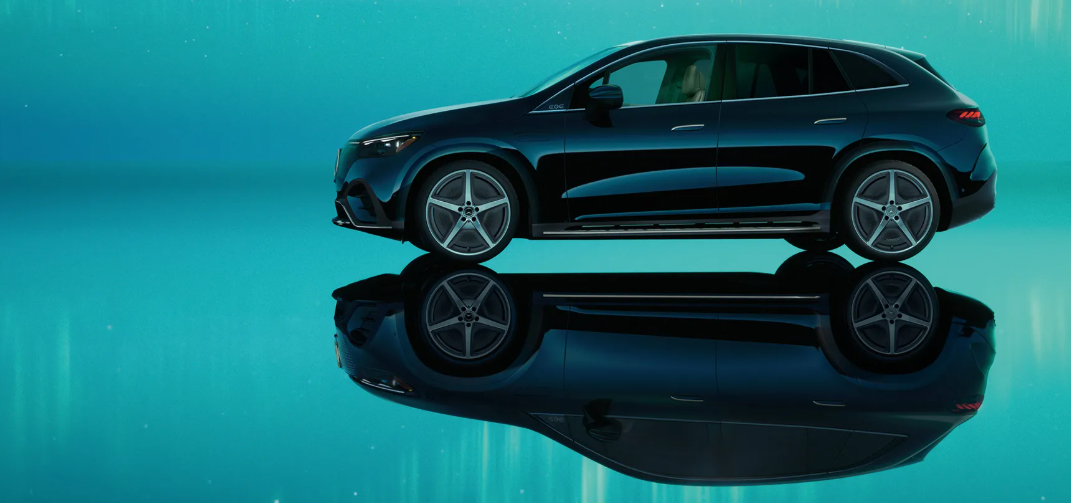
2026 Mercedes-Benz EQE 320+ SUV: Where Complexity Yields Effortless Luxury

The enduring paradox of modern engineering is how profound complexity, painstakingly rendered, yields such profound ease. This 2026 Mercedes-Benz EQE 320+ SUV arrives not merely as a machine of transit but as a testament to that contradiction—a heavy, midsize electric chariot designed to make the world outside feel featherlight.

It is a calculated blend of motion and stillness. They crafted the body low, ensuring that electric efficiency (yielding 87 city/77 highway MPGe) married the opulent craftsmanship the three-pointed star demands. This vehicle is more than its battery capacity; it is the promise of arriving unburdened, the silence of the cabin insulating the spirit from the clamor of the journey.

The initial price, starting at $64,950, confirms that this future of driving carries a premium, yet the complete experience justifies the weight of the expenditure.

The luxury here is not merely leather seats; it is the deep relief of preemptive protection. Consider the subtle, yet fierce, vigilance built into the architecture.

Active brake assist stands guard, anticipating moments the driver might miss, a silent co-pilot intervening before a whisper of trouble becomes a shout. The digital LED headlamps adjust their intensity and beam pattern with an almost empathetic understanding of the approaching darkness and the need for clear sightlines.

Driving fatigue is a known villain on long stretches; the inclusion of Attention Assist speaks to the unique understanding that the driver's mind is the most valuable cargo. This is where technology transcends feature lists and becomes genuine care. The vehicle recognizes the weight of a long day. It demands alertness.

This sense of protective awareness extends even into moments of stillness.

Guard 360° vehicle protection watches the silent perimeter when the driver steps away, providing ease that few purely mechanical systems can offer. Furthermore, the capacity for simple, verbal connection transforms the dashboard into a conversational partner. When the driver utters the prompt, "Hey, Mercedes," a personable multilingual digital assistant responds, ready to guide or inform.

This interaction, both immediate and sophisticated, lifts the curtain on the brand's electric commitment. Fully equipped, at $81,920 as reviewed, the EQE 320+ SUV confirms that electric performance (82 MPGe combined) can indeed wear the armor of high sophistication, ensuring that competitors must continually rethink their approach to comfort and capability.

**

Key Observations 2026 Mercedes-Benz EQE 320+ SUV
Energetic Efficiency Achieves an 82 combined MPGe rating, highlighting exceptional electric economy for its size.
Conversational Interface Access to features is simplified via the "Hey, Mercedes" personalized, multilingual digital assistant.
Preemptive Safety Suite Standard features include Active Lane Keeping Assist and Active Brake Assist, ensuring constant vehicular vigilance.
Adaptive Illumination Equipped with advanced digital LED headlamps featuring Adaptive Highbeam Assist for optimized visibility without compromising other drivers.
Parking Confidence The Surround-View Camera paired with Active Parking Assist removes the anxiety of maneuvering the midsize form.
Cost of Entry Starting MSRP is $64,950, reflecting its position as a highly capable, luxurious all-electric option.

Image

In the realm of electric vehicles, Mercedes-Benz has long been a stalwart, pushing the boundaries of innovation and luxury. The 2026 Mercedes-Benz EQE SUV is a testament to this commitment, embodying the perfect blend of style, performance, and sustainability. With its sleek design and aerodynamic profile, this SUV is poised to make a statement on the roads, while its electric powertrain promises a quieter, smoother ride.

The EQE SUV's interior is a masterclass in opulence, featuring premium materials and cutting-edge technology. The cabin is designed to envelop occupants in comfort, with ample legroom and intuitive controls.

A large, high-resolution display dominates the dashboard, providing seamless access to navigation, entertainment, and vehicle settings.

According to "The Atlanta Voice", the EQE SUV boasts an impressive range of up to 373 miles on a single charge, making it an attractive option for those seeking a long-range electric vehicle.

As the automotive landscape continues to evolve, Mercedes-Benz ___ at the forefront, driving the transition to electric mobility.

The 2026 EQE SUV is a shining example of this vision, offering a compelling blend of performance, luxury, and eco-friendliness.

• • • •

I was hoping to review another Mercedes-Benz by popular demand before the year ended, and the wait is over.
You might also find this interesting: Check here

# Essential Electric Bike Insights

Isn't it profoundly confusing how the act of cycling, which is fundamentally about expending effort, can sometimes feel like a mild, happy defiance of gravity itself? Learning to embrace the electric bicycle (or E-bike) is not about cheating; it is about discovering a quiet, helpful magic that lives within the frame. These marvelous contraptions are bicycles first and foremost, distinguished only by the whisper-quiet inclusion of a motor, a battery, and a sensing mechanism that detects the precise moment your legs might prefer a momentary reprieve. Understanding how these components dance together—transforming what might have been a grueling slog up a daunting incline into a moment of pure, silly joy—is the first step toward finding the perfect steed for your everyday adventures or the most ambitious touring endeavors.

To begin this whimsical journey, one must first navigate the bizarre, yet critical, labyrinth of legal classifications. In many regions, E-bikes are not a single entity, but are carefully segmented into classes that dictate maximum assisted speed and motor activation methodology. Class 1 bikes utilize pedal-assist only, ceasing their phantom push at precisely 20 mph; these feel the most traditional. Class 2 bikes can also possess a throttle, offering assistance without requiring the rider to pedal, which often mystifies the purists. The serious speed enthusiasts often gravitate toward Class 3, which maintains pedal-assist only but extends the joyful limit up to 28 mph, making the mundane commute surprisingly swift. It is absolutely essential to know your class, as regulatory agencies take these distinctions quite seriously, lest someone mistake your helpful assistant for a genuine motorbike.

The next peculiar decision involves the placement of the secret helper—the motor itself—and whether it should integrate directly into the crank or the hub. Hub-drive motors, typically situated in the rear wheel, are often a straightforward, less expensive option; they push the wheel forward regardless of the gear you are currently using, acting as a simple, effective propeller. However, the true connoisseurs often seek out the mid-drive system, manufactured by giants like Bosch, Shimano, or Yamaha. These motors are nestled right at the pedals and are far more intelligent; they utilize the bicycle's gears, offering superior torque management for scaling impossible hills and ensuring far better battery efficiency. They are the sophisticated, thinking motors, perfectly attuned to the peculiar cadence of the rider's effort, sensing the exact moment you wish the world to become slightly less taxing.

When venturing into the market, you will discover that the E-bike world is populated by brands as varied and unique as the riders themselves. Some companies prioritize seamless integration and sleek design, ensuring the motor is barely visible—Specialized, with their Turbo line, achieves this beautifully, crafting bicycles that look almost impossibly aerodynamic despite their electric heart. Others focus on the utility and accessibility of cycling; Rad Power Bikes, for example, specializes in direct-to-consumer models that prioritize utility, cargo capacity, and robust components for daily, unpretentious use. For those who seek the highest expression of engineering and comfort—perhaps anticipating long, luxurious European tours—brands like Riese & Müller offer exquisitely complex, fully suspended trekking and cargo models, which manage to make a heavy load feel nearly weightless. Each brand possesses a unique personality, offering a specific type of magic to suit the precise flavor of your cycling ambition.

Mid-Drive Superiority For serious hill climbing or extensive mileage, prioritize a mid-drive motor system (e.g., Bosch Performance Line, Shimano STEPS EP8). They leverage the bike's gearing for greater mechanical advantage and efficiency.
Torque vs. Cadence Sensors E-bikes utilize sensors to activate the motor. Torque sensors measure how hard you are pressing the pedals, providing a nuanced, natural boost; cadence sensors simply measure if the pedals are turning, offering a more immediate, less subtle boost.
Battery Specification The size of the battery is measured in Watt-hours (Wh). A higher Wh number means longer range, but often correlates with a heavier frame. Most effective commuter batteries range between 500 Wh and 750 Wh.
The Crucial First Test Never purchase an E-bike without testing its cut-off speed. The sensation when the assistance suddenly halts (at 20 mph or 28 mph) can feel slightly disconcerting, like the friendly poltergeist suddenly vanishing mid-shove; ensuring you are comfortable with this transition is paramount.
The Component Ecosystem Many top bicycle manufacturers rely entirely on a few key suppliers for the electronic guts. When reviewing specifications, look specifically for the quality of the motor and battery brands—Bosch, Shimano, and Fazua are reliable indicators of system integrity and ease of service.

BMW's 5 Series Refresh Sparks Design U-Turn Amid Electric Identity Crisis

Image

The strategic direction for BMW's mid-cycle refresh of the 5 Series Touring is suddenly under intense scrutiny, presenting a fascinating internal conflict. Recent spy photographs indicate a jarring reversal of design philosophy: prototypes slated for the refresh have jettisoned the distinctive "Neue Klasse" face—previously believed to be the non-negotiable electric future of the brand—in favor of a surprisingly conventional fascia.

This shift, occurring at a stage when exterior designs are typically locked down and supplier tooling is already underway, suggests a profound lack of consensus regarding BMW's immediate visual identity and the planned differentiation between its electric and combustion offerings.

When the Vision Neue Klasse concept debuted, it was heralded as a definitive, generational leap.

Adrian van Hooydonk, BMW's head of design, described the aesthetic as "so progressive it looks like we skipped a model generation," intended specifically to define and elevate the new electric fleet. Yet, the strategy began to confuse when the radical Neue Klasse look was spotted on prototypes for gasoline-powered models, blurring the promised demarcation line.

The latest development—the complete abandonment of that look on the refreshed 5 Series prototype—is a stunning reversal. Normally, validation vehicles are near-final products; this fundamental redesign introduces massive complexity, impacting internal engineering budgets and immediately forcing external suppliers, who may have already invested in specialized production tooling, to start over.

The newly adopted face appears to signal a desire for immediate commercial compromise.

The controversial, enlarged kidney grille openings of the current generation are visibly reduced, though they do not adopt the minimalist, thin horizontal strip characteristic of the Neue Klasse concept. The headlight cluster shape seems largely preserved, a small nod to stability amidst the chaos. Subtle but detailed changes are visible across the lower bumper: the thin "mail slot" air opening above the license plate is present but appears smaller, and the main lower intake is now formally divided into two distinct sections by a new central element.

These specific, late-stage alterations confirm that this is not merely a change in camouflage tape but a full structural pivot demanding significant re-engineering and recalibration of components.

Amidst this fascinating corporate drama on the exterior, reports point to thoughtful innovation within the cabin.

A unique and empathetic feature rumored for the interior is a dedicated entertainment screen for the front passenger, designed to be shielded visually from the driver. This emphasis on enhancing the co-pilot experience—providing individual distraction and control without compromising safety—highlights that even while grappling with profound stylistic upheavals and logistical difficulties, the company maintains a keen focus on unique occupant comfort.

The rapid, visible re-thinking of a core global model confirms that the path to production is seldom straight, often involving high-stakes negotiations over aesthetics and engineering budgets right up to the final bell.

The BMW 5 Series, a stalwart of the luxury sedan market, has undergone a subtle yet significant transformation. The facelift, unveiled to great fanfare, brings a host of updates to the iconic model. At first glance, the changes may seem incremental, but a closer inspection reveals a vehicle that is both refined and rejuvenated.

The exterior design, while largely familiar, boasts a number of tweaks, including revised headlights, a reworked front bumper, and a slightly updated grille.

Under the hood, the 5 Series receives a range of powertrain upgrades, designed to enhance both performance and efficiency. The existing engine lineup has been fine-tuned, with engineers extracting additional power and torque from the available options.

The result is a vehicle that is both quicker and more economical, a rare combination in the world of high-performance motoring. Inside, the cabin has been treated to a series of updates, including a revised infotainment system and a range of new driver assistance technologies.

According to a report by CarBuzz, which provided details on this topic, the updated 5 Series will also feature a range of advanced safety features, including automatic emergency braking and lane departure warning.

• • • •

Somebody at BMW needs to figure out what direction the company is headed in. The latest CarBuzz spy photos of the company's midsize 5 Series wagon ...
Alternative viewpoints and findings: See here

The Coming Crisis of Autonomous Vehicles: Beyond Technical Challenges

It is conventional wisdom that the final hurdle for ubiquitous self-driving technology involves only sensor fusion perfection—a sophisticated algorithm that never misses the errant cyclist or the sudden shift in traffic flow. This is a tidy, technical explanation, palatable to Silicon Valley. But the truly intractable problem is not algorithmic; it is anthropological. The machine can learn to drive, but it cannot yet learn how to assume liability, how to navigate the murky ethics of the trolley problem transposed onto a rainy highway in Portland, or how to convincingly testify in traffic court. The car is the easy part. The legal and moral framework required to shift the definition of "driver" from a biological entity to an operating system—that is the infrastructure still undergoing its slow, agonizing construction. The promise of autonomy is magnificent, the regulatory inertia, however, is a fascinating study in resistance.

The optimistic view, the one fueling billions in development capital, suggests that once we move beyond Level 2 driver-assistance systems—where the human must still maintain full situational awareness—the safety dividends will be too vast to ignore. This technological pivot demands a careful understanding of the specific capabilities and critical limitations of the systems currently deployed. We are learning how to delegate control, which is vastly different from relinquishing it entirely.

The Hierarchy of Autonomy: Understanding the SAE Scales

To truly grasp the capabilities of these digital chauffeurs, one must first dismiss the marketing fluff and adhere to the rigorous SAE International J3016 standard. This provides the five operational definitions of automation, and understanding the gulf between them is the core "How To" element.

Level 0 is no automation. Level 1 is simple steering or speed assistance—basic cruise control, longitudinal control only. Level 2, often misidentified as "self-driving," is where the system handles both steering and acceleration/braking simultaneously, but the human driver remains the primary monitor, ready to intervene instantly. It is a shared cognitive load. This is where most sophisticated consumer vehicles reside: Enhanced Autopilot, Super Cruise. The driver must watch. Always watch.

The existential crisis arrives at Level 3. This is Conditional Automation, the technological hot potato. Here, the system executes the majority of the dynamic driving task, and the human may engage in non-driving activities (read, text, watch a film), but must be prepared to resume control when the system issues a warning, often with only seconds of notice. This requirement to transition from passive observer to active controller is psychologically fraught, legally challenging, and rarely deployed outside of restricted highway corridors, if at all. Level 4 (High Automation) and Level 5 (Full Automation) require no human intervention. Level 4 systems operate only within specific, geofenced Operational Design Domains (ODDs)—downtown Phoenix, specific San Francisco districts. They simply stop if they exit the map. Level 5 is the science fiction promised land: autonomy everywhere, in all weather, on any road. It is currently nonexistent.

The Quiet Titans: Who is Actually Building the Brain?

The current landscape of autonomous development is a contest of philosophical approaches, each company tackling perception, prediction, and execution with wildly disparate sensor suites.

Alphabet's Waymo stands out for its methodical approach and reliance on highly refined, three-dimensional digital mapping. Operating primarily in areas like Phoenix, Arizona, their strategy centers on achieving L4 excellence within restricted boundaries, using a dense array of custom LiDAR, radar, and cameras. They prioritize redundancy, meticulously creating a precise digital twin of their environment before allowing the vehicle to operate. Waymo's cars are not learning the road as they go; they are executing a defined route upon a pre-existing, centimeter-accurate map.

Then there is Mobileye, an Intel subsidiary, focusing less on operating a taxi service and more on supplying the foundational intelligence. Mobileye champions a vision-first approach, using multiple cameras as the primary sensor, supplemented by radar, minimizing the reliance on expensive LiDAR systems often favored by competitors. Their scalable ADAS (Advanced Driver Assistance Systems) are utilized by numerous global Original Equipment Manufacturers (OEMs), essentially providing the widely adopted 'eye' and processing unit for the intermediate steps to autonomy. Their goal: providing the building blocks for predictable decision-making across millions of consumer vehicles, relying heavily on crowdsourced data for map building.

Cruise, supported by General Motors, focuses squarely on dense urban complexity. Their testing environment in San Francisco requires systems capable of navigating the city's chaotic, unpredictable variables: hills, unpredictable human behavior, double-parked delivery vans. They specialize in overcoming the rapid, low-speed interactions that characterize metropolitan driving. Their solutions are optimized for the precise physics of traffic flow, the constant stop-and-go.

The Unsolved Puzzle: Perception and Prediction Errors

The final, fascinating layer is the unpredictable reality of the "edge case." These are the unique, almost statistically impossible scenarios that the deep learning models must accurately identify and respond to. A common pedestrian crossing a crosswalk is a solved problem. A mattress falling off a truck is not. A rogue shopping cart blowing across six lanes of traffic. Unexpected debris avoidance maneuvers. Sensor degradation from heavy rain.

The systems demonstrate empathy not by emotion, but by the sheer cataloging of unique anomalies they must process instantaneously. The failure point is never the obvious. It's the subtle, unique thing that throws off the sensor fusion. A shadow moving just so. Glare at 4:30 P.M. The double bag of trash flapping rhythmically, mimicking the gait of a small animal.

The evolution of these systems is a testament to persistent engineering and an unyielding optimism that complexity can eventually yield to code. We are moving toward a future where the driving task is safer, less strenuous, but we are learning, week by week, that the road to true self-reliance is paved with the weird, the rare, and the utterly unexpected.

Audi's Identity Crisis: Reconciling Past And Future

Image

A manufacturer's pilgrimage back through its own archives is rarely straightforward, particularly when the path forward demands a complete renunciation of the artifacts being celebrated. Audi, it appears, is currently gripped by precisely this peculiar historical obligation: an attempt to synthesize the clamor of its glorious past with the streamlined, silent necessity of its future.

The brand seeks not merely a design refresh, but a kind of spiritual reboot—a conscious effort to recapture the elusive, arbitrary moment when an object transcends utility and becomes, simply, iconic.

The Asymmetrical Heartbeat

The Retro-Inspired Audi GT50 Concept serves as a compelling, perhaps even confusing, tribute to the heritage of the five-cylinder engine. This configuration, the very essence of Audi's motorsport legacy, stands as an inherently unique mechanical decision—a deliberate deviation from the harmonious six or the symmetric four.

It is that distinctive, uneven firing order, that rough-edged, insistent pulse which differentiates the machine; the sound remains the essential currency. The GT50, then, is not merely a styling exercise; it is an homage to acoustic asymmetry, drawn up, ironically, by a generation who may never tune a naturally aspirated engine again.

This concept, seen through the eyes of those next-generation designers, is a fascinating act of historical retrieval, pulling a raw, roaring memory across the increasingly silent chasm toward electric inevitability. They celebrate the oddity, the mechanical imbalance that defined performance for decades, acknowledging that the most interesting things are often those slightly imperfect arrangements.

The Burden of the "Moment"

Contrast this passionate backward glance with the Concept C, a model explicitly intended to herald the company's new aesthetic direction.

When an automaker reveals a design and simultaneously names its desired cultural effect—hoping it will become "another TT moment"—the anxiety is palpable. The original TT achieved its status through spontaneity, a sharp break from convention that the market simply embraced. It was an accident of genius, perhaps. The attempt to consciously engineer a recurrence of such a sudden, defining impact is one of the more confusing operational endeavors in modern industrial design.

Can genius be scheduled? The Concept C hints at the structural philosophy of forthcoming Audi models, presenting a distilled visual language for the imminent era, but its true burden is psychological: the necessity of manufacturing enthusiasm, of crafting the un-manufacturable icon. The GT50, conversely, suffers no such corporate pressure; it merely venerates a past whose iconic status is already settled.

The struggle, therefore, is this: to reconcile the mechanical, noise-driven sincerity of the GT50 with the clean, futuristic, and self-conscious striving represented by the Concept C. This transformation requires not just new sheet metal, but the delicate, difficult art of choosing which ghosts to honor and which to finally let rest.

The swooping lines of the Audi concept car sliced through the desert air like a shard of glass, its gleaming metal skin reflecting the blistering sun as it careened across the dry lake bed.** The vehicle's design was a masterclass in restraint, its proportions perfectly balanced between sleekness and functionality.

The Hofmeister kink, a signature Audi design element, was reimagined in a futuristic context, adding a touch of elegance to the car's otherwise aggressive stance.

As the concept car glided effortlessly across the desert floor, its gull-wing doors swung open to reveal a sumptuous interior that seemed to defy the laws of physics.

The cabin was a symphony of curved lines and precision-crafted surfaces, with a wraparound dashboard that seemed to envelop the occupants in a cocoon of luxury.

Every detail, from the hexagonal-patterned trim to the slender, turbine-inspired air vents, spoke to a design language that was at once avant-garde and deeply rooted in Audi's heritage. The Audi concept car's design was a testament to the brand's commitment to pushing the boundaries of innovation and style.

With its daring proportions, sculptural lines, and obsessive attention to detail, this vehicle was a clarion call to the automotive world, a declaration of ← →

○○○ ○ ○○○

Audi is going through something of a transformation at the moment as the brand tries to recapture some of its old design magic.
Looking to read more like this: See here

The Rise Of Viral Vulnerabilities: How Social Media Exposed A Car Security Gap

The initial structural oversight was real, a curious lapse in the intricate calculus of vehicle security: the absence of a relatively standard engine immobilizer chip in specific models across two massive manufacturing lineages. This omission, a minute technological gap, became a gaping vulnerability when exploited not by expert hackers, but by an algorithm-driven surge of instructional short-form video content.

It is a stunning lesson in the exponential power of digital propagation to expose physical fragility. The cost of this silence—the quiet lack of that specific anti-theft signal—was measured swiftly in shattered glass and the sudden, traumatic disappearance of millions of personalized mobility hubs.

Consider the unsettling speed with which the system buckled.

A car, historically defined by mechanical integrity and the inviolability of its physical lock, was instantaneously undermined by widely accessible digital knowledge. The sheer scale is staggering: nearly seven million vehicles across the United States, machines often serving as crucial, indispensable anchors for daily survival and economic participation, were suddenly tagged as potential targets.

The manufacturers, Hyundai and Kia, now commit to remediation, retrofitting these millions of pieces of hardware with free zinc-reinforced ignition cylinder protectors, a tangible, physical defense against a problem born from an intangible digital movement. The timeline is confusingly slow, however; consumers will receive notices about these necessary updates in early 2026, a distant calendar page for a problem that materialized overnight in neighborhood parking lots.

This is the strange new equation of industrial accountability in the age of viral instructions: the analog solution (a piece of strengthened metal) necessitated by a purely informational crime wave.

The ultimate resolution with 35 attorneys general ensures that all future U.S. vehicles will integrate the engine immobilizer technology, effectively closing the technological loop. There is empathy in recognizing the deeply disruptive nature of this vulnerability; the vehicle is frequently the most expensive, non-house asset a person owns, a guarantor of routines.

The journey toward security is often circuitous, involving bipartisan investigations and mass hardware rollouts that stretch years into the future. But the commitment itself—the large-scale repair of a technological miscalculation—reaffirms the enduring, if sometimes delayed, ability of complex systems to self-correct and restore essential trust in the tools that carry us forward.

Image

The art of thievery has long been a thorn in the side of car owners. As technology advances, so too do the methods employed by would-be thieves. In response, the automotive industry has implemented a range of vehicle theft prevention measures. One such measure is the immobilizer, a device that prevents a vehicle from being started without the correct key or fob.

This simple yet effective technology has significantly reduced the number of thefts.

Another crucial measure is the use of steering wheel locks, which physically prevent a vehicle from being driven away. These devices are particularly useful for vehicles that are left unattended in high-risk areas. Many modern vehicles come equipped with advanced security systems, including GPS tracking devices and alarm systems that alert authorities in the event of a theft.

These systems not only deter thieves but also aid in the recovery of stolen vehicles.

^^, vehicle theft prevention measures are a vital consideration for car owners. By taking proactive steps to secure their vehicles, owners can significantly reduce the risk of theft. For more information on vehicle theft prevention, readers can consult USA TODAY, which provides valuable insights and statistics on the topic.

●●● ●●●

Korean automakers Hyundai 005380.KS and Kia 000270.KS agreed on Tuesday to retrofit 7 million U.S. vehicles to address theft concerns and install ...
You might also find this interesting: Check here

Unraveling the Complex Web of Car Manufacturers and Engineering Innovation

The largest and most immediate challenge in learning to genuinely understand the world of cars and manufacturers, one which prevents most casual observers from advancing beyond the level of color preference, is not, in fact, the daunting complexity of the differential gearing or the various iterations of Otto-cycle timing, but rather the overwhelming, almost deliberately obfuscatory corporate nesting of proprietary lineage—the foundational confusion that arises when trying to determine who actually *made* the thing you are observing. Because the truth, the difficult, delightful, capital-T Truth, is that the name emblazoned on the steering wheel often tells you only the marketing narrative, not the engineering origin. The corporate structure is less a family tree and more a Gordian knot of platform sharing: that Volkswagen Group Audi A3 parked innocuously on the street uses the same fundamental MQB architecture as the Skoda Octavia and the Seat Leon, meaning the underlying engineering conversation is taking place four companies removed from the badge you are reading. Learning to see through the sheet metal and recognize the shared, fundamental structural elements—the intellectual property that defines the chassis geometry and safety parameters—is the essential first step, a necessary, almost archaeological dismantling of marketing pretense.

To properly learn the terrain is to focus obsessively on unique engineering dogma, the philosophical commitments that define the manufacturer beyond mere horsepower figures. Consider the hyper-specific, almost monomaniacal focus demonstrated by Christian von Koenigsegg, whose company created the nine-speed Light Speed Transmission (LST) for the Jesko, a multi-clutch system specifically designed to eliminate the flywheel, thereby achieving gear changes so rapid and so inertia-free they necessitate the development of highly specific, bespoke control algorithms just to manage the transition; this is not simply *building* a car, this is executing a high-level theoretical argument about rotational mass. Or look further back to the Czechoslovakian Tatra, which, from the 1930s onward, mounted its air-cooled V8s far behind the rear axle, creating stability challenges that mandated early, radical aerodynamic study—an institutional embrace of rear-engine physics that yielded cars requiring a genuine respect for their dynamic pendulum effects. These are not generalists; they are highly specialized, often stubborn, entities whose continued existence is a testament to the fact that radical, unusual solutions sometimes solve unusual problems (and sometimes, they just *are* the unusual problems).

The truly insightful reader understands that every component, every material choice, is a compromise—a decision made under constraint (cost, regulation, history). Empathy, here, means acknowledging the internal struggle faced by the engineers. Take Mazda's ongoing dedication to the highly unconventional Skyactiv-X engine, which utilizes Spark Controlled Compression Ignition (SPCCI). While the rest of the industry is either doubling down on forced induction or transitioning entirely to battery electric propulsion, Mazda is stubbornly, beautifully dedicating staggering resources to perfecting a combustion engine that uses a spark plug not to initiate the main burn, but to create a small, localized pressure spike that facilitates the rapid, efficient compression ignition of a very lean fuel mix. This quest for the perfect, high-compression, efficient piston engine—a refusal to concede that the internal combustion engine has reached its limit—imbues every drive with the ghost of that enormous, expensive, beautiful corporate commitment. You are not just driving a car; you are experiencing a corporate thesis statement on thermodynamics, delivered decades late but precisely on time for the contemporary moment. Understanding manufacturers is thus less about statistics and more about decoding these institutional priorities—the silent arguments happening under the hood. The noise the engine makes, the feedback the steering wheel provides—these are the resulting textures of those deeply particular, intensely specific, engineering decisions.

Wednesday, December 17, 2025

The Evolution of Rear-Wheel Drive: How Sophisticated Electronics and Design Refine the Art of Friction Management

The true grit of rear-wheel drive (RWD) resides not in the blunt application of power—that was solved by simple, brutalist engineering decades ago—but in the sophisticated electronic refinement of friction management. This mastery began when engineers ceased treating the rear axle merely as a power conduit and recognized it as a highly tunable instrument of dynamic control. Early limited-slip differentials (LSDs) relied on cone clutches and viscous coupling, functional but slow to react to shifting surface coefficients. The immediate advancement, the change that recalibrated vehicle dynamics entirely, was the introduction of digitally managed differential systems employing high-speed clutch packs. These electro-hydraulic systems do not merely limit slip; they preemptively meter torque across the axle to manage chassis yaw before the driver even perceives the start of a skid. The system can now instantly decide that only the outer wheel requires 80 percent of the available torque during a cornering event, pushing the vehicle precisely where the steering wheel dictates. This is less about maintaining traction and more about shaping the vehicle's trajectory with digital precision—a level of empathy for tire adhesion previously unattainable.

Separating the driving wheels from the steering wheels inherently optimizes weight transfer during hard acceleration; the rearward mass shift loads the tires responsible for propulsion, maximizing the available grip. Modern RWD platforms leverage this advantage by employing highly complex five-link rear suspension architectures—a geometry far more intricate than the straightforward MacPherson struts often required by space-constrained front-wheel-drive designs. These multi-link setups allow engineers to isolate and tune longitudinal stiffness for acceleration (squat reduction) and lateral stiffness for cornering (roll center management) independently. The driveshaft tunnel itself, often dismissed as merely a cabin intrusion, becomes a crucial structural backbone, adding torsional rigidity that contributes to the vehicle's immediate, crisp responsiveness. Consider the sheer effort poured into refining the high-pivot geometry used in specialized performance vehicles: eliminating unwanted toe changes under load, minimizing vertical wheel travel that unsettles the chassis. The necessity of mechanical integrity in the face of brutal forces drove innovation: the broken half-shaft on the alkali flats demanded a stronger alloy, not just a patch.

The migration of RWD principles into the electric vehicle (EV) era signifies not an end, but a remarkable purification of the concept. When the combustion engine and complex transmission tunnel vanish, the dedicated rear e-axle—a motor and reduction gear housed almost entirely within the wheel envelope—emerges. This configuration places mass lower and centered, drastically improving the center of gravity and reducing unsprung weight. Instantaneous torque availability, inherent to EV motors, is then coupled with digital traction control that can adjust power output microsecond by microsecond, achieving a degree of control that makes hydraulic clutch packs seem leisurely. The silent push on slick pavement now results from precisely metered electron flow, offering immediate acceleration control unavailable when managing the inertia of a massive spinning flywheel. This optimized weight distribution and fine digital mastery ensures the unique RWD feel—that subtle steering lightness and controlled tail-end push—persists, offering a future where the mechanical simplicity of a rear-only drive system meets the ultimate refinement of digital computation.

A Shift Towards Luxury And Performance

Image

The 2026 Mazda CX-70 3. 3 Turbo Premium S stands out in the midsize SUV market, offering a unique blend of performance, luxury, and practicality. Here are some key features that set it apart: * Powerful Engine: The CX-70 is equipped with a 3. 3-liter turbocharged inline-six engine, paired with a mild-hybrid system, producing 340 horsepower and 369 lb.-ft. of torque on premium fuel.

Smooth Transmission The eight-speed automatic transmission has been refined for 2026, providing smoother low-speed transitions and more decisive downshifts in Sport mode.
Exceptional Handling The CX-70's chassis feels planted and balanced, with precision steering that rivals luxury crossovers.
Refined Ride The rear suspension damping has been retuned for 2026, improving stability on rough pavement, especially with cargo onboard.
Towing Capacity With the Premium Towing Package, the CX-70 can tow up to 5,000 pounds.
Upscale Cabin The Premium S trim offers an luxurious interior that competes with more expensive competitors.

The Evolution of SUVs: A Shift Towards Luxury and Performance**. The sport utility vehicle (SUV) market has undergone significant transformations over the years, with manufacturers continually pushing the boundaries of design, performance, and luxury. Gone are the days of boxy, utilitarian SUVs, as modern models now boast sleek lines, advanced technology, and premium features.

This shift towards luxury and performance has been driven in part by changing consumer preferences, with many buyers seeking vehicles that offer a perfect blend of style, comfort, and capability.

One of the key factors contributing to the evolution of SUVs is advancements in engineering and technology. Modern SUVs often share platforms with luxury cars, enabling them to deliver a more refined and engaging driving experience.

The widespread adoption of turbocharged engines, advanced transmissions, and sophisticated suspension systems has significantly improved performance and handling.

As a result, SUVs are no longer just practical family vehicles; they have become a viable alternative to luxury cars, offering a unique combination of versatility, style, and driving dynamics.

The rise of luxury SUVs has also led to increased competition in the market, with manufacturers vying for attention with innovative features, premium materials, and exceptional performance.

◌◌◌ ◌ ◌◌◌

This week, I've had the 2026 Mazda CX-70 3.3 Turbo Premium S that comes to market as Mazda's two-row answer for buyers who want the driving dynamics...
You might also find this interesting: See here

# The Daily Ritual of Observation

A truck is more than a machine of commerce; it is a rolling repository of responsibility. Truck and road safety hinges upon meticulous pre-operation diligence, sustained spatial awareness, and the rigorous management of momentum. This vocation demands not merely physical stamina, but a specific form of intellectual vigilance, recognizing that the kinetic energy generated by an 80,000-pound Gross Vehicle Weight Rating (GVWR) unit requires an entirely different understanding of reaction time than a typical passenger vehicle. Safety in trucking is an applied philosophy—a continuous commitment to prevent the catastrophic interaction between immense weight and the ordinary flow of traffic.

Every shift must begin not with the turn of a key, but with a disciplined observation of the equipment's quiet details. The pre-trip inspection is less a formality and more a necessary meditation on the integrity of steel, rubber, and air lines. A quick glance achieves nothing; the driver must become a detective of minor failures. Listen for the specific, low-grade hiss that signals a slow air leak within the brake chambers, an indication that the integrity of the pneumatic system is compromised long before the warning buzzer sounds in the cab. Check the wheel bearing seals: the slight smear of fresh grease on the hubcap, a unique tell that friction is generating heat where it should not be. This process acknowledges that neglect breeds failure.

Unique Mechanical Checks:
Tire Sidewall Integrity Look past the tread depth. Examine the inner sidewalls for shallow, unique abrasions caused by curbs or road debris, subtle injuries that forecast a sudden blowout.
Slack Adjuster Play Confirm the specific, tight tolerance of the slack adjusters. Excessive movement—even a quarter inch more than specified—suggests a delay in brake application response time.
Fifth Wheel Coupling Ensure the kingpin is fully captured by the jaw. The safety latch should be visibly engaged, confirming the 40,000-pound trailer is truly one with the tractor.

A driver's focus must encompass the minutiae. You are seeking the specific frayed filament in the wiring harness, the slight discoloration near a weld point suggesting stress, or the solitary loose lug nut, which often begins its secession from the wheel quietly, without fanfare.

Managing the Invisible Spaces

The primary challenge of operating a large commercial unit is overcoming the vastness of the blind zones. These areas are not merely inconveniences; they are genuine voids of immediate information, often large enough to entirely swallow smaller cars. A competent driver views their mirrors not as supplemental tools, but as primary instruments, sweeping them every few seconds as if refreshing a critical data stream.

The right-side blind spot—extending diagonally back from the tractor and covering multiple lanes—is particularly treacherous during maneuvers. It is the zone where drivers of lighter vehicles often settle, mistakenly believing they are visible. Adjusting mirrors should compensate for this: the flat mirror must reveal the edges of the trailer, and the convex (spot) mirror must pull in the critical space immediately adjacent to the rear axles. Proper mirror setting ensures that as a vehicle enters the flat mirror's purview, it is already exiting the convex mirror's view, creating a continuous visual chain.

Understanding Momentum and Stopping Dynamics

The physics of moving 40 tons demands a profound revision of acceptable following distances. The standard car requires roughly 200 feet to stop from 65 mph under ideal conditions; a fully loaded truck requires almost 400 feet, often much more if the road surface is wet or uneven. This difference is non-linear and non-negotiable.

Consequently, safety requires preemptive braking—the recognition that you must begin deceleration far earlier than surrounding traffic. Do not simply rely on air pressure; use the engine brake (jake brake) judiciously to scrub speed slowly and consistently, transforming speed into heat well before engaging the primary foundation brakes. This preserves the brakes for emergencies and mitigates the danger of brake fade on long downgrades. Maintaining a secure space cushion is the single most effective tool for preventing rear-end collisions. When you see brake lights two car lengths ahead, it is already too late; the driver must be responding to events unfolding half a mile ahead.

Sustaining Vigilance and Physical Discipline

Fatigue is the quiet thief of precision. Hours of Service (HOS) rules provide a legal framework for rest, but the driver must exercise deeper personal discipline. It is the quality of the rest, not just the quantity, that matters. The greatest risk often occurs not late at night, but during the natural circadian trough, usually between 2:00 AM and 5:00 AM, or during the early afternoon post-lunch dip.

Optimism in this demanding environment means respecting the body's limits. Acknowledge the first subtle sign of reduced concentration—the slow blink, the slight drift within the lane. Do not attempt to push through the initial onset of drowsiness; pull over immediately. Even a twenty-minute power nap can reboot the necessary mental circuitry required for high-stakes operation. This discipline ensures that the driver remains an alert, empathetic observer of the world outside the cab, ready to make the necessary micro-adjustments that keep everyone safe.

Bullet Point Highlights for Truck Safety:
The Four-Second Rule (Minimum) Maintain at least a four-second following interval in dry conditions, increasing this by one second for every adverse factor (rain, fog, heavy traffic).
Active Observation of Load Shift Be acutely aware of how braking and turning affects the trailer's contents. For liquid loads, understand the unique, ongoing sloshing momentum (surge), which demands very smooth, gradual movements.
Communication via Lights Use four-way flashers proactively to warn traffic behind you of specific, impending dangers, such as sudden slowdowns ahead or required low-speed maneuvers.
Low Bridge Awareness Always know the height of your trailer. Misjudgment can lead to catastrophic structural damage and significant traffic disruption. Confirm clearance not once, but at every major decision point.

# The Invisible Thirst: Powering Perception

The power of the autonomous vehicle is not the horsepower of forgotten muscle cars, nor the steady burn of ancient fossilized sunshine, but rather, Electric Ganesha: the immediate, silent, and ravenous digital appetite, consuming megawatts not for motion primarily, but for perception. This consumption is a shimmering necessity. It is a fundamental truth that controlling the journey of a machine without human intervention is an act of perpetual, vigilant electrical drainage, a complex negotiation where every millimeter of the road, every flicker of reflected light, costs energy. This complex negotiation is where the driver—now merely a passenger—must understand the delicate energy economy of the car. The relationship between autonomy and consumption is a tightly woven tapestry, surprisingly fragile.

Understanding "how to" manage this power relationship means acknowledging that the primary power sink is the sensory suite, not the wheels. The constant creation of the digital twin of the world—a real-time 4D map shimmering inside the car's processors—demands extraordinary electrical resources. LIDAR units, ceaselessly spinning and pulsing their laser eyes, high-definition cameras streaming petabytes of visual data, and the central computational chips, operating at levels akin to small data centers, all require instantaneous and reliable power delivery. Imagine the processing strain required to decide, in a blinding instant, if a wind-blown plastic bag is a minor obstacle or a major philosophical statement about Newtonian physics. This intense computation dictates the range far more than the motor itself.

The self-driving apparatus fundamentally alters the vehicle's energy profile, pivoting from mechanical concerns to computational burdens. A conventional electric car might dedicate ninety percent of its battery power strictly to propulsion; an advanced Level 4 autonomous vehicle must subtract a significant percentage—sometimes twenty percent or more—just for the persistent function of seeing and deciding. This is the invisible thirst, requiring intelligent management systems that can dynamically throttle power based on environmental complexity. Driving down an empty, straight desert highway demands less computational energy than navigating the chaotic, signal-dense labyrinth of Mumbai traffic. The car's power management must learn this rhythm, adjusting electron flow with the sensitivity of a conductor leading an invisible orchestra.

Computational Overload The continuous running of redundant sensor systems (a safety requirement) significantly reduces available driving range.
Thermal Management The heat generated by high-performance GPUs requires separate, substantial cooling systems, which themselves draw dedicated power from the main traction battery.
The Standby Drain Even when 'resting,' the vehicle maintains essential systems—listening for updates, calibrating inertial measurement units—a low-level hum of consumption that must be factored into storage projections.
Antenna Array Sustenance High-speed communication systems (5G, V2X) needed for mapping updates and fleet coordination necessitate constant, stable power input.

The Electric River: Recapturing Lost Motion

A significant part of the "How To" of autonomous power management involves the skillful art of kinetic energy regeneration. This is the graceful, silent action of the vehicle transforming deceleration back into usable electricity—snatching back the energy it spilled moments before. For human drivers, regeneration is erratic, dependent on immediate mood and reflexes. For the Level 4 machine, it is an optimized mathematical exercise. The algorithms calculate the exact braking force required long before a human would react, maximizing the efficiency of the power recovery.

This leads to a silly but true insight: the self-driving car is, inherently, a better eco-driver than ninety-nine percent of humans. Its lack of ego ensures smooth braking, avoiding the sudden, wasteful dumps of energy characteristic of hurried commuters. The system anticipates traffic light changes miles away, utilizing slow, steady resistance to fully replenish the battery during the deceleration phase. This steady efficiency is crucial for range optimization.

Architecture of Sustenance: The Waiting Grid

To maintain the operational integrity of a fleet, one must master the external power architecture. The vehicle is only as powerful as the grid connections designed to sustain it. Charging is no longer a simple overnight affair; it is a tactical necessity requiring careful staging.

The distinction between Level 2 AC charging—the polite, slow dinner enjoyed over several hours—and DC Fast Charging (DCFC)—the intravenous injection of pure electron velocity—is critical. DCFC systems operate at hundreds of kilowatts, necessary to rapidly replenish the massive batteries that underpin the autonomy calculation. The challenge lies in managing battery thermals during these high-speed operations; too much heat degrades the battery capacity over time. Therefore, the "How To" of successful long-term autonomous power relies on scheduling fast charging sessions strategically, allowing the thermal management systems adequate time to prepare the battery for the onslaught of electrons. A necessary pause, yes, but a life-giving one.

Ultimately, the mastery of autonomous power is an exercise in resource empathy. It requires treating every electron with respect, understanding that the silent, sophisticated brain of the car demands perpetual sustenance. We are watching the beautiful, difficult transition from the crude physics of explosion to the elegant science of calculation. An optimistic future demands this efficiency.

Featured Post

The Allure of Four-Wheel Drive: A Philosophy of Freedom and the Machine

The Sovereignty of the All-Wheeled Path Gravity demands obedience. When the paved assurances of the city dissolve into the whims...

Popular Posts