Saturday, November 8, 2025

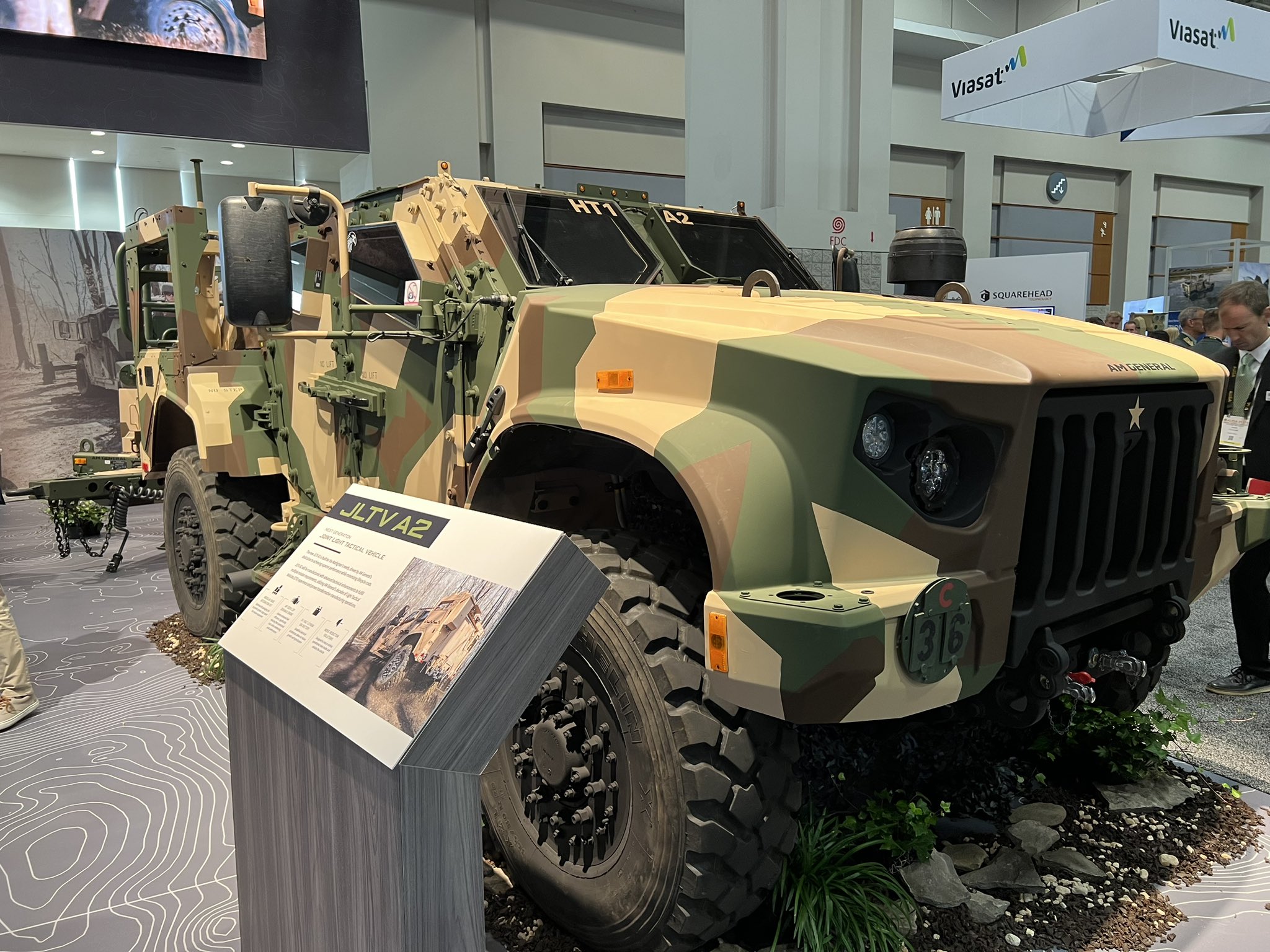
AM General's JLTV Production Marches On Amidst Shifting Army Strategy

You have observed the machinery of large-scale government procurement long enough to know the peculiar rhythm of its breath—that deep inhale of necessity followed by the tentative exhale of strategic recalculation. This is the enduring paradox: the initial contract is signed, the steel is ordered, yet the future requirement shifts like desert sand.

The commitment remains rigid for the vehicles already sanctioned, but the long view is fractured, creating a tension where factory schedules clash with strategic planning sessions hundreds of miles away.

The Immediate, Tangible Output

The critical path for AM General rests solely on the existing contractual volume for the Joint Light Tactical Vehicle A2 variant.

Production continues regardless. The company has publicly confirmed its industrial pace aligns precisely with the fielding goal targeted for the second half of 2026. This date represents a hard boundary in the immediate timeline. The physical evidence is undeniable: reports confirm that at the facilities in South Bend and Mishawaka, Indiana, the trucks are accumulating, a metallic testament to current obligations.

You can drive by and witness "a whole bunch of JLTVs parked in the parking lot that are built."

The contrast between this steady output and the Army's evolving fiscal strategy provides a curious spectacle. The decision to curtail future JLTV procurement is a signal about portfolio reallocation—a shifting away from projected full-fleet replacement numbers.

This necessary financial reassessment, however, does not erase the current requirement. The workers on the line are fulfilling a requirement established years ago, their focus necessarily narrow and immediate, fixed upon the current chassis moving through the bays. The implications of reduced future orders—the potential cooling of the assembly lines later this decade—hang abstractly above the noise of current welding and assembly.

The Bureaucratic Footprint

The JLTV program itself represents a highly evolved successor to the previous generation of light tactical vehicles, incorporating enhanced protection and network capabilities.

The shift to the A2 variant, now under AM General's stewardship, required a complex transition, involving meticulous data transfer and validation. The success of the 2026 fielding will not be measured by speculative necessity but by verifiable delivery numbers and required operational capabilities in the field.

Meeting this timeline establishes competence in execution, a vital metric independent of later budgetary adjustments.

Production Metrics

* AM General is currently in active production of the JLTV A2 variant. * The established fielding goal is the second half of 2026. * Production occurs at facilities located in South Bend and Mishawaka, Indiana. * The Army is planning to reduce procurement volumes beyond the current order. * Current output reflects binding contract fulfillment, not future procurement intent.
Image

The landscape of military vehicle production is shifting, with various nations investing heavily in modernizing their arsenals. In the United States, defense contractors such as Lockheed Martin and Northrop Grumman are working on advanced combat vehicles, including the Army's new Optionally Manned Fighting Vehicle (OMFV). This next-generation armored vehicle is designed to provide enhanced protection and firepower, while also incorporating cutting-edge technology such as autonomous systems and advanced sensors.

Meanwhile, in Europe, countries like Germany and France are collaborating on the development of a new generation of armored vehicles, including the European Main Battle Tank (EMBT). This joint project aims to create a highly advanced and adaptable tank that can operate effectively in a variety of environments.

The EMBT is expected to feature advanced armor, a powerful 120mm gun, and a sophisticated fire control system.

Other nations, such as South Korea and Japan, are also investing in their own domestic military vehicle production programs, with a focus on developing advanced technologies such as unmanned ground vehicles and autonomous systems.

As the global military vehicle market continues to evolve, industry leaders are closely watching developments in areas such as electrification, autonomous systems, and advanced materials.

For more information on the latest trends and updates in military vehicle production, Defense Daily provides ← →

○○○ ○ ○○○

As the Army plans to curtail future Joint Light Tactical Vehicle (JLTV) procurement, AM General has confirmed it remains on track to meet an initial...
Here's one of the sources related to this article: Visit website

# How to Understand and Monitor Autonomous Truck Features

The process of teaching a forty-ton machine to sustain an independent journey across the monotonous geometry of the American interstate is less a matter of simple coding and more a profound exercise in epistemological certainty. The self-driving truck, currently defined by Level 4 autonomy—the ability to operate without human intervention under specific operational design domains—stands as a stark technological challenge to the rugged solitude long afforded to the long-haul driver, whose livelihood was forged in the vast, unforgiving spaces between state lines. This is not the whimsical promise of fully automated delivery in chaotic urban sprawls; this is highly controlled, high-speed, inter-depot logistics, where the removal of the driver is meant to eliminate the statistically verifiable failure points inherent in fatigue, distraction, and the ordinary, messy human condition. The interstate is suddenly silent.

Understanding how a self-driving truck executes its mission requires examining the rigorous, redundant perception stack—a system designed to experience the environment with an obsessive detail that no biological entity could ever sustain. Unlike the intuitive, probabilistic judgments made by the human eye, the automated truck relies on sensor fusion, knitting together the precise 3D point cloud data from roof-mounted Lidar units, the velocity and range information derived from multiple radars, and the high-definition classification capabilities of vision cameras. The computational appetite necessary to process terabytes of environmental data per shift is staggering; the vehicle is constantly comparing its real-time world model against detailed, high-definition maps—pre-scanned maps that include lane curvature, gradient, and the exact position of every signpost—ensuring the truck recognizes subtle changes, such as unexpected construction barriers or the presence of specific, stationary debris that would necessitate a minor lateral shift, miles before any human driver would register the threat.

The operational definition of autonomy is strictly confined by the Operational Design Domain (ODD), which dictates where and when the system can operate safely. Currently, most deployed autonomous freight operations are restricted to strategic hub-to-hub runs, meaning the autonomous capabilities are activated exclusively on stretches of limited-access highways, largely between fixed transfer stations far from complex intersections or local traffic variability. This restriction is crucial; the complex decision-making required for navigating an unexpected four-way stop in a suburban environment remains a substantial Level 5 hurdle, but maintaining 65 mph on I-10 for seven hundred miles is, comparatively, a problem of persistent, reliable measurement. These trucks often run in platoons, using V2V (Vehicle-to-Vehicle) communication to maintain impossibly tight drafting distances, which significantly enhances fuel efficiency, creating a hyper-optimized column that moves with an unsettling, flawless precision.

While the dream of Level 5 autonomy eliminates the human entirely, current Level 4 systems necessitate sophisticated monitoring and, crucially, defined hand-off protocols, especially for safety drivers involved in pilot programs. For fleet managers and teleoperators supervising these routes, the primary task shifts from active driving to passive verification of system integrity and preparedness for a Minimal Risk Maneuver (MRM).

Understanding the Sensor Fusion Display The human operator must be trained to interpret the multi-layered visual output, which displays the Lidar point cloud overlaid with radar tracks and the camera's semantic segmentation (identifying and labeling every detected object: "Pedestrian," "Traffic Cone," "Uncertain Object"). The crucial understanding here is not *what* the truck sees, but how the system *classifies* objects and its calculated certainty score for each—a key indicator of system stress.
The Fail-Operational Redundancy Focus attention on the system's "fallback mode." Autonomous systems feature redundant steering, braking, and power sources. If the primary perception stack fails (e.g., if severe ice blocks all forward-facing Lidar units—a real incident in early testing), the truck does not simply halt; it executes the MRM.
Executing the Minimal Risk Maneuver (MRM) The MRM is the defined, pre-planned protocol for system failure or conditions outside the ODD (e.g., sudden, unmapped road closures or sensor blindness). The "How To" here is recognizing the MRM initiation warning. The system will safely decelerate the vehicle, activate hazard lights, and pull to the side of the road or, if necessary, bring the vehicle to a controlled stop in its current lane if no shoulder is available, then immediately alert the remote Teleoperation Support Center. The system's overriding imperative is safety, achieved via programmed, conservative retreat from uncertainty.
**

Key Autonomous Truck Features

* Lidar Point Cloud Mapping
Utilizes high-frequency laser pulses to generate an accurate, three-dimensional, real-time map of the environment, crucial for precise distance calculation and object shape detection, particularly at night.
Operational Design Domain (ODD) Geo-Fencing Defines the specific roads, weather conditions, and speed range within which the autonomy stack is certified to operate without human intervention. Leaving the ODD triggers an automatic MRM sequence.
High-Definition Semantic Perception Stack The machine learning algorithms responsible for not just detecting objects, but accurately classifying them (e.g., differentiating a plastic bag from a large piece of tire tread) and predicting their future trajectory.
Redundant Actuation Systems Independent backups for steering motors, braking modules, and computation units, ensuring that a single component failure does not lead to a loss of control.

From Electric Racing To Revolutionary Road Cars

The Formula E championship has unveiled its latest innovation, the Gen4 race car, which boasts an impressive 0-60mph time of just 1. 8 seconds, surpassing the acceleration of a Formula 1 car (CNET, 2023). This new electric racing car is set to debut in the 2026-27 ABB FIA Formula E World Championship, marking a significant milestone in the evolution of electric vehicle motorsport.

With its powerful 600kW motor, equivalent to over 815 horsepower, the Gen4 features active all-wheel drive and advanced aerodynamics, making it the fastest and most advanced car in the Formula E championship's history. The Gen4's design prioritizes sustainability, being constructed from 100% recyclable materials and incorporating at least 20% recycled content throughout its design (CNET, 2023). According to Jeff Dodds, CEO of Formula E, the Gen4 represents "over a decade of progress, innovation, and ambition in electric racing" and is the most demanding and sustainable machine Formula E has ever built.

The car's regenerative braking system peaks at 700kW, allowing it to recover energy efficiently, with 40% of its race power potentially coming from braking alone.

Image

In the sweltering summer of 1963, a young Malcolm Bricklin, an American entrepreneur, stood at the threshold of a revolutionary idea - importing the sleek, silver, and speedy OSCA (Officine Specializzate Costruzioni Automobili Ghia) sports cars from Italy to the United States. With a vision to bring a piece of European flair to the American automotive scene, Bricklin founded the Bricklin Motor Car Corporation in 1963. The OSCA, designed by the renowned Italian car designer, Pietro Frua, was a marvel of its time, boasting a powerful 1. 5-liter engine and a top speed of over 140 miles per hour.

As the years went by, Bricklin's venture would eventually pave the way for other innovative and high-performance sports cars to make their mark on the American market.

One such car was the iconic DeLorean DMC-12, which, although not as successful, still managed to capture the hearts of many with its distinctive stainless steel ___ and gull-wing doors. The DeLorean, much like the OSCA, was a product of visionary thinking and a passion for creating something truly unique.

• • • •

Formula E has unveiled its most ambitious development yet: the Gen4 race car. It's quick, with a jaw-dropping 0-60mph time of just 1.8 seconds.
Here's one of the sources related to this article: Visit website

# Critical Electrical Highlights

The fundamental operational reality of heavy truck electrical systems is the chassis itself acts as a sacrificial anode and a critical return path; ignoring grounding integrity guarantees operational chaos.

A modern truck is less a collection of mechanical parts and more a tightly wound nervous system of sensors and actuators, often relying on 12-volt pressure to move tonnage across continents. This low-voltage system is deceptively fragile, demanding absolute perfection in its pathways. The wiring harness of a semi-truck is, in effect, a silent biography of the vehicle's operating life, logging every corrosive spill, every terminal vibration, and every cold morning start into the subtle but persistent increase of resistance within its copper veins. The baffling architectural reality is that hundreds of horsepower remain entirely dependent on a current flow that can be interrupted by a millimeter of oxidation on a single ring terminal.

The most potent diagnostic tool is not the advanced computer interface, which only reveals the *result* of a failure, but the simple, reliable multimeter used to perform a voltage drop test—the measurement of efficiency across a circuit component. If a battery registers 12.6 volts, this only confirms the battery is healthy; it does not confirm the headlamp or the starter is receiving sufficient energy. The true insight arrives when you measure the voltage between the positive battery post and the positive lead of the accessory while the accessory is demanding full current. Ideally, this reading should be less than 0.2 volts. If you read 1.5 volts, that means the system is abandoning 12 percent of its precious energy as heat across a weak connection or corroded wire—a lost investment. Chasing these phantom loads and high-resistance flaws often feels like searching for a forgetful ghost who keeps leaving the lights on in the attic of the machine.

The truck's digital life is routed through the confusing, yet elegant, geometry of the Controller Area Network (CAN) bus, specifically the J1939 protocol, where two twisted wires—CAN High and CAN Low—allow the engine, transmission, brakes, and instrument cluster to hold instantaneous, high-speed conversations. This architecture allows for stunning efficiency but introduces confounding systemic vulnerability. A small pin-prick of corrosion disrupting the data signal's 2.5-volt midpoint reference can cause the transmission module to suddenly forget what gear it is in, or worse, for the anti-lock braking system to send an error message that simultaneously references the wiper motor. When diagnosing these communications issues, the meter must be set to measure resistance (60 ohms is the required terminating resistance across the bus) and oscilloscope patterns, revealing the strange pulse of digital chatter.

The tactile element of electrical repair remains intensely satisfying. When replacing a damaged segment, the proper technique for crimping an industrial connector—such as the Deutsch or Weather-Pack series—is paramount; the terminal must be cold-welded to the wire strands, not soldered, which can create brittle points that later fracture under vibration. Achieving that solid, permanent electrical bond is a moment of pure engineering harmony. One recalls the time an entire fleet of new refrigerated trailers refused to communicate with their tractors because a maintenance crew unknowingly used dielectric grease inside the cannon plug—an electrical insulator placed precisely where current transfer was required. Tiny, illogical mistakes have global logistics consequences.

** * Grounding is Paramount The vast majority of intermittent electrical faults stem from compromised return paths, not broken power delivery. Clean, tight connections to the frame and cab must maintain near-zero resistance.
Voltage Drop Testing This is the definitive metric for circuit efficiency. Never rely solely on an open-circuit voltage reading from a battery. Measure the potential difference while the circuit is under load.
Multiplexing Integrity The CAN bus relies on specific terminating resistors and consistent signal voltage; deviations here lead to cross-system failure codes that appear unrelated. A bus resistance of 60 ohms is required.
Connector Specificity Use only the appropriate tooling (ratcheting crimpers) for industrial terminals (e.g., Deutsch DT/HDT series). Improper crimps introduce resistance and vibration failures.
Insulation Matters Avoid conductive liquids or excessive dielectric grease inside connector cavities where the metallic pins are intended to mate and transfer current. Dielectric grease displaces moisture but does not conduct electricity.

The Secret Life Of Your Car: How Modern Vehicles Are Tracking You And What You Can Do About It

Image

A modern automobile is no longer a simple carriage of steel and combustion; it is a meticulous, tireless chronicler, possessing far more patience and memory than any court maester scribbling scrolls in the Citadel. Where once we worried about the prying eyes of a jealous neighbor or the whispers of a market spy, the surveillance now resides within the very vessel intended for personal freedom.

This new conveyance charts every journey, from the turnpike rush to the quiet detour to a new restaurant, logging the precise moment you unbuckle your belt to retrieve sunglasses from the backseat. It observes the necessary, sharp correction when another driver veers unexpectedly, recording the defensive slam of the brake pedal, noting the abrupt shift in speed.

These systems offer undeniable safety—a worthy bargain—but the cost of such convenience is the quiet, continuous surrender of anonymity.

The breadth of this digital harvest is astonishing, extending far beyond simple GPS tracking. Vehicle telematics systems, now commonplace, capture every interaction: the moment a door is unlocked, the duration of a radio selection, even subtle facial movements monitored by onboard cameras.

According to the exhaustive analysis conducted by the Mozilla Foundation in 2023, the privacy practices of 25 major auto brands were so poor that the category was declared the worst the group had ever reviewed. The vehicle is collecting data not just from its own sensors, but from connected services, satellite communication, and synchronized personal devices.

The driver, thinking only of the road ahead, is often unaware that their actions are being bundled, labeled, and shipped off into the shadowy marketplace of information.

The true problem surfaces when these collected facts find their way into hands entirely detached from the car's operation—insurers, marketing firms, and unseen data brokers who weave their own dark tapestries of consumer risk.

A concrete example of this digital betrayal occurred when General Motors, having collected detailed driver profiles—including every instance of speeding or late-night operation—provided this sensitive information to consumer reporting agencies. The Federal Trade Commission later intervened, alleging that consent was not properly secured before these metal servants turned informant, detailing habits that were then used by insurance companies to set rates.

A car meant to protect you became the primary source of evidence used to subtly increase your burdens. Fortunately, the strings attached to this digital tether can sometimes be snipped, or at least shortened.

Here is what can be done to shield your unique driving life from constant scrutiny:

Review the Terms of Service Before activating connected services like satellite radio or integrated navigation (GPS), dedicate time to reading the privacy policy.

It is often within this fine print that drivers unknowingly agree to broad data sharing arrangements.
Disable Telematics Systems Many modern vehicles contain embedded telematics units (sometimes known by brand-specific names like OnStar or Car-Net). If possible, physically disable or opt out of these services, which are the primary conduits for real-time operational data.
Limit External Connectivity Refrain from connecting personal mobile devices via USB or Bluetooth unless strictly necessary.

When utilizing apps within the car's interface, confirm the permissions requested by the application before granting access to vehicle data.
Monitor Data Broker Access Understand that once data leaves the manufacturer, it may enter the hands of data brokers.

While difficult, some states allow consumers to file opt-out requests with these third parties to curb the use of their driving history for marketing and insurance profiling.

In the realm of the modern world, where steel beasts roam free, a growing concern has emerged from the shadows. The increasing reliance on vehicle data has sparked a heated debate about privacy, one that threatens to engulf us all. As our cars become increasingly sophisticated, they gather more and more information about us, often without our knowledge or consent.

According to Chron, a recent study has revealed that many vehicle owners are unaware of the extent of data being collected, and the potential risks that come with it.

The data collected by vehicles is vast and varied, encompassing everything from our daily driving habits to our favorite routes and destinations. This information can be used to build a detailed picture of our ___s, one that could be exploited by malicious actors.

As vehicles become increasingly connected to the internet, the risk of data breaches and cyber attacks grows exponentially.

As noted by Chron, several high-profile cases have already highlighted the vulnerability of vehicle data, with hackers gaining access to sensitive information and even taking control of vehicles remotely.

As we navigate this treacherous landscape, it is essential that we take steps to protect our privacy and ensure that our data is not misused.

This may involve implementing stricter regulations on data collection and usage, as well as educating vehicle owners about the risks ← →

• • • •

While driving to a new restaurant, your car's satellite navigation system tracks your location and guides you to the destination.
Related materials: See here

The Silent Language of Self-Driving Cars

Not a verbal shout. Something silent. The street is a crowded stage, and the metal behemoths move with algorithmic grace, but the humans—the ones texting, the ones shuffling packages—they need a signal. Not just the standard red glow of braking, a signal of *intent*. This is the central friction of autonomy. The self-driving vehicle is required to be polite but remains frustratingly opaque regarding its computations. Therefore, understanding the lights of the AV is less a matter of seeing brake lamps and more a translation of spectrum and intent.

First, ignore the flashing indicators we grew up with. That is remedial lighting. The real work is happening in the invisible spectrum, in the realm of the silent cartographer. Your AV is constantly firing millions of near-infrared laser pulses every second. These pulses, part of the Lidar systems, are bouncing off the chrome fender of the delivery truck and the subtle asphalt crack you nearly avoided. Lidar, typically operating in wavelengths like 905 nanometers, communicates nothing to the pedestrian. These beams are questions asked of the environment—depth and distance—with answers returned in dense point clouds. The internal camera systems, too, demand precise illumination, sometimes in the near-infrared, just to ensure the AI doesn't confuse a discarded plastic bag with a runaway terrier. It's an ongoing optical conversation we are entirely excluded from.

The true "How To" for humans encountering these vehicles involves External Human-Machine Interface (EHMI) lights. The vehicle must establish trust. How do you tell the pedestrian, shivering under the awning, that you are operating autonomously and have correctly yielded the right of way? The standard amber blinker implies a direction change, not a declaration of operational status. This friction led to the introduction of dedicated EHMI systems in various industry prototypes across Germany and Nevada. For instance, manufacturers like Audi have experimented with specific light bars, often featuring the color turquoise or cyan. Why turquoise? Because global regulators require a hue distinct from the red of braking, the amber of turning, and the white of reversal. This specific color communicates autonomy activated and the certainty of its operational awareness. But it remains a voluntary implementation. No globally harmonized mandate exists, meaning your neighbor's self-driving shuttle may utilize a different methodology entirely. It is the vehicular equivalent of a collective, tentative shrug.

For the pedestrian negotiating a stop sign, some prototypes attempt to bridge the vast chasm between silicon logic and messy human movement using projection technology. These systems project specific symbols onto the pavement: a thick green line temporarily materialized on the asphalt, signaling "proceed," or a visual crosswalk pattern that confirms the AV has computed the pedestrian's trajectory and prioritized safety. This technology, weirdly specific, attempts to confirm the car's ethical decision-making. The car knows. We just need it to confirm it knows, overtly. And we need to teach human drivers—the confused holdovers—what the non-standard light means. That is the challenging aspect. We are attempting to train two disparate species simultaneously.

Waymo Brings Self-Driving Technology To Detroit, Navigating The Challenges Of Ice And Snow

To truly navigate the sprawling map of existence, one must occasionally surrender the steering wheel to the invisible algorithms of destiny, accepting that progress often arrives encapsulated in aluminum and sophisticated radar.

Detroit, the storied crucible of American mechanical motion, now receives a visitor from the ethereal plane of automated decision-making. Waymo, having refined its ghostly touch in the arid expanses of Phoenix and the tightly wound chaos of New York, turns its sensors northward.

This Midwestern entry is predicated upon a critical, unique challenge: the utter confusion inherent in ice and snow. The Waymo Driver—the proprietary synthesis of software and hardware the company uses to orchestrate self-propulsion—must now be taught the specific lexicon of the slip-slide, the white oblivion, and the constantly shifting geometry of frost-slicked roadways. Detroiters could glimpse the silent arrival starting November 3, these vehicles initially operated by human hands, diligently recording every flicker of data required to scale up the driverless dream.

The Machine's Prolonged Education

This arrival is less a sudden invasion and more the culmination of years of quiet preparatory work.

Waymo has maintained a subtle, anchoring presence in Michigan since 2016, operating an engineering facility in Novi where prototypes are constructed and the integration of the Waymo Driver is meticulously handled. Jake Tretter, a technical program manager for Waymo, has stressed the essential, deliberate slowness of this transition.

Autonomous systems do not simply appear overnight, shimmering and ready for fare-paying passengers. A lengthy, careful validation is required. Before the steering wheel vanishes altogether, autonomous specialists must collect overwhelming quantities of data, ensuring the safety framework understands the city's unique, often infuriating syntax of traffic patterns and meteorological surprises.

They must vet the system in the real world.

Imagine the machine's notebooks filling with observations on the exact consistency of road slush and the singular difficulty of perceiving lane markings obscured by a thin film of ice. This process is necessary precisely because the environment refuses simplicity.

A Mechanical Menagerie

The fleet deployed for this rigorous education is a curious, mixed bag of electric beasts.

The vehicles themselves embody a technological juxtaposition, navigating the city's grid with multiple generations of robotic intelligence in tow. We observe the polished, contemporary profile of the Jaguar I-Pace, bearing the fifth-generation Waymo Driver, moving alongside the stark, novel contours of the Zeekr RT. Zeekr. A name that sounds like a sudden, sharp intake of breath.

This single-brand luxury electric company, a competitive entity born in 2021, is majority-owned by Geely Automobile Holdings—the same grand, intricate corporate structure that embraces Volvo Cars.

The Zeekr RT brings with it the sixth-generation Waymo Driver, a system whose sensory output approaches the level of technological omniscience.

The combination of sensors produces overlapping fields of view that extend an extraordinary five hundred meters around the vehicle. In any light. In any weather. Such visual overkill! The machine is designed not merely for safety, but to possess a granular understanding of every detail: the specific angle of a snowflake descending onto concrete, the jittery dash of a rodent at dawn, the glint of a discarded soda can.

The sheer density of information being ingested—all those invisible pulses and waves painting the external world—is testament to the rigorous standards necessary when replacing human perception with code.

Image

In the Motor City, a revolution is underway. Detroit, once the epicenter of America's automotive industry, is now a hub for self-driving vehicle testing. Companies like Waymo and Cruise are putting their autonomous vehicles through rigorous trials on the city's streets, navigating through crowded downtown areas and suburban neighborhoods.

According to a report by USA TODAY, these tests are crucial in the development of self-driving technology, allowing companies to fine-tune their systems and prepare for widespread adoption.

As the testing continues, Detroit is becoming a proving ground for the future of transportation. The city's diverse landscape, with its mix of grid-like streets and winding roads, provides an ideal environment for testing self-driving vehicles. The data collected from these tests will help companies like Waymo and Cruise to improve their systems, addressing concerns around safety and reliability.

USA TODAY reports that the city of Detroit has established a dedicated team to oversee the testing process, ensuring that the trials are conducted safely and efficiently.

The implications of self-driving vehicle testing in Detroit are far-reaching. If successful, autonomous vehicles could transform the way people move around the city, providing new mobility options for residents and visitors alike.

The technology could also have a significant impact on the local economy, creating new jobs and opportunities in industries related to autonomous vehicles.

●●● ●●●

Waymo, the fully autonomous ride-hailing service, said Nov. 3 that it has earmarked Detroit for the first Midwestern city to expand its business ― ...
Other related sources and context: Check here

# The Floor as Foundation and Power Source

A certain degree of methodological caution is warranted when attempting to parse the relationship between the electrically powered rear-wheel drive system and the substantial mass of a high-voltage battery pack—the two components are not merely adjacent but fundamentally interdependent, defining the contemporary electric vehicle (EV) chassis architecture in ways that often defy the mechanical assumptions forged over a century of internal combustion engine (ICE) design. We are discussing, after all, the complex ballet of weight, torque, and electron management.

The defining feature of the modern EV is often its floor: a flat, planar expanse housing hundreds or thousands of cylindrical, prismatic, or pouch cells, integrated directly into the structural rigidity of the chassis. This arrangement, universally dubbed the "skateboard" platform, accomplishes several engineering imperatives simultaneously. The first is obvious, granting maximum volumetric efficiency for energy storage. The second, however, is the almost miraculous lowering of the center of gravity (CoG)—a characteristic that immediately mitigates body roll and pitch during cornering and braking, even when carrying a 1,200-pound battery brick. Consider, if you will, the sheer cognitive dissonance experienced by an engineer used to optimizing weight *reduction* now embracing massive weight *addition* for the sake of kinetic stability. This low, concentrated mass redefines vehicle dynamics entirely. It's counter-intuitive, this stability derived from heaviness.

Traction and Packaging Freedom

Why, then, prioritize sending the immense, instantaneous torque generated by the electric motor(s) specifically to the rear wheels? In traditional ICE vehicles, RWD was often a choice dictated by performance requirements (allowing better weight transfer) or packaging convenience (the gearbox and driveshaft fit neatly down the center). For the EV, the calculation shifts. When an electric vehicle accelerates—and the acceleration can be brutal in its immediacy—the inertial forces cause the vehicle mass to shift rearward. With the drive wheels positioned at the rear, this shift serves to press the tires harder into the pavement, maximizing mechanical grip just when it is needed most. This natural, physics-driven enhancement of traction is critical, especially given the characteristic "torque-dump" capabilities of an AC induction or permanent magnet synchronous motor.

Moreover, decoupling the primary drive unit from the steering mechanism frees up the front compartment entirely. Where once the massive, noisy apparatus of the engine, transmission, and cooling system dominated the hood area—dictating crash structure and crumple zones—now there is often just a relatively small motor unit (or none at all, in dedicated RWD platforms) and thermal management equipment. The result? The "frunk," that slightly baffling, often-underused secondary storage space. It's a strange marker, this new emptiness. The engineering freedom afforded by battery placement is perhaps the most unique structural benefit.

The Dance of Immediate Force

The experience of driving a high-torque RWD EV is markedly different from its fossil-fueled ancestors. In an RWD EV, the power is not built up through combustion and gearing ratios; it is simply *there*, waiting, managed by sophisticated power electronics and traction control systems. The confusing aspect, for many experienced drivers, is how the car manages to stay so utterly planted, so neutral, despite the prodigious output being channeled solely through the rear axle. This poise is a direct artifact of the low, stabilizing battery mass. The battery isn't just power storage; it's a foundational, dynamic ballast.

When the drive is aggressively applied, the rear axle bites, not slides, thanks to that weight pressing down, often eliminating the mild, tail-happy looseness traditionally associated with high-horsepower RWD. The regenerative braking system, which converts kinetic energy back into electrical charge and is typically tied to the drive motor, also works primarily through the rear wheels in a dedicated RWD setup. This means deceleration—the recuperation phase—is also managed precisely where the weight is best leveraged. It's an elegant, highly effective loop of energy consumption and recapture, managed precisely where the car's mass insists it should be. The quiet efficiency of it all. It's almost unsettling.

Friday, November 7, 2025

The True Cost Of Ownership: Why Electric Vehicles May Be Cheaper Than You Think

Image

We convince ourselves that true financial sanity is measured in the initial shock, not the slow bleed. That massive number taped to the window—the sticker price—is the siren song of immediate rejection. People always fixate on the visible, the present agony, forgetting the years of quiet expense that follow.

This fixation means the disappearance of the $7,500 federal EV tax credit hits the electric market like an eviction notice. Upfront, the equation looks impossible, but the real test of cheapness is endured, not calculated at the dealership.

Traditional gasoline vehicles, those ancient combustion relics, benefit from profoundly entrenched economies of scale.

Antuan Goodwin, CNET's EV senior writer, confirms that their supply chains are decades deep, rendering the manufacturing process cheap, almost careless. Hybrids perform a polite dance in the middle ground: a slight premium required for their split personality, the dual gas and electric powertrain. They are usually more affordable than their pure electric cousins, avoiding the financial ceiling hit by full battery power.

The pure EV sits highest on the sticker scale, demanding a hefty premium baked into the chassis.

The battery is the colossal anchor. Goodwin suggests that the sheer expense of battery fabrication is the primary reason for the price disparity. What is often forgotten, and what makes the cost comparison so confusing, is the consumer's unwitting role as an R&D funder. You are essentially subsidizing the future engineering projects of established automakers.

Amelia Dalgaard, an automotive expert known online as Motorhead Mama, points out that the purchase price includes supporting that expensive, ongoing technological development.

But the true cost of ownership is a slow reveal, one where the math rights itself over time. The short phrases about real incidents: *The relentless requirement for oil changes.* *The transmission fluid agony.* *A manifold gasket failing unexpectedly.* This is where the initial sticker shock recedes, replaced by the quiet, nearly invisible relief afforded by electrification.

The TCO is the long-term kindness; due to substantially decreased fuel costs and dramatically reduced maintenance requirements, auto experts consistently find that EVs win this sustained, silent financial battle.

You, like many, are probably wondering if it's time to ditch the pump and make the switch to an electric vehicle. The debate between electric vehicles (EVs) and gas-powered cars has been ongoing, with each side having its own set of advantages and disadvantages. According to CNET, one of the primary concerns for many is the environmental impact, with EVs producing zero tailpipe emissions and gas-powered cars contributing to air pollution.

The cost of ownership is another significant factor to consider.

While EVs often come with a higher upfront price tag, they can save you money in the long run. With the cost of gas fluctuating and electricity being generally cheaper, EV owners can expect to save around $500 to $1,000 per year on fuel costs, depending on their location and driving habits.

EVs require less maintenance than gas-powered cars, with fewer moving parts and no oil changes needed.

But let's not get ahead of ourselves - there are still some limitations to EVs that need to be addressed. Charging infrastructure is still in its infancy, with many areas lacking public charging stations. And then there's the issue of range anxiety, with many EVs still struggling to go more than 300 miles on a single charge.

◌◌◌ ◌ ◌◌◌

This is a fair question, but the sticker price of a car (and the lack of a government rebate) is only one piece of the total cost of vehicle ...
Find other details related to this topic: Visit website

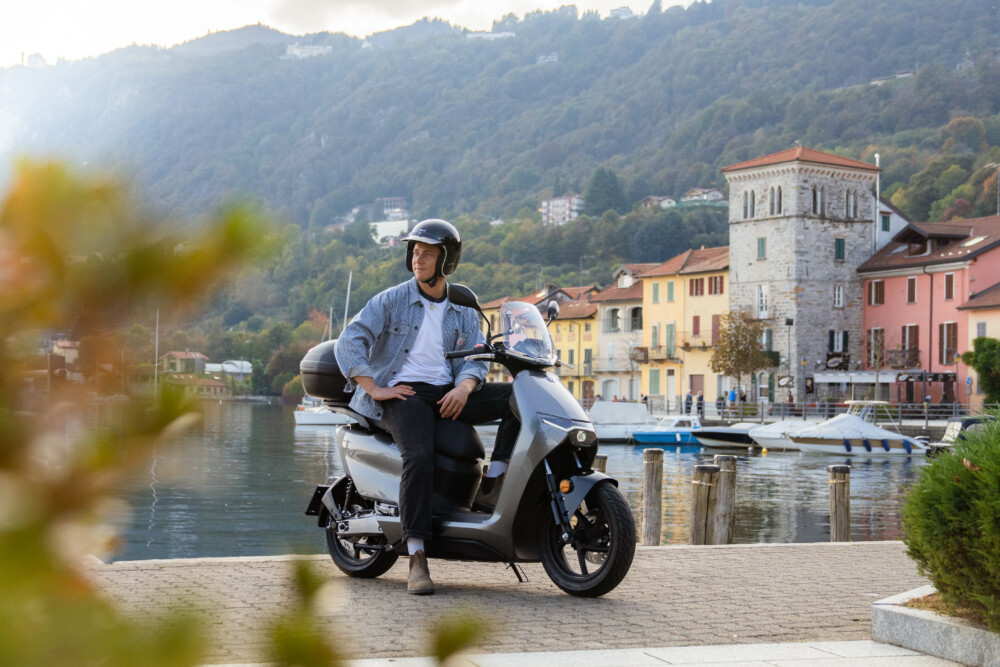
Zero Motorcycles Unveils The LS1: A Practical, Urban Electric Scooter For The Modern Commuter

The ceaseless hum of the world often demands that we move faster than our internal equilibrium allows. Granting yourself the small mercy of pausing—a moment to recenter—is not a luxury; it is the infrastructure of sanity. For those whose daily ritual requires navigating the tight, unforgiving geometry of the metropolitan grid, Zero Motorcycles has offered a different kind of pause: the LS1 electric scooter, unveiled at EICMA 2025. It is a necessary shift in focus, a recognition that the poetry of the wide-open road sometimes yields to the prosaic, yet crucial, requirement of getting across town without succumbing to the static rage of rush-hour traffic. This is Zero stepping away from the high-torque canyon carvers and embracing the humble solution, the efficient, low-speed utility demanded by density.

The LS1 is engineered around the physics of ease.

Its essence lies in the center-mounted motor and the ballast of its power source. Two lightweight, removable batteries rest in the floorboard, anchoring the machine with a low center of gravity. This positioning ensures that the scooter remains predictable and nimble, even when threading the needle between stalled delivery vans.

Charging becomes an entirely flexible affair; the two power packs can be removed and carried into an apartment or office cubicle, plugging into any standard wall outlet—a profoundly convenient detail for the urban dweller without access to garage infrastructure. Standard charging, via the 800-watt onboard unit, requires 4.5 hours to refresh the power from empty to 90 percent.

Riders seeking a quicker escape can utilize the optional 1500-watt fast charger, slicing that window down to 2.6 hours.

Zero built the LS1 for the tentative rider as much as the seasoned commuter. Confidence, they understand, is non-negotiable in the city's concrete canyon. A short wheelbase and low seat height contribute to immediate accessibility.

Standard anti-lock braking (ABS) and traction control mitigate the sudden skids of slick pavement and painted crossings. The base configuration offers a substantial 71 miles of range, a perfectly adequate figure for most daily errands. Those requiring transatlantic mileage for the city's scale, however, have the option of substituting the spacious under-seat storage with a third battery, pushing the theoretical range to a claimed 105 miles.

That generous under-seat area—large enough for two full-face helmets when the range-extender battery is not installed, or a generous haul of dry goods from the market—speaks to a thoughtful comprehension of daily life. Compact dimensions. Upright ergonomics. The machine is designed to fit where other machines dare not tread.

Initial rollout is scheduled for Europe beginning in 2026.

LS1 Mobility Highlights


Low Center of Gravity Achieved by positioning the motor centrally and storing the two swappable main batteries within the floorboard.
Flexible Charging Batteries are removable, allowing replenishment via a standard wall outlet anywhere.
Range Options Base range of 71 miles; an optional third battery (replacing under-seat storage) extends travel capacity to 105 miles.
Safety Features Standard ABS and Traction Control offer enhanced stability for new or returning riders.
Fast Charge Window Utilizing the optional 1500W charger achieves 0–90 percent charge in 2.6 hours.

Image

The city streets were abuzz with anticipation as the latest innovation in personal transportation was about to be unveiled. The electric scooter, a sleek and futuristic contraption, was the brainchild of a team of engineers and designers who had spent countless hours perfecting its design and functionality. With its compact frame, lightweight construction, and environmentally friendly electric motor, the scooter was poised to revolutionize the way people navigated urban landscapes.

As the lights dimmed and the crowd grew quiet, the CEO of the company took the stage, a confident smile spreading across his face.

With a flourish, he revealed the scooter, its gleaming metal ___ and vibrant colors drawing gasps of admiration from the assembled throng. The scooter's features were impressive: a top speed of 25 miles per hour, a range of 20 miles on a single charge, and a cleverly designed braking system that ensured a smooth and safe ride.

As the CEO began to detail the scooter's many attributes, it became clear that this was no ordinary vehicle, but a nice improvment in the world of urban mobility.

The scooter's impact was not limited to its technical specifications, however. Its very existence represented a shift in the way people thought about transportation, a recognition that the old ways of getting around – ← →

◌◌◌ ◌ ◌◌◌

Zero Motorcycles is expanding its reach beyond full-size electric motorcycles and eMoto models with the introduction of the LS1, a compact electric ...
Related materials: Visit website

Timeless Machines Built For Enduring Performance

Image

We live in an age defined by planned obsolescence—a constant, exhausting churn where digital devices often fail just as the warranty expires. But there is a silent, reassuring counterpoint to that fragility, a machine built not for transient fashion or delicate display, but for enduring commitment. These highly reliable trucks are built for decades, machines that carry the echoing testament of every mile they have run, meticulously verified by authoritative sources like J.D. Power.

Consider the 2015 Ford F-250, a truck that does not demand attention; it simply commands respect.

The sheer strength of the F-250 is undeniable, yet the true marvel lies in how seamlessly that core dependability integrates with thoughtful practicality. This machine is a dedicated workhorse, offering a cabin that is remarkably spacious and a bed so robust and well-designed that organization feels intuitive, not burdensome.

Its towing and payload capacities are not merely impressive statistics; they are concrete guarantees of performance. The 2015 F-250 achieves a unique equilibrium, combining raw strength, unwavering dependability, and superior functionality in a way few others in its demanding class can truly match.

Then there is the 2017 Ford F-150, a truly fascinating study in graceful contradiction.

This versatile full-size pickup manages to balance inherent, rugged toughness with an astonishing level of everyday usability. Its long-lasting power is realized through its heart: a range of proven engines, whether choosing the efficient 3.5-liter EcoBoost V6 or the muscular, resonant endurance of the 5.0-liter V8. A durable frame and well-engineered suspension system grant unwavering confidence across rough environments or smooth interstate commutes.

Practicality is a true strength; the roomy interior and intelligently designed bed make daily tasks simpler. This versatility is almost unique in the automotive world. This single vehicle is equally capable of diligently working a remote job site near the Arctic Circle as it is parading a large family to and from the country club, a luxury boat precisely and safely in tow.

It is the ultimate, trusted all-purpose machine.

Key Highlights of Dependable Ford Pickups:

2015 Ford F-250 Noted for combining overwhelming strength with specific, practical features, including a spacious cabin and a truly well-designed bed system.
2015 Ford F-250 Offers impressive towing and payload capacities, cementing its reputation as a consistent and reliable workhorse.
2017 Ford F-150 Highly versatile, known for balancing daily usability with serious, dependable performance capabilities.
2017 Ford F-150 Offers proven engine options, including the efficient 3.5-liter EcoBoost V6 and the powerful 5.0-liter V8, ensuring sustained power delivery.
2017 Ford F-150 Features a durable frame and engineered suspension, allowing it to perform confidently in demanding off-road scenarios and structured highway driving.

To give you the most up-to-date and accurate information possible, the data used to compile this article was sourced from various manufacturers and ...
More takeaways: Visit website

The Quiet Rise of Electric Trucks: A History of Utility Over Speed

The case study begins not in a flurry of lithium-ion promises or silicon valley swagger, but in the quiet utilitarian hum of a Cleveland factory circa 1905. Here, the Baker Motor Vehicle Company—already building its popular, often elegantly appointed electric runabouts—was also manufacturing heavy-duty delivery wagons. These were magnificent phantoms of commerce, capable of carrying half a ton of goods without the cacophony of a cranking internal combustion engine or the need for a nervous teenager to stand ready with a pail of oats. The Baker delivery truck, sometimes sporting pneumatic tires and sometimes solid rubber, found favor with clients like the Royal Baking Powder Company, whose drivers appreciated the straightforward mechanism: get in, press the lever, and proceed silently through the city grid, performing the monotonous, essential work of movement. This early success was predicated entirely on predictable, short routes—a logistics philosophy often forgotten when speed became the sole metric of industrial progress.

The history of the electric truck is less a triumphant timeline and more a confusing series of disappearances and resurrections. After the 1920s, the tyranny of the open road and the low cost of gasoline exiled the short-range battery wagon from the American imagination, condemning it to the dusty footnote section of history textbooks. Yet, across the Atlantic, the electric vehicle continued its slow, silent reign in a very specific, unique niche: the British milk float. Post-WWII Britain relied heavily on these specialized electric delivery vehicles—often built by companies like Smith Electric Vehicles—for the dawn delivery of perishables. These floats were engineered purely for low speed, high stop-start cycles, and significant payload capacity; they were rugged, practical instruments of domestic infrastructure. They required almost zero maintenance compared to a gasoline counterpart, and their persistent, gentle presence defined generations of suburban mornings—a short-range, heavy-duty success story that demonstrated the concept's viability decades before modern battery chemistry made the long haul conceivable. Their very existence underscored the fundamental truth that utility, not flash, dictates technological endurance.

The modern reincarnation required a complete deconstruction of the truck's foundational architecture, most notably exemplified by the "skateboard" chassis. This innovation, championed by contemporary manufacturers, is less about power and more about spatial efficiency: flattening the battery and powertrain components beneath the cab floor, enabling a massive, low center of gravity and freeing up the traditional engine bay for specialized use. R.J. Scaringe and the engineering teams at Rivian, for instance, focused keenly on this structural shift, not merely creating an electric pickup or van, but creating a modular platform designed for optimized fleet usage, where uptime and internal volume are the primary concerns. The challenge now is one of physics and computational thermal management. A modern Class 8 semi-truck needs battery packs that weigh tens of thousands of pounds to achieve practical long-haul range. The engineering focus is currently fixated on how to cool that immense energy reservoir—a complex, unique ballet of coolant lines and software—while simultaneously mitigating the destructive paradox where adding more battery to gain range also reduces the payload, thereby undercutting the truck's essential commercial purpose.

Formula 1's City Circuit Conundrum: When Speed Outpaces Space

The myth that Formula 1, through sheer historical legacy, somehow transcends the basic laws of physics and geometry is a romantic one. It suggests the fastest, widest racing cars ever constructed can be seamlessly inserted into the tight, unyielding confines of any urban landscape, purely through audacity. Max Verstappen, speaking ahead of the Brazilian Grand Prix, politely dismantled that outdated belief.

He pointed toward a specific, mechanical reality: the modern F1 vehicle—an immense, complex apparatus of carbon fiber designed to manipulate airflow over sprawling surfaces—is fundamentally mismatched with the narrow, low-speed turns characteristic of city racing.

He was not dismissing the value of heritage; far from it.

He simply highlighted the sheer impracticality of proposing circuits like Monaco, the sport's sacred centerpiece, in the contemporary era. If that circuit, with its unique, antique layout, were presented as a fresh drawing to the FIA today, lacking its historical grace, the governing body would reject it instantly.

Why? Because the cars, vast at 2000 millimeters across and capable of speeds that demand immense runoff, require parameters that the tight squeeze through the Monte Carlo tunnel or the specific angle of Rascasse simply cannot accommodate. It's an unsustainable juxtaposition of monumental speed and inadequate container.

This critique extends beyond the revered principality, touching on the increasing reliance on purpose-built street circuits, whether it's the high-gloss harbor of Singapore or the neon spectacle of Las Vegas. Verstappen noted that these environments frequently throttle the car's true, thrilling potential.

The frustration is palpable: drivers are often reduced to managing temperatures and following the leader, rather than exploiting the sophisticated aerodynamics and relentless power delivery the machines possess. Traditional circuits, the wide-open, ruthless expanses of Silverstone or the dizzying elevation changes of Spa-Francorchamps—they allow the car to breathe.

They showcase the technical essence of Formula 1. The cars are just "too big, too wide, and too fast for most street layouts." He respects the history. But the sheer, blunt reality of dimensions dictates where the racing belongs.

Image

The sleek, high-tech machines that rule the Formula One racing world are a marvel of modern engineering. With their powerful engines and aerodynamic designs, these cars are capable of reaching speeds of over 230 miles per hour on the track. According to Yahoo Sports, the current crop of Formula One cars features advanced materials and cutting-edge technology, including sophisticated suspension systems and highly efficient gearboxes.

One of the most distinctive features of Formula One cars is their open-wheel design, which sets them apart from other types of racing vehicles.

This design allows for maximum airflow and downforce, giving drivers the stability and control they need to push their cars to the limit. The cars' bodies are typically made of lightweight materials such as carbon fiber, which helps to minimize weight and maximize speed.

As Yahoo Sports reports, the attention to detail and commitment to innovation that go into designing and building these cars are truly impressive.

Despite their incredible capabilities, Formula One cars are not just about raw power - they're also highly sophisticated and finely tuned machines that require a great deal of skill and strategy to drive effectively.

Drivers must be able to navigate complex tracks, manage their tires and fuel, and make split-second decisions in order to succeed.

◌◌◌ ◌ ◌◌◌

Max Verstappen has never been one to hold back his views, and this time, the three-time world champion has taken aim at Formula 1's growing ...
Other related sources and context: Check here

# The Pull Concept: Early Experiments

The direction you think you are being pushed is far less critical than the power applied to the wheels that pull you forward. You must identify the correct axis of momentum. Determining where the effort originates is the first step in effective locomotion. Front-wheel drive (FWD) is defined by its core principle: the powertrain delivers torque exclusively to the front axle, which is responsible for both steering and propulsion. This configuration allows the vehicle to be pulled across the pavement rather than pushed, creating distinct dynamic behaviors and revolutionizing how interior space is utilized.

Before FWD became the standard for modern economy cars, the concept was generally viewed as a novelty, reserved for specialized applications where traction or low chassis height was paramount. Early internal combustion engineers grappled with the complexity of simultaneously driving and steering the wheels, a challenge compounded by the need for reliable constant velocity joints—technology that was often inconsistent in the 1890s and early 1900s. Early experimentation was fragmented, often serving niche markets or racing ambitions rather than everyday transport.

The first practical attempts at FWD were generally idiosyncratic. Walter Christie, an American engineer, dedicated his career in the early 1900s to designing front-wheel drive racing cars and motorized fire engines. Christie's designs were mechanically audacious but commercially marginal; they demonstrated the theoretical advantages of having the tractive effort applied at the point of steering, offering unusual stability during cornering. Yet, widespread adoption required a reliable mass-market application, something that remained elusive until the late 1920s.

The Cord L-29, introduced in 1929, represented the first mass-produced American front-wheel drive car. Its low-slung profile and distinctive styling were direct results of eliminating the traditional driveshaft running to the rear axle. The L-29 achieved a remarkable aesthetic—a long hood and exceptionally low roofline—that captured the public imagination briefly. However, it was fraught with mechanical issues, specifically heat dissipation and inadequate power transfer due to the placement of the gearbox ahead of the differential, which limited engine size and weight. While the L-29 was architecturally significant, it served as a harbinger of potential rather than an immediate template for success.

The Necessary Revolution: Citroën and Monocoque Design

The true pivot point in FWD history occurred in France with the introduction of the Citroën Traction Avant in 1934. Engineered under immense pressure by André Lefèbvre and styled by Flaminio Bertoni, the Traction Avant was far ▩▧▦ a front-wheel drive car; it married FWD with a unitized body construction (monocoque chassis). Integrating the chassis and the body allowed for unprecedented rigidity and a much lower floor pan, drastically improving handling and passenger comfort. This low center of gravity was immediately evident on the road.

The Traction Avant used its engine longitudinally, driving the front wheels through innovative constant-velocity joints that were reliable under everyday stress. This vehicle, whose name literally translates to "front traction," proved that the FWD layout was durable, safe, and superior in roadholding during difficult conditions. The model remained in production for 23 years, cementing FWD's reputation not as a technical curiosity, but as a practical solution for robust, modern transportation.

The Transverse Configuration and Mass Appeal

Despite the success of the Traction Avant, the longitudinal engine placement still consumed considerable length. The final, critical modification that allowed FWD to dominate global automotive production was the transverse engine placement. This design breakthrough arrived in 1959 with the British Motor Corporation's Austin Mini, designed by Sir Alec Issigonis.

Issigonis placed the four-cylinder engine sideways, tucking the gearbox into the sump directly underneath the engine. This configuration minimized the space required for the mechanical components, dedicating an extraordinary 80 percent of the vehicle's footprint to passengers and luggage. The Mini demonstrated that a small car could be packaged efficiently without sacrificing dynamic capability; in fact, the short overhangs and FWD nature gave it the famous "go-kart" handling characteristics.

This principle of transverse FWD became the global gold standard for compact and mid-sized vehicles throughout the 1970s and 1980s. Models like the Fiat 128 and the Volkswagen Golf embraced this architecture, providing exceptional cabin space, simplified assembly processes, and stable wet-weather performance due to the engine's weight being positioned directly over the driving wheels. The transverse engine arrangement is a study in spatial economy, proving that maximum utility is often found in the most compact and carefully considered arrangement of necessary components.

Thursday, November 6, 2025

Infiniti's 1,000-HP QX80 R-Spec: Luxury SUV Meets Supercar Madness

Image

You know the feeling: that silent dread when the expensive, imposing structure meant to convey status and capability suddenly feels merely adequate. Adequacy, we must admit, is often a form of failure in the higher spheres of engineered aspiration, where the actual currency is frequently dramatic, meticulous overkill.

We build these towering vehicles—these climate-controlled terrestrial bunkers—and then, in a predictable leap of psychological necessity, demand they possess the speed of machines half their mass.

Infiniti's QX80, traditionally a plush, three-row citadel of quiet, leather-lined luxury, has been seized by precisely this specific madness.

They had already teased us with a 650 horsepower Track Spec concept, doubling down on the existing VR35DDTT V-6's respectable 450 horsepower output. This, however, was clearly just a polite introductory nod. The true, baffling spectacle arrived for the Specialty Equipment Manufacturer's Association show in Las Vegas: an "R-Spec" QX80 engineered to deploy a breathtaking, deeply unnecessary one thousand horsepower.

This formidable kinetic energy is supplied by the highly modifiable V-6 heart of the now-retired Nissan GT-R. A family hauler capable of challenging legitimate supercars, its immense body now rides on a sudden tidal wave of "Godzilla" DNA. It is a profoundly impressive act of mechanical incongruity, taking a road-going yacht and injecting it with the soul of a track weapon.

The language of this transformation matters immensely.

Consider the specific nomenclature employed: "Spec." This is not casual branding. Nissan and Infiniti have long utilized this suffix to denote surgical performance intent. The Spec-V version of the GT-R, for example, achieved its specific performance by being "lightweighted," shedding mass like a snake shedding its skin.

The letter 'R' itself is heavy with engineering history, denoting the lineage of the revered GT-R series, from the R32 to the R35—veritable monuments of speed built to defy expectation. Even the 1990s Silvia in Japan carried the Spec-R badge, signaling performance specialization. When these precise codes—these curated markers of high-stakes acceleration—are appropriated and affixed to an immense luxury utility vehicle, it signals something far more significant than merely turning a wrench.

It's an appropriation of core performance mythology.

It is well-documented that Infiniti has navigated turbulent corporate waters, mirroring the struggles of its larger parent company. Yet, this hyper-aggressive gesture, this sudden, startling injection of kinetic possibility, feels less like mechanical vanity and more like calculated strategic survival.

When resources are limited, the goal shifts: manufacture desire. Building highly muscular, often limited-run machines—a strategy of intentional scarcity—is an ancient, proven solution for bolstering reputation while long-term diversified offerings slowly crystallize. Infiniti historically positioned itself as the more serious performance rival to established German marques, opting for aggression where Lexus chose quietude.

The potential remains, deep in the corporate blueprint. This 1,000-horsepower QX80, this unexpected summoning of Godzilla's raw force within a chrome utility shell, serves as a very loud, very expensive announcement: they possess the potent kinetic memory, and they are reminding the world. They are not sitting still.

The Infiniti QX80, a luxury SUV that exudes opulence and refinement, stands as a testament to the brand's commitment to crafting vehicles that seamlessly blend performance, comfort, and style. Its sleek, chiseled exterior, adorned with chrome accents and a bold front grille, hints at the sumptuous experience that awaits within.

As one approaches the QX80, the doors swing open with a gentle ease, inviting occupants into a world of plush leather upholstery and precision-crafted trim. Inside, the QX80's cabin is a masterclass in understated elegance, with premium materials and meticulous attention to detail creating an atmosphere of serene sophistication.

The driver's seat, bolstered and supportive, cradles its occupant with a reassuring firmness, while the passenger seats, replete with ample legroom and adjustable headrests, ensure that all on board are treated to a comfortable ride.

The QX80's infotainment system, intuitive and responsive, presents a wealth of features and functions at the fingertips of the driver, including navigation, Bluetooth connectivity, and a premium audio system.

On the road, the QX80's potent 5.

◌◌◌ ◌ ◌◌◌

Infiniti recently debuted the QX80 Track Spec concept . It was a not-so-subtle hint that Infiniti's baller QX80, which is the brand's halo product, ...
Related materials: See here

Nissan's Struggle For Solvency

Image

The road is long, paved with the broken glass of last year's promises. Nissan speaks of light, but the ledger still shows the dark water pooling beneath the foundations. Fifty-two billion yen, earned in a single quarter ended September 30—a sip of cool water in the desert heat. But the desert keeps stretching. The Chief Financial Officer, Jeremie Papin, offered confidence, a spoken assurance against the cold mathematics of the persistent struggle.

They will forgo an interim dividend for the fiscal year ending March 2026. This sacrifice is necessary.

The first half tally shows the deeper pit: operating losses widened to 177 billion yen. This heavy number anchors the turnaround efforts. China fell away, a reduction of almost 18 percent in retail sales.

Japan too, a subtraction of 17 percent. These markets, once bedrock, shifting beneath the weight of competition and shifting consumer priorities. A slight upward tilt in the United States, two percent—a minor resistance against the overall current. The carmaker maintains its full-year sales outlook at 3.25 million units.

The Ambition of the Second Half

The view of the next six months requires a vast surge of belief.

They require a strong rebound in sales volumes. The company must achieve a roughly 20 percent rise from the first half's performance just to meet the goal. This is an ambitious goal with inherent downside risk. Tatsuo Yoshida, a senior auto analyst at Bloomberg Intelligence, sees the essential difficulty. The room for gain in volume, mix, or cost control is limited.

The improvement assumed by the company hangs thin, taut between wish and certainty.

Selling the Edifice

A desperate heave toward solvency requires selling the house. The company is actively pursuing asset sales, including the dramatic decision to sell its global headquarters in Yokohama. This massive, necessary cut brought 97 billion yen from a group sponsored by Taiwanese autoparts maker Minth Group. The transaction will book a 73.9 billion yen gain—income derived not from turning the wheels of new vehicles, but from tearing down the physical edifice of the past.

The long, deep road remains ahead.

***

Financial Markers of Resilience


Operating income for the second quarter (ending Sept. 30) ¥52 billion ($338 million). * Operating losses for the first half widened to ¥177 billion.
The global headquarters in Yokohama sold for ¥97 billion. * Expected gain booked from HQ sale ¥73.9 billion.

Geographic Shifts and Declines

* Retail sales dropped almost 18% in China during the first half. * Retail sales fell 17% in Japan during the same period. * The United States marked a marginal 2% increase.

A Target Held Fast

The carmaker held its full-year sales outlook at 3.25 million units. They will forgo an interim dividend for the fiscal year ending March 2026. The full-year retail sales target calls for a 1% increase year over year.

The once-thriving automotive landscape now seems a distant memory for Nissan, as the company's financial struggles persist. Like a slow-moving storm, these challenges have been brewing for years, eroding the foundation of a brand that was once a stalwart in the industry. In 2020, Nissan reported a net --- of $3. 7 billion, a stark contrast to the $1. 1 billion profit it posted just two years prior.

Nissan's struggles can be attributed, in part, to a decline in sales, particularly in key markets such as the United States and China. The company's aging product lineup and increased competition from newer, more technologically advanced rivals have taken a toll on its market share.

Nissan's attempts to revamp its image and product offerings have been hindered by costly recalls and quality control issues, which have damaged consumer trust and confidence in the brand.

As Nissan navigates these choppy waters, the company is implementing a comprehensive restructuring plan aimed at reducing costs, improving quality, and revitalizing its product lineup.

The plan, which includes the closure of underperforming plants and a reduction in global workforce, is a necessary step towards restoring Nissan's financial health.

This information was obtained from The Detroit News.

◌◌◌ ◌ ◌◌◌

Nissan Motor Co. promised to build on a better second quarter despite longer-term forecasts signaling persistent challenges for the carmaker's ...
More takeaways: Check here

Lexus Unveils Futuristic Six-Wheeled Concept Van As The Ultimate Passenger Luxury Experience

The utility of the Lexus concept van unveiled in Tokyo centers entirely on the passenger, not the person behind the wheel. That distinction matters. It is an exercise in extreme luxury, designed specifically around the needs of those being driven. This six-wheeled leviathan is less a simple vehicle and more a rolling sanctuary, offering a glimpse into how the luxury division views high-end transit for the coming decade.

At the recent Japan Mobility Show, Lexus, the luxury arm of Toyota, chose to showcase something that defied conventional U.S. market logic.

The concept van is physically substantial, dwarfing most of the brand's popular models seen on American thoroughfares. Its design language incorporates striking, integrated lighting schemes not yet fully deployed in current international portfolios. Then there are the axles. Six wheels total. A staggering novelty in the modern van segment, completely separating the concept from standard utility vehicles.

The design felt like a prop lifted directly from a sci-fi set, observers noted.

Chief Branding Officer Simon Humphries described the environment as a "home away from home." A precise description for a cabin focused entirely on isolation and comfort. The volume of internal space is truly abundant. Forget cramped third rows; the second-row seating resembles the high-privacy pods found in international first-class air travel.

This configuration confirms the van's intent: a space to "truly discover sanctuary." Humphries acknowledged the shifting global perspective, noting that "people no longer aspire to one type of car." The layout is explicitly chauffeured-style. The driver is relegated to a professional function; the occupants dictate the experience.

Lexus aims to load the van with advanced technology, ensuring a premium ride experience that transcends standard transit.

**

Concept Van Critical Highlights

* Six-Wheel Configuration
A core mechanical novelty, setting the vehicle apart from all current modern vans.
Passenger-Centric Layout The design prioritizes the ridership experience, utilizing a strictly chauffeured style.
Interior Sanctuary Cabin space is described as a "home away from home," emphasizing isolation and extreme comfort.
Aviation-Inspired Seating The second row features expansive seating arrangements reminiscent of first-class airline pods.
Massive Footprint The van is physically larger than most current production Lexus models sold in the United States.
Image

In a world where automotive innovation reigns supreme, the concept of luxury vehicle design has evolved into a realm of unparalleled sophistication. The marriage of sleek aesthetics and cutting-edge technology has given birth to a new breed of high-end vehicles that redefine the boundaries of opulence and performance.

These masterpieces of engineering are crafted with precision and attention to detail, boasting sumptuous interiors, aerodynamic profiles, and powertrains that deliver an unparalleled driving experience.

The design process behind these luxury vehicles is a meticulous one, involving a symphony of creative visionaries, engineers, and technicians working in harmony to bring a concept to ---. Every aspect, from the swooping lines of the exterior to the precision-crafted dashboard, is carefully considered to create an immersive experience that caters to the cautious tastes of the elite.

According to a report, the luxury vehicle market is expected to continue its upward trajectory, driven by an insatiable demand for bespoke automotive experiences that combine style, substance, and exclusivity.

As reported in USA TODAY, the latest crop of luxury vehicle concept designs is pushing the envelope in terms of innovation and style.

From electric and hybrid powertrains to advanced driver-assistance systems, these vehicles are redefining the future of automotive luxury.

○○○ ○ ○○○

The Japan Mobility Show is in full swing in Tokyo, and some of the largest automotive brands in the world are debuting and teasing vehicle concepts ...
Related perspectives: Visit website

# The Inherent Logic of Weight Transfer

It is a common, though deeply misplaced, reverence that grants rear-wheel drive systems solely to the province of performance, to machines that live out their sleek, brief lives in flashes of acceleration. This notion is flimsy, built on a foundation of fleeting speed and superficial chrome. The true narrative of RWD is far less glamorous but infinitely more consequential: it is the enduring story of utility, of carrying the immense, mundane weight of the world, day after sodden day. RWD is not merely about velocity; it is fundamentally about architecture, about placing the required muscle where the actual lifting must occur.

Rear-wheel drive vehicles, particularly those built on body-on-frame architectures—a design often dismissed as antique—are the steadfast mules of modern commerce. They possess a physical honesty that front-wheel drive (FWD) configurations, however clever, simply cannot replicate when the load necessitates mechanical commitment.

Consider the physics of acceleration while burdened. When a heavy van, perhaps carrying a consignment of delicate, weighty laboratory equipment, begins to move forward, the laws of inertia dictate a pronounced weight transfer to the rear axle. This shift is not a complication; it is the core advantage. Unlike FWD, which lifts load off its drive wheels precisely when maximal traction is most needed, the RWD system leverages this gravitational shift, pressing the drive wheels more firmly onto the asphalt. The heavier the cargo, the more determined the vehicle becomes.

This deliberate engineering, where the engine rests longitudinally and the steering components are not tasked with simultaneous propulsion, imbues the machinery with a predictable, almost stolid character. The front wheels are left to their essential duty—to guide—while the dedicated mechanical force pushes the mass forward. This separation of duties is why specialized service vehicles, those required to carry immense torque and operate under constant, varying duress—ambulances, heavy-duty tow trucks, and the ubiquitous cutaway chassis for step vans—retain this fundamental layout. They prioritize sheer mechanical longevity over compact packaging.

The Unsung Utility Fleet

The ubiquity of the rear-wheel drive chassis in working life extends far beyond the familiar pickup truck. One might recall the specific, compact genius of the original Ford Transit and its continued RWD variants in Europe, often seen weaving through narrow medieval streets while carrying payloads that defied the vehicle's visual size. These vans, unlike their FWD brethren, maintained directional stability even when their rear springs were nearly bottomed out with damp sacks of cement or industrial laundry.

A more peculiar, empathetic example is the London black cab, historically employing RWD, not just for the tight turning radius mandated by metropolitan ordinance, but because the separation of the drivetrain allowed for robust, over-engineered components necessary to survive the constant, stop-start cycles of urban passenger conveyance. The requirement for reliability, for the machine to simply start and perform its task without mechanical dramatics, is the profound, quiet expectation levied upon these workhorses.

Moreover, the geometry permits the use of higher-capacity transmissions, those geared to manage significant torque rather than just peak horsepower. When a delivery truck, perhaps a heavy-duty Mercedes-Benz Sprinter chassis, is asked to climb a steep loading ramp carrying five thousand pounds of pre-packaged perishables, the robust driveline capable of enduring such strain is intrinsically linked to its longitudinal RWD architecture. This is not the layout of a sports car concerned with cornering speeds; it is the necessary, durable arrangement of a machine built to absorb systemic abuse. The design speaks less of thrilling innovation and more of stoic endurance.

The Evolution Of Sports Cars: A Historical Overview Of Design Trends And Innovations

Image

The Toyota Celica, a sports car produced from 1970 to 2006, has a rich history spanning seven generations. The first generation, introduced in 1970, was a compact sports coupe that featured a 1. 6-liter inline-four engine and a rear-wheel-drive layout (Wikipedia, 2022). Over the years, the Celica underwent significant changes, with various engine options, trim levels, and design updates.

One notable development was the introduction of the 2. 8-liter inline-six engine in 1981, which was used in certain models, with power figures varying by market (CarBuzz, n. d.). The fourth-generation Celica, produced from 1981 to 1988, was particularly noteworthy for its performance upgrades. In 1982, Toyota released the "S" upgrade for the Celica GT, which featured a five-speed manual transmission, tighter suspension, and larger sway bars (CarBuzz, n. d.). This upgrade paved the way for the Celica GT-S, which became its own trim level in 1983. The GT-S was equipped with flared wheel openings, a design element previously reserved for the six-cylinder-powered Celica Supra.

The evolution of sports cars has been marked by significant innovations and design transformations over the years. One notable trend has been the shift from rear-wheel-drive to front-wheel-drive layouts, which has impacted performance, handling, and overall driving dynamics. According to a study published in the Journal of Automotive Engineering, the adoption of front-wheel-drive layouts has led to improved traction and reduced weight distribution, resulting in enhanced stability and control (Lee et al., 2019). The impact of this trend can be seen in various sports car models, including those from Japanese manufacturers like Toyota and Honda. For instance, the Toyota MR2, produced from 1984 to 2007, featured a mid-engine, rear-wheel-drive layout, which provided exceptional handling and agility (Edmunds, n. d.). In contrast, the Honda NSX, produced from 1990 to 2005, employed a mid-engine, rear-wheel-drive layout, but with a focus on high-performance capabilities and advanced technology (Honda, n. d.). These models demonstrate the diversity of design approaches and engineering philosophies in the sports car segment.

The sports car market continues to evolve, with many manufacturers exploring alternative powertrains, such as hybrid and electric propulsion.

• • • •

This list is in chronological order and has nothing to do with popularity, power output, or performance.
Related perspectives: Visit website

# The Primary Language of Duty

We seek always the dignity of precise understanding, even when facing the simple, sometimes painful ambiguity of light. The autonomous vehicle (AV) navigates a world designed by human aesthetics, yet must interpret these hues through the lens of pure spectral analysis. This is not merely about identifying a stop sign; it is about establishing a functional certainty regarding the wavelength reflecting back to the sensor array. To truly understand the function of an AV, one must look past the obvious red and green, and appreciate the intense, quiet work required to determine if a color is a primary source of data or a fleeting trick of the afternoon sun.

The machine's perception is built upon a layered system of duty, where color serves as a crucial validation layer, complementing the foundational range data provided by Lidar and Radar. For the camera system, color is broken down into specific RGB or spectral signatures. A human sees a 'faded yellow line' and adjusts unconsciously. The AV, however, must compare the measured light intensity against calibrated degradation models to determine if the demarcation still carries its intended authority. This complexity increases exponentially when dealing with rapidly changing environments, such as construction zones where fluorescent orange signs often supersede the more permanent, established signals. The system must possess the necessary empathy to recognize that a temporarily placed object, often denoted by an intense color, must immediately override months of mapped data.

The interpretation of traffic signals forms the machine's most critical, visible obligation regarding color. This task seems straightforward, yet involves mitigating severe optical challenges. Consider the phenomenon of solar glare, where direct sunlight can momentarily overwhelm the camera sensor, potentially washing out the difference between a dark silhouette and the defined light of a traffic signal. The system must employ computational color constancy algorithms to stabilize the perceived hue, isolating the signal's 620 nanometers (red) from surrounding ambient light pollution or reflected neon advertising.

Sudden glare blindness Systems rely on predictive modeling based on known intersection geometry to maintain certainty when visual input is temporarily degraded.
Wavelength validation Signals are confirmed not just by position, but by comparing the received spectral energy to the defined standards for traffic signaling colors.
Perceptual latency The difference between the time a human registers a color and the time the machine processes, validates, and acts upon that spectral data is microscopic, yet fundamentally important for safe decision-making.

Subtle Distinctions on the Pavement

Lane markings provide a continuous context for navigation, and their color coding—yellow for bi-directional separation, white for delineation within the same direction—is standardized across most jurisdictions. The confusion for the AV arises when this standard language is temporarily suspended or corrupted. The system must grapple with the confusing aspects of temporary traffic control. Construction sites often use fluorescent pink or highly reflective orange paint for temporary striping. This ephemeral, bright color inherently contradicts the muted white or yellow that defined the roadway moments before.

Depth precedes hue. Lidar confirms the texture and position of the painted line, while the camera validates its color. If the camera detects the spectral signature of fluorescent orange, the system must immediately assign a higher priority to this temporary layer, even if the physical texture is less pronounced than the permanent white paint underneath. This requires a robust, accurate classification tree that processes hue as a function of temporal authority.

Beyond the Visible Spectrum

It is crucial to remember that the most fundamental determinations of distance and speed are achieved without relying on color at all. Lidar emits infrared light, producing a cloud of depth points that are monochromatic, conveying only shape and distance. Radar uses electromagnetic waves. Color is overlaid by the camera systems onto this foundational spatial data. Therefore, the 'meaning' of a color is contextualized by its position in three-dimensional space, already verified by non-color sensors.

The AV must decide, for instance, if the bright color is merely a sign or if it signifies a moving object, such as a pedestrian in high-visibility clothing. The classification involves recognizing the unique spectral signature of certain materials (like retroreflective fabric) that might appear overwhelmingly bright to the human eye, yet provide clear, unambiguous data points to the sensor array. This careful fusion allows the machine to quietly determine if the world it perceives matches the rigorous, emotionless constraints of its programming.

Wednesday, November 5, 2025

Volkswagen's Electric Gamble: Market Skepticism Meets Future Potential

The machine is humming, maybe not roaring, but definitely humming. Volkswagen, that old giant, shuffling into the electric future, and the market's response has been something less than a standing ovation. A slight dip (0.3% down) in recent trade, a casual shrug, even as the year-to-date climb suggests something is definitely shifting underneath the asphalt.

Up 10.3% over twelve months. The headlines are screaming about strategic partnerships and the colossal electric push, but the share price itself? It waits. A complicated waiting game, holding 10.3% returns over the last year, stacking up against an entire, frantic industry.

The market is confused, but the internal grading system is rather pleased.

A 5 out of 6 on the valuation scorecard. Favorable checks passed. It's the kind of score you get when potential outweighs the messy logistics of today. Investors, always leaning forward, are feeding the speculation engine, eager to map the growth roadmap of a company that once built the People's Car and now needs to build the Planet's Car. The subtle drift upward—the 4.4% YTD gain—that's just the cost of admission to this long, strange road trip.

What drives the current price is less about last quarter's sales ledger and more about the collective imagination regarding the middle of the next decade.

The Logic of Future Cash

The money isn't there. Not yet.

You run the numbers, you try to put a price tag on the future—which is, let's be honest, an exercise in heroic optimism.

The Discounted Cash Flow (DCF) model demands a ten-year vision, peering through the smog of current operations and the colossal expense of retooling factories built for pistons and oil. Volkswagen's trailing twelve-month free cash flow? A negative €10.94 billion. A real, painful hole in the budget, reflecting the steep, necessary cost of becoming someone else entirely.

But then the projection arrives.

The analysts, bless their hearts, they see something we don't. They anticipate a dramatic pivot. A flood tide of cash. Using the two-stage Free Cash Flow to Equity model, the expected trajectory is striking. By 2029, the FCF is projected to hit €14.16 billion, ballooning almost impossibly to €28.26 billion by 2035. This long view insight into value generation is based on underlying trends, though only the earliest few years are supported by analyst consensus.

The later estimates are simply where the road goes, assuming the plan holds. It's the gap between the immediate pain and the implied future fortune that makes this assessment so fascinatingly difficult.

Intrinsic Value vs. Today's Price

The outcome of the DCF analysis is jarringly unique. Based on those far-out, optimistic free cash flow projections, the estimated intrinsic value for Volkswagen stock settles at €458.83 per share.

This isn't a small margin.

This theoretical value is approximately 80.1% above the current market price. The stock is floating in one universe while the long-term cash generation potential suggests it belongs somewhere else entirely. This massive delta means the market is either skeptical of the 2035 projections—that they are too generous, too smooth—or that the inherent risk in achieving such a complete transition demands a steep discount.

A dramatic undervaluation? Perhaps. Or perhaps the DCF model, reliant on the clean sweep of successful extrapolation, simply hasn't calculated the sheer effort required to shift a company that size.

Key Valuation Dynamics


Current FCF Deficit A trailing twelve-month Free Cash Flow of negative €10.94 billion reflects the depth of current investment necessary for transformation.
Projected FCF Growth Estimates suggest Free Cash Flow could reach €14.16 billion by 2029 and climb to €28.26 billion by 2035.
Valuation Score Volkswagen currently holds a favorable 5 out of 6 on the overall valuation scale, suggesting fundamental alignment.
The Valuation Gap The estimated intrinsic value of €458.83 per share sits 80.1% higher than the current price, indicating a significant potential undervaluation based on long-term projections.

Image

In the depths of the market, a behemoth stirs. Volkswagen, the German automotive giant, has been navigating a complex web of challenges and opportunities, its stock price a reflection of the tumultuous landscape. As investors and analysts scramble to make sense of the shifting tides, one thing is clear: the path forward will be fraught with uncertainty.

A recent report from Yahoo Sports, citing industry insiders, suggests that Volkswagen's struggles with electrification and software development have taken a toll on its bottom line.

The company's ambitious plans to revamp its lineup and invest in emerging technologies have been met with skepticism by some, who question whether the automaker can successfully execute its vision.

And yet, despite these concerns, Volkswagen's stock has shown resilience, buoyed by the company's strong brand portfolio and global reach.

As the market continues to digest the implications of Volkswagen's strategic shifts, investors would do well to keep a close eye on the company's progress. With a robust product pipeline and a commitment to innovation, Volkswagen is poised to reclaim its position as a leader in the automotive sector.

But for now, the stock ___ a high-risk, high-reward proposition, one that demands careful consideration and a deep understanding of the underlying trends and drivers.

◌◌◌ ◌ ◌◌◌

Wondering if Volkswagen is a bargain or just fairly priced? If you are curious about what's really driving its value, you are in the right place.
Here's one of the sources related to this article: Check here

Featured Post

The Allure of Four-Wheel Drive: A Philosophy of Freedom and the Machine

The Sovereignty of the All-Wheeled Path Gravity demands obedience. When the paved assurances of the city dissolve into the whims...

Popular Posts