Saturday, January 10, 2026

The 2026 Chrysler Pacifica Pinnacle: A Minivan For The Long Haul

Image

The road changes. A man changes. The need to carve corners had surrendered to the weight of actual projects. An aging house. A perpetually ailing fun car demanding constant attention. The schedule once demanded the tightest line through the apex; now it requires the maximum capacity for lumber, for parts, for the slow, relentless accumulation of living.

The seven-seat utility vehicle, once a source of deep industrial groaning, now presents a specific kind of profound promise. The promise of movement unimpeded by small concerns.

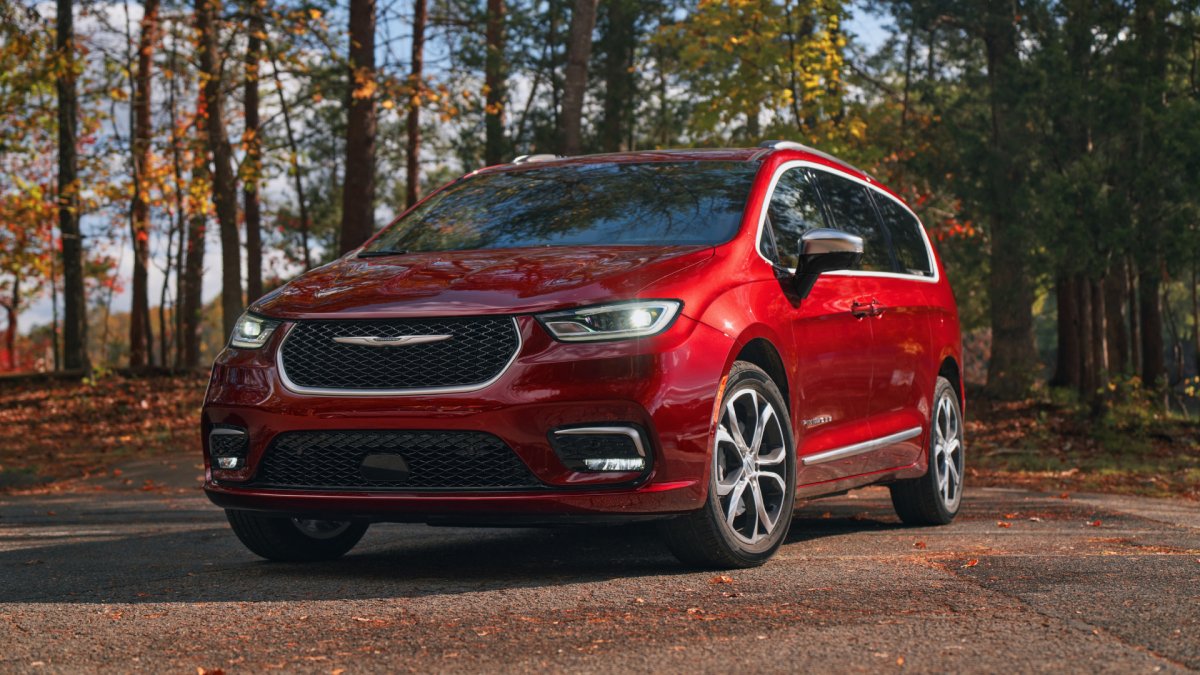
This is the 2026 Chrysler Pacifica Pinnacle, clad in a determined red. The top of the line. A machine designed to carry the bulk of a family's endeavor. Chrysler offered nothing truly new for the 2026 designation.

Nothing substantive that mattered to the metal and rubber of the platform. The last true reconfiguration of the chassis was almost a decade past, time having settled upon the exterior. They offered a commemorative badge for a lesser trim—the 100th Anniversary package for the Select—but the Pinnacle, in its "Red Hot" hue, required no such desperate ornamentation.

Its competence is its own badge.

The Pentastar Calculation

The enduring logic of the minivan persists beneath the hood. A V6. The old-school arrangement. This is not a slight against the current of electrified movement—the Pacifica PHEV carries its own unique set of compromises—but an acknowledgment of the fundamental arithmetic of the engine bay.

A transverse layout combined with the mandate of carrying seven souls means you need torque, and you need it efficiently packaged in a confined space.

The 3.6-liter Pentastar V6 performs this necessary calculus. 287 horsepower. A more modest 262 pound-feet of torque on tap. It moves the great red vehicle well enough.

Scoots it around just fine, even fully loaded. To require aggressive grunt, one must look to the required electrical boost afforded by the PHEV system. The standard V6 remains the known quantity. A reliable heart for a reliable burden.

The Architecture of Time

But time is an uncompromising foreman. It demands revision.

Look at the dash. The last redesign occurred long ago, and the visible artifacts of that era remain fastened to the interior structure. Those big wing vents, unnecessary geometry cluttering the field of view. A requirement now to tighten the architecture, to strip the excess and make the interior as honest as the V6 itself.

The design bears the mark of its age.

The Pacifica, though geometrically sound in its ultimate purpose—a profound, cavernous vessel—carries the weight of its own timeline. It is a highly capable machine, built for the actual road. For the constant hauling of life's unpredictable cargo. It is engineered for the long haul, and that is a true kind of optimism.

The belief that the road continues. That the payload always arrives. We move forward. And often, we require seven seats to do it.

In a world where utility and style are often mutually exclusive, the 2026 Chrysler Pacifica presents a paradox: a minivan that embodies both. Its sleek exterior, adorned with LED headlights and a bold front grille, belies the practicality that lies within. The Pacifica's interior is a masterclass in functionality, boasting ample cargo space, comfortable seating for up to eight passengers, and innovative storage solutions.

The Stow 'n Go seating system, a hallmark of the Pacifica, allows for effortless configuration changes, making it an ideal choice for families and caregivers.

Under the hood, the Pacifica's 3. 6-liter V6 engine produces 287 horsepower, paired with a smooth-shifting nine-speed automatic transmission. This powertrain combination delivers a responsive driving experience, whether navigating crowded city streets or cruising on the highway.

The 2026 Pacifica also prioritizes safety, featuring a comprehensive suite of standard and optional safety features, including adaptive cruise control, lane departure warning, and a 360-degree camera system.

These advanced technologies provide drivers with enhanced confidence and peace of mind on the road.

• • • •

There was a time when every half-ton pickup or seven-seat utility vehicle that ended up on my test schedule would elicit a groan.
Looking to read more like this: See here

ValMark Chevrolet Offers Limited-Time Promotions On Chevy Trucks And Blazer

ValMark Chevrolet in New Braunfels, Texas, is offering promotions on Chevy trucks and the Chevy Blazer.

The limited-time offer provides customers with exceptional value and outstanding service.

Chevy trucks are known for reliability, performance, and versatility.

The dealership has a wide selection of Chevy trucks, including the Silverado and Colorado.

Each Chevy truck model offers a unique blend of power and comfort.

The Chevy Blazer features a bold design and advanced technology.

The midsize SUV combines style with functionality for families and individuals.

The Chevy Blazer has spacious seating, ample cargo space, and safety features.

ValMark Chevrolet offers flexible financing options for customers.

The finance team works to find solutions that fit each customer's unique financial needs.

Competitive rates and tailored financing plans are available.

The car-buying process is designed to be smooth and stress-free.

ValMark Chevrolet is a leading dealership in New Braunfels, Texas.

The promotions are available for a limited time only.

Customers can experience outstanding service at ValMark Chevrolet.

Image

The automobile industry is a dynamic and ever-changing market, with sales and promotions playing a crucial role in driving business. As the demand for vehicles continues to grow, manufacturers and dealerships are constantly looking for innovative ways to attract customers and stay ahead of the competition. One of the most effective strategies is to offer promotions and discounts that appeal to a wide range of buyers.

Whether it's a limited-time offer, a loyalty program, or a bundle deal, these promotions can help to drive sales and increase customer loyalty.

recently, the rise of online shopping has transformed the way people buy cars. With the ability to research and compare prices from the comfort of their own homes, customers are more informed and empowered than ever before.

As a result, dealerships are having to adapt their sales strategies to meet the changing needs of consumers.

This includes offering more transparent pricing, providing detailed product information, and investing in digital marketing. By embracing these changes, dealerships can stay competitive and attract a new generation of car buyers.

Another key trend in the automobile industry is the growing demand for electric and hybrid vehicles.

As concern about the environment and fuel efficiency continues to grow, more and more customers are looking for eco-friendly options.

○○○ ○ ○○○

ValMark Chevrolet, a leading dealership in New Braunfels, Texas, is thrilled to announce exciting promotions on its extensive inventory of Chevy ...
Looking to read more like this: Check here

The Skeletal Labyrinth of Copper

The greatest battles are not fought with fire and steel, but against entropy and resistance. If you wish to master the road ahead, you must first master the unseen currents that propel you. The machine is complex; its heart beats through circuits, not muscle. Learn its language of voltage and ground, and you shall navigate any challenge, finding immense power in understanding the delicate balance of complex systems.

The automobile, that common conveyance, relies upon a hidden, intricate nervous system far more sprawling and vulnerable than most drivers imagine. We speak not merely of the harness—that bulky coil of insulated wires—but of the ceaseless, silent war waged between current and corrosion, resistance and regulation. For decades, the industry tethered itself to the 12-volt Direct Current (DC) standard, a standard that originated in the 1950s when ignition was the sole electrical tyrant. Today, a modern car demands power for dozens of Electronic Control Units (ECUs), managing everything from sophisticated engine timing to adaptive cruise control. This massive increase in demand created vehicles where copper weight became a tangible design constraint. One complex luxury sedan might carry nearly two miles of wire in its chassis, a skeletal labyrinth of necessary connections. The complexity does not forgive carelessness. A single frayed ground wire, a tiny speck of rust upon a crucial terminal—these minor faults cascade into phantom misfires and inexplicable system shutdowns, defying easy diagnosis. Engineers spend lifetimes wrestling these ghosts of electrical leakage.

The Circulatory System of Power

The 12-volt storage battery, despite its humble appearance, is a masterpiece of applied electrochemistry. It is a device built for brutal, short bursts of power, delivering hundreds of cold-cranking amps instantly to the starter motor. Yet, it thrives poorly under deep discharge cycles, which explains why the primary role of system power delivery quickly transitions to the alternator. The alternator—the heart's tireless generator—converts mechanical energy from the engine's crankshaft into alternating current (AC), which is then rectified into DC to supply the entire vehicle load and replenish the battery. This cycle is monitored by the voltage regulator, an absolute necessity. If the regulator fails high, lamps flicker and batteries prematurely boil dry. If it fails low, the system starves, leading to slow starts and inevitable shut-down. The grounding path is the often-neglected hero of this system; current must return to its source. A high-resistance ground path chokes the system, starving modules of the necessary voltage differential and causing otherwise perfect sensors to transmit erratic data.

The Digital Weave and the CAN Bus

The true revolution in automotive electricity was not in power generation, but in data communication. Facing the crushing weight and diagnostic nightmare of point-to-point wiring, engineers adopted multiplexing through the Controller Area Network (CAN Bus), a technology developed by Robert Bosch GmbH in the 1980s. Instead of dedicating a physical wire for every signal—say, a separate wire from the door switch to the interior light, the central locking, and the security module—multiple systems now communicate along a twisted pair of wires. These data whispers, transmitted at high speed (often 500 kbit/s), allow ECUs to share information instantly. The brake control module (BCM) informs the engine control unit (ECM) of aggressive deceleration. The transmission control module (TCM) shares torque requirements. This digital weave is essential for safety features; stability control systems, for instance, cannot function without microsecond synchronization of wheel speed sensors and steering angle data. The network structure reduces wiring complexity drastically, but necessitates sophisticated diagnostic tools that read proprietary protocols and identify which nodes are transmitting erroneous or corrupted data packets.

High Voltage: The Silent Revolution

The rise of hybrid and purely electric vehicles introduced a fundamental shift, moving beyond the manageable 12-volt domain into high-voltage (HV) systems, typically ranging from 400 volts to 800 volts DC. This leap was necessary to manage the massive energy transfer required for propulsion motors and rapid charging. These HV systems are characterized by their orange cabling—a globally recognized visual warning signifying lethal voltage. Unlike the common 12V system, HV architectures incorporate complex safety interlocks and insulation monitoring devices that instantly disconnect the main service plug if an intrusion or short circuit is detected. Lithium-ion chemistry is the foundation of these battery packs, demanding relentless, precise thermal management. Performance is contingent on temperature; cold cells revolt, failing to deliver optimal current. If the pack exceeds safe thermal limits, the risk of thermal runaway—a catastrophic chain reaction releasing intense heat and volatile gases—is a constant, critical engineering challenge. The modern vehicle demands vigilant cooling loops and specialized HVAC components dedicated solely to maintaining the battery's ideal temperature window, ensuring efficiency and preventing disaster.

Friday, January 9, 2026

# The Sensor Array: When Light Becomes Data

The single, sprawling, computational challenge facing any attempt to deploy Level 4 (L4) or Level 5 (L5) autonomous heavy transport vehicles is not the algorithmic navigation of an empty, arid Interstate at noon. That, while complex, is essentially a solved geometry problem. The true, agonizing struggle—the one that demands both machine vision refinement and philosophical consideration of urban interaction—is the reliable handling of Atmospheric Light Scattering and Sensor Saturation.

This is not a matter of simply installing brighter bulbs. It is the existential question of how a vehicle perceives the true location and velocity of a motorcycle when the sun sits low, horizontally blinding both forward-facing cameras and human drivers simultaneously, or when heavy, wet snow acts as a relentless, reflective obstacle course. Lidar systems—which rely on precise, timed pulses of near-infrared light (often 905nm or 1550nm)—suddenly find their precious photons scattered by millions of microscopic water droplets or ice crystals. The return signal, the key data point defining the world, becomes noise. The machine registers a "wall" where only fog exists, or fails to differentiate between brake lights and the blinding reflection of its own high-intensity beams bouncing off a snowdrift. The solution demands immediate, adaptive manipulation of both emitted light (the truck's visibility tools) and received light (the sensor's interpretation), often involving dynamic filtering and multi-spectral redundancy that attempts to compensate for the atmosphere's inherent chaos. A daunting task, frankly. A very high hurdle.

***

For the autonomous truck, light is not merely illumination; it is the fundamental medium of perception. The lighting systems and the sensing platforms are inextricably linked, forming a feedback loop where the truck controls the light environment it needs to perceive, rather than passively accepting what nature provides. This required a paradigm shift away from traditional, manually-focused light sources.

The truck employs a panoply of sensors, each tuned to a specific wavelength, frequency, or computational task. A malfunction in one light source—say, the infrared (IR) illuminators needed for nighttime camera operation—cripples a specific perception modality.

Near-Infrared (NIR) Illuminators These are discrete light sources, often invisible to the human eye, used to "flood" the immediate environment so high-resolution complementary metal-oxide-semiconductor (CMOS) cameras can achieve sufficient contrast and depth calculation at night. The optimization here is balancing power output (for range) with avoiding saturation or "blooming" effects on reflective surfaces (like road signs or license plates).
Adaptive Driving Beams (ADB) Utilizing advanced matrix LED technology, these systems rapidly adjust the shape, intensity, and direction of the main headlights. They are governed by computational algorithms that project light precisely into dark areas without ever illuminating oncoming or preceding traffic, preventing the momentary blindness that causes human error. The system might simultaneously cast a long, focused beam down the center of an empty lane while dimming the perimeter to account for high reflectivity of wet asphalt.
1550nm Lidar Utilizing light sources invisible and safer for human retinas, this longer wavelength Lidar tends to perform marginally better than 905nm systems in atmospheric haze and light fog because the particles scatter the longer wavelength less severely. This is a subtle but critical optimization in the perpetual battle against the elements.
**

The Language of Lumens Signaling Intent

If the perceptual challenge is *input* (how the truck sees), the communicative challenge is *output* (how the truck speaks). A human driver communicates intent—anxiety, impatience, deference—through subtle, learned cues: a flash of the high beams, the slow creep forward at an intersection, the momentary tap of the brake pedal.

The autonomous truck, lacking a face or a nervous system, must codify this complex social exchange into a clear, unambiguous language of light. The primary function of its external lights shifts from simple regulatory compliance to advanced social signaling—a digital form of highway etiquette.

Unique Signaling Requirements:
The "Ready-to-Proceed" Signal At complex intersections, a human waves another through. The autonomous system requires a standardized, unique light pattern—perhaps a rhythmic, short flash of the hazard lights coupled with a specific amber projection onto the asphalt ahead—to indicate: "I see you. I have yielded my right of way. Please proceed." (This must be totally distinct from hazard signals used for breakdown or distress, obviously.)
The "Confirmed Detection" Indicator Humans are deeply suspicious of unblinking machines. To alleviate this anxiety, some systems propose projecting a green, slow pulse of light onto the road surface near a pedestrian or cyclist once their position is mathematically secured by the sensor array. It's an externalized, optimistic confirmation: *I have you. I acknowledge your existence.*
The "Deceleration Warning Halo" Because regenerative braking or gentle coasting might not trigger standard brake lights quickly enough, high-level autonomous fleets are exploring external light bands that illuminate proportionally to the rate of negative acceleration, providing human drivers following behind an immediate, analog representation of the truck's computational decision to slow down. The effect is almost anticipatory. ***

A Silly Insight on the Human Condition

It is a deeply strange, profoundly optimistic thing to consider: the most powerful, computationally intense transportation system humanity has ever devised hinges, in part, on the efficacy of a tiny, high-powered diode.

We spend trillions building infrastructure, calibrating megahertz frequencies, writing petabytes of code, all so that a truck—a two-ton, autonomous behemoth—can perform the simple, silly task of convincing a very tired person in a sedan at 2 AM that it is not, in fact, going to hit them. That is the core empathy problem. We are using blindingly complex physics and mathematics just to facilitate a calm, trusting conversation mediated solely by carefully pulsed photons. That the conversation is between a hyper-aware supercomputer and an anxious person drinking lukewarm coffee only makes it more interesting. We are giving the machine a gentle, silent way to say, "I got this." And that's something. Something good.

Revving Up For The Rolex 24: Daytona International Speedway Kicks Off The Racing Season

Image

The racing season is about to kick off at Daytona International Speedway with a series of events that will set the stage for the Rolex 24, a prestigious sports-car marathon. From January 15-17, the track will host IMSA's three-day test, also known as the "Roar Before the Rolex," which serves as a final shakedown for the 61 teams entered in the Rolex 24. This event marks the beginning of a new year of racing in the United States and internationally, with a diverse lineup of manufacturers and racers competing.

According to a report by USA Today, the Rolex 24 will feature an international driver lineup, including IMSA regulars and guest drivers from other racing disciplines such as NASCAR, Formula One, and IndyCar. Notable drivers like AJ Allmendinger, Connor Zilisch, Kevin Magnussen, Scott Dixon, Alex Palou, Josef Newgarden, Kyle Kirkwood, and Colton Herta will be competing in the event.

The test weekend will be headlined by teams from IMSA's WeatherTech SportsCar Championship division and the Michelin Pilot Challenge Series. The Rolex 24 will feature four classes of racing, including the marquee GTP (prototype) class with 11 entries ← →

The allure of speed and competition has long been a siren's call to enthusiasts of motorsports. As the racing season gains momentum, fans and aficionados alike eagerly anticipate the thrills that await them on the track. One of the most iconic events in the racing calendar is the Daytona racing event, a spectacle that draws in crowds from far and wide.

Beyond the excitement of the event itself, the meticulous planning and preparation that go into creating an unforgettable experience for spectators are often overlooked.

The Daytona racing event schedule is a testament to the organizers' dedication to delivering a seamless and exhilarating experience. From the early morning practice sessions to the nail-biting finale, every aspect of the event is carefully choreographed to ensure that the action unfolds with precision and finesse.

As the racing season heats up, teams and drivers from around the world converge on Daytona, each with their own unique story to tell and a burning desire to claim victory.

The air is electric with anticipation as the sounds of revving engines and screeching tires fill the air, transporting spectators to a world of high-octane excitement. Whether you're a seasoned racing enthusiast or a casual observer, the Daytona racing event schedule has something for everyone.

• • • •

And while it's technically a NASCAR product, it won't look like NASCAR equipment turning laps from Friday to Sunday, Jan.
Other references and insights: Check here

The Future Of Transportation Takes Center Stage At CES 2026

Image

In the neon-lit sprawl of CES 2026, a revolution simmers, one that threatens to upend the very fabric of transportation. The air is thick with the hum of electric motors, the chatter of artificial intelligence, and the gleam of autonomous systems. Here, the future of cars is being rewritten, not just in sleek designs and advanced materials, but in the very essence of their being: the fusion of machine and mind.

At the forefront of this maelstrom is Sony Honda Mobility's AFEELA 1, a vehicle that embodies the confluence of human innovation and technological prowess. First unveiled in 2023, the AFEELA 1 has undergone significant refinement, its production version showcased last year, and this year's iteration polished to a sheen.

Priced at $89,900, it stands as a testament to the industry's push towards smarter, more connected cars. But AFEELA 1 is not alone. The introduction of the AFEELA 1 Prototype, a SUV variant slated for production in 2028, signals Sony Honda's unwavering commitment to the smart EV paradigm. This, despite some competitors scaling back their EV ambitions, underscores the company's vision for a future where cars are not just modes of transportation but ← →

At this year's CES , automakers focused on showing us the future of cars ; not so much the cars themselves.
Related materials: See here

Why Americans Are Hesitant To Embrace Electric Vehicles

The true conundrum of the motoring age isn't simply the technological leap itself, but the peculiar human heart that remains deeply attached to the familiar, fossil-fueled roar. We speak constantly of an impending electric revolution, yet the ground stubbornly refuses to shake. The largest challenge standing squarely in the path of rapid electrification is, quite simply, consumer desire—or the distinct lack thereof.

According to Deloitte's sprawling 2026 Global Automotive Consumer Study, a staggering, utterly overwhelming 61% of U.S. consumers are still pledging their steadfast allegiance to the internal combustion engine for their next vehicle purchase. It is a loud, resounding 'No, thank you' to the silent march of batteries.

The massive undertaking, sampling 28,500 souls across 27 countries, revealed that only a fragile 7% of Americans currently yearn for a fully electric future. Seven percent. One might imagine it's a temporary dip in enthusiasm, but this meager slice of the pie grew by only two percentage points from the previous year.

What on earth is going on behind those firmly shut garage doors?

Empathy dictates we must look beyond the romance and examine the logistics. The road ahead for the battery-powered dream is currently paved with legitimate, thorny anxieties that plague the everyday driver. These are not invented fears conjured up by professional naysayers, but practical worries that cling to the back of the mind during a necessary cross-state journey. Range remains the chief phantom haunting the prospective EV buyer, cited by 47% of respondents as their top concern.

Imagine the sheer, baffling terror of watching that digital mileage estimate drop precipitously just miles from a known port of call, suddenly transformed into a desperate quest. This paralyzing thought is immediately followed by the agony of required patience: charging time, the second great villain at 44%. The clock, that cruel master, dictates an unwanted pause where life insists on speed.

While EV enthusiasts correctly praise the reduced fuel costs—the most commonly cited reason for wanting the switch—the reality of premium pricing strikes hard; 40% expressed immediate financial concern over the vehicle's entry ticket. The expense of entry is currently a massive, unforgiving wall.

The consumer's heart has drawn a firm, bright line in the sand regarding money.

A solid 44% of U.S. respondents require their next vehicle to cost less than $35,000. They are seeking marvelous efficiency without demanding total insolvency. This requirement poses a cruel, silly joke when juxtaposed against the current market structure. While the humble Nissan Leaf bravely dips its toes just below the line, starting at $29,990, many highly desired options remain aloof.

Even Tesla's most accessible chariot, the standard Model 3, hovers closer to $36,000. These financial tightropes are not imaginary; they are real, documented factors influencing everything. This hesitance is visible in recent commercial reports: only weeks after the Deloitte data was gathered, manufacturers confirmed a visible slowdown.

Rivian, for instance, delivered over 51,000 vehicles in 2024, yet saw an 18% drop, selling only 42,247 vehicles in 2025. This strange, confounding moment—where the underlying technology is undeniably ingenious, yet the wallets remain largely closed—signals a cautious, deliberate path toward the future. It's not a final rejection of electric progress, perhaps, but a fervent, universal request for a little more time, a little less complexity, and a much kinder price tag.

The electric future is absolutely coming; it just seems to be stuck idling for a moment, waiting for us all to feel perfectly ready.

Image

The world of transportation is undergoing a significant transformation, driven in large part by the growing demand for electric vehicles (EVs). As consumers become increasingly environmentally conscious and governments implement policies to reduce carbon emissions, the popularity of EVs is surging. recently, we've seen a remarkable shift in consumer attitudes, with many individuals opting for electric over traditional gasoline-powered vehicles. One of the primary drivers of this trend is the growing awareness of the environmental benefits of EVs. With zero tailpipe emissions, electric vehicles offer a cleaner alternative to traditional vehicles, reducing greenhouse gas emissions and air pollution in urban areas.

As the technology continues to evolve, EVs are becoming increasingly cost-competitive with their gasoline-powered counterparts, making them an attractive option for consumers looking to save money on fuel costs.

According to a recent report, consumer demand for EVs is expected to continue growing in the coming years, driven by government incentives, declining battery costs, and increasing model availability.

As a result, many automakers are investing heavily in electric vehicle technology, with several major manufacturers announcing plans to launch new EV models in the near future.

This surge in investment is likely to have a profound impact on the automotive industry, driving innovation and competition in the market.

◌◌◌ ◌ ◌◌◌

An overwhelming 61% of U.S. consumers want their next car to include a combustion engine, according to Deloitte's 2026 Global Automotive Consumer ...
Here's one of the sources related to this article: Visit website

The E-Horizon: Sight Beyond Sight

Image

What if the horizon failed? If the world ahead were not a continuation of sight but a sudden void, the sheer velocity of modern transit demanding a memory of the ground that exceeds the mortal eye. This is the cold logic of the automated highway, a reckoning measured not in miles traveled but in milliseconds anticipated.

At the Consumer Electronics Show, the focus shifted from the mere steering of the machine to the absolute certainty of the maps that guide it, a deeper geometry etched into the silicon heart of the vehicle.

The spectacle unfolded in Las Vegas, a city of fleeting light and hard desert edges. Qualcomm set its Snapdragon Ride Pilot upon the streets.

Yet the true display was not the car's ability to navigate the lanes—a feat increasingly commonplace—but the unseen architecture of knowledge that allowed it to perceive beyond the curve of the immediate road. The system integrates advanced driving maps from HERE, maps that speak a language of future movement. This is not simple GPS. It is the construction of an informed reality, a safety net woven from complex spatial data.

The E-Horizon: Sight Beyond Sight

The maps define an "e-horizon," a predictive sphere that anticipates the terrain far past the vehicle's own sensor range.

It grants the machine a prescience, allowing the driving assistance system to prepare for ascents and declines before they are physically visible, adjusting power and response with seamless precision. A vehicle equipped with this awareness becomes less reactive and more strategic in its movements. The consequence of this foresight is smoother lane changes, the vehicle knowing the topography of the adjacent path lane-by-lane, a granular detail that changes the nature of automated driving from simple following to predictive orchestration.

Qualcomm does not seek to deploy the robotaxi, does not claim the driverless streets as its own domain.

Instead, the company provides the foundational intellect, the hidden architecture powering myriad vehicles now operating. Through the expansive Snapdragon Digital Chassis package, the silicon provides the nervous system—handling everything from infotainment displays and connectivity protocols to critical safety features.

Manufacturers like General Motors, BMW, and Ford rely on this bedrock, the engine of connectivity and decision-making residing just beneath the polished surfaces. The integration of HERE's advanced mapping capabilities is one such powerful tributary feeding into the Snapdragon Ride Pilot system.

Global Cartography and Confidence

The scope of this technology is immediate and widespread.

HERE already furnishes its advanced driving maps across sixty countries, a vast network of detailed road intelligence. They speak of plans to expand this coverage aggressively, aiming for one hundred nations within the year. The map becomes not merely a guide but a guarantor of safety, a layer of digital trust laid over the unpredictable surface of the world.

This widening gyre of accurate data promises to level the entire ecosystem of assisted driving, ensuring that the machine's certainty does not depend merely on the quality of the immediate line of sight, but on a global comprehension of the road unspooling before it.

**

Key Capabilities of AI-Powered Maps

* E-Horizon Functionality
Maps anticipate road topography and conditions beyond the vehicle's physical line of sight, enabling proactive driving decisions.
Lane-by-Lane Topography Detailed road intelligence facilitates smoother, safer automatic lane changes by mapping precise elevation and curvature for adjacent lanes.
Snapdragon Digital Chassis Integration The map technology works within Qualcomm's broader platform, which supplies core computing for safety, displays, and connectivity across major automotive brands.
Global Reach HERE's advanced maps are currently operational in 60 countries, with concrete plans for expansion into 100 countries within the calendar year.

The asphalt unwound before them like a black snake, a serpentine path that beckoned to the brave and the foolhardy. In the vanguard of this revolution stood the self-driving car, a technological juggernaut that threatened to upend the very fabric of modern society. According to a report by Gizmodo, the latest advancements in autonomous vehicle technology had brought the industry to a critical juncture, one that promised to redefine the relationship between man and machine.

At the heart of this revolution lay the complex interplay of sensors, software, and hardware, a synergy that enabled vehicles to perceive, interpret, and respond to their surroundings with uncanny precision.

Lidar, radar, and cameras formed the triumvirate of perception, feeding data into sophisticated algorithms that parsed the environment and made split-second decisions. The result was a machine that could navigate the most treacherous terrain with ease, its digital brain processing information with a speed and accuracy that far surpassed human capabilities.

As the technology continued to mature, the possibilities seemed endless.

Imagine a world where traffic congestion was a relic of the past, where vehicles moved in harmony like a choreographed ballet, their autonomous systems optimizing traffic flow and minimizing the risk of accident.

• • • •

A car with Qualcomm's Snapdragon Ride Pilot, the company's driving assistance system, roamed the streets of Las Vegas to kick off the CES tech show ...
Find other details related to this topic: Visit website

# Highlights of Autonomous Appeal

**The engine noise, that familiar, low, churning moan that haunted every mile marker, finally recedes, replaced by the surgical, silent hum of computation. Imagine the interstate, stripped of its human vigil, yet flowing. A steel whale moving inexorably toward dawn, its cargo heavy with necessity, driven not by exhaustion but by algorithm. That is the new road, the autonomous promise delivered upon the aching spine of American commerce.**

The allure of the self-driving truck is rooted deeply in subtraction—the erasure of the flaws inherent in flesh and blood. Hauling is an essential, brutal economy. It has always been defined by limits: the mandate of mandatory rest stops, the sudden veer caused by microsleep, the devastating statistic of accidents tied to driver fatigue. The autonomous system, classified primarily as Level 4—operating fully independently within specific, geofenced areas—brings endurance as its primary commodity. It does not look away. It does not drink coffee past three in the morning just to see the next state line. The promise is not merely faster delivery; the promise is the stabilization of an entire supply chain that has, for generations, been perpetually fragile, dependent on individuals willing to sacrifice home life for the tyranny of the asphalt calendar. The appeal is predictability, a kind of flawless, silent devotion to the route map, hour after hour, a relentless, smooth traversal of the middle mile.

Consider the economics of breath. The chronic shortage of commercial drivers in North America exceeded 80,000 workers by 2021, a deficit that strains every point of exchange, every warehouse door. The truck, piloted by its sensor array, is impervious to these demographic tides. It offers continuous operation, removing the stringent Hours-of-Service (HOS) regulations that currently cap human driving at 11 hours following 10 consecutive hours off duty. This operational expansion means capital assets—the million-dollar truck and trailer—spend less time idling and more time generating value. Furthermore, the technology enables platooning, a unique aerodynamic technique where trucks travel closely together, digitally linked, dramatically reducing drag and achieving fuel efficiency gains—a significant saving when dealing with the millions of gallons consumed daily by the industry. The human trucker, the veteran of the road, finds a potential shift in identity; they become the last-mile operators, the technicians monitoring the transfer points, utilizing their profound knowledge of the local geography where autonomy cannot yet reliably tread.

The future of freight is fundamentally about relief—relief from risk, relief from shortage, relief from the heavy psychic weight of the solitary, isolated journey.

Removal of Hours-of-Service (HOS) Constraints Allows for genuine 24/7/365 operation, maximizing the utilization of high-cost assets and guaranteeing swift long-haul movement.
Safety Improvement Autonomous systems eliminate errors related to fatigue, distraction, or impairment, addressing the fact that human factors contribute to over 90% of all roadway collisions.
Fuel Economy via Platooning Digitally synchronized convoys travel in close proximity, drastically reducing aerodynamic resistance, yielding verifiable fuel savings (often 5%–10% per vehicle in the platoon).
Mitigation of Labor Shortage Directly addresses the acute driver shortfall crisis, ensuring critical goods can move efficiently even when human labor supply is exhausted.
Precision Logistics AI-driven route optimization and speed control ensure unparalleled delivery timing and consistency, reducing variance in supply chain lead times.

Thursday, January 8, 2026

Norton Motorcycles Revival: A

The phantom echo of the Isle of Man T.T. is set to rumble once more across American asphalt. Norton Motorcycles, long a name associated with both brilliant speed and unfortunate financial ghosts, is performing a magnificent vanishing act—vanishing the past and reappearing in 2026. This is not merely a repatriation of a storied name; it is a meticulously engineered resurrection, underwritten by a staggering, almost fantastical commitment.

TVS Motor Company, the industrial behemoth behind this quiet revolution, has poured more than £200 million ($268 million USD) into securing Norton's future. Such vast sums are not merely currency; they are concrete evidence of a profound belief in the enduring power of British engineering, a willingness to build a fortress of stability where only shaky foundations existed before.

The investment found its initial, palpable form in Solihull, a Midlands location now housing the global R&D and design hub, a new factory designed with the capacity to build up to 8,000 machines each year. This facility, opened in 2021, is the precise, immaculate bedrock upon which renewed legends are now bolted.

The specific architecture of the new lineup speaks volumes about intent, signaling a distinct pivot toward the premium buyer.

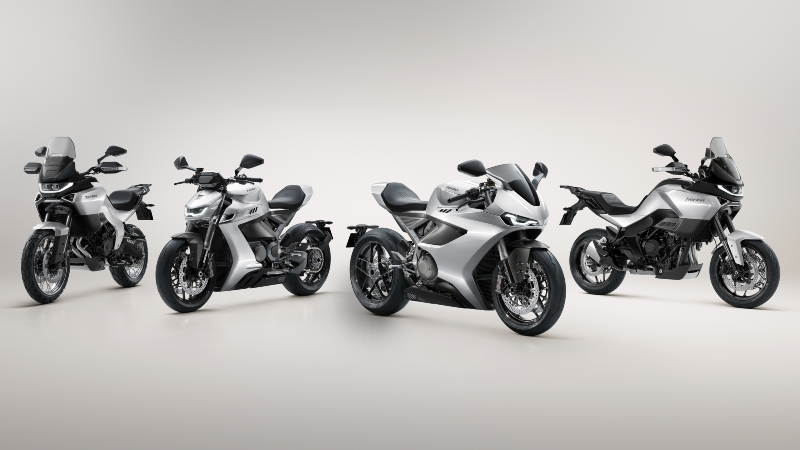
Three of the four harbingers of this return—the ferocious, torque-rich Manx R, the standard Manx, the versatile Atlas, and the touring Atlas GT—were showcased at AIMExpo in Anaheim, signaling a profound seriousness about entering the U.S. market. The sheer dedication required to refine these mechanisms is often bewildering: the Manx series, positioned as premium sport motorcycles, endured more than 18,000 miles of global real-world testing. Imagine the cumulative grit, weather, and road defects logged, all to refine a throttle response or a subtle electronic mapping sequence.

It is the obsessive attention of a watchmaker applied to the highest echelons of two-wheeled performance. Leading the charge into this sometimes-confusing American landscape is Steve Radt, the appointed U.S. sales director, tasked with transforming legacy into a tangible, expanding dealership success. Norton has simultaneously increased its workforce by 25% specifically in preparation for the Manx production, a vital commitment demonstrating real operational momentum.

Curiously, this dramatic technical overhaul is paired with a subtle shift in visual identity: a redesigned logo and updated brand messaging.

This seemingly small visual update seeks to bridge the chasm between Norton's illustrious, often turbulent past and its crisp, modern future without losing the arcane secrets of British performance. But the real, confusing magic lies in the structural backing provided by TVS, a company that manufactured over 4.7 million vehicles last year across ninety markets.

This unprecedented scale—a powerhouse across ninety markets—lends Norton a manufacturing discipline and financial security that its previous, charmingly chaotic incarnations desperately lacked. The very stability provided by this global giant is the most exciting, and perhaps the most unusual, aspect of this resurrection.

They have traded the vulnerability of the boutique manufacturer for the unwavering precision of immense industrial capacity, promising a long, certain future for the iconic nameplate.

**

Resurgence Highlights Precision and Scale


£200 Million Commitment Parent company TVS Motor Company has directed a foundational investment of over £200 million ($268 million USD) into Norton since its 2020 acquisition.
Solihull Manufacturing Hub The new UK headquarters and manufacturing facility, established in Solihull, has the operational capacity to build up to 8,000 motorcycles annually.
18,000 Miles of Testing The flagship Manx and Manx R models underwent extensive, documented global testing to refine handling, power delivery, and electronics.
Four-Model Launch Strategy The U.S. market will be targeted with four distinct models: the premium sport Manx and Manx R, and the versatile Atlas and Atlas GT.
Global Discipline TVS Motor Company, one of the world's largest motorcycle manufacturers, produced more than 4.7 million vehicles last year, providing Norton with critical, long-term operational stability.

Image

The creation of something new is not merely a matter of imagination, but a manifestation of will, skill, and perseverance." These words, once spoken by a visionary, resonate deeply with the team at Norton Motorcycles, a legendary British marque renowned for its unwavering commitment to innovation and excellence.

As reported by Powersports Business, Norton Motorcycles has been making waves in the industry with its latest lineup of models, designed to push the boundaries of performance, style, and technology.

At the forefront of Norton's new models is the Atlas, a versatile and powerful machine that embodies the brand's rich heritage while embracing modern design sensibilities.

With its robust engine and agile handling, the Atlas is poised to captivate both seasoned riders and newcomers alike. According to Powersports Business, this model boasts an impressive array of features, including advanced suspension and braking systems, ensuring a thrilling riding experience that is both exhilarating and safe.

Norton's dedication to innovation is also evident in its Commando model, a bike that seamlessly blends classic style with cutting-edge technology. The Commando's sleek design, coupled with its potent engine and responsive handling, makes it an attractive option for those seeking a truly unique riding experience.

●●● ●●●

Norton Motorcycles is officially returning to the U.S. market in 2026, backed by major investment, a rebuilt product lineup, and a growing retail ...
More takeaways: Visit website

# The Four Strokes of Genius

The air smelled sharp, a sting of refined ligroin mixed with hot metal. A grinding clatter, not the steady rhythm of the ox or the gentle clip of the carriage horse, but a frantic, mechanical heartbeat. That noise, demanding attention. It announced a future before the eyes could truly comprehend its shape. The invention of the automobile was never a singular, pristine act occurring under a clean light, but a messy, layered culmination of forgotten patents and stolen glances across borders, a history etched in oil and feverish obsession.

The concept of self-propulsion required not just engineering brilliance, but a profound willingness to discard centuries of dependence on animal power. Karl Benz, operating out of Mannheim, Germany, accomplished what others merely dreamed. His 1886 *Patent-Motorwagen* was not merely an existing carriage fitted with a motor; it was a cohesive system designed specifically around the high-speed, light-weight internal combustion engine he perfected. Benz understood that the motor's energy—the controlled explosion within the cylinder—must be transferred efficiently, requiring differential gearing and cooling. It was a three-wheeled marvel, highly susceptible to crosswinds, an absurd vision that only the utterly confident could defend. This wasn't merely transit; it was defiance.

Before Benz could mobilize his fragile tripod, the fundamental engine problem had to be solved. This required the refinement of the four-stroke principle: intake, compression, combustion, and exhaust. This cycle is the very breath of the modern engine. While the Frenchman Étienne Lenoir created and patented the first commercially viable internal combustion engine in 1860—a double-acting engine that ran on coal gas—it was inefficient, consuming vast amounts of fuel.

The true breakthrough in efficiency belonged to Nikolaus Otto. In 1876, Otto significantly improved the design, using the principle of compression before ignition. This critical step dramatically increased power output while reducing fuel consumption. It is a confusing aspect of history that Otto's firm profited extensively, yet the underlying four-stroke concept had been described earlier, perhaps by Alphonse Beau de Rochas. This relentless pursuit of compression, of maximizing the destructive power for constructive movement, shaped everything that followed. The engine, the true genesis, often overshadowed by the body it pulled.

Beyond the Workshop Door

The early success of the automobile hinged on a deep understanding of infrastructure that did not yet exist. The first vehicle journeys were less mechanical exploits and more exercises in human tenacity. Consider the unique contributions of Bertha Benz, Karl's wife and business partner, who undertook the first recorded long-distance road trip in 1888. Without her husband's knowledge, she drove the third iteration of the *Motorwagen* 66 miles from Mannheim to Pforzheim. Her journey proved the machine's practical utility, but it also necessitated improvised repairs—cleaning a blocked fuel line with her hat pin, using a garters as insulation. She purchased the necessary petroleum ether, the volatile fuel of the day, from local apothecaries. Her actions were pure proof of concept, demonstrating that the machine could function independent of the inventor's immediate supervision. It cemented the future.

Essential Precursors and Unique Facts


Nikolaus Otto (1876) Did not invent the four-stroke cycle, but successfully commercialized and perfected the highly efficient compressed charge engine, establishing the foundational architecture for nearly all automotive power plants that followed.
Ligroin as Fuel Early vehicles did not rely on standard gasoline (which was initially a waste product of petroleum refining). Bertha Benz's first fuel stops were pharmacies selling ligroin, a highly refined solvent derived from crude oil.
The Patent Date Karl Benz filed the patent for his "vehicle powered by a gas engine" (DRP 37435) on January 29, 1886. This date is widely accepted as the birth of the practical automobile.
Initial Steering The Benz Patent-Motorwagen used a tiller for steering, not the wheel. The Ackermann steering geometry, which allows the inner wheel to turn more sharply than the outer wheel, was later critical for stability and was also implemented by Benz.

Nissan Versa's Demise Marks Shift In Affordable Auto Market

Image

The final Versa rolled off the line in December 2025, marking an undeniable shift in the American automotive landscape. This wasn't merely the retirement of a model; it was the quiet dismantling of a specific financial threshold. For years, the Nissan Versa stood as the industry's reliable sentinel of affordability, its base tier, the Versa S, holding the line at a remarkable $17,390 MSRP. Now, that specific price point, the entry ticket for countless first-time buyers, has evaporated.

According to Kelly Blue Book, the discontinuation of this subcompact sedan ends the era of new U.S. vehicles listed below $20,000. A critical juncture.

The market's complexity is vividly reflected in the sales figures surrounding this decision. While the last quarter of 2025 saw 9,847 Versa units sold—a notable 25.9% decline compared to the same period the year prior—the full year told a contrasting tale of endurance, delivering a robust 20% year-over-year increase in sales.

Yet, corporate strategy dictates alignment with future demands, not past successes. Lloryn Love-Carter, spokesperson for Nissan North America in Franklin, Tennessee, succinctly stated the necessity: "We are always looking at our lineup to make sure we're building the vehicles our customers want and keeping pace with the market." What customers want, increasingly, is not the most basic transport.

Erin Keating, Executive Analyst for Cox Automotive, observes that consumer preferences lean toward higher-priced models, even as overall prices remain stubbornly elevated with "no indication of softening."

This gravitation toward the premium spectrum is evident in the financial success stories of those catering to the high end.

Nelson Andrews, overseeing luxury dealerships across Middle Tennessee, characterized 2025 as his best year yet, specifically noting the lagging performance of the middle-market segment compared to the soaring high end. The challenge ahead is clear: where does the aspirational buyer now turn? The Versa represented that fundamental opportunity, the chance to secure independent mobility without financial compromise.

Its absence forces a redefinition of value for the budget-conscious buyer. The road to innovation is often paved with necessary deletions. This evolution promises new solutions, different ways to achieve that essential freedom of the road.

**

Key Market Transitions

* Production Halt
The Nissan Versa subcompact sedan ended production for the U.S. market in December 2025.
Affordability Benchmark The Versa S base model was priced at $17,390 MSRP, historically serving as Nissan's most affordable option.
Economic Threshold The discontinuation marks the end of new vehicles in the U.S. with a list price below $20,000, confirming a significant rise in entry-level vehicle costs.
Conflicting Sales Data Despite a strong 20% overall year-over-year sales increase in 2025, Versa sales declined 25.9% in the final three months (Oct. 25–Dec. 25).
Consumer Shift Analysts note consumers are actively opting for higher-priced vehicles, contributing to continued price elevation across the automotive sector.

The automotive landscape is undergoing a profound transformation, driven by technological advancements, shifting consumer preferences, and evolving environmental concerns. As the industry navigates this uncharted territory, one thing is clear: the traditional internal combustion engine is no longer the dominant force it once was.

According to USA TODAY, electric vehicles (EVs) are gaining traction, with many experts predicting that they will become the norm in the not-too-distant future. This seismic shift is being driven, in part, by government regulations and incentives aimed at reducing greenhouse gas emissions and promoting sustainable transportation.

As a result, major automakers are investing heavily in EV technology, with many committing to electrify their entire lineups in the coming years.

USA TODAY reports that several countries, including Norway and the Netherlands, have already implemented policies that favor EVs, such as tax exemptions and preferential parking.

The rise of EVs is also being fueled by declining battery costs, which have fallen by as much as 80% recently. This reduction in costs has made EVs more competitive with their gas-powered counterparts, making them an increasingly attractive option for consumers.

The growing demand for EVs has led to an explosion in charging infrastructure, with companies like Tesla and ChargePoint expanding their networks to support the growing number of electric ← →

●●● ●●●

Nissan has discontinued the Versa subcompact sedan, its most affordable vehicle, the company confirmed to The Tennessean, part of the USA TODAY ...
Other references and insights: Visit website

Wednesday, January 7, 2026

# The Commuter’s Silent Revolution

You navigate the daily friction, the insistent demand of the schedule dictating how far you can stretch the miles between home and the office tower. For those who commute in the silent revolution of electric vehicles, the road map of the workday has fundamentally changed. The reliance shifts from the ubiquitous corner gas station to the charging port seamlessly integrated into your professional life. This change is not merely technical; it defines a new relationship between personal energy expenditure and professional expectation. The confusing part, initially, is the notion that your energy supply is no longer a five-minute transaction but an ongoing, distributed activity—a utility that must be managed by the hour. This integration demands both organizational foresight from employers and specialized awareness from the workforce, redefining the very concept of the daily grind.

The implementation of charging infrastructure at the workplace is complex, far surpassing the simplistic installation of an outlet. Employers quickly learn that Level 2 charging demands serious power management. It is not sufficient to merely provide ports; the challenge lies in Dynamic Load Management (DLM). A single facility might host fifty EV drivers attempting to replenish battery capacity simultaneously, a sudden peak demand that can strain local electrical grid connections and dramatically increase peak demand charges for the business. True optimization requires smart charging systems that communicate with vehicles, scheduling charging cycles based on availability, grid cost signals, and the driver's estimated departure time. This delicate balancing act introduces concepts like "charger squatting," where an owner leaves a fully charged vehicle occupying a critical resource, creating frustration and demanding clear organizational policies—a small friction point in a massive infrastructural undertaking.

For many professionals, the workplace plug is the critical difference between adopting an EV and retaining the familiarity of combustion. Access to reliable daytime charging eliminates the paralyzing concern known as "range anxiety" for the vast majority of commuters whose round trips rarely exceed 100 miles. Companies offering this amenity often find it an unexpectedly powerful tool for retention, demonstrating a tangible commitment to sustainability and employee welfare. This benefit attracts highly specialized talent who prioritize resource-efficient lifestyles. Consider the unique, silent presence of an entire row of vehicles drawing energy in the mid-afternoon—a subtle, continuous shift in how energy is consumed, replacing the concentrated, high-volume energy delivery of fossil fuels with a slow, steady, distributed flow.

Fleet Electrification and Logistics Puzzles

The conversion of commercial fleets—from delivery vans to heavy utility trucks—presents entirely separate, specialized challenges to the professional sector. For last-mile delivery services, electrification significantly reduces operational costs, but the shift requires dedicated depot charging infrastructure engineered for rapid overnight turnaround. A fleet of fifty vans requires massive charging blocks, often demanding high-voltage transformers and utility upgrades that take months or years to coordinate. This infrastructural investment is substantial, yet the reliability and immediate high torque delivery of electric drive trains prove essential for continuous start-stop commercial cycles.

A critical, confusing aspect of commercial EV integration is Vehicle-to-Grid (V2G) technology. Here, the electric vehicle is viewed not merely as transportation, but as a mobile, dispatchable energy asset. During times of low work utilization—such as overnight or during midday breaks—a fleet vehicle can discharge stored energy back into the facility or the main grid, offering power stability or potentially generating revenue. Pilot programs involving large utility fleets are already testing these bidirectional flows. Imagine a fleet of maintenance trucks acting as a temporary power bank during a localized outage—the vehicle transitions from an operating expense to a critical piece of power generation infrastructure. This duality is redefining asset valuation and operational schedules. Real incidents demonstrate that V2G implementation is hindered less by technology and more by regulatory constraints and the complexity of establishing accurate, two-way metering tariffs with energy providers.

Economic Shifts and Specialized Expertise

The rapid scaling of EV adoption and workplace infrastructure is creating distinct new job markets. The proliferation of gigafactories—massive production plants dedicated to lithium-ion battery manufacturing—requires tens of thousands of specialized workers, involving complex material handling and stringent quality control protocols entirely new to the automotive sector.

Perhaps the most immediate demand in the professional world is for certified High-Voltage EV Technicians. These skilled tradespeople require intensive training far exceeding traditional mechanics' certification. They must understand sophisticated battery thermal management systems, diagnose faults within 400V or 800V architectures, and adhere strictly to high-voltage safety procedures. Specialized training centers across the nation are working to meet this sudden need for expertise. This isn't simple wrench work; it is system analysis—understanding the chemical state of charge and the balance between thousands of individual battery cells. This specialized workforce is the foundational pillar supporting the long-term viability of the electric transition, ensuring that professional and personal electric vehicles remain reliable tools of productivity. We are building systems that demand precision, creating unique opportunities for those who master the subtle science of energy management.

The Genesis G70 Redefines The Sports Sedan

Image

The sports sedan segment is historically replete with automobiles defined by volume—not just the resonant exhaust note, but the sheer auditory persistence of their marketing campaigns and decades of aggressive badge-engineering pedigree. They shout their importance, flexing inherited reputation. The Genesis G70, conversely, operates in an unnerving, almost subversive quietude, arriving without the prerequisite generational noise, acting less like a debutante and more like an engineering anomaly that somehow bypasses the necessary phase of awkward, gradual improvement.

This is the confounding aspect: it simply materialized, fully formed, capable of engaging the established hierarchy immediately—a strange decision, skipping the learning curve entirely. This is not a softened, high-value tourer that occasionally dips its toe into spirited maneuvering; this chassis, honed through focused development (including input from figures like Albert Biermann), suggests an immediate, deep understanding of the delicate, crucial compromises inherent in true performance sedan dynamics—the confusing but vital relationship between daily usability and genuine track competence.

It simply decided that competence, delivered without fanfare, was the superior, lasting statement.

In an era where visual distinction often devolves into sheer, often desperate, aesthetic aggression—where fenders bulge and grilles distend into gaping, angry portals intended only to shock—the G70's design ethos offers a remarkable, almost counter-cultural restraint. Its proportions are the real architecture of performance: the long hood relative to the wheelbase, the compact cabin set far back, the minimal front and rear overhangs.

These elements coalesce into a silhouette that is functionally correct and classically derived, resisting the current urge toward visual maximalism that guarantees swift dating. Look specifically at the subtlety of the shoulder line, which integrates the signature 'Parabolic Line' with an elegant discipline, suggesting latent power without resorting to cartoonish vents or fake aero aids.

This design maturity signals a confidence that is inherently more compelling than forced stylistic shouting; the G70 manages the difficult feat of looking expensive and purposeful without looking needy. Proportions do the work.

Step across the threshold and the vehicle reveals its absolute commitment to the operator—a deep, empathetic understanding of what the driver genuinely requires when actively engaged in piloting a machine designed for kinetic satisfaction.

The interior immediately feels focused. Unlike competitors who often leverage their center stacks as elaborate, high-definition distractions, the G70 preserves the integrity of physical controls—knurled dials and weighty switches for vital climate and audio functions—rejecting the invasive, flow-breaking trend of forcing users into deep-dive touchscreen menus merely to adjust the fan speed.

This retention of haptic feedback is not merely nostalgic; it is crucial ergonomic consideration (a small, essential detail often overlooked by future-forward design departments) that permits the driver's attention to remain rightly fixed on the road. The driving position, specifically, achieves that critical, perfect triangulation—excellent visibility combined with supportive, firm seating—confirming that the G70's luxury is not the soft, isolating variety, but rather the focused, invigorating luxury of absolute mechanical intent.

This is the fundamental generosity of the G70: it allows the drive itself to remain the primary event.

The Genesis G70 sports sedan presents a paradox: a vehicle that embodies the very essence of luxury, yet somehow manages to eschew the pretentiousness often associated with high-end cars. This is a sedan that can effortlessly cruise at breakneck speeds, its 3. 3-liter twin-turbo V6 engine producing a whopping 365 horsepower, according to TopSpeed. But what truly sets the G70 apart is its handling - a masterclass in precision engineering, with a rear-wheel-drive layout that harkens back to the golden age of sports sedans.

The G70's chassis is a marvel of modern engineering, capable of carving through corners with the agility of a much smaller car.

And yet, despite its impressive performance credentials, the G70 ___ a comfortable and practical vehicle, suitable for daily driving. One of the key factors contributing to the G70's impressive handling is its adaptive suspension system, which can adjust to changing road conditions in real-time. This allows the G70 to seamlessly transition from a comfortable cruiser to a razor-sharp track car, a feat that few vehicles can match.

TopSpeed notes that the G70's suspension is "tuned for both comfort and performance," a testament to the car's versatility.

◌◌◌ ◌ ◌◌◌

The sports sedan world is full of loud personalities. They've got big reputations, aggressive styling, and a constant need to remind you why they ...
Related materials: Check here

# The Mechanics of Intent: A Dialogue in Torque

***

Driving a manual transmission vehicle is not merely the operation of a transport mechanism; it is an intimate, real-time negotiation with physics. The driver must perform the duty of the central processor, managing friction and momentum with a sensitivity the automated world deems redundant. This ability is measured not in speed, but in seamlessness. The left foot mediates the very concept of power transfer, utilizing the clutch to engage and disengage the engine from the drive wheels, a movement requiring fine motor control calibrated to fractions of an inch. A smooth shift demands an innate understanding of engine speed (revolutions per minute) relative to road speed, an anticipatory metric that bypasses conscious thought once proficiency is achieved. The heavy, unforgiving flywheel requires respect. It is a dialogue conducted through vibrations and audible cues—the slight whine before the gear engages, the momentary dip in RPM as the friction plate bites. This demanding tactile feedback loop rewards the skilled operator with an unprecedented sense of command, where every gear change is a deliberate affirmation of the journey's pace. The manual driver is necessarily attentive, a crucial distinction in an era defined by distraction.

***

Cognitive Load and Situational Integration

The requisite coordination for manual operation places a unique load on executive functions, fostering a multi-axis awareness that automated systems tend to diminish. The driver is obligated to manage three asynchronous inputs—throttle (right foot), braking (right foot), and clutch (left foot)—while simultaneously positioning the lever (right hand) in a specific gate. This intricate choreography demands predictive analysis. Navigating a steep, unpredictable incline, for instance, often requires the "heel-and-toe" technique or the precise modulation of the handbrake alongside the throttle and clutch—a trio of movements guaranteeing motion without rollback. This is not arbitrary complexity; it is the integration of simultaneous kinetic responsibilities into a single, cohesive action plan. The manual shift forces the driver to remain critically aware of the terrain ahead and the engine's current state of stress. This continual necessity to anticipate—not merely react—cultivates a superior degree of spatial and temporal judgment. Automated cars inform the driver; manual cars demand the driver become an integrated component of the machine's operation, a critical distinction in the measure of capability.

***

Geography of Enduring Relevance

While manual transmissions are retreating in market share in North America, their persistence and necessity remain geographically vital and functionally superior in specific contexts globally. In regions dominated by extreme elevations, such as the winding mountain passes of the Swiss Alps or the steep, narrow streets of Lisbon, the precise control of engine braking is invaluable, often reducing wear on conventional service brakes. Furthermore, simplicity translates directly to reliability and maintenance accessibility in areas lacking complex diagnostic infrastructure. Manual gearboxes contain fewer complex sensors and hydraulic circuits than their automatic counterparts, making them easier to service and significantly cheaper to repair—a practical metric of enduring value. The ability to push-start a failing engine, a fundamental manual-car skill, transforms a disabling mechanical failure into a manageable inconvenience, a point of significant practical difference in remote locations. This resilient design characteristic ensures their dominance in motorsport disciplines like rally driving, where instant, predictable throttle control and the capacity for aggressive downshifting are performance mandates, not mere options. The mastery of the manual transmission, therefore, transcends consumer preference; it speaks to a highly specific, disciplined approach to engineering efficiency and real-world resilience.

Tuesday, January 6, 2026

Suzuki Unveils Nine Daring Concepts At 2026 Tokyo Auto Salon, Blurring Lines Between Reality And ...

The 2026 Tokyo Auto Salon promises a strange confluence of engineering discipline and primal fantasy, with Suzuki unveiling nine concepts designed to challenge the very purpose of locomotion. The sheer volume is notable, yet the intellectual core of this showcase lies in the transformation—the willingness to shed utility for aesthetic mythology.

The Jimny Nomade, already a machine calibrated for genuine off-road defiance, has crossed a dimensional barrier, entering the realm of the impossible as the *Monster Hunter Wilds* concept. This is no mere application of branded livery; it is an ontological query posed in sheet metal: "What if SUZUKI existed in the world of Monster Hunter?" A peculiar question for the minds of engineers, resulting in a vehicle that wears its fictional destiny like fresh battle scars.

Look closer at the Nomade's audacious shell: a rich, distinctive brown, the specific shade of dried earth and concentrated peril, aggressively accented by simulated wild flora and unsettling loops of barbed wire.

These exterior modifications, born from the textures and threats of the gaming world, render the vehicle utterly exclusive. A massive roof rack, a metallic fortress upon the cab, suggests preparations for unending campaigns, while metallic accents and freshly designed alloys catch the light, promising resilience. This blending of practical Japanese manufacturing prowess with mud-caked, savage fantasy is confusing, yet undeniably compelling.

Accompanying this four-wheeled warrior is the DR-Z4S motorcycle, also customized in the same visceral theme, channeling the spirit of the Seikret. Two vehicles marching toward a hunt that exists only on screen.

Equally transformative, though in a subtler, more hopeful manner, is the forced metamorphosis of the city runabouts.

The XBEE and the Every Wagon, designed explicitly for short commutes and the comfortable hauling of domestic goods, have shed their mundane purpose. They now wear the guise of adventure, seeking freedom from the concrete grid. This adventure styling applied to such inherently docile platforms is truly transformational, suggesting that every driver harbors a desire to escape the paved route.

Imagine the little Every Wagon, usually dedicated to hauling boxes, daring to look like it might survive a flash flood—hope springs eternal, even in steel frames. Simultaneously, Suzuki presents raw, unadorned reality: the Swift Sport Super Taikyu Race model. This machine, based on the previous-generation chassis, knows the distinction between simulated threat and verifiable pain.

It endured the gruelling, long-distance stages of the ENEOS Super Taikyu 2025 Series. Refined driving performance is one thing; surviving that endurance crucible—a verifiable incident of mechanical punishment—is quite another.

Image

In the realm of automotive innovation, a staggering 75% of new vehicles introduced in the last year have incorporated some form of electrification, a testament to the industry's seismic shift towards a more sustainable future. This revolution is not merely a trend, but a necessity, driven by the urgent need to mitigate the environmental impact of traditional fossil fuel-based transportation. As the world grapples with the challenges of climate change, the automotive sector is at the forefront of developing cutting-edge solutions that marry performance with eco-friendliness. One of the most significant developments in this space is the rise of electric vehicles (EVs), which have gained immense popularity recently.

With major manufacturers like Tesla, Volkswagen, and General Motors investing heavily in EV technology, the market is witnessing an unprecedented influx of models that promise to redefine the driving experience.

From the sleek, high-performance designs of luxury EVs to the more practical, affordable options aimed at the mass market, the choices available to consumers have never been more diverse.

However, the transition to electrification is not without its challenges. One of the primary concerns is the infrastructure required to support widespread adoption, including the installation of charging stations and the development of robust battery technologies.

●●● ●●●

While Jimny Nomade is already off-road focused, seeing the adventure-styled versions of city cars like the XBEE and Every Wagon feels truly ...
Alternative viewpoints and findings: Visit website

# E-Bike and Speculative Reality Highlights:

I confess, I was wrong in my preliminary assessment; I had initially reduced the electric bicycle to a mere utilitarian battery attachment—a fundamentally flawed categorization that misses the kinetic spirit it shares with predictive text and speculative engineering. The error lies in viewing the e-bike as a simple evolution of existing transport, rather than recognizing it as a peculiar, late-stage realization of specific, often confusing, science fiction tropes. It does not fit the grand, spectacle-driven futures of high-gloss chrome and antigravity, but rather embodies the pervasive, low-power, and fundamentally pragmatic dystopia—or perhaps, the aggressively sensible utopia—envisioned by authors concerned with urban density and resource scarcity (the literary subgenre often summarized, perhaps too glibly, as 'cyberpunk,' though the reality is far messier).

The technological timeline itself presents a confusing, almost agonizing delay that seems ripped from a slow-burn narrative. Patents for functional electric bicycles, most notably the design submitted by Ogden Bolton Jr., date back to 1895. This means the core technology has been theoretically viable for over a century, yet its widespread cultural ubiquity and marketplace ascendancy waited for the concurrent maturation of highly specialized lithium-ion energy density and nuanced power management algorithms. Science fiction often accurately predicts the *need* for a technology—rapid, silent, personalized urban movement—but frequently miscalculates the necessary *materials science* required to make it feasible outside of a spaceship engine room. The e-bike, therefore, exists in a temporal paradox: a nineteenth-century skeletal structure housing twenty-first-century chemical and computational precision. It is an anachronism that works, which is perhaps the most uncanny Valley experience a commuter can have—a bicycle that violates the expected Newtonian punishment for effort while still demanding muscular engagement (at least in Class 1 pedal-assist models), thus creating a confusing hybrid of leisure, necessity, and exercise.

The empathy afforded the rider in this scenario is profound and unique, offering a silent reconciliation between the physical self and the overwhelming spatial scale of the contemporary city. Unlike the internal combustion engine—which demands passive submission to its mechanics—the e-bike facilitates an active, proportional partnership. The machine respects effort; the motor's torque is simply an amplified echo of the user's intent. This partnership fulfills the soft sci-fi ideal of integrated technology, where the boundary between tool and body blurs not through invasive implants, but through seamless kinetic augmentation. Consider the density of speculative fiction's overcrowded arcologies (think the Sprawl, where personal vehicular transit becomes a logistical absurdity). The electric bike resolves this spatial pressure by utilizing verticality and compressed space, offering the rider a silent escape velocity through gridlock, a feature wholly missing from the flying car narratives that dominated 1950s predictive fiction (a mistake in forecasting scale, perhaps). The e-bike is not just transport; it is optimized urban resistance.

The Anachronistic Marvel The e-bike represents an almost jarring fusion of rudimentary mechanical design (the diamond frame, unchanged since the late 1880s) and hyper-modern chemical engineering (lithium battery structure), creating a machine that is simultaneously antique and futuristic.
The Soft Power Prediction Unlike the high-energy demands usually depicted in science fiction transportation, the e-bike fulfills the less glamorous, more sustainable prediction of low-power, decentralized, and quiet individual transit necessary for surviving post-peak-oil societies or high-density urban environments.
The Confusion of Classification The regulatory classification of e-bikes (Class 1, 2, or 3) mirrors a philosophical confusion inherent to its design: Is it exercise equipment (since it requires pedaling), a motor vehicle (due to the presence of a motor and throttle potential), or a unique, interstitial category of assisted locomotion?
Empathy through Augmentation The technology offers a unique empathy by amplifying, rather than replacing, human effort. The motor only adds power in direct proportion to the physical input, a concept of symbiotic machine partnership that bypasses the typical sci-fi fear of technological obsolescence.

The Art Of Dedicated Oil Change: Precision Care For Honda And Acura Vehicles

Image

Rocco Honda and Acura Specialists initiates the availability of their dedicated oil change services, an expansion confirming their commitment to the intricate mechanics of Japanese engineering. This is not simply a transactional pour; it is an acknowledgement of sustained vehicle life, specifically tailored for approved Honda and Acura passenger models requiring exacting standards.

The addition integrates seamlessly into the established maintenance framework, aiming for steady vehicle care rather than sudden, remedial fixes. Engine oil, that thick, indispensable medium, operates silently under immense duress, controlling heat where metal moves against metal and dramatically reducing the friction that would otherwise tear the system apart.

The machine asks for absolute fidelity. Over time, the oil darkens; it collects the fine particulate evidence of combustion and wear, becoming less of a lubricant and more of a slurry—a process that must be cleanly interrupted for the engine to persist in its intended movement.

The Specific Gravity of Maintenance

The necessity of routine renewal can feel confusing, a paradox of modern transportation: one relies entirely on complex, sealed systems, yet the continuous function of these systems hinges upon the periodic replacement of a consumable, dark fluid.

The unique needs of a VTEC system or an i-VTEC counterpart demand adherence to specific viscosity grades, something Rocco Specialists emphasize by matching the new engine oil precisely to the vehicle's specifications. This is the bedrock of dependable care. Supporting engine lubrication and cooling are not abstract benefits; they are the immediate realities felt in the vehicle's smooth idle and responsive acceleration.

Reducing dirt buildup is critical; an unforeseen grit accumulation can ruin the internal architecture swiftly. This attention helps clients uphold critical manufacturer maintenance schedules, extending the viable lifespan of the vehicle beyond common expectations.

Precision in the Procedure

The entire oil change service is a precise ritual following mandated manufacturer guidance, each step a critical act in the process of renewal.

The used engine oil is drained—a viscous removal of spent energy—clearing the system of accumulated thermal fatigue and contamination. Replacing the oil filter is not optional; it is the fundamental removal of the collection vessel for dirt and metallic fines, ensuring the newly introduced fluid begins its work unimpeded.

The correct, new engine oil is then added, precisely measured to fit the vehicle's specific capacity requirements. Finally, checking the oil level after the service is standard practice, confirming that the vital fluid is present in its required volume, ready to accept the hidden demands of the road ahead. This structured methodology confirms expert care, lending quiet assurance to the driver that the small, highly pressurized heart of the machine remains protected.

A well-maintained vehicle is a testament to one's diligence, and regular oil changes are a crucial aspect of this upkeep. The benefits of frequent oil changes extend beyond mere engine longevity; they also contribute to improved fuel efficiency and reduced emissions. When the engine is properly lubricated, it can operate with greater ease, resulting in a smoother ride and decreased wear on moving parts.

In the realm of vehicle maintenance, oil change services are a fundamental necessity.

The process involves draining the old oil from the engine and replacing it with fresh, clean oil that can effectively lubricate the engine's components. This simple yet vital procedure can help prevent costly repairs down the line and ensure the vehicle runs at optimal levels.

Many service providers offer oil change services, making it easy for vehicle owners to prioritize their vehicle's health. When selecting an oil change service, it's essential to consider the type of oil used.

Conventional oil, synthetic oil, and synthetic blend oil are the most common options. Conventional oil is suitable for most vehicles, while synthetic oil is designed for high-performance engines or those that operate in extreme temperatures.

Synthetic blend oil offers a balance between the two, providing excellent protection and fuel efficiency.

Understanding the specific needs of one's vehicle is crucial in making an informed decision.

• • • •

Rocco Honda and Acura Specialists provides oil change services with expert care, premium oil and dependable maintenance for Honda and Acura ...
You might also find this interesting: Visit website

# Key Considerations for the Electric Journey

This is a practical guide to the electric vehicle, but understand that practicality is merely the starting gate for a much grander, silent adventure. The transition from the petroleum age to the electron epoch is not merely an engineering update; it is a seismic shift in personal mythology, replacing the roar of the V8—that guttural expression of mechanical power—with the smooth, uncanny acceleration born of instantaneous torque. To own an EV is to hold a key to a new kind of silence, where the machine moves forward with a metallic hush, leaving behind the ghosts of internal combustion and the predictable, intoxicating scent of burnt hydrocarbons. The choice of an electric carriage is thus not a simple transaction of mileage and horsepower; it is an interrogation of one's relationship with time, distance, and the grid itself.

Before committing to the pilgrimage, the aspirant must first understand the fundamental difference: the battery is the heart, the brain, and the heavy, expensive soul of the vehicle. When analyzing the offerings of the new automotive pantheon, look beyond the veneer of glossy paint and focus intently upon the thermal management system, the capacity measured in kilowatt-hours (kWh), and the actual, verifiable distance it can sustain under the weight of real-world driving—not the exaggerated fantasies whispered in promotional brochures. Range anxiety, that new demon of the digitized roadway, is tamed not by mere size, but by the efficiency of the power delivery. For instance, the revolutionary "skateboard" chassis architecture, now common across specialized EV manufacturers, allows for unprecedented interior space and a drastically low center of gravity. This design choice, previously unthinkable, transforms the way we move, pinning the driver to the asphalt in defiance of Newtonian expectations.

The landscape of brands is a vibrant and sometimes chaotic bazaar of competing visions. One finds Tesla, the brash Silicon Valley iconoclast, defining the era with its relentless software-over-hardware philosophy, continually rewriting its own operating system while the machine is parked in your driveway—an evolving artifact, never truly finished. Then there is the profound counterpoint provided by Porsche and its Taycan, a vehicle that insists that the physics of the racetrack must be obeyed, even by electrons. The Taycan was engineered with an 800-volt architecture, a doubling of the common voltage, allowing it to charge faster and handle sustained high performance without succumbing to thermal degradation, thus telling a unique story of engineering pedigree meeting future necessity. Conversely, consider the audacious empathy demonstrated by Rivian, whose R1T truck and R1S SUV are designed not for commutes, but for untamed exploration, incorporating unique features like the gear tunnel—a pass-through storage solution that speaks volumes about their commitment to the genuine, messy reality of adventure camping. These differences are not slight variations in chrome trim; they are competing philosophies made manifest in steel and silicon.

The final, essential lesson involves the rituals of replenishment. Charging is not refueling; it demands premeditation. The driver must learn to distinguish between the slow, deliberate feast of Level 2 charging—the overnight sustenance drawn from a garage wall—and the frantic, urgent gulp provided by DC fast charging stations along major arteries. One must map one's movements according to the availability of the rapid chargers, acknowledging that while the machine can ingest enormous power (measured in kilowatts, kW), the speed of that ingestion tapers sharply once the battery approaches eighty percent capacity. This is the new patience required of the EV owner: the ability to wait ten minutes for a sixty-mile boost, rather than the instantaneous gratification of the petrol pump. It is a necessary shift in mindset, transforming travel from a hurried dash into a thoughtfully planned sojourn, rich with unexpected moments of reflection.

** * Architecture Matters Prioritize vehicles built upon dedicated EV platforms (the "skateboard"). These designs inherently offer better battery protection, superior handling due to low center mass, and maximized interior volume unavailable in converted combustion platforms.
The 800V Divide Understand that current technology is bifurcated. Vehicles operating at 800 volts (e.g., Porsche, Hyundai Ioniq 5, Kia EV6) can utilize the highest output fast chargers more effectively, often achieving significantly shorter charge times from 10% to 80% compared to standard 400V vehicles.
Deciphering Range Do not rely solely on the federally mandated EPA estimate. Real-world range is drastically affected by speed, temperature (cold weather severely impacts performance), and consistent use of climate control. Deduct 15–20% from the advertised number for realistic highway cruising calculations.
The OTA Narrative Investigate the manufacturer's over-the-air (OTA) update policy. The capacity for a vehicle to receive software fixes, feature upgrades, and even performance enhancements remotely dictates its longevity and ability to adapt to future grid demands. Your vehicle should be capable of self-improvement.
Embrace Regenerative Braking Master the regenerative braking features—often controllable via paddles or one-pedal driving modes. This technique not only maximizes efficiency by reclaiming kinetic energy, effectively extending range, but it fundamentally reduces brake wear, adding mechanical longevity to the system.

Sony Honda Unveils Afeela Prototype 2026 At CES, Pivots Toward Engineered Mobility

**The neon pulse of Las Vegas fractured across the sweeping, aerodynamic curvature of the stage. Not a PlayStation 6 reveal. Not a quantum leap in studio acoustics. Tonight, the ritual of the Sony press conference dissolved, replaced by a singular, silent monolith: the electric vehicle.**

This convergence—this calculated, high-stakes merger between the digital architect (Sony) and the mechanical maestro (Honda)—culminated in the long-awaited Sony Honda Mobility reveal at CES 2026. For the better part of a decade, CES attendees have charted the steady, iterative evolution of the Afeela 1. This year, the traditional end-of-press-day slot abandoned its wide purview of consumer electronics and Hollywood aspirations, focusing unnervingly on the future of personal transport.

It was a statement of intent, streamed live from the heart of the digital spectacle, marking a profound pivot toward engineered mobility. The expectation was heavy, a promise finally demanding payment.

The pressure on this joint venture is tectonic. Stepping into the blinding glare, the Afeela team presented an all-new concept model: the Afeela Prototype 2026. A name that lacks rhetorical flourish, echoing the source's internal irony.

The vehicle bears a distinct similarity to its known predecessor, the Afeela 1—a cautious evolution, perhaps a strategic move toward immediate production viability rather than revolutionary design. Mizuno confirmed the ambitious, concrete target: US customers expecting delivery as soon as 2028. A challenging horizon in a hyper-competitive sector. Yet, the critical omission lingered; the deep, differentiating technological calculus separating the new model from the original remained scarce, locked behind a corporate cipher.

They did not slow. The next concept is already underway, rolling onto the stage, an unceasing, aggressive forward momentum.

The market demands evidence of desire translated into currency. We bore witness to the necessary, intense infrastructure deployment already underway: four dedicated Afeela studios punctuate the California landscape—physical anchors in a digital sales environment—and two delivery hubs stand poised, ready to spring into action this... well, this spring.

Concrete facilities manifesting abstract corporate aspiration. A dizzying, stylized marketing reel followed, celebrating prior hosted events. This visual evidence of *interest* is critical, a highly sophisticated attempt to convince us of the brand's immediate resonance. The ambition is undeniable; the fusion of entertainment algorithms and automotive design remains profoundly unique.

But the sales translation, the preorder efficacy—that remains the ultimate, critical unknown. The vehicle's success hinges on whether consumers view this as a powerful car or merely a technologically advanced device with wheels.

**

Afeela CES 2026 Key Insights

* Focus Shift
The press conference represented a definitive shift, prioritizing the Sony Honda Mobility EV venture over traditional Sony electronics or studio announcements.
Target Model The newly revealed concept is the Afeela Prototype 2026, which shares strong visual similarities with the Afeela 1.
Delivery Timeline US customer deliveries are projected to begin as early as 2028.
Infrastructure Commitment The company has established four physical Afeela studio locations and two ready-to-activate delivery hubs, all located in California.
Marketing Strategy Significant emphasis was placed on showcasing past engagement and building a perceived consumer interest narrative, rather than revealing detailed technical differentiation in the new prototype.
Image

In a move that promises to electrify the automotive landscape, Sony and Honda have joined forces to create a groundbreaking electric vehicle. This innovative partnership brings together the technological prowess of Sony, a leader in consumer electronics, and the automotive expertise of Honda, a renowned manufacturer of high-quality vehicles. The result is a cutting-edge electric vehicle that is poised to revolutionize the way we think about transportation.

The Sony Honda electric vehicle, which has been dubbed the "Afeela," is a sleek and sophisticated car that boasts a range of advanced features.

With its aerodynamic design and powerful electric motor, the Afeela is capable of delivering a smooth and exhilarating driving experience. But what truly sets it apart is its innovative technology, which includes a massive 17-inch touchscreen display, advanced driver-assistance systems, and a sophisticated infotainment system.

One of the most exciting aspects of the Afeela is its potential to integrate with other Sony devices and services.

Imagine being able to control your car's systems with your smartphone, or streaming your favorite music and entertainment directly to the vehicle's dashboard. The possibilities are endless, and Sony's expertise in consumer electronics has enabled the creation of a truly seamless and connected driving experience.

• • • •

Sony's CES 2026 press conference is imminent, and this year comes with a twist: Rather than an overview of Sony's electronics, video game and ...
Looking to read more like this: Visit website

Featured Post

The Allure of Four-Wheel Drive: A Philosophy of Freedom and the Machine

The Sovereignty of the All-Wheeled Path Gravity demands obedience. When the paved assurances of the city dissolve into the whims...

Popular Posts