

What if the horizon failed? If the world ahead were not a continuation of sight but a sudden void, the sheer velocity of modern transit demanding a memory of the ground that exceeds the mortal eye. This is the cold logic of the automated highway, a reckoning measured not in miles traveled but in milliseconds anticipated.
At the Consumer Electronics Show, the focus shifted from the mere steering of the machine to the absolute certainty of the maps that guide it, a deeper geometry etched into the silicon heart of the vehicle.
The spectacle unfolded in Las Vegas, a city of fleeting light and hard desert edges. Qualcomm set its Snapdragon Ride Pilot upon the streets.
Yet the true display was not the car's ability to navigate the lanes—a feat increasingly commonplace—but the unseen architecture of knowledge that allowed it to perceive beyond the curve of the immediate road. The system integrates advanced driving maps from HERE, maps that speak a language of future movement. This is not simple GPS. It is the construction of an informed reality, a safety net woven from complex spatial data.
The E-Horizon: Sight Beyond Sight
The maps define an "e-horizon," a predictive sphere that anticipates the terrain far past the vehicle's own sensor range.
It grants the machine a prescience, allowing the driving assistance system to prepare for ascents and declines before they are physically visible, adjusting power and response with seamless precision. A vehicle equipped with this awareness becomes less reactive and more strategic in its movements. The consequence of this foresight is smoother lane changes, the vehicle knowing the topography of the adjacent path lane-by-lane, a granular detail that changes the nature of automated driving from simple following to predictive orchestration.
Qualcomm does not seek to deploy the robotaxi, does not claim the driverless streets as its own domain.
Instead, the company provides the foundational intellect, the hidden architecture powering myriad vehicles now operating. Through the expansive Snapdragon Digital Chassis package, the silicon provides the nervous system—handling everything from infotainment displays and connectivity protocols to critical safety features.
Manufacturers like General Motors, BMW, and Ford rely on this bedrock, the engine of connectivity and decision-making residing just beneath the polished surfaces. The integration of HERE's advanced mapping capabilities is one such powerful tributary feeding into the Snapdragon Ride Pilot system.
Global Cartography and Confidence
The scope of this technology is immediate and widespread.
HERE already furnishes its advanced driving maps across sixty countries, a vast network of detailed road intelligence. They speak of plans to expand this coverage aggressively, aiming for one hundred nations within the year. The map becomes not merely a guide but a guarantor of safety, a layer of digital trust laid over the unpredictable surface of the world.
This widening gyre of accurate data promises to level the entire ecosystem of assisted driving, ensuring that the machine's certainty does not depend merely on the quality of the immediate line of sight, but on a global comprehension of the road unspooling before it.
•**Key Capabilities of AI-Powered Maps
* E-Horizon Functionality Maps anticipate road topography and conditions beyond the vehicle's physical line of sight, enabling proactive driving decisions.• Lane-by-Lane Topography Detailed road intelligence facilitates smoother, safer automatic lane changes by mapping precise elevation and curvature for adjacent lanes.
• Snapdragon Digital Chassis Integration The map technology works within Qualcomm's broader platform, which supplies core computing for safety, displays, and connectivity across major automotive brands.
• Global Reach HERE's advanced maps are currently operational in 60 countries, with concrete plans for expansion into 100 countries within the calendar year.
The asphalt unwound before them like a black snake, a serpentine path that beckoned to the brave and the foolhardy. In the vanguard of this revolution stood the self-driving car, a technological juggernaut that threatened to upend the very fabric of modern society. According to a report by Gizmodo, the latest advancements in autonomous vehicle technology had brought the industry to a critical juncture, one that promised to redefine the relationship between man and machine.
At the heart of this revolution lay the complex interplay of sensors, software, and hardware, a synergy that enabled vehicles to perceive, interpret, and respond to their surroundings with uncanny precision.
Lidar, radar, and cameras formed the triumvirate of perception, feeding data into sophisticated algorithms that parsed the environment and made split-second decisions. The result was a machine that could navigate the most treacherous terrain with ease, its digital brain processing information with a speed and accuracy that far surpassed human capabilities.
As the technology continued to mature, the possibilities seemed endless.
Imagine a world where traffic congestion was a relic of the past, where vehicles moved in harmony like a choreographed ballet, their autonomous systems optimizing traffic flow and minimizing the risk of accident.
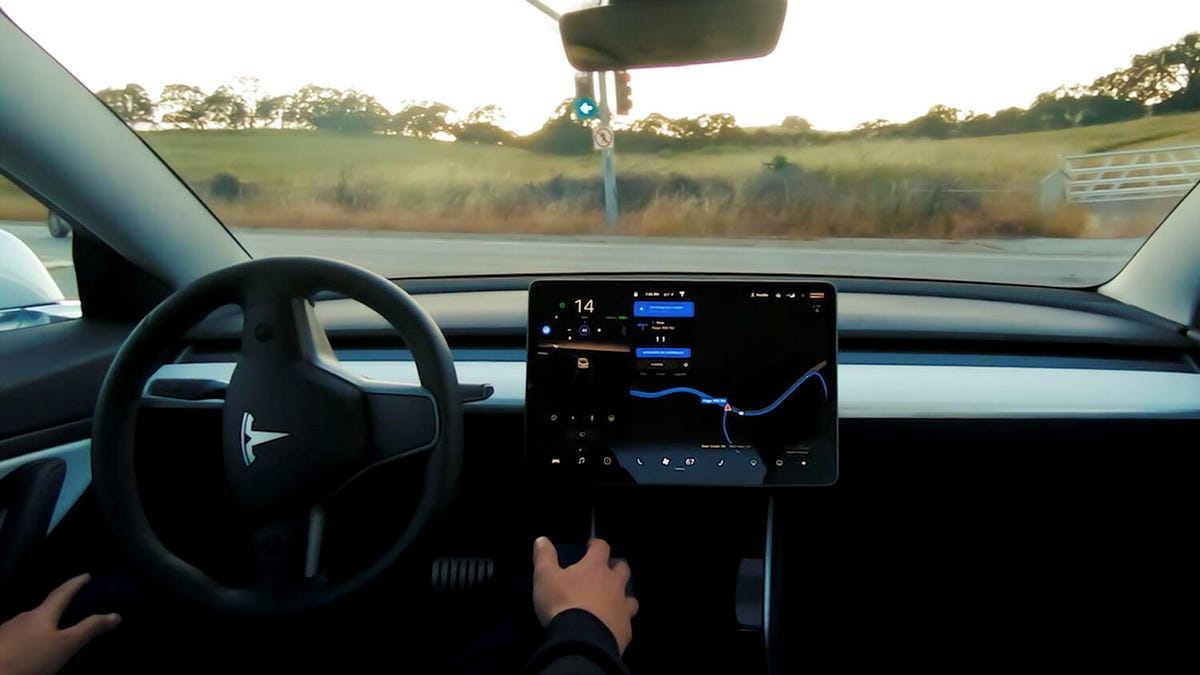
Find other details related to this topic: Visit websiteA car with Qualcomm's Snapdragon Ride Pilot, the company's driving assistance system, roamed the streets of Las Vegas to kick off the CES tech show ...• • • •



No comments:
Post a Comment