
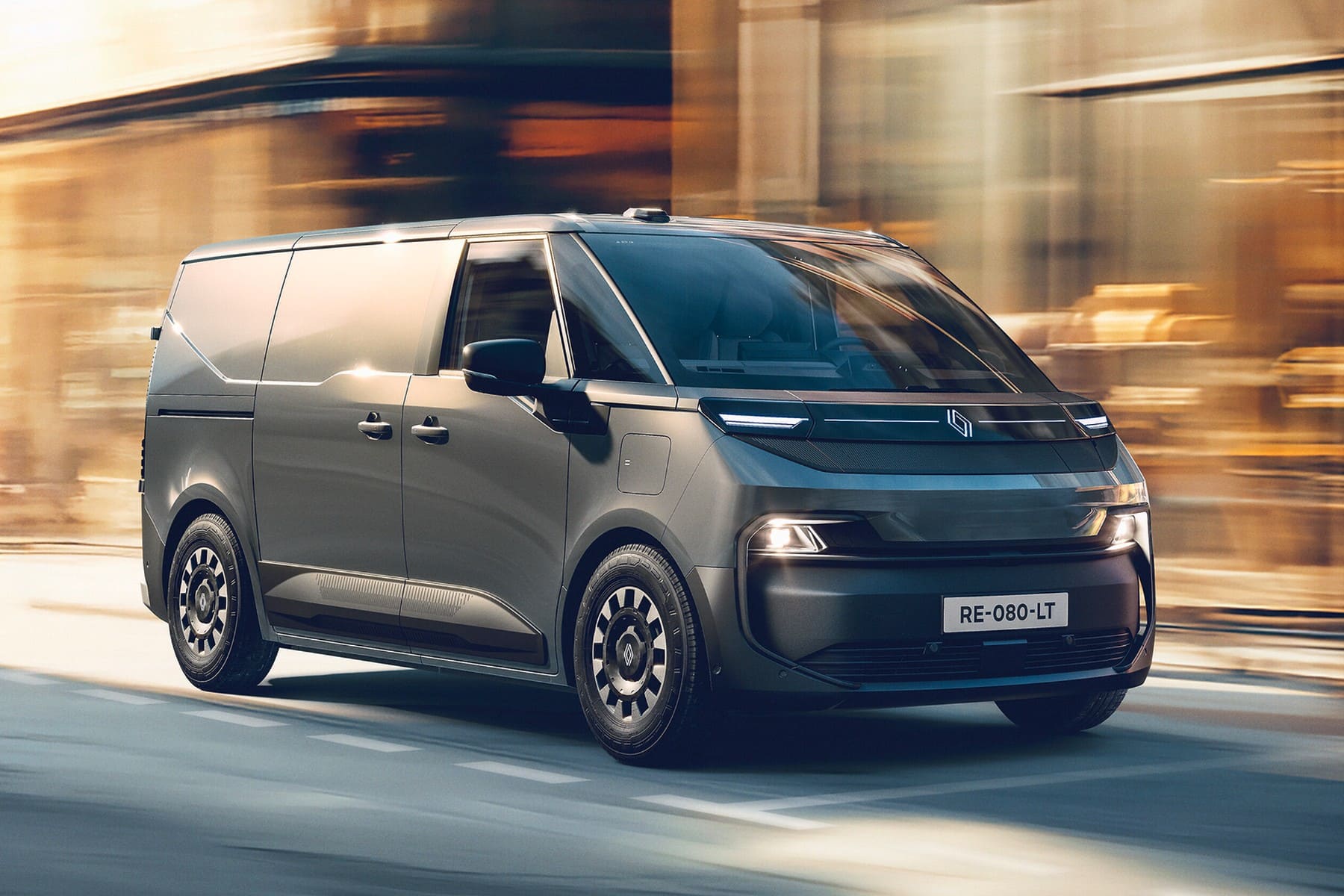
Renault has unveiled the production version of its first 800-volt electric vehicle, the Trafic E-Tech Electric, at Solutrans 2025 in Lyon. The all-electric panel van is based on Ampere's flexible, scalable SDV (Software Defined Vehicle) architecture. This new architecture will enable charging times of less than 20 minutes from 15 to 80 per cent, according to Renault's initial announcement in January (Electrive. com, 2025). The Trafic E-Tech Electric will be available with two battery options: an NMC battery for up to 450 kilometres of WLTP range or a cheaper LFP battery that is expected to achieve around 350 kilometres.
The vehicle will be equipped with a new electric motor with 150 kW of power and 345 Nm of torque. In terms of utility value, the Trafic E-Tech Electric will have a towing capacity of two tonnes and a payload of up to 1. 25 tonnes, pending homologation (Electrive. com, 2025). The vehicle's dimensions will vary, with the L1 panel van offering 5. 1 cubic metres of cargo space and the L2 offering up to 5. 8 cubic metres.
The rapid evolution of electric vehicle (EV) technology has led to a significant shift in the automotive industry, with many manufacturers investing heavily in the development of new electric models. One of the key areas of focus has been the improvement of battery technology, with companies such as Tesla and Volkswagen working to increase energy density and reduce costs.
According to a report by BloombergNEF, the cost of lithium-ion batteries has fallen by over 80% in the past decade, making EVs more competitive with internal combustion engine vehicles.
As EV technology continues to advance, we are seeing the emergence of new business models and innovative approaches to vehicle ownership.
For example, car-sharing services such as Zipcar and Car2Go are increasingly offering electric vehicles as part of their fleets, providing consumers with a convenient and sustainable way to access transportation.
Companies such as Tesla and Rivian are exploring new approaches to vehicle sales, including direct-to-consumer models that bypass traditional dealerships.
The growth of the EV market is also driving investment in charging infrastructure, with companies such as ChargePoint and EVgo working to expand their networks of public charging stations.
Governments are also playing a key role in supporting the adoption of EVs, with many countries offering incentives such as tax credits and rebates to encourage consumers to ← →
Other references and insights: Check hereRenault unveiled the production version of the new Trafic E-Tech Electric at Solutrans 2025 in Lyon (18 to 22 November).●●● ●●●



No comments:
Post a Comment