
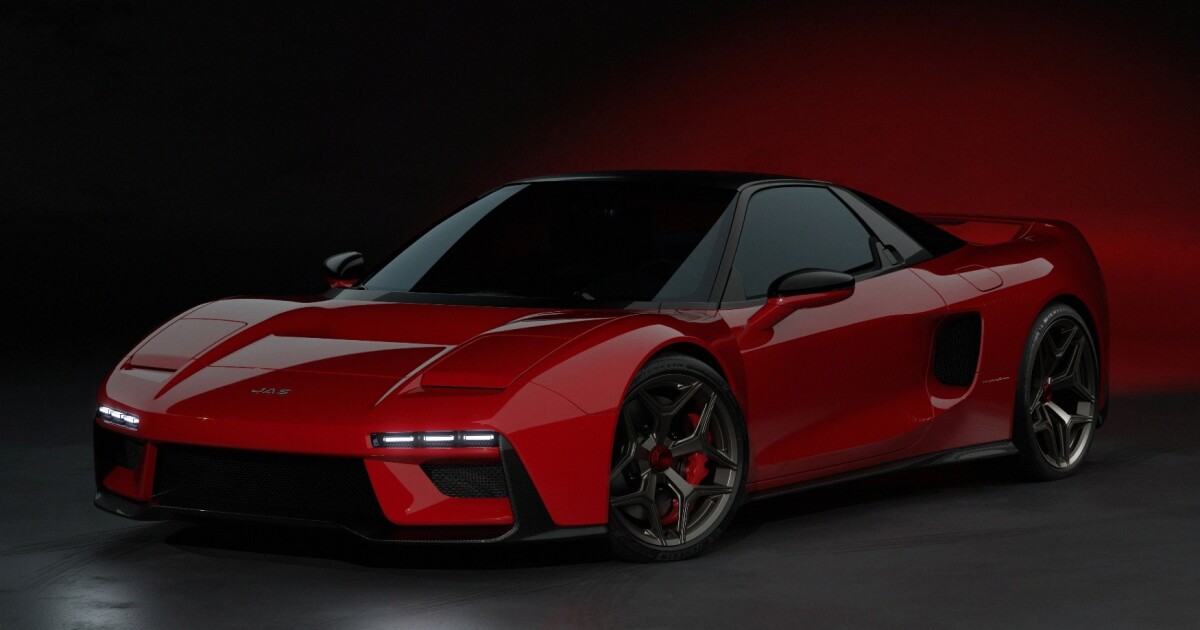
The things we love never truly disappear; they just wait for the right light. The original Honda NSX holds a strange, enduring place in memory. It was low-slung. It challenged established European aristocracy when it arrived 35 years ago, managing to compete effectively with vehicles that carried generations of pedigree.
Now, we hear of the "Tensei"—Rebirth—a project intending to bring the NSX back into the world. This is not just a basic restoration, not a simple 'restomod' as they are often clumsily labeled. Pininfarina, designing the cabin, and JAS, overseeing the sophisticated manufacturing, are positioning the Tensei as a rerelease, a very specific distinction that carries genuine weight when talking about something so profoundly revered.
Milan, 2026. That is where a new, ultra-limited production run is set to begin. It is a frightening promise, updating an object that so many consider complete.
JAS promises cutting-edge technology and advanced mechanics derived from the world of competition. This is where the tension resides: how do you honor the purity of the first generation while implementing competition-level components? The powertrain choice reflects a deliberate reverence: a naturally aspirated V6 described as "original NSX-inspired." That first 3.0-liter V6, producing 270 hp, was a celebrated piece of engineering purity.
While the Tensei must deliver a meaningful power boost to justify its modern designation, the dedication to natural aspiration speaks volumes about preserving the driving character. A specific six-speed manual transmission is confirmed, intended to enhance "driving emotion." That phrase is everything; it suggests they understand the tactile, analog experience that modern hypercars sometimes overlook entirely.
The cabin, designed by Pininfarina, is the most ambiguous part right now. The original NSX featured a famously focused, analog interior. Balancing that cherished simplicity with modern demands is a dangerous tightrope walk. You hope they do not smother the focused driver's environment with excessive digital interfaces.
What we are witnessing is not merely an engineering exercise; it is a hopeful negotiation with nostalgia.
A classic car, especially one engineered to such a precise, usable standard, carries years of accumulated human history—the long drives, the focused maintenance, the simple, quiet admiration. The Tensei intends to feature a carbon V6 rebirth, positioning the car anew. This entire process is a compelling example of preservation through adaptation.
The intention is clear: keeping the soul intact while changing the core components. It's hard to update perfection, but the desire to maintain the foundational driving experience suggests a deep empathy for the car's legacy.
* Project Tensei translates to "rebirth" in English. * The project is positioned as a rerelease, distinctly separate from a typical restomod. * An ultra-limited production run is scheduled to take place in Milan starting in 2026. * Power will come from an NSX-inspired naturally aspirated V6. * A six-speed manual transmission is confirmed for the vehicle. * The advanced mechanics are derived from the world of competition, according to JAS, who oversees manufacturing. * Pininfarina is responsible for the interior design.There aren't many cars with appeal as enduring as the original Honda NSX. Its beautiful, low-slung styling, the sheer dearth of examples you can ...Find other details related to this topic: See here


No comments:
Post a Comment