
Ladies and gentlemen, today I'd like to take you on a fascinating journey through the realms of science fiction and its uncanny ability to predict our future. Cinema and television have long been touted as mere entertainments, but the truth is, they serve as a window into the zeitgeist, offering a glimpse of the technological and cultural transformations that lie ahead.
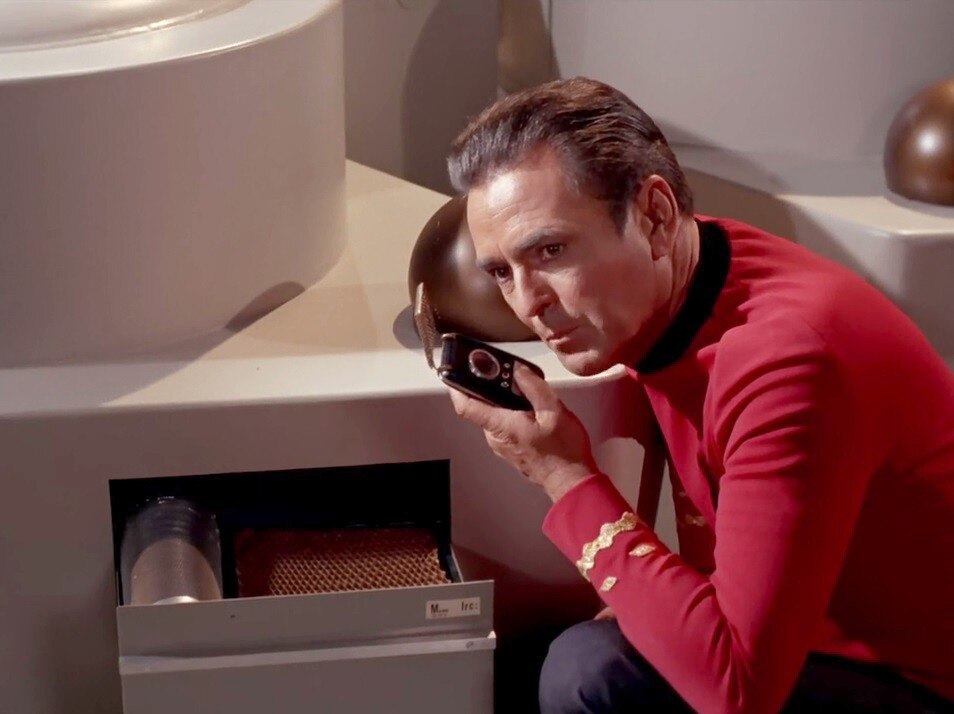
Case in point: the prophetic visions of the 1960s, when Star Trek boldly went where no one had gone before. The crew's trusty communicator, a device that allowed them to converse wirelessly, was a remarkably prescient concept. Its clamshell design, snap-open mechanism, and intuitive interface eerily foreshadowed the cell phones of the 1980s and 1990s.
Fast forward to today, and it's clear that the Padd, a touchscreen terminal from Star Trek: The Motion Picture and The Next Generation... was a harbinger of the tablets we use today. Its minimalist design, "lack of physical keyboard.".. and touch-based interface were all hallmarks of a user-friendly digital interaction that has become the norm.
But Star Trek's vision didn't stop there.
Technical Overview of Predictive Technology in Cinema** The convergence of technology and science fiction in cinema has led to the creation of devices and scenarios that have materialized in our world. The 1960s' vision of portable, wireless communication devices, exemplified by the Star Trek communicator, has become a reality with the development of modern cell phones.
The clamshell design, snap-open mechanism, and intuitive interface of the communicator have been echoed in early mobile phones of the 1980s and 1990s. The touchscreen terminal, Padd, introduced in Star Trek: The Motion Picture (1979) and later in Star Trek: The Next Generation (1987–1994), has been a precursor to modern tablets... showcasing a clear vision of user-friendly digital interaction.
The depiction of artificial intelligence in science fiction has also shown remarkable foresight. Stanley Kubrick's 2001: A Space Odyssey (1968) marked a turning point in how AI was imagined, "with the sentient entity Hal 9000." Its calm, "emotionless voice.".. and ever-watchful red eye have foreshadowed many of today's ethical concerns surrounding AI. The involvement of scientific consultants with screenwriters and production designers in the creation of these predictive technologies has highlighted the ← →
The Sci-Fi Crystal Ball How Fiction Shapes Our Reality
The most critical point to understand is that **science fiction isn't just escapism; it's a powerful form of speculative design that often foreshadows and even inspires future technological and societal advancements.** By exploring potential futures, even fantastical ones, science fiction authors and filmmakers plant seeds of innovation in the collective consciousness, influencing the direction of scientific research and technological development.
The power of science fiction lies in its ability to extrapolate from current trends and imagine the possibilities, both utopian and dystopian, that lie ahead. It acts as a playground for ideas, allowing us to explore the potential consequences of new technologies and social structures before they become a reality. This imaginative exploration can, in turn, inform our present-day decisions, helping us navigate the complex challenges and opportunities of a rapidly changing world.
Beyond specific technological predictions, science fiction often explores profound ethical and philosophical questions. Stories about artificial intelligence force us to confront what it means to be human, while tales of interstellar travel challenge our notions of community and belonging. By engaging with these thought-provoking narratives, we can develop a deeper understanding of ourselves and the world around us, preparing us for the future that science fiction is actively helping to create.
Cinema and television often mirror our society, but in some cases, they have served as windows into the future, foreseeing technological and cultural transformations long before they became reality. In a strikingly prophetic way, various filmmakers and screenwriters have imagined devices and scenarios that once seemed like pure science fiction but over time, they have materialized in our world.◌◌◌ ◌ ◌◌◌
In the 1960s, when landline phones and wired communications dominated the real world, Star Trek envisioned a future where people communicated through portable, wireless devices. The Enterprise crew's communicator is now widely recognized as a conceptual precursor to the cell phone, with its clamshell design, snap-open mechanism, and intuitive interface resembling the early mobile phones of the 1980s and 1990s.


No comments:
Post a Comment