Wednesday, December 31, 2025

The Optimism of Adaptive Technology: How Customized Cars Empower Personal Freedom

The steering wheel, polished slick from decades of steady contact, is gone. In its place, cantilevered slightly toward the chest, rests a stainless-steel lever—a push-pull marvel, perhaps, or a delicate joystick, calibrated to command the throttle, braking, and direction with the minimalist pressure of a thumb and forefinger. This is not the standard, brute-force interface of the combustion engine age; this is the tactile manifestation of sophisticated human will, a bespoke kinematic solution. The automobile, that sprawling American emblem of absolute kinetic freedom, becomes in this context a high-functioning prosthetic, an extension less of the foot and hand and more of the central nervous system itself. We watch as the inherent mechanical challenge—the conversion of human effort into vehicular motion—is solved not by universal design, but by intensely localized, specialized engineering. A peculiar, necessary alchemy. The car, suddenly, is not judgmental about knees or grip strength; it requires only intent.

Consider the complexity beneath the specialized gear. We move beyond simple spinner knobs—a historic fixture that allowed unilateral steering input for individuals with limited hand function, a post-World War II innovation that quickly became a standard modification—and enter the realm of drive-by-wire systems. These highly accurate electronic accelerators and reduced-effort or zero-effort steering columns translate minute inputs into full hydraulic or electronic command. The technology is often invisible to the casual observer, perhaps only betrayed by the sheer absence of clutter in the footwell, or the intricate wiring harness beneath the dash, replacing rods and cables. Imagine the precise calibration required when the driver utilizes a compact console that merges brake and gas controls onto a single digital plane; one millimeter of forward pressure means three miles per hour faster. This engineering is not mere modification; it is the surgical integration of microprocessors and servos, ensuring that the critical latency between command and execution remains negligible.

What the ability to pilot an automobile truly grants, beyond mere conveyance, is the reclamation of personal geography, the immediate access to arbitrary destination. It transforms the world from a constrained sequence of accessible fixed points into a boundless, navigable expanse. The administrative requirement of the driving examination for adaptive equipment—often rigorous, requiring specialized vehicles and testing officers certified to evaluate electronic controls—is not a barrier, but the final validation of competence. The licensing hurdle. That first solo trip to the corner store, unsupervised, after the decade spent relying on fixed transit schedules. It is the restoration of spontaneity. The ability to simply *leave* when one desires, without consulting a calendar or a roster of available assistance. This quiet, technical mastery—the perfect fusion of human cognition and adaptive hardware—is, at its core, deeply optimistic. It reminds us that technology, when applied with careful empathy, is the finest tool we have for expanding, rather than limiting, the scope of the possible.

The Evolution of the Truck in Science Fiction

***

The transfer of the terrestrial heavy hauler—the familiar truck—into the landscape of science fiction is not an accidental aesthetic choice, but a necessary distillation of human endurance. It speaks to an underlying truth: civilization is utterly dependent on the movement of crucial materials across increasingly hostile zones. When the environment, whether desert waste or deep vacuum, becomes actively lethal, the vehicle ceases to be a mere conveyance. It becomes a mobile bastion, a technological life support system wrapped around its desperately dependent occupants. This is the enduring, confusing intimacy between pilot and steel shell.

Dystopian futures rely on the sheer, unyielding utility of the armored transport. Consider the post-oil scarcity narratives, where massive rigs are transformed into rolling arsenals and resource refineries. These aren't just vehicles carrying fuel; they *are* the infrastructure, the last remaining scrap of centralized power, traversing territories where laws have devolved into instinctual reaction. The long convoys, the 'War Rigs,' are emblems of grotesque dependence—if the axles cease turning, the community ceases breathing. The empathy in these scenarios lies in recognizing the driver's unique burden: carrying the sum total of necessary survival, exposed, minute by perilous minute.

When the scale shifts from the arid wasteland to the vast void, the truck does not vanish; it simply learns to tow stars. The commercial towing starship *Nostromo*, in *Alien*, functions as the ultimate space truck, a deep-space ore hauler designed purely for profit and payload. Its mission is to drag resource wealth back to an indifferent Earth, the crew merely disposable overhead. This transformation reveals a constant in all logistics, regardless of technology level: the essential goods must move, even if the journey is unimaginably long and staffed by beings whose primary existence is marked by boredom and precarious contracts. The confusing aspect is the sheer disproportionate scale: billions of credits of technology applied to haul rocks, ensuring the bottom line remains intact while existential threats lurk just beyond the bulkhead. Short phrases like "Standard operating procedure" or "Priority One" mask the terror.

In near-future cyberpunk settings, the ground-based hauler is often automated, colossal and shielded against urban hostility. These are not trucks so much as moving strongholds, traversing neon-choked canyons filled with drone traffic and desperate gangs. They represent the cold, unrelenting efficiency of corporate distribution—the lifeblood of the sprawl moves in these armored streams. But how much of that freight is legal? How much of the supply chain is compromised, hidden within the encrypted telemetry of the heavy cargo drone, moving proprietary pharmaceuticals or smuggled tech? This automation creates a unique isolation; the truck driver is replaced by an AI core, yet the inherent danger of the route remains, demanding external protection, demanding armor against the very people the goods are meant to serve.

Mobile Defense Perimeters In scenarios lacking central governance, the armored hauler becomes the definitional boundary of a territory—a fortress that must move to survive, embodying the resource war.
The M577 APC While technically an armored personnel carrier, its deployment in *Aliens* reinforces the heavy-duty, utility-first aesthetic common to science fiction trucking analogues; rugged capability over sleek design.
Deep Space Resource Tugs The concept ensures that even centuries hence, humanity maintains a working class defined by the tedious, dangerous labor of moving heavy, unglamorous cargo across incomprehensible distances. The job remains.
Sensory Deprivation Future trucking often isolates the occupant, wrapping them in layers of filtration, armor, and automated navigational systems, creating a strange, technologically induced solitude across a crowded planet.

The enduring presence of the truck—in whatever form, ground-crawler or orbital tug—is an optimistic indicator. It confirms that the desire to connect, to sustain, and to deliver remains paramount. Despite catastrophe, despite isolation, despite bureaucracy, the goods must get through. The road, or the jump lane, is always open for the determined carrier.

Autonomous Car Racing Technology

Image

The peculiar thing about progress—the baffling, beautiful truth—is that to maximize human thrill, we sometimes must remove the human entirely. Think of the perfect pastry crust, or the self-watering geranium. Formula One, with its split-second decisions and roaring personalities, has long relied on the flawed, magnificent squishiness of the human body inside the cockpit.

Yet, here we have the Abu Dhabi Autonomous Racing League (A2RL), proposing a future where the contest is purely between lines of code. It asks us to invest our enthusiasm in a software stack hitting 150 miles per hour, often in conditions where the original desert heat demanded a climate shift to November just for basic system comfort.

What a funny goal: ultimate speed, managed by deliberate, necessary slowness.

From Sand Dunes to Sensor Arrays

It has been twenty years since Stanford's "Stanley" made its debut, a determined box of circuits navigating the 132-mile stretch of the DARPA Grand Challenge. That $2 million prize money must have felt like a king's ransom at the time.

Crossing a desert landscape is one thing. Quiet. Predictable, mostly. Now, the goal is something wildly, wonderfully different: multi-car competition, aggressive maneuvers, the frantic pace of a packed circuit. Stéphane Timpano, A2RL's CEO, mentions they are "playing with things that nobody really knows how to make work at scale." It sounds like a nervous confession about arranging a large family picnic.

That initial race, held eighteen months prior to the recent success, was deemed a "technical miracle." A miracle indeed, given the notorious exhibition in Japan in November 2024 where the autonomous competitor simply crashed on its formation lap, refusing to participate.

Oh, the indignity of a machine that refuses to warm up. They are integrating software, middleware, and hardware into a vehicle capable of 330 kph, but they mustn't push to the limit. Complexity demands restraint. Hitting 250 kph is complicated enough. Go step by step. The most recent November event proved much more successful; the learning curve is steep, but the car still doesn't possess the pilot's ego. Maybe that is the key.

The Logic of Fan Engagement

The people building this strange new world bring unique skill sets, perhaps fittingly opaque ones.

Lawrence Walter, CEO of Code19 Racing, described the team's founding by two US Army Intelligence veterans. A vision: becoming the world's first professional autonomous racing team. Walter notes that their expertise is rooted deeply in technology and human-computer interaction, meaning a focus on the spectator, the connection.

The league was drawn to their proposal precisely because of their approach to fan engagement.

That's the odd pivot, isn't it? The race itself is a technical debate, a silent argument between algorithms, yet the goal is loud, emotional spectator joy. Code19 Racing exists to bridge that gap between code and cheers.

A baffling, brilliant notion. If Tensor plans to sell us a self-driving personal vehicle by 2026, we will all have a new, intimate relationship with these digital pilots soon enough. Maybe that is the empathy point: cheering for the perfect, unblinking machine. Or maybe, the fun is simply watching sophisticated systems navigate confusion without ever needing a comforting blanket.

The world of motorsports is on the cusp of a revolution, as autonomous car racing technology begins to shift gears. Imagine a sleek, high-speed vehicle navigating a twisting track with precision and accuracy, all without a human behind the wheel. This is the promise of autonomous racing, where advanced sensors, artificial intelligence, and machine learning come together to create a new breed of speed demons.

At the forefront of this innovation are companies like Waymo and Cruise, which are pushing the boundaries of what's possible with self-driving cars. As autonomous vehicles take to the track, they're not just competing against each other – they're also challenging our conventional notions of racing.

With the ability to react faster and more accurately than human drivers, autonomous cars are redefining the limits of speed and agility.

But it's not just about raw performance; autonomous racing also raises important questions about safety, liability, and the future of transportation. As the technology continues to evolve, we can expect to see new business models emerge, from autonomous racing leagues to self-driving taxis and delivery vehicles.

For those interested in staying ahead of the curve, Forbes provides valuable insights and analysis on the latest developments in autonomous car racing technology.

From the technical challenges of building a reliable and efficient autonomous system to the economic and regulatory implications of widespread adoption, ← →

○○○ ○ ○○○

It has been 20 years since Stanford University's "Stanley" won the DARPA Grand Challenge, completing an autonomous drive 132 miles long and winning ...
Other related sources and context: See here

Tuesday, December 30, 2025

The Evolution Of Innovation: How CES 2026 Is Shaping The Future Of Transportation And Mobility

The best landscapes are those we haven't charted yet. For eighteen years, the January trek to Las Vegas has been a required calibration, a forced look past the next rise. Stepping onto the convention floor for CES 2026 will still hold that specific metallic scent of possibility, the hard, bright promise of computation applied to movement.

At my first show, the automotive section was a small, noisy collection of specialized gear: robust aftermarket audio systems and early, screen-mounted GPS units dictating direction in flat voices. Then 2011 arrived, an unmistakable pivot point, when Ford debuted the all-electric Focus. That moment opened the floodgates, turning North Hall into the essential global showroom for high-tech vehicle concepts and mass-production models alike.

The Shifting Focus of Automotive Presence

The spectacle is mutable.

Following the global interruptions of the post-pandemic years, a noticeable re-anchoring occurred. The traditional automakers, those leviathans of mass transit, began shifting away from showcasing full, grand vehicle debuts. Instead, they detailed the skeletal framework of their vehicles—the intense infrastructure supporting the drive.

This focus centers on the deep integration of cutting-edge technologies: the complex computation governing autonomous movement, the sophisticated architectures of infotainment systems, and the smart networking that links cars to broader city systems. The priorities shifted.

This move created necessary clearance. Where the large manufacturers receded, a cohort of newcomers, startups, and specialized mobility entrants moved swiftly in.

CES has trended over the last half-decade toward granular, disruptive innovation. We now expect rigorous detail on artificial intelligence applications, new robotic systems designed for logistics or personalization, and an accelerated presentation of specialized electric vehicle (EV) builders. The show floor now houses intensely specialized technology, focused on solving singular, complex transportation problems.

Air Mobility Takes Flight

It is a certainty of the January schedule: there will be something that leaves the ground.

The evolution of air mobility concepts, from earnest sketches to tangible prototypes, has been one of the most compelling narratives over the last decade of coverage. These are not general concepts anymore; these are machines designed for specific, challenging roles.

Highlights from recent shows illustrate this focused progress:

2024 Debut Hyundai's air mobility division, Supernal, unveiled its flight-ready electric air taxi, a defined step toward urban air ride-sharing services.
2025 Debut XPeng AeroHT, a wing of the Chinese automaker XPeng, presented the Land Carrier—a plug-in hybrid SUV built with the startling capability of deploying a small electric vertical take-off and landing (eVTOL) aircraft directly from its rear compartment.

The complexity of these individual solutions—an SUV carrying its own aircraft—underscores the depth of innovation currently directed at the simple act of movement. The era of the speculative concept is closing; the era of highly engineered, often bizarrely specific, mobility systems is fully upon us.

Image

The vast expanse of the American West, with its rugged terrain and sprawling skies, seems an ideal testing ground for the fledgling autonomous and flying car industries. Companies like Joby Aviation and Lilium are pioneering the development of electric vertical takeoff and landing (eVTOL) aircraft, which promise to revolutionize urban transportation.

These innovative vehicles, with their sleek designs and quiet electric motors, are poised to transform the way we travel, freeing us from the tedium of traffic congestion and the drudgery of traditional roadways.

As the technology continues to advance, the possibilities seem endless. Imagine soaring above the Grand Canyon, the wind rushing past your face, as you make your way to a remote destination.

Or picture --- commuting to work in a bustling metropolis, effortlessly gliding above the concrete jungle in a vehicle that requires minimal human input.

The prospect of autonomous and flying cars is not only exciting but also potentially game-changing, offering a glimpse into a future where transportation is faster, cleaner, and more efficient.

According to CNET, several companies, including Uber and Google, are actively working on developing autonomous and flying car technology, with some already conducting test flights.

Despite the promise of this emerging technology, there are still significant challenges to overcome.

●●● ●●●

CES 2026 will be my 18th time heading to Las Vegas to cover all of the cars and automotive technology at the world's largest tech show.
Looking to read more like this: Check here

# The Geometry of Effort

What if the driver, in the damp English mist of 1928, had never been gifted the simple, mechanical politeness of the synchronizer? The teeth would grind, a shuddering sound of refusal, a sudden, brutal resistance against the physics of momentum. Every journey, then, becomes an effort of careful timing, a driver's silent negotiation with the very rotational speed of the shafts. We forget the difficulty now, the sheer *work* once required to simply select second gear. The car is more than an engine and four wheels; it is a complex social contract signed in oil and hardened steel, designed to mitigate human error and multiply meagre torque into usable effort.

The history of the gear car is really the history of the gradual elimination of noise, of finding the quiet zone between two spinning masses. The earliest systems, employed by pioneering firms like Panhard et Levassor in the 1890s, used sliding gears. Brutal components. If the shafts were not perfectly matched in velocity—an inexact science measured often by feel and intuition—the resulting *clash* was immediate. This was driving as wrestling. It demanded a deep, physical empathy for the machine's internal state, a patience most modern commuters have long since misplaced. The initial gearbox solved the fundamental problem of internal combustion—that a wide speed range is necessary, yet the engine only generates maximum power within a narrow, high-revving band—by stacking discrete ratios.

To understand the companies that shape this industry, one must first grasp the purpose of the reduction gear. It is leverage, pure and applied. Without a series of diminishing (or increasing) diameter gears, the small, rapid revolutions generated by the pistons would never move the initial mass of the vehicle from a standstill. First gear, a mechanism designed only for the moment of leaving the curb. It is a necessary inefficiency, surrendered entirely the moment the wheels roll free.

The greatest leap was, perhaps, the synchronized transmission. Cadillac, among others in the 1920s, began integrating mechanical systems that would force the rotational speeds of the gear and the collar to match *before* engagement. Suddenly, shifting became a simple push, a movement of intention rather than precision timing. This invention saved untold thousands of dog teeth from premature destruction and changed the nature of driving from a skilled trade to a generalized public amenity. This is where the great manufacturing houses staked their claims, recognizing that the transmission, not just the engine block, was the heart of efficiency.

The Silent Revolution: How the Gears Learned Manners

The real power brokers in gearing often manufacture components the driver never sees, stamped with logos few outside the engineering departments recognize. Consider ZF Friedrichshafen AG, a German industrial powerhouse originally involved in airship engineering—a shift in altitude, if you will, but still concerned with precision mechanics. ZF is known globally for mastering the complex, compact planetary gear sets required for modern automatic transmissions. Their ubiquitous 8HP transmission, found across countless luxury and performance marques, is a marvel of modular design and efficiency. It manages eight forward speeds using only four simple gear sets and five shifting elements. A testament to optimization.

Then there is BorgWarner, an American titan built on acquisitions and innovations, historically crucial in pioneering the automated gearbox. BorgWarner's early involvement provided the foundational technology—clutch plates, torque converters—that allowed the automatic transmission to move from exotic novelty to standard feature. The companies understood early on that complexity could be contained, managed behind an elegant lever. Their mastery lies in converting hydraulic pressure into predictable, decisive action.

The Tyranny of Choice

The modern quest for fuel economy and performance neutrality has pushed gearing into exotic territory, creating hybrid solutions that satisfy the requirements of speed and efficiency simultaneously. The Dual-Clutch Transmission (DCT) is one such ingenious complication. It is effectively two manual transmissions working in parallel, one handling odd gears (1, 3, 5, 7) and the other handling even (2, 4, 6, R). While the vehicle is operating in third gear, the opposing clutch already has fourth gear pre-selected, silently anticipating the driver's command. When the shift is commanded, it is not a sequential movement but a simultaneous swap of clutches. Near instantaneous.

Volkswagen Group's early and successful deployment of their DSG (Direct-Shift Gearbox) systems demonstrated the potential of this technology to merge the raw engagement of manual driving with the effortless speed of automation. It is a high-wire act of engineering—precise lubrication, microscopic tolerance stacking, complex electronic control units managing the interaction of hydraulic fluid and mechanical force—all hidden beneath the car's shell. These companies are the silent architects of movement, ensuring that the driver's intention translates to immediate, optimized reality. A momentary perfection, repeating itself thousands of times per journey.

Waymo's Future In NYC Uncertain Under New Mayor

Image

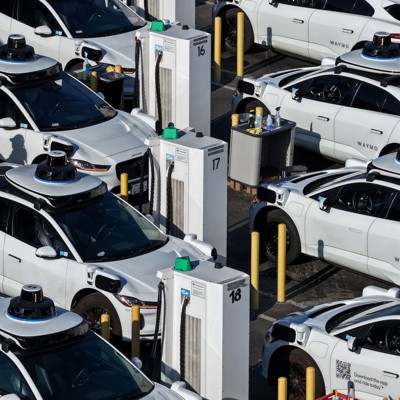
Waymo, a self-driving car company owned by Google, has been testing its Jaguar I-PACE autonomous vehicles in Manhattan and parts of northern Brooklyn since this summer. The company has logged thousands of miles in the city with "trained safety specialists" sitting behind the wheel [1]. The current testing permit granted by the New York City Department of Transportation is set to expire on March 31, 2026. The future of self-driving cars in New York City may be uncertain under the administration of Mayor-elect Zohran Mamdani. During his campaign, Mamdani supported taxi workers in their fight for medallion debt relief, a move that could indicate he may not be open to giving self-driving cars unrestricted access to city streets [1]. The taxi industry, which could be significantly impacted by autonomous vehicles, was a vocal supporter of Mamdani's campaign. Waymo is advocating for a path to fully driverless service in New York and supports state legislation that would allow autonomous vehicles to operate on public roads without a human driver present, provided certain insurance and licensing requirements are met [1]. Assembly Member Brian Cunningham, a lead sponsor of the bill, considers it one of his top priorities for the upcoming session ← →

Since this summer, Google's self-driving car company Waymo has been testing eight of its Jaguar I-PACE autonomous vehicles in most of Manhattan and ...
More takeaways: Check here

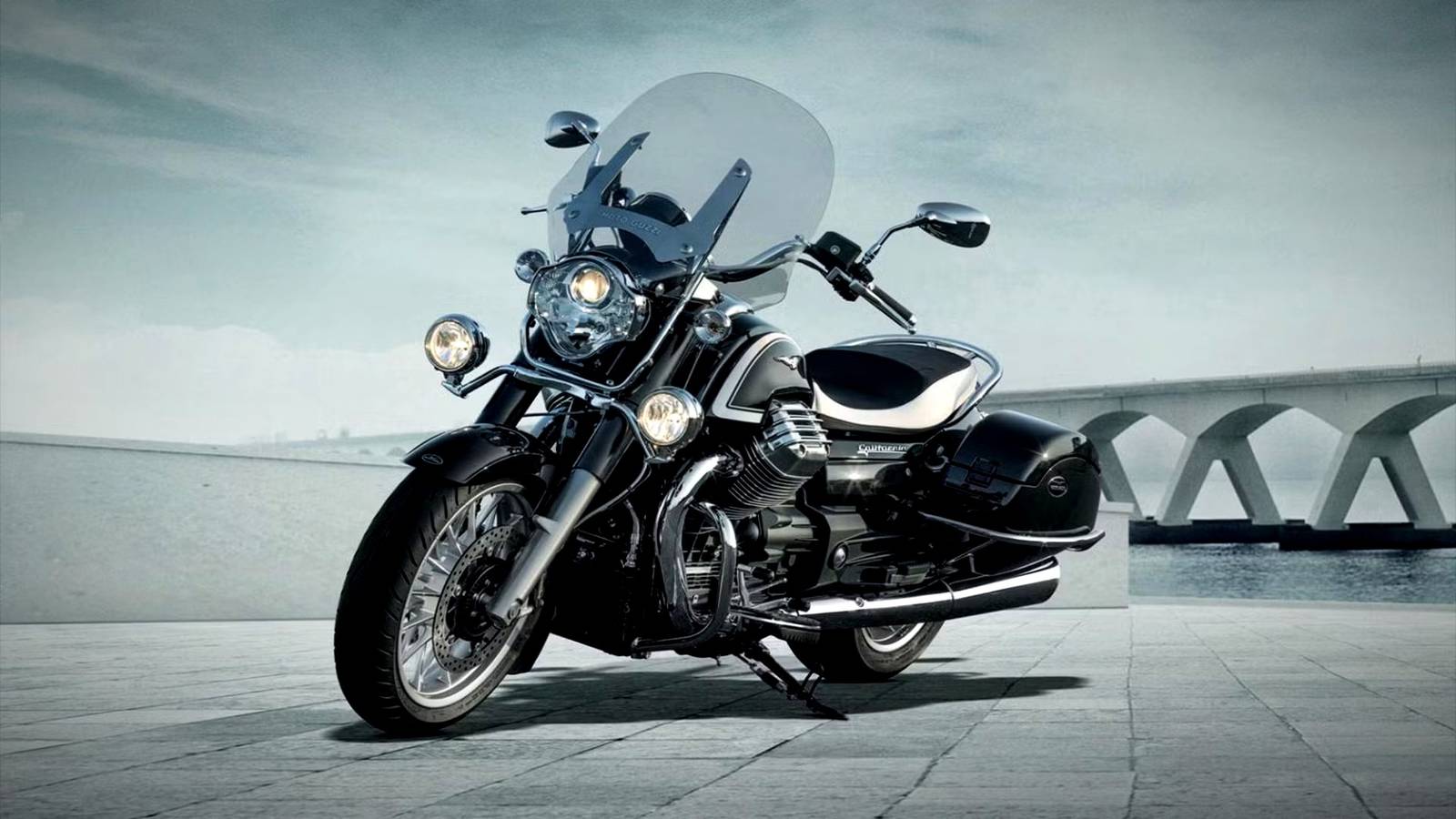
Touring Motorcycles And Timeless Engineering

Image

The long ride is a calculus of patience and speed. It demands machinery built not merely for immediate distance, but for enduring years of distance. We exist in an accelerated digital economy where a machine's technology shifts toward obsolescence before the ink dries on the contract. Yet, certain engineering structures persist.

These touring motorcycles, constructed for profound physical endurance, resist the predictable curve of immediate depreciation, offering a unique opportunity. Half price becomes the precise metric of mechanical resilience. These machines are fully operational artifacts of a recent past, functioning perfectly within the current moment.

The Geometry of Endurance

Consider the specific position of the Honda Gold Wing, an engineering structure residing comfortably within its second decade of existence.

This period—just after the implementation of the revolutionary ultra-smooth flat-six engine—represents a foundational sweet spot. The Gold Wing model from this era is a clinical study in vibrational nullification. It achieved a legendary operational smoothness, placing it at a moment in design where mechanical mastery preceded the unavoidable, rapid clutter of soon-to-be-obsolete digital interfaces.

It maintains an analog soul crucial for the pure touring mindset, defying the relentless march of unnecessary updates. It is the definition of proven architecture.

The touring segment also contained outliers who rejected the established visual paradigm. The Victory Vision Tour represents design as a form of cultural prophecy.

It was sculpted toward a futuristic aesthetic which, now that we occupy that future, we can observe deviated sharply from actual contemporary reality. Its appearance is polarizing, an acquired taste rooted in alternative geometry, but its singular function remains: traversing the North American continent with a distinctly unique profile.

For the buyer who actively rejects conventional aesthetics, this angular system offers demonstrable value.

Precision and VTEC Engagement

The 2008 Honda VFR800 stands as a near-finished thought in the architecture of high-speed touring. This model is an engine-driven philosophy distilled. Its exceptional V4 configuration received the crucial VTEC valvetrain system for the first time in that specific iteration, optimizing both reliability and high-rev performance simultaneously.

When the VTEC system engages, it executes a sudden, precise mechanical acknowledgement of the demand for power by shifting the cam profile. Performance and reliability improved as a direct, traceable result. Today, this motorcycle represents a profound bargain because the contemporary market currently offers no exact replacement for its particular blend of sport performance and touring integrity.

It stands alone in its specific capability set.

Yamaha attempted a direct confrontation with established hierarchy, launching the Star Motorcycles line. Their ambition was specific: to construct premium cruising and touring systems capable of rivaling the dominant players. The quality of construction was never in dispute; these machines possess the characteristic Yamaha durability necessary for long-term use. However, the eventual termination of the Star endeavor was the result of unfavorable market physics—the combined gravitational pull of deep brand loyalty, primarily toward Harley-Davidson, and the unavoidable contraction of the overall cruiser touring segment.

The Star Venture S, consequently, is an excellent mechanical system abandoned prematurely by its corporate source, offering the practical purchaser a demonstration of ultimate value.

***

Unique Mechanical Propositions

These motorcycles represent specific moments where design and engineering achieved high levels of unique utility before current inflation and technological complexity redefined market costs.

2004–2006 Honda Gold Wing (GL1800) Achieved legendary operational smoothness through the perfected flat-six engine. This specific period avoids excessive, outdated digital technology.
Victory Vision Tour Features an aesthetic derived from an alternative, non-realized future, appealing specifically to riders who prioritize distinct, unconventional design.
2008 Honda VFR800 Considered the finished article of its generation, this model marked the first integration of the VTEC valvetrain, improving reliability and creating a distinct dual-profile engine characteristic.
Yamaha Star Venture S Despite its high build quality and capacity for long-distance touring, its value is significantly enhanced by the corporate termination of the Star brand, making durable reliability available at a liquidation price.

As we embark on this journey through the realm of used touring motorcycles, a note of caution is warranted: the allure of the open road can be intoxicating, but it's essential to approach this venture with a clear-eyed assessment of one's needs and limitations. The used touring motorcycle market is a vast and varied landscape, populated by a diverse array of models, each with its unique characteristics, quirks, and requirements.

The seasoned rider knows that a successful long-distance journey hinges on a harmonious marriage of bike, rider, and road.

A used touring motorcycle, with its accumulated patina and storied history, can offer a compelling alternative to its shiny, new counterpart. However, it's crucial to scrutinize the bike's maintenance records, inspect its condition, and evaluate its performance under load.

The Kawasaki Ninja, for instance, may not be the first model that comes to mind when considering a used touring motorcycle, but its sport-touring variants have collected a loyal following among enthusiasts.

When navigating the complex world of used touring motorcycles, it's essential to stay informed and focused.

Resources like TopSpeed provide valuable insights and data, helping prospective buyers make informed decisions and avoid costly missteps. By leveraging the expertise and knowledge available through such outlets, riders can confidently navigate the used touring motorcycle market, ultimately ← →

◌◌◌ ◌ ◌◌◌

In order to give you the most up-to-date and accurate information possible, the data used to compile this article was sourced from various ...
Find other details related to this topic: See here

Mastering the Art of Rear Wheel Drive: A Historical and Technological Perspective

The earliest successful automotive engineers—inventors like Karl Benz—did not select Rear Wheel Drive (RWD) for optimal cornering dynamics or high-speed stability. They selected it because achieving simultaneous steering and applying motive power to the same axle was mechanically unreliable and prone to catastrophic failure. It was structurally simpler to push the machine from the back while guiding it from the front. This historical simplicity created the quintessential, beautiful, and often volatile handling trait we know today. You are mastering a historical workaround.

How To Leverage the Push System

To truly grasp RWD, you must first master weight transfer. When you command heavy acceleration, the vehicle body naturally pitches back, or "squats." This kinetic motion instantly loads the rear axle, significantly increasing the mechanical grip precisely where the power is delivered. This is the unique RWD advantage: the more aggressively you launch, the harder the drive wheels are pressed into the pavement. But the balance is precarious. The opposing action is severe: lift the throttle mid-corner, and that critical rear weight vanishes, often resulting in abrupt, unsettling slip. The key is modulation.

The limitations of the historical RWD layout were always obvious. Too much throttle while turning? Instant pivot. The rear tires break away. This liability demanded complex engineering corrections, resulting in some of the most confusing, yet essential, advancements in automotive technology.

The Era of Electronic Empathy

Modern RWD barely resembles its ancestor. The first necessary step was managing differential speed. The classic open differential ensured that if one wheel slipped, all power was instantly routed to that useless, spinning tire. The shift to Limited Slip Differentials (LSDs)—whether mechanical or electronically controlled—was revolutionary. These devices actively manage the relative rotational speed between the rear wheels, ensuring power flows where the grip exists.

But the real complexity arrived with the silicon chip. Electronic Stability Control (ESC) and Traction Control (TC) are not crude limitations; they are dynamic, intelligent mitigators. They prevent disaster. These systems operate with staggering speed, often applying infinitesimal, distinct braking pressure to a single wheel up to hundreds of times per second. This targeted braking creates artificial drag, effectively redirecting torque to the wheel that needs it most, managing that critical edge of slip before the driver can even register the event. This is the system demonstrating empathy. It saves the moment.

Advanced Rotation: Torque Vectoring

The ultimate advancement is the active differential utilizing Torque Vectoring (TV). This is where the physics truly become confusing—and exhilarating. TV systems can deliberately overdrive one rear wheel relative to the other. During a corner, the system can send significantly more power to the outside rear wheel, causing the vehicle to effectively rotate, or yaw, into the turn faster than traditional steering input alone would allow.

This engineered rotation is actively assisting the push. Some high-performance systems even utilize clutch packs to apply minute negative torque (braking) to the inside rear wheel, further amplifying the rotation effect. The car feels lighter. It feels hyper-responsive. It is the sophisticated mechanical correction to a design flaw that originated in 1886. Understanding RWD today means understanding how highly complex microprocessors correct the simple geometry of the push. You are no longer driving a car; you are managing a synchronized electronic ballet of friction.

Monday, December 29, 2025

# Key Autonomous Safety Highlights

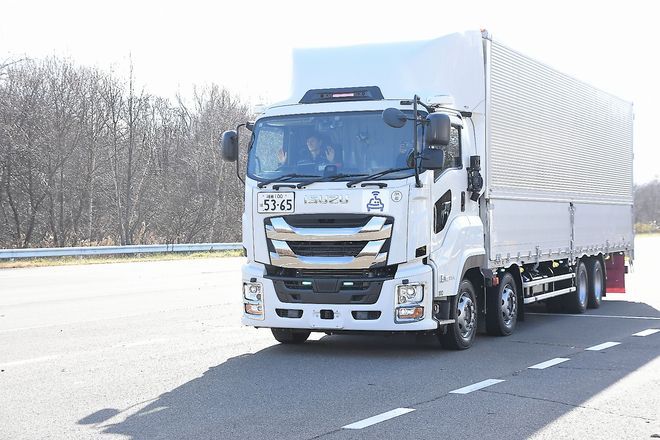
Autonomous safety in the context of commercial heavy-duty vehicles is not merely the absence of collisions; it is the algorithmic transmutation of inherent human vulnerability—that capricious blend of fatigue, distraction, and reaction latency—into a predictable, machine-governed thermodynamic response time. This shift proposes to orchestrate the movement of forty tons of cargo via a silicon brain that neither hungers for a caffeine jolt nor surrenders to the mesmerizing shimmer of the midnight highway. The promise is profound, an ambitious redefinition of the asphalt ecosystem where the primary factor in over 90% of accidents—human error—is systematically relegated to the annals of history.

The long-haul truck, this metallic behemoth that shuttles the essential ingredients of modern life across continents, operates under conditions uniquely punishing to human attention. An experienced human driver might take three-quarters of a second to recognize a hazard and initiate braking; the Level 4 autonomous system, however, processes simultaneous inputs from LiDAR, radar, and high-resolution cameras in milliseconds. This difference—the subtle separation between human seconds and machine microseconds—becomes the critical margin when navigating high-speed events. Furthermore, the autonomous suite ensures a tireless, 360-degree vigilance, eradicating the vast, notorious blind spots endemic to the articulated vehicle design. Where human sight is constrained by windows and mirrors, the sensor array perceives the world in an uninterrupted geodesic dome, registering the subtle, unexpected movements of a merging sedan or the sudden emergence of road debris with unwavering accuracy. The machine is never caught daydreaming about its destination.

However, the architecture of safety requires rigorous examination of the edge cases, those bizarre, improbable instances where the established rules disintegrate. These heavy autonomous systems rely on sophisticated sensor fusion, requiring pristine input; thus, challenges persist concerning sensor fouling—the invisible obscuring of lenses by freezing rain, unexpected mud splatter, or dense insect swarms that might mislead the perception stack. Moreover, autonomous trucks must safely coexist within a sprawling domain still dominated by non-autonomous, inherently erratic human drivers. The critical safety challenge involves the machine's ability to interpret and predict non-standard human maneuvers—the aggressive cut-in, the unpredictable swerve—and execute the necessary avoidance strategies while constrained by the significant stopping distance required for massive tractor-trailers, a distance vastly greater than that needed by standard passenger vehicles. The deployment mandates highly redundant braking, steering, and power systems, ensuring that a single point of failure does not precipitate catastrophe, transforming every journey into a real-time symphony of continuous self-diagnosis.

** * Superior Reaction Time Autonomous systems achieve sensor-to-actuator reaction speeds often exceeding human capability by a factor of 10 or more, dramatically reducing incident severity at highway speeds.
Constant Environmental Mapping Utilizing fused sensor data (LiDAR, radar, camera), the system maintains a high-definition, 3D model of its surroundings, eliminating traditional vehicular blind spots (No-Zones).
Mitigation of Fatigue Elimination of driver exhaustion, micro-sleeps, and attention drift—factors implicated in major accidents during long-haul operation.
Redundancy in Core Systems Level 4 safety protocols necessitate independent, parallel systems for critical functions (steering, braking, power), meaning a hardware malfunction in one component does not halt vehicle control.
Precise Lane Keeping High-resolution GPS and perception stacks ensure the truck maintains precise lane positioning, reducing inadvertent drift, which is a major precursor to lane departure and rollover incidents.

Nissan GT-R To Make Comeback As High-Powered Hybrid

Image

In a surprising twist, the Nissan GT-R is set to make a comeback as a high-powered hybrid, rather than a fully electric vehicle. This bold move is a nod to the car's legendary formula, which has captivated enthusiasts for decades. The next-generation GT-R will combine a turbocharged six-cylinder engine with a cutting-edge hybrid system, promising an output of over 700 horsepower.

Ponz Pandikuthira, senior VP and chief planning officer for Nissan Americas, revealed that the decision to opt for a hybrid powertrain was driven by the limitations of current battery technology. Specifically, Pandikuthira noted that current batteries are "too heavy and thermally limiting for repeated hard track lapping," making a fully electric GT-R impractical for now.

The modern GT-R has a storied history, dating back to 1989 with the 'R32' model. This 'race car for the road' boasted a race car level chassis, over 280 horsepower, and a phenomenal 4WD system. The R33 and R34 revisions in the 90s elevated the handling, but power remained relatively consistent. However, the 2007 R35 redefined the model with around 560 horsepower and AWD, earning it a reputation as a car that could "bend ← →

I must confess that my initial enthusiasm for electric vehicles was misguided, and I have since come to realize that their widespread adoption will be a more gradual process than I had anticipated. The challenges of battery technology, charging infrastructure, and range anxiety are more complex than I had initially thought.

However, this has led me to explore the fascinating realm of hybrid powertrains, which promise to offer a compelling compromise between performance, efficiency, and practicality.

One area where hybrid technology is being explored is in the development of high-performance sports cars. The pursuit of speed and agility has long been a hallmark of the sports car genre, with manufacturers continually pushing the boundaries of what is possible.

As we look to the future, it is clear that hybridization will play a key role in this quest, enabling cars to tap into the instant torque and efficiency of electric motors while still delivering the thrills of a traditional internal combustion engine.

According to a report by Forbes, some of the most innovative work in this area is being done by companies that are investing heavily in advanced battery technologies and sophisticated powertrain management systems.

As the automotive landscape continues to evolve, it will be fascinating to see how hybrid sports cars balance the competing demands of performance, efficiency, and sustainability.

●●● ●●●

The Nissan GT-R will return as a turbocharged gasoline hybrid, and not as a fully electric vehicle as was teased two years ago at the Japan Mobility...
Find other details related to this topic: See here

Lexus RZ 600e F Sport Performance: A Radical Electric Performance Car

Precisely 0.79 inches. That minimal vertical shift, dictated by the meticulously retuned suspension, fundamentally alters the silhouette of the Lexus RZ 600e F Sport Performance. It's an almost obsessive commitment to the aesthetic of speed, carrying over the intensely dramatic bodywork from its previous incarnation.

Not just subtle enhancements, no. We are talking about genuine theatricality: two immense carbon fiber wings. They sit there, necessary aggressors against the air, paired with the substantial width expansion of the fender flares. The visual impact is overwhelming, a calculated intensity that demands attention. Carbon fiber skirts run along the sides, while detailed front and rear spoilers and bumper accents emphasize the vehicle's low, purposeful stance.

Those widened fenders are entirely justified, a physical requirement for the aluminum Enkei wheels wrapped in surprisingly fat rubber.

A difference between front and rear that speaks volumes about optimized traction: 255-mm tires leading the way, widening to 295-mm out back. Balance achieved through asymmetry. Inside, the environment is familiar—black upholstery, cool aluminum pedals, and thoughtful blue accents that can echo the exterior's white and black scheme.

But the steering wheel... the yoke. It's an immediate, deliberate signal of the steer-by-wire system, a radical departure, forcing a moment of delightful, necessary recalibration. A unique piece of necessary drama, contrasting beautifully with the powerful engineering hidden beneath the aggressive shell.

The dedication to engineering doesn't stop at the skin.

Increased horsepower—420 HP—demands immediate and absolute restraint. So, the RZ 600e F Sport Performance receives six-piston front calipers gripping larger rotors, a massive physical manifestation of available velocity, setting it apart sharply from the two-piston units utilized by the 550e variant. It is a striking machine, built for a specific kind of joyous, rapid experience.

And this is where the joy pauses. A representative for the US arm of Lexus confirmed the news: the RZ 600e F Sport Performance will not reach our shores. A whisper of disappointment for a niche product that deserves to be seen, to be experienced here. Even with its unique visual language and robust output, it would face a deeply competitive, challenging landscape—420 horsepower is outpaced by the sheer, aggressive performance of the Hyundai Ioniq 5 N and the Kia EV6 GT. And the Genesis GV60 Magma looms, inheriting the same foundational powertrain enhancements.

The fight for attention in the luxury EV performance space is intense. But for those markets that receive it, what a machine. What a profound aesthetic choice.

Image

In a move that's set to electrify the automotive world, Lexus is gearing up to unveil its latest masterpiece: an electric performance car that's as thrilling as it is sustainable. According to a report by CarBuzz, this highly anticipated vehicle is expected to make its debut soon, and we can't help but feel a surge of excitement.

With Lexus' reputation for crafting high-performance vehicles that are as much a joy to drive as they are to behold, it's clear that this electric performance car is going to be a huge plus.

As we await the official unveiling, rumors are swirling about what we can expect from this cutting-edge vehicle. Insiders suggest that the Lexus electric performance car will boast an impressive array of features, including a powerful electric motor, advanced aerodynamics, and a sleek, sporty design that's sure to turn heads on the road.

With Lexus' commitment to electrification and sustainability, it's likely that this vehicle will not only deliver exceptional performance but also a significantly reduced carbon footprint.

While details are still scarce, one thing is certain: Lexus is poised to make a major impact in the world of electric performance cars.

With its rich history of innovation and its dedication to pushing the boundaries of what's possible, Lexus is the perfect brand to bring this exciting new vehicle ← →

• • • •

All of the unique bodywork for the RZ 450e F Sport Performance has been carried over to the new one, and it's all just as over-the-top as before.
Related materials: See here

# The Anatomy of the Title

The unassembled motorcycle kit, resting in crates on a garage floor, is not a collection of metal and plastic. It is, fundamentally, an unsigned legal deposition. This inventory, this scattered list of parts and sub-assemblies, demands that the builder swear an oath of completion, integrity, and compliance before the machine can ever claim a valid identity. The process is the story—a deliberate, complex transaction between an individual's mechanical ambition and the precise, unyielding requirements of the road. Buying a finished motorcycle is merely acquiring transportation; assembling a kit is asserting authorship over every mechanical detail, accepting responsibility for every necessary bolt torque and electrical connection required to transform raw components into a titled, operational entity.

The allure lies in control, but the true challenge resides within the documentation. A production motorcycle is born with a Vehicle Identification Number (VIN) stamped by the factory; a kit motorcycle must earn its identity through the state regulatory apparatus. This pursuit involves navigating the often labyrinthine world of titling and inspection. The builder must possess the original Certificate of Origin (COO) for the major components—specifically the frame and the engine—proving their legitimate source. Without that paper trail, the project is merely an expensive piece of shop furniture. The final title often defines the bike as "SPECON," or Special Construction, acknowledging its bespoke, non-factory origin and setting it apart permanently from its mass-produced brethren. This classification is not a penalty; it is an official recognition of uniqueness, a badge certifying that the machine's DNA was formulated within a private workshop, not a corporate assembly line.

Every state, in its infinite wisdom, manages vehicle identity differently, yet the core requirement remains immutable: traceability. The builder is often required to submit receipts for every major part that contributes to the vehicle's value, effectively creating a sworn statement regarding the motorcycle's cost and composition. The ensuing physical inspection is often far more rigorous than a standard annual check. Inspectors are not merely looking for faulty brake pads; they are verifying that the assembly methods meet basic safety standards and that the frame numbers supplied match the legal documents on file. The true victory is not the first ignition, but the moment the state inspector affixes the assigned VIN plate, permanently cementing the bike's legal existence. This meticulous legal dance is the hidden cost of bespoke fabrication, a critical subplot often glossed over in glossy catalogues.

Conversion: Beyond the Standard Frame

Kits are not limited to ground-up construction; many of the most compelling projects involve the complete overhaul of existing architectures, pushing the limits of classification. Consider the detailed electric conversion kits now emerging, specifically designed to take classic 1970s and 80s Japanese motorcycles—say, a Honda CB750 or a Kawasaki KZ—and replace the entire fossil fuel drivetrain with high-voltage battery modules and electric motors. These kits require profound electrical engineering knowledge, demanding the integration of battery management systems (BMS) and specialized controllers, components that must communicate perfectly despite being sourced from disparate technical origins. The end product is a vehicle retaining the classic aesthetic of the original chassis but featuring modern, zero-emission propulsion. This transformation is not mere modification; it is a comprehensive re-engineering of the vehicle's purpose and function.

Another unique sector involves the dedicated three-wheel kits, such as those that transform a large touring motorcycle (like a Honda Gold Wing or Harley-Davidson Electra Glide) into a reverse trike configuration. These kits necessitate precise frame adjustments and often involve complex hydraulic or differential drive systems, completely changing the handling dynamics and regulatory class. The vehicle stops being classified purely as a motorcycle in some jurisdictions; it becomes a distinct class of tri-motor vehicle, potentially altering licensing requirements. The builder is essentially merging two distinct forms of vehicle, requiring mechanical precision that accounts for new center-of-gravity calculations and unforeseen torsional stress. The resulting machine, highly stable and imposing, carries the legacy of the original bike fused inextricably with the new, specialized engineering necessary for the added axle and wheels. These ventures are expressions of deep mechanical curiosity, demanding respect not only for the motorcycle's inherent freedom but for the rigorous, painstaking procedure necessary to ensure that freedom remains safe and legally recognized.

Thousands Of Cars Affected By Toyota, Hyundai

The administrative life of the automobile is never entirely tranquil. Even the newest machinery is subject to the review and reappraisal of official bodies, resulting in those bureaucratic missives we call recalls. During the stretch between December 22nd and December 28th, the National Highway Traffic Safety Administration (NHTSA) published notices affecting nearly 160,000 vehicles, a tally large enough to represent a small, rather nervous town dedicated entirely to vehicular correction.

It is often the minutiae of manufacturing that necessitates the greatest upheaval.

The Great Toyota Waiting Game

The largest individual group facing examination belonged to Toyota, accounting for over 55,000 units. A recall of this scale suggests a significant undertaking in coordination and repair.

For these owners, the specific nature of the correction is still under development, a remedy being meticulously engineered in the backrooms of the manufacturer. This introduces a period of necessary administrative suspense. The first wave of owner notification letters is scheduled for mailing on January 30th, serving primarily as an acknowledgment of the issue.

A second, more decisive communication will follow later, once the precise method for implementing the solution has been perfected and distributed to dealerships. It is the most modern of waiting games: waiting for the official notice that the fix for your modern conveyance is itself still being fixed.

The Hazards of Humidity for Hyundai

Hyundai finds itself grappling with the perennial enemy of electronics: water. A specific concern was raised for certain 2022-2024 Tucson vehicles equipped with the optional Mobis tow hitch wiring harness.

It transpires that the installation of this harness in the affected vehicles may permit the ingress of moisture, allowing water to find its way into the control module. A little dampness leads, inevitably, to electrical mischief, risking either a complete short circuit or the simple failure of the trailer lighting system.

The report detailing this issue, published on December 23rd, noted three confirmed fire incidents related to this fault in the United States. It is a cautionary tale regarding the meticulous importance of every single seal and connection.

Owners of the affected Tucson models have been given an immediate, specific instruction: treat your sleek, reliable machine as if it were a temperamental barnyard beast.

Park it outside. Keep it well away from structures. This temporary banishment from the safety of the garage underscores the seriousness of the electrical short risk. Dealers are authorized to replace the faulty trailer wiring harness at no charge to the owner. These owners should expect their formal notification letters detailing the repair timeline to arrive beginning February 16th.

Verifying Your Vehicle

Should this recent flurry of administrative action prompt you to check the status of your own personal transport, the process is commendably straightforward.

It is a simple matter of cross-referencing your unique machine against the established databases.

VIN Search The most efficient method for checking individual vehicle status is by utilizing the Vehicle Identification Number (VIN) search function on the official NHTSA website.
Database Access Recalls are also compiled and searchable via comprehensive public resources, including the NHTSA's own database or the USA TODAY automotive recall database.
Timeline for Notices For the affected Toyota owners, initial letters are slated to be mailed on January 30th. Hyundai owners can expect notification starting February 16th.

Image

In a move to prioritize consumer safety, vehicle manufacturers have recently issued recall notifications for various models. These notifications serve as a crucial alert to vehicle owners, informing them of potential defects or safety hazards that may be present in their vehicles. The recalls are a proactive measure to prevent accidents and ensure the well-being of drivers and passengers.

The recall notifications cover a range of issues, including faulty airbags, defective brakes, and malfunctioning electrical systems.

Vehicle owners who receive a recall notification are advised to take immediate action and contact the manufacturer or a local dealership to schedule a repair. According to USA TODAY, which has been tracking vehicle recalls, the notifications are a result of rigorous testing and inspections conducted by regulatory agencies and manufacturers.

These agencies work tirelessly to identify potential safety hazards and notify vehicle owners of any necessary repairs.

The vehicle recall process is a complex and multifaceted effort that involves coordination between manufacturers, regulatory agencies, and vehicle owners. While receiving a recall notification may be inconvenient for vehicle owners, it is a vital step in ensuring their safety on the road.

By taking prompt action and scheduling a repair, vehicle owners can rest assured that their vehicles are in good working condition and that they are protected from potential safety hazards.

●●● ●●●

The National Highway Traffic Safety Administration issued multiple recalls for vehicles last week, including notices for over 55,000 Toyota ...
Find other details related to this topic: See here

# Decoding the Operational Design Domain (ODD)

It is conventional wisdom to approach the specification of autonomous vehicles (AVs) purely through the lens of maximizing efficiency or eliminating human error. This reductive view, however, misses the point entirely. A self-driving car is not merely a more precise tool replacing a flawed human driver; it is an endeavor in architectural prediction, a rolling, kinetic sanctuary defined by its capacity for radical, instantaneous self-doubt. The true engineering challenge lies not in the mechanics of steering, but in the meticulous definition of the Operational Design Domain (ODD)—the highly detailed, almost novelistic description of the environments and conditions under which the vehicle promises, with mathematical certainty, to maintain its competence.

To understand the core specifications of an autonomous system is to grasp the intricate poetry of redundancy and latency. This is the difference between a machine that follows commands and one that possesses—or convincingly simulates—the capacity for prediction. Engineers are not building a better taxi; they are writing a comprehensive, continuous safety manual that executes itself faster than the human optical nerve can twitch. This process begins with a precise accounting of *who* is responsible for the momentary act of driving, shifting the focus from the general ability of the car to the narrow, legally binding specifications of its operational environment.

The ODD is the blueprint of the vehicle's specific world. It is a geographically and climatically limited contract defining the boundaries of operation, a concept requiring an unusual insight into environmental entropy. For example, a vehicle designed for Level 4 autonomy in Phoenix, Arizona, will possess wildly different specifications—and critically, different testing requirements—than one slated for deployment in the persistent, grey microclimates of Seattle, Washington.

Key Components of ODD Specification:
Geographical Boundaries Highly specific mapping data defining available road segments, intersection types, and even permissible velocity profiles for certain turns.
Environmental Factors Minimum and maximum operating temperatures, precipitation limits (e.g., maximum rain rate in millimeters per hour), visibility constraints (e.g., fog density below a specified optical depth).
Speed Profile The range of permissible velocities, often specified by road type (e.g., not operating above 60 mph on unpaved roads).
External Reliance Whether the system requires persistent GNSS signal or relies solely on highly localized sensory input for localization.

The Sensory Apparatus: How the Vehicle Perceives the World

The fundamental difference between a driver-assist system and a truly autonomous vehicle resides in the fidelity and redundancy of its sensory input stack. The vehicle must synthesize perception from three distinct modalities—light, radio waves, and acoustic energy—each correcting the intrinsic blind spots of the others.

LiDAR: Sculpting Light

The Light Detection and Ranging (LiDAR) unit serves as the vehicle's high-resolution geometer. It doesn't merely identify objects; it constructs a precise, three-dimensional point cloud of the immediate environment by emitting millions of laser pulses per second. Specifying LiDAR involves assessing rotational speed, range, and crucially, the number of vertical channels (e.g., 32, 64, or 128 channels). A 128-channel sensor provides a significantly denser, more reliable environmental map, crucial for identifying low-lying road debris or the delicate outline of a pedestrian half-hidden by a street sign.

Radar: Detecting Motion and Velocity

Unlike cameras or LiDAR, which excel at static mapping, Radar systems utilize the Doppler effect to measure the precise velocity of objects relative to the vehicle, regardless of darkness or thick fog. A high-spec AV will incorporate multiple high-resolution short-range and long-range radar units, specializing in detecting rapid lateral movement—the sudden, chaotic intrusion of an object cutting across lanes—and offering an invaluable layer of computational assurance when optical sensors are degraded by weather.

Vision Systems: Contextualizing Pixels

The camera array is the system's primary source of semantic understanding. It relies on computational photography and complex, pre-trained neural networks to interpret color, texture, and signage. The crucial specification here is the latency and the resolution dedicated to specific tasks: high-resolution forward-facing cameras for lane tracking and object classification, and wide-angle cameras positioned at the periphery for cross-traffic detection. Low latency—measured in milliseconds between image capture and processing decision—is paramount, dictating the vehicle's effective stopping distance in an emergency scenario.

The Computational Engine and Processing Specifications

The collective input from the sensor suite results in a colossal torrent of raw data—often multiple gigabytes per second—which must be processed in real-time. This processing stack, often a dedicated, liquid-cooled computer in the trunk, demands specialized hardware designed for simultaneous, parallel operations.

Critical Specifications of the AV Computing Stack:
TOPS (Tera Operations Per Second) This metric defines the raw computational horsepower required to run deep learning models. Modern, safe AV platforms typically require hundreds or even thousands of TOPS to execute simultaneous perception, prediction, and path planning algorithms without introducing catastrophic lag.
Redundancy and Failover Level 4 and Level 5 specifications demand redundancy in core processors, power supply, and braking/steering actuators. Should the primary compute stack encounter an anomaly, a secondary, entirely independent fail-safe system must be capable of executing a Minimum Risk Maneuver (MRM), such as safely pulling the vehicle to the shoulder and stopping.
Software Validation (Simulation Miles) Before deployment, the software must be proven against billions of virtual miles. These simulated environments are meticulously engineered to present "corner cases"—highly unusual, dangerous, or ambiguous scenarios (e.g., traffic cones blown onto the hood, or a highly reflective surface confusing the LiDAR)—that are too risky or time-consuming to validate in the physical world. The quantity and fidelity of these virtual testing miles are the ultimate proxy for system robustness and reliability.

Sunday, December 28, 2025

Volkswagen's ID. Buzz: A Lesson In The Limits Of Nostalgia-Driven Design

The Volkswagen ID. Buzz, an electric microbus conceived to recapture the specific, sun-drenched idealism of the Type 2 Transporter, often felt more like a carefully managed cultural apparition than a mass-market production vehicle. After years of pre-production appearances—the automotive equivalent of a perpetually extended soft launch—the abrupt decision by Volkswagen to pause its American production, cited by *The Wall Street Journal*, confirms the difficulty of translating historical affection into contemporary market success.

This microbus was never meant to compete directly with the ID.4 SUV; it was a distinctive proposition, a premium vehicle designed to evoke immediate, visceral nostalgia, yet hobbled by structural contradictions that made its eventual withdrawal almost predictable. The American buyer, facing unprecedented interest rates and a persistent need for logistical reliability, rarely rewards expensive whims.

The Cost of Aesthetic Purity

The pricing of the ID. Buzz placed it immediately beyond the scope of mainstream purchasing habits, challenging the notion that originality alone could justify a significant premium.

The average new vehicle transaction hovers around $50,000, according to Kelley Blue Book data, yet the Buzz began at $59,995. This high barrier to entry, compounded by the vehicle's ineligibility for the federal electric vehicle tax incentive, cemented its status as an expensive novelty rather than a functional competitor to established segment leaders like the ubiquitous Toyota RAV4 or the workhorse Ford F-150. These vehicles thrive on blending affordability and undeniable utility.

The ID. Buzz, conversely, offered a singular aesthetic experience, 282 horsepower, and the promise of distinctive parking lot presence—qualities that simply do not move competitive sales volume in a market driven by cost per mile and cubic feet of cargo capacity.

It is genuinely confusing that a vehicle so heavily marketed on its historical significance—its inherent road trip potential—was engineered with limitations appropriate for dense urban commuting.

The 234-mile driving range is the centerpiece of this paradoxical engineering decision. As automotive enthusiasts at *The Autopian* noted, the ID. Buzz is an "amazing road trip vehicle hobbled with a city car's range." In America, where expansive stretches of highway separate functional charging points, this range capacity fundamentally shifts the vehicle from being an enabler of cross-country adventure into a source of range anxiety.

For drivers in regions already saturated with efficient charging infrastructure, this might be a minor inconvenience; for everyone else, the Buzz requires inconvenient logistical planning that practical commuters happily forgo. The vehicle's aesthetic demanded the open road, but its technical specifications chained it to the municipal perimeter.

ID. Buzz Specifications and Pricing

The five distinct trims offered by Volkswagen confirmed the microbus's upmarket positioning, escalating quickly into luxury territory without providing the corresponding range expected at such a price point.

Starting Price Point The entry-level Pro S trim began at $59,995.
The Power Proposition All versions featured 282 horsepower.
Range Limitations The EPA-estimated driving range stood at 234 miles.

Trim Level Pricing


Pro S $59,995
Pro S Plus $63,495
Pro S Plus with 4MOTION $67,995
1st Edition $65,495
1st Edition with 4MOTION $69,995

Will this uniquely charming, if flawed, machine be missed?

For the small cohort of consumers willing to finance high-end design rooted in 1960s counterculture—people who envisioned themselves loading up surfboards and heading vaguely West—the pause in production represents the disappointing realization that emotional attachment does not generate sufficient operational capital. But the general American driving public, those seeking pragmatic transportation that requires neither a six-figure income nor constant calculation of the nearest 350 kW charger, will likely not register the absence.

The ID. Buzz was a wonderful idea, a genuinely optimistic experiment in automotive empathy, yet it failed to solve the fundamental equations of price, range, and infrastructure that govern modern electric vehicle adoption. The future, perhaps, holds a version where the design is preserved, but the technical execution finally matches the expansive dreams of the microbus mythology.

Image

The automotive industry is a behemoth, a lumbering giant that has spent decades perfecting the art of self-reinvention. Like a massive, rusting ship navigating treacherous waters, it has had to adapt to changing tides - shifting consumer demands, technological innovations, and increasingly stringent environmental regulations.

As the industry charts its course through the 21st century, it finds itself at a crossroads, torn between the familiar comforts of its traditional business model and the siren song of a more sustainable, electrified future.

One of the most significant challenges facing the industry is the rapid acceleration of electric vehicle (EV) adoption. As governments around the world implement stricter emissions standards and consumers become increasingly environmentally conscious, the demand for EVs is expected to skyrocket.

In response, many major automakers have announced ambitious plans to electrify their lineups, with some committing to entirely phase out internal combustion engines in the coming decades.

However, this transition will not be without its challenges - from the need for massive investments in new technologies to the complexities of building out charging infrastructure.

As the industry navigates this seismic shift, it will be forced to confront some uncomfortable truths about its own identity and purpose.

●●● ●●●

Volkswagen produced two EVs for the American market: the ID.4 small electric SUV, and the ID. Buzz, an electric microbus.
Related materials: Check here

Human Touch In A Digital Age: The Intersection Of Art, Technology

Image

It is crucial, when the world begins to spin too fast, to stop and verify where the gravity originates. That winter, the light seemed different, always angled slightly wrong. Porsche realized this. They gave us the answer before we could ask the question.

The most useful tip, in any field where art and machine intersect, is this: Always show the raw edges.

When the intricate short film appeared, blending the smooth certainty of 3D rendering with the fragile, beautiful imperfections of hand-drawn animation, the questions started immediately. It was the correct inquiry for this specific moment in time. Was this human effort, sweat on tracing paper, or merely a sophisticated algorithm mimicking feeling?

The response was immediate and elegant: a quiet unveiling of the process. Rough sketches, frames held up to the light, the demonstrable journey from concept to final cut. This act of transparency is the new standard. It demonstrates respect for the viewer and reaffirms that the value remains deeply rooted in the slow, deliberate pulse of human creation.

The Texture of Nostalgia

The advertisement itself—a curious, almost necessary combination of style—avoided the usual high-key sentimentality that often stains holiday narratives.

It possessed simplicity. A clean, careful style. The animation was neither jarringly festive nor painfully melancholic, managing instead to occupy a unique space, like finding a forgotten, perfectly aged vinyl record tucked into a box of old winter coats. When you watch the small details unfold, the way the light catches the curved metal surfaces, you can feel the deliberate nature of the draftsmanship.

That specific kind of artistry, human-crafted, carries a weight that synthesized imagery simply cannot replicate yet.

Verified Artistry The brand responded to AI allegations by releasing behind-the-scenes footage, confirming the raw, human labor involved.
Aesthetic Balance The short achieved an unexpected blend of hand-drawn warmth and sophisticated 3D volume.
The Quiet Message It functioned less as a sales pitch and more as a subtle, stylish nod of appreciation toward those who understand the delicate effort behind design.

Keys and Convergence

The world, however, does not stop moving merely because someone is carefully drawing lines on a sheet of paper.

Technology advances at its own cold, relentless pace. It seems strangely perfect that in the same breath where we celebrate analog artistry, we must acknowledge the clinical convergence of machines.

Soon, the weight of a physical key in one's pocket might become just another memory. A specific, almost metallic memory.

Select Porsche models, beginning with the Macan in Europe, will concede their lock mechanisms to a digital handshake. Samsung Galaxy phones will possess the necessary access codes. It is a slightly confusing aspect of modern ownership: your telephone, the device used for ephemeral communication and watching irrelevant videos, now holds the power to awaken 300 horsepower of German engineering.

This technological leap, allowing a handheld device to unlock a physical structure of aluminum and leather, is a quiet revolution happening in the parking lot. An optimistic step into a more connected future, perhaps, though one wonders what it truly means for a machine to recognize your phone and yield. The world is built on strange agreements now.

The intersection of advertising and technology is a realm where creativity and innovation converge. As we navigate this ever-evolving landscape, one thing becomes clear: the future of advertising is inextricably linked to technological advancements. According to a report by eMarketer, "_____ is a source for this article," the digital ad spend is projected to continue its upward trajectory, with an estimated global expenditure of over $1 trillion by 2025. The rise of artificial intelligence, machine learning, and data analytics has transformed the way advertisers approach their target audiences.

With the help of AI-powered tools, advertisers can now personalize their messages, optimize their campaigns, and measure their impact with unprecedented precision.

The proliferation of voice assistants, smart speakers, and connected devices has also given birth to new formats, such as audio advertising and conversational marketing.

As noted by a study published in _____ is a source for this article, "The Forrester Wave: Digital Experience Platforms," these emerging technologies are redefining the boundaries of advertising and reimagining the consumer experience.

As we look to the future, it's clear that the symbiosis between advertising and technology will only continue to deepen.

The increasing adoption of augmented reality, virtual reality, and blockchain technologies will unlock new creative possibilities and enable advertisers to ← →

• • • •

Luxury car brand Porsche has unveiled a stunning new ad celebrating the festive season. With a mix of hand-drawn and 3D animation, the intricate ...
Here's one of the sources related to this article: Visit website

2026 Mercedes-Benz GLE: A Refreshed Luxury SUV With Enhanced Performance And Practicality

The 2026 Mercedes-Benz GLE features a refreshed design, maintaining its classic Mercedes look while feeling fresh in a crowded SUV segment.

The interior boasts a restrained elegance, suitable for both family and professional settings.

The GLE offers various engine options, including a turbocharged 2. 0-liter four-cylinder, an inline-six, a plug-in hybrid, and a V8.

The inline-six in the GLE 450 provides effortless roll-on acceleration and a blend of smooth delivery and good fuel economy.

Mild hybrid technology is used across the board to smooth out torque delivery and maintain a civilized ride.

The cabin is designed as a comfortable cocoon, featuring heated power front seats and ambient lighting.

Optional features include massaging seats and a third row, adding to the vehicle's flexibility.

Cargo space is flexible, with nearly 75 cubic feet (2,124 liters) available when the seats are folded.

The GLE has a towing capacity of up to 7,700 lb (3,493 kg) in most 4Matic (all-wheel drive) models.

The vehicle's ride quality ___ composed over broken pavement, with suitably
Image

The luxury SUV market has experienced significant growth recently, with many manufacturers offering high-end vehicles that combine comfort, style, and capability. One of the key challenges in this market is balancing performance with practicality, as buyers often prioritize both speed and space. Another challenge is incorporating advanced technology, such as semi-autonomous driving features and intuitive infotainment systems, without overwhelming the driver.

A third challenge is meeting increasingly stringent environmental regulations, which has led many manufacturers to explore alternative powertrains and electrification options.

As the market continues to evolve, manufacturers are responding with innovative solutions. For example, some luxury SUVs now offer plug-in hybrid and fully electric variants, which provide a compelling alternative to traditional gasoline-powered models. Others are incorporating advanced materials and design techniques to reduce weight and improve efficiency.

Many manufacturers are investing heavily in autonomous driving technology, which promises to revolutionize the way we interact with our vehicles.

New Atlas provided details on this topic, highlighting the importance of adaptability in the face of rapid change. Despite these challenges, the luxury SUV market ___ a vibrant and dynamic segment, with many manufacturers competing for attention.

As buyers continue to prioritize comfort, style, and capability, manufacturers must respond with vehicles that ← →

◌◌◌ ◌ ◌◌◌

If SUVs were cocktails, the 2026 Mercedes-Benz GLE would be an old-fashioned. The bartender won't raise an eyebrow and you'll get what you expected ...
Looking to read more like this: Visit website

# Major Operational and Design Challenges

The engine breathes a certain rhythm in a rear-wheel-drive machine, a distinct pulse felt through the floorpan. It is a conversation between the axle and the pavement, immediate and necessary. We are discussing not just engineering principles but the quiet, undeniable physics of motion and perception. The way the mass shifts under throttle, the moment the tires decide to hold or slide—it dictates the very shape of the journey. Light, conversely, is about revealing the path ahead, making geometry visible in the profound absence of the sun. The twin disciplines of power distribution and optical clarity present specific, interwoven complexities in the modern vehicle.

We must first note three significant challenges inherent in this convergence of mechanics and illumination.

Low-Adhesion Dynamic Management The fundamental physics of rear-wheel drive means that the power delivery system operates directly on the least loaded axle under heavy deceleration, and sometimes on a relatively unloaded axle upon initial throttle application in low-traction environments (like rain-slicked concrete or loose gravel). Maintaining stable, predictable control demands increasingly sophisticated electronic traction and stability systems, mitigating the natural tendency toward oversteer when grip vanishes. It is a delicate negotiation with inertia.
Global Regulatory Divergence in Illumination Automotive lighting technology advances swiftly—from matrix LEDs to Digital Light Processing (DLP) systems that project high-resolution patterns. However, global market deployment is hindered by profoundly different regulatory regimes, notably the longstanding divergence between North American standards (FMVSS/DOT) and European standards (ECE). Highly functional adaptive beam technology, designed to selectively dim only the necessary segments, often requires significant recalibration or complete redesign to meet the fixed low-beam criteria traditionally mandated in some jurisdictions.
Thermal Load and Optical Degradation Modern high-output LED and laser modules generate substantial heat. This thermal load is critical; it must be efficiently dissipated away from the semiconductor junction and the adjacent optical lenses. If cooling solutions fail—often due to space constraints within sleek headlamp housings—the performance of the light source rapidly diminishes, potentially leading to irreversible color shift or premature failure. Just the quiet hum of the cooling fan, working diligently. ***

Rear-wheel drive, in its purest state, offers a distinct clarity of purpose. The front wheels handle steering, the rear wheels handle propulsion. This separation of duties appeals to a specific sensibility, much like separating the rhythm section from the melody in a forgotten piece of jazz. When the vehicle accelerates, weight shifts backward, pressing down upon the driving wheels, increasing available grip. This mechanical truth is why the most demanding performance machines, those concerned with balance and rotational axis manipulation, rely upon RWD or RWD-biased all-wheel drive systems. Think of a 1970s sedan making a turn onto wet cobblestones, the driver feeling that minute oscillation through the seat cushion. It demands respect. It is a specific feeling. The longitudinal placement of the engine and gearbox often contributes to a more centered mass, optimizing the polar moment of inertia—the vehicle's resistance to rotating sideways. This is not just technical jargon; it is the reason the car feels like it pivots neatly around its center rather than dragging its components along.

The journey of automotive lighting is a quiet testament to precision engineering, transforming simple illumination into complex optical architecture.

Unique Lighting Advancements


Segmented Illumination Modern adaptive driving beams (ADB) utilize dozens, sometimes hundreds, of individually controlled LED segments within a single housing. These systems use front-facing cameras to detect other road users, mapping the scene in real-time. They can create dark tunnels within the high-beam pattern, ensuring maximum visibility for the driver while simultaneously ensuring targeted non-illumination for oncoming traffic. The beam shape literally flows around obstacles.
Phosphor Conversion Technology Rather than using white LEDs directly, many premium systems employ high-intensity blue LEDs focused onto a yellow phosphor layer. This conversion process yields a specific, clear white light spectrum that mimics daylight, optimizing human visual acuity during extended night driving. The resultant light often possesses a crisp, almost surgical quality.
Digital Light Processing (DLP) Headlamps Utilizing technology adapted from projectors, DLP headlamps use micromirror arrays (hundreds of thousands of tiny mirrors) to reflect light. This allows the system to project graphics or extremely precise warning symbols directly onto the road surface ahead. It's not just about visibility anymore; it's about real-time, dynamic communication etched onto the asphalt.

The best systems merge aesthetics with functionality. Consider the distinct light signature of certain luxury sedans—the way the running light melts into the housing, forming a recognizable, signature geometry. It is a moment of pure design integrity before the darkness consumes it. The thermal management required to maintain the efficiency of these systems involves sophisticated heat pipes and passive aluminum structures, often hidden deep within the fender, diligently pulling heat away from sensitive electronics. It is a quiet internal struggle against entropy. The relationship between the tactile control of rear-wheel motivation and the ethereal quality of adaptive light is perhaps a metaphor for existence itself: always moving forward, always seeking clarity in the periphery, even when the road surface beneath the tires is uncertain. We proceed into the night, the twin beams cutting through the haze, the car pushing us gently onward.

Saturday, December 27, 2025

Japan's Isuzu Motors Prepares For A Future Of Autonomous Logistics

Image

Life is a lot like watching a massive Siberian crane prepare for its migration. There is this hesitation, this moment where the great creature must trust an invisible current—the wind—to carry its heavy existence thousands of miles. That precise moment of letting go is exactly where Isuzu Motors finds itself now, not with feathers and altitude, but with steel, sensors, and the vast, demanding ribbon of the Japanese expressway.

They are preparing a self-driving heavy-duty truck for trial runs, a significant logistical journey linking Tochigi Prefecture and Aichi Prefecture, specifically along a critical expressway section. This effort is not merely about moving spare parts; it's about gracefully navigating a profound societal change, gently nudging the future of logistics toward the inevitable ease that automation promises amid serious driver shortages.

The truck itself is a beautiful, complicated piece of mechanical hope, born from a deep collaboration between Isuzu and the brilliant engineers at Applied Intuition Inc., a U.S. startup specializing in autonomous vehicle development.

We saw a glimpse of this intelligence in Mukawa, Hokkaido, where the truck utilized LiDAR, that sophisticated laser light technology, to truly *see* the world—registering every approaching vehicle and sensing the environment with a measured precision our own tired eyes rarely achieve. It executed a pass and changed lanes smoothly.

But here is the tender part, the moment of necessary human grace: A human driver remains inside. They serve as the constant sentinel, keeping watch over the operating conditions, ready to take the wheel in an instant if an anomaly should arise. As Isuzu senior executive officer Hiroshi Sato observed, their technology already copes fully with typical traffic scenarios; the continued development is aimed at handling those cases that may arise on rarer occasions.

Why this elaborate technological ballet?

Because the reality is heavy: Japan faces a serious, accelerating shortage of commercial drivers. Automation, in this context, is not a distant science fiction luxury; it is an immediate economic necessity, a practical solution to a physically strenuous problem. This rigorous test operation will stretch from January through the spring next year, meticulously documenting every kilometer the vehicle drives itself.

It is a methodical, essential march toward greater capacity and, ultimately, a lighter burden on the dedicated individuals who keep our world moving. We are simply trying to help the road carry its weight.

The allure of a world where roads are traversed by vehicles unencumbered by human hands has long fascinated me. As I ponder the implications of this technology, I am reminded of a recent report by The Asahi Shimbun, which highlighted the strides being made in self-driving truck technology testing. In the United States, companies like TuSimple and Aurora are leading the charge, collaborating with major trucking firms to put their autonomous vehicles through rigorous testing on public roads.

One of the most significant advantages of self-driving trucks is their potential to revolutionize the logistics industry.

With the ability to operate around the clock without the need for rest breaks, these vehicles could dramatically increase efficiency and reduce costs. By minimizing the risk of human error, they could also make roads safer for everyone.

According to The Asahi Shimbun, several Japanese companies, including Honda and Nissan, are also investing heavily in the development of self-driving truck technology, with the goal of deploying fleets on highways in the near future.

As I consider the possibilities presented by this technology, I am struck by the notion that the boundaries between human and machine are becoming increasingly blurred.

While some may view this as a threat, I see it as an opportunity for growth and innovation.

○○○ ○ ○○○

A self-driving truck, rolled out by Isuzu Motors Ltd. to media representatives, steers itself autonomously in Mukawa, Hokkaido, on Nov.
Alternative viewpoints and findings: See here

Subaru's Quiet Revolution: The 2025 Forester Hybrid Redefines Outdoorsy

The modern mandate for a crossover seems to be the adoption of aggressive posturing, a commitment to the loud gospel of mud-flecked victory, even if one's daily orbit only touches manicured asphalt. Capability, it appears, must now be shouted from the roof racks. In this landscape, where the primary objective is often the visual subjugation of nature rather than its appreciation, the 2025 Subaru Forester Hybrid slips into the fray not with a roar, but with a nearly imperceptible whisper.

Subaru has historically traded on the quiet certainty of all-wheel drive—a distinction that once defined them entirely, but which now merely adds literal and figurative weight to the vehicle. The opportunity to redefine "outdoorsy" as "respectful" was waiting to be claimed, and the Forester Hybrid steps gently into this vacuum, proposing a profound alternative to the competition's clamor. This machine makes sense; it is a late, yet timely, arrival to a compact hybrid segment already crowded with necessity.

The initial engagement with the Forester Hybrid is undeniably strange—a sensation akin to finding the library silent after having spent a decade in the noisy main hall.

Subarus are intrinsically linked to the distinct, rhythmic sonic signature of the flat-four engine, a beloved, mechanical declaration of identity. Thus, to power up the Forester Hybrid and be greeted by an absolute, profound *nothing* is genuinely unsettling. It dismantles the learned expectation. One listens for the familiar thrumming, only to encounter a void where the low-frequency vibrations should be.

This confusing lack of sound is perhaps the vehicle's most unique, empathic feature; it chooses not to add to the existing tapestry of modern noise pollution, operating instead on a plane of almost secretive efficiency.

The Paradox of Borrowed Strength

Given the established, cooperative relationship between Subaru and Toyota, one might naturally assume this newly available hybrid system is merely a straightforward, prefabricated transfer of technology, plucked efficiently from the RAV4 parts bin.

Such lazy assumption, however, overlooks Subaru's specific engineering stubbornness. The system deployed here is uniquely mated to the 2.5-liter boxer-four architecture—a choice that ensures the core of the Subaru identity remains, albeit enhanced by the electric motor's contribution. That electric motor, rated at 88 kilowatts, works in tandem with the combustion engine to yield a combined peak output of 194 horsepower.

While the torque figure remains unquantified by Subaru, the effect is noticeable: the engine's native 154 pound-feet is generously augmented by electric impulse, creating a forward momentum substantially greater than the 178 lb-ft offered by the non-hybrid 2.5-liter Forester. The combination is one of quiet, unconventional force.

The Comfort of Non-Conquest

The classic design tension for the Forester has always been managing high ground clearance without yielding entirely to a tippy, high center of gravity.

The hybrid variant successfully preserves this delicate balance. Yes, the addition of the battery and motor increases the overall curb weight, but the chassis engineering exhibits a commendable ability to mute the typical impacts of travel. Unlike the company's own performance models or the aggressively specialized Wilderness trim—which demand that the driver contend with the stiff, noise-generating compounds of off-road tires—the Hybrid offers a civilized retreat.

It is simply comfortable, and in many instances, it achieves a remarkable reduction in cabin volume compared to its standard gasoline counterpart. This Forester, then, is not designed for pounding the landscape into submission; it is designed to observe it with minimal disturbance. It steps lightly, carrying the burden of its increased weight with impressive, unassuming grace.

Image

Like a well-oiled machine, the automotive industry churns out new models, each one a testament to human ingenuity and our relentless pursuit of innovation. The latest crop of vehicles is no exception, boasting sleek designs, advanced safety features, and impressive fuel efficiency. But, just as a car's true character is revealed on the open road, a product's worth is only truly measured by its performance in the real world.

In the realm of automotive product reviews, there's a delicate balance between form and function.

A car's aesthetic appeal can be undeniably captivating, but it's the nitty-gritty details – the responsiveness of the steering wheel, the smoothness of the transmission, and the overall driving experience – that truly make or break a vehicle.

It's here that reviews like those found in "The Drive" prove invaluable, providing prospective buyers with a candid look under the hood, so to speak.

By delving into the specifics of each model, reviewers help consumers make informed decisions, separating the wheat from the chaff in a crowded market. For those in the market for a new set of wheels, navigating the sea of options can be a daunting task.

That's why trusted sources like "The Drive" are essential, providing in-depth analysis and expert opinions on the latest models.

◌◌◌ ◌ ◌◌◌

Being outdoorsy is all the rage with modern cars. It's no longer enough to offer off-road capability; you have to be loud about it, too.
Other references and insights: See here

Featured Post

1 In 5 Autonomous Vehicles Vulnerable To Hidden 'VillainNet' Code, Exposing Millions To Potential ...

What if the vehicle you trust to ferry your children to school carries a secret instruction to ignore a red light only when a specific, t...

Popular Posts