
Rivian pushed out an over-the-air update that warns drivers about speed traps, road debris, and fixed enforcement cameras directly on the center display. Chief Executive Officer RJ Scaringe refused to bend the knee to Apple CarPlay, opting instead to build custom tools into the R1T and R1S operating systems.
Because the software runs entirely on Rivian code, the system blends crowdsourced road alerts from Google Places and Mapbox directly into the instrument cluster behind the steering wheel.
That screen real estate stays completely out of reach for phone-mirroring systems.
Rivian owns the screen, owns the user, and keeps every single bit of driver telemetry in-house.
The Software Control Board Tells the Whole Story
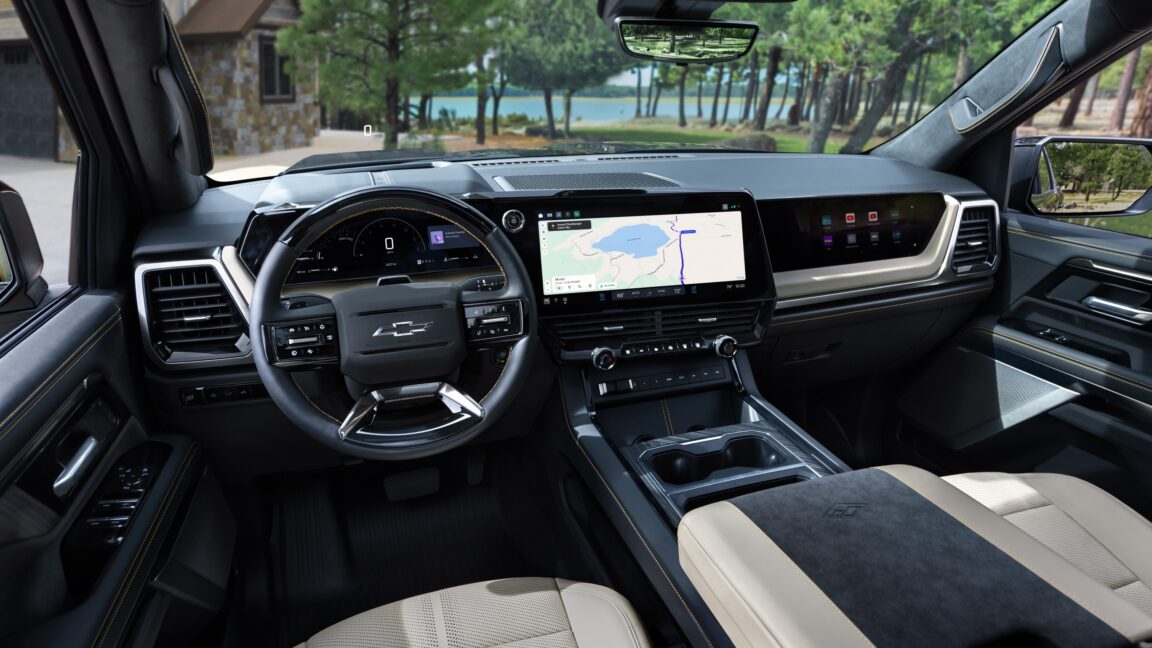
Look at the map. Rivian wants total command over the entire digital landscape inside the cabin. When a driver enters a route from the Rivian mobile app, the car pulls terrain data, battery pack temperature models, and charger availability in real time. Apple CarPlay cannot read pack voltage or pre-condition an 800-volt battery architecture before arriving at an Electrify America station.
And software chief Wassym Bensaid made the bet that drivers will accept native apps if the factory software delivers the exact same warning before a state trooper appears over the hill. Control the software layer, control the vehicle experience.
Borrowing the Best Apps While Locking the Front Door
Rivian rejects phone projection software, yet the company keeps rebuilding exact replicas of popular smartphone features inside its own interface. During recent summer updates, software teams added Apple Music with Dolby Atmos, Google Cast video playback, and crowdsourced hazard reporting.
And Rivian gives drivers the candy from those third-party services without handing the keys over to Cupertino or Mountain View. You get the speed camera alert from external map feeds, but you cannot tap an Apple Maps icon on the dashboard.
That setup forces drivers to maintain an active Rivian Connect Plus data plan to keep those live road alerts running.
How Vehicle Radar Merges With Live Cloud Road Feeds
Nobody explains the math behind how a speed camera icon actually pops onto the central display. Rivian ties cloud-based hazard coordinates from Mapbox directly into the vehicle perception stack. When the vehicle drives down Interstate 55 near the Normal, Illinois plant, the compute platform checks the vehicle GPS coordinates against an active database of known stationary radar posts.
At the exact same time, the front millimeter-wave radar and eleven exterior cameras scan overhead gantries for physical road signs.
If the cloud database matches the optical road speed reading, the digital cluster flashes a hazard beacon five hundred meters ahead.
The system ignores outdated hazard pins if the vehicle onboard visual sensors detect an open, clear roadway.
Why Subscription Revenue Dictates Every Screen Pixel in Normal Illinois
Follow the money trail from the assembly line to Wall Street balance sheets. Rivian charges for the Connect Plus data package, which powers live traffic, satellite imagery, streaming music, and these shiny new safety alerts. If Rivian enabled Apple CarPlay, owners would run those same speed trap warnings for free using an existing phone data plan. By keeping the display walled off, Rivian turns navigation into recurring software income.
Look at the numbers from legacy carmakers who tried this path and backed away. Rivian is doubling down on its own silicon and its own user accounts to generate recurring cash flow from every truck on the road.
Real Hardware Benchmarks Inside the Second Generation R1 Platform
Under the hood of the updated R1 platform sits a redesigned electrical architecture that changes how quickly hazard warnings appear. Rivian slashed the total electronic control unit count from seventeen down to just seven unified computers, stripping out miles of heavy wiring harness.
The main infotainment module runs a high-performance Qualcomm Snapdragon system-on-chip paired with custom Unreal Engine graphics rendering software.
That graphics engine updates the instrument cluster at sixty frames per second while processing live vehicle telemetry.
During heavy processing loads, the navigation computer calculates alternative detour routes around speed traps in under two hundred milliseconds.



No comments:
Post a Comment