Monday, October 27, 2025

Understanding the New Metrics of Electric Vehicle Ownership

The gasoline gallon, that specific volume of explosive liquid, offered the familiar certainty of highway miles; it smelled strongly of petroleum and cold metal. Now, learning the electric car requires shifting allegiance to the kilowatt-hour (kWh), a unit profoundly abstract and silent. The kWh measures capacity—not how far you can drive, but how much energy the vehicle is permitted to hold, a densely packed library of electrons awaiting release. To truly understand an EV specification sheet, you must cease thinking of a reservoir and begin thinking of consumption dynamics. This conversion is the first hurdle.

How to read the range? The number listed—typically the EPA estimate in North America—is a calculated promise. It assumes climate control use, average speeds, and mild topography. Real life, however, is a cold, uphill commute with the radio blazing. The EPA figure is merely a theoretical median. What truly matters is the vehicle's efficiency, measured in watt-hours per mile (Wh/mile) or the inverse, miles per kWh. A highly efficient car, like the current iterations of the Hyundai Ioniq or Tesla Model 3 Long Range, requires fewer Wh to travel the same distance than a larger, heavier vehicle optimized for raw acceleration, such as the Audi e-tron or some high-performance electric pickups. The calculator lies slightly. Those heavier vehicles might possess the larger battery (higher kWh), but their thirst for power means the usable range shrinks disproportionately in adverse conditions.

Consider the charging rate. This specification is often the most confusing aspect of ownership transition. The quoted maximum DC Fast Charging rate (measured in kW) is rarely sustained. A vehicle boasting 250 kW capability will not maintain that blistering speed past a 40% state of charge. This is the charging curve—a necessary electronic tapering to protect the battery chemistry from overheating. Look not only at the peak rate, but also how long the vehicle holds a respectable charge rate—say, 150 kW—before the dramatic decline begins. That cold morning in Vermont. Range dropped twenty percent, just standing there. For practical road trips, examine the voltage architecture. Systems built on 800 volts, prominent in the Kia EV6, the Porsche Taycan, and the Lucid Air, translate into profoundly faster charging times because they handle higher current loads more effectively than the common 400-volt standard.

The power delivery itself demands attention. When reviewing drivetrain specifications, the immediate, silent surge of instant torque is the differentiating factor. We are conditioned to expect a mechanical delay, the engine's internal combustion plea for higher RPMs before maximum power arrives. EVs simply *push*. Dual-motor architectures achieve all-wheel drive (AWD) without mechanical connection, allowing for precise, instantaneous digital torque vectoring. This means a specified horsepower number often feels substantially more responsive than the equivalent gas measurement. The frunk—the front trunk—then becomes the quiet confirmation of absence, a space reserved simply for grocery bags or that one forgotten pair of gloves. Choosing an EV is less about maximizing range and more about understanding the complex dance between capacity, charging infrastructure access, and the unique, silent kinetics of its power delivery.

The Complexities of Buying a Modern Pickup Truck: A Deep Dive into Technical Specifications and Proprietary Features

The moment a prospective owner steps onto the dealership's polished concrete, they are no longer just looking at a vehicle; they are entering a deep contract with metallurgy, proprietary software, and often, their own unforeseen limitations. The modern pickup truck, especially in its heavy-duty configuration, is less a conveyance and more a mobile industrial platform. Navigating the sheer volume of specialized components requires not a test drive, but forensic research. The salesperson often guides the transaction toward comfort—leather, infotainment—but the crucial decisions reside in the drivetrain's murky depths. Ignore these technical specifics, and the machine purchased may perform admirably on the interstate but immediately betray its owner when facing the single, specific task it was bought to handle.

Understanding the chassis components is paramount. This begins with the final drive ratio, an algebraic calculation often obscured by simple three-digit numbers like 3.55 or 3.73. This is one of the most confusing aspects of truck selection, determining the balance between fuel economy and sheer pulling power. A higher numerical ratio (e.g., 4.10) provides exceptional mechanical leverage, making the truck effortless when hauling a fifth-wheel trailer across the Rockies. That lower gear ratio, however, guarantees that the engine spins thousands of revolutions faster at highway speed, incinerating fuel and rapidly shortening the lifespan of the rear end assembly. The buyer must first calculate the heaviest load they will ever legally carry, locate the required axle ratio in the manufacturer's technical data—often buried in supplemental PDF files—and then order the machine accordingly. *Warranty voided on Tuesday.* It is a precise intersection of engineering and law, and guessing is the easiest path to expensive disappointment.

Modern features introduce a layer of digital convolution. The integration of advanced telematics and specific digital controls often locks the owner into the manufacturer's ecosystem. Systems like Ford's Pro Power Onboard, which converts the truck into a massive portable generator with multiple 120V and 240V outlets, are revolutionary. Yet, they are inextricably linked to proprietary software that monitors usage, temperature, and current draw. The capability is unique; the reliance is absolute. Furthermore, the specialized storage solutions, such as the RamBox cargo management system built directly into the bed rails, offer weatherproof security and storage but often restrict the use of certain aftermarket bed covers or traditional loading methods. These unique features trade one kind of utility for another. The buyer must weigh the convenience of the specialized storage against the eventual complication of using a non-standard setup.

Critical Feature Highlights for the Prospective Owner:
• Integrated Trailer Brake Controller (ITBC) Avoid aftermarket controllers. The ITBC integrates directly with the truck's ABS and stability control systems, ensuring smooth, proportional braking across the entire coupled unit—a subtle, critical safety advantage that changes the character of the heavy-haul experience.
• Engine Exhaust Brake Mandatory for towing heavy loads in mountainous terrain. This system uses the engine's compression to slow the vehicle, saving the service brakes from overheating and failure. The difference between having this feature engaged and relying solely on friction brakes is the difference between a manageable descent and a significant insurance event.
• Grade Braking Logic A feature tied to the transmission programming, which automatically downshifts when sensing a decline while the driver is applying the brakes. This prevents the transmission from continually "hunting" for the right gear and keeps the engine in the optimal RPM range for utilizing the exhaust brake effectively.
• High-Capacity Rear Axle Often hidden behind a simple package name, this option includes larger ring and pinion gears, heavier axle tubes, and specialized differential oil coolers necessary to support maximum towing weights without thermal fatigue. This is a quiet assurance of durability.

Sunday, October 26, 2025

# Illumination, Regulation, and the Human Retina

The shudder of air brakes, a deep, resonating hum across the pavement, precedes the actual arrival. It is a sonic announcement of mass approaching stasis, defined visually by the sudden, intense wash of light. This illumination is not accidental; it is a meticulous, federally mandated geometry, a moving perimeter of safety codified over decades, designed not just to pierce the night but to communicate scale and velocity across vast distances. The modern heavy-duty truck, in its nocturnal transit, becomes a complex diagram of kinetic energy marked by specific photometric signatures.

The regulatory framework dictating the placement, intensity, and color of these lamps transforms the vehicle from mere transport into a walking, eighteen-wheeled enforcement zone. Every facet—from the high-mounted red identification lamps grouped tightly on the trailer's peak to the continuous strip of white/red retroreflective tape (DOT C2 standard)—serves as a non-negotiable data point for surrounding traffic. The very architecture of the truck's visibility is a philosophical debate resolved in steel and polycarbonate: How much information, conveyed instantly, prevents catastrophic miscalculation? The answer is measured in lumens and candelas, a precise luminous calculus designed to counter driver fatigue and the limitations of the human eye's scotopic vision.

Early truck lighting relied heavily on sealed-beam halogen units, a robust but static technology that offered little flexibility. The transition to high-intensity discharge (HID) and later, light-emitting diodes (LEDs), fundamentally altered the energy efficiency and longevity of these systems, though not without new challenges. LEDs provide immediate, crisp light, reducing response time, but their concentrated intensity requires careful thermal management and beam pattern control to prevent glare—a significant factor in cross-country logistics where operational hours are measured in uninterrupted darkness.

The unique empathetic challenge facing truck manufacturers is designing a forward lighting system that fulfills both the enormous visibility needs of the driver (who sits roughly eight feet off the ground) and the necessity of algorithmic forbearance toward oncoming traffic. The integration of lighting into aerodynamic bodies, particularly prominent since the 1990s push for fuel efficiency, sometimes created less optimal light disbursement patterns, prioritizing sleekness over standardized, easily accessible units. The constant pressure of meeting strict federal safety standards (FMVSS 108 in the United States, ECE regulations internationally) forces innovation to occur within incredibly narrow performance parameters.

• Adaptive Driving Beams (ADB) These systems, legally approved for use in the U.S. beginning in 2022, utilize camera and sensor data to continuously reshape the high-beam pattern, selectively dimming individual light segments (sometimes numbering over 100) to create a 'shadow' around preceding or oncoming vehicles while maintaining maximum high-beam coverage everywhere else. A moving sculpture of light adjustment.
• Conspicuity Tape The mandated use of high-grade retroreflective sheeting (alternating red and white sections) outlines the exact physical dimensions of the trailer, particularly crucial for preventing underride collisions. This material reflects light directly back to the source, activating visibility even when the vehicle's active electric lighting system is off or damaged.
• Color Spectrum Mandates Amber is exclusively reserved for turn signals and clearance markers on the sides and front; red for the rear, brakes, and emergency systems. This clear division bypasses cognitive processing time; the color itself is the immediate signal.

The Logic of Adaptive Lighting Systems

The current frontier in truck lighting is the proliferation of sensors interwoven with the light units themselves. This creates an environment where the lighting system is no longer a passive emitter but an active element of the truck's sensory network. Future autonomous systems rely heavily on precise, reliable visual identification, necessitating lighting systems robust enough to function as communication beacons and infrastructural checkpoints.

The development of high-resolution digital light processing (DLP) headlamps allows for projections directly onto the road surface—displaying navigation cues, warnings about lane departure, or braking distances. This shift transforms illumination from mere vision enhancement to a direct, graphical communication tool between vehicle and road user. The moments of blinding glare—the necessary milliseconds of algorithmic adjustment—are now being reduced exponentially by these high-speed systems. They navigate the ethereal boundary between necessary visibility and intrusive brightness with increasing finesse.

Saturday, October 25, 2025

# The Algorithmic Driver

The shift away from the reliance on the internal combustion engine mirrors the upheaval of the early 1900s, when the stench of horse manure was exchanged for the fumes of gasoline. That transformation necessitated infrastructure that did not yet exist. Fuel lines had to be laid. Roads had to be paved wider than the original buggy tracks. Now, the necessity is different; we are swapping physical mechanics for lines of code. The core objective remains simple: reliable movement. This current transition, however, is not merely about energy source; it is about delegating control entirely.

Control is the cost of efficiency. Modern vehicles are no longer merely transport devices; they are connected nodes in a sprawling network, performing billions of calculations per second merely to maintain lane position. The future of movement resides in the acceptance of algorithmic command. High-definition sensor arrays—LiDAR, radar, and advanced camera systems—are mandated for autonomy. They interpret the world faster than a human, but they struggle with interpretation. A plastic bag blowing across a highway needs immediate, accurate classification. The engineering required to achieve Level 4 autonomy, the capability to handle nearly all driving conditions without intervention, is immense.

Vehicle-to-Everything (V2X) communication promises to eliminate congestion by allowing cars to exchange precise locational data, negotiating merges and intersections digitally milliseconds before the human eye registers the need. Early testing showed the necessary reliance on safety drivers; complex urban canyons still confuse navigation systems. The vehicle becomes a living data center, requiring continuous updates and edge computing power capable of processing 20 terabytes of data daily. Who accepts the liability when the server decides the route? This is the fundamental, unique friction point of the transition.

Grid Pressure and Power Access

The primary necessity for future mobility is stable energy delivery, transforming parking garages into necessary power distribution centers. Electric vehicles (EVs) fundamentally shift the burden from independent gas stations to the centralized electrical grid. The demand for nickel and lithium, essential components for current high-density battery chemistries, exposes vulnerabilities in global supply chains. Unique research focuses on reducing this dependence, with solid-state batteries offering higher energy density and improved thermal stability, potentially alleviating the widespread, unique anxiety known as range concern.

Infrastructure adaptation is critical. Pilots are underway for inductive charging—embedding coils beneath road surfaces that allow vehicles to charge wirelessly while stationary or even moving slowly in designated lanes. This solves the acute problem of vehicle access in densely populated areas where dedicated home charging is impossible. The challenge is distributing sufficient kilowatt capacity to prevent regional brownouts. A dense residential block, suddenly housing fifty overnight chargers, demands planning previously reserved for new factory construction. The vehicle's future is tethered irrevocably to the grid's resilience.

# Unique Dynamics of Rear-Wheel Drive

The real pivot point is never where you expect it to be. It is not the front wheels guiding the journey, nor the steering column; it is often that subtle, sustained pressure from behind, a feeling of being propelled forward. Rear-wheel drive (RWD) architecture, for all its historical prevalence, offers a unique dynamic: the front wheels handle steering and braking entirely, while the dedicated rear axle manages the critical work of applying torque. This division of labor dictates the entire feel of the vehicle. You notice it instantly, often through the presence of the central driveshaft tunnel, that uncompromising hump running down the middle of the passenger compartment, demanding that three people sit close, knees high. It is the cost of sending power cleanly from the engine—usually mounted longitudinally—to the differential at the back.

For a long time, there was no other sensible way to build a robust transport vehicle. The system manages high horsepower and high torque demands efficiently, allowing the vehicle's weight to naturally shift rearward under acceleration, pressing the driving wheels down onto the road surface exactly when maximum traction is required. This is why heavy goods vehicles—tractor units pulling thousands of pounds—rely almost exclusively on RWD systems. The demands of load management override the desire for compact packaging. Consider the city bus: its structure necessitates that the power source is placed strategically to handle the enormous stresses of constant starting and stopping, the engine working relentlessly, pushing the mass of passengers up the incline toward the stop sign on the hill. A very different calculation than merely hauling oneself to the market.

Yet, this purposeful engineering also introduced a singular, critical vulnerability. When the surface turns slick—a late frost on an asphalt road, or compacted snow—that useful transfer of weight reverses. As the driver eases off the accelerator or tries to coast, the engine weight becomes ballast over the front wheels, leaving the rear driving wheels with less purchase. The result is that slow, almost dignified lateral slide, the loss of friction announcing itself not with a bang, but with a slight, unnerving silence. People remembered this. They dealt with it. In the American Midwest throughout the 1960s and 70s, it was standard winter preparation to place fifty-pound sacks of concrete mix or sand in the trunk of the large RWD sedan—a simple, practical measure to artificially restore necessary weight distribution, ensuring the family car could indeed navigate the driveway after a deep snow. A small, ingenious fix for a massive mechanical principle.

•** * Load Bearing Efficiency RWD configuration is inherently better at handling the stress and mass involved in heavy hauling and towing, making it the standard for commercial trucks and large utility vehicles.
• Weight Distribution During Torque Under rapid acceleration, the vehicle's mass transfers toward the rear, effectively increasing the static load and maximizing grip on the driving wheels.
• Longitudinal Engine Placement The typical RWD layout utilizes a longitudinally mounted engine (crankshaft aligned front-to-back), which is structurally beneficial for maintaining balance and often simplifies access for maintenance.
• Driveshaft Necessity The required driveshaft, connecting the front engine/transmission to the rear differential, necessitates a prominent transmission tunnel inside the cabin, impacting floor space and interior design.
• Performance Handling Many specialized performance and sports vehicles favor RWD due to the separation of steering functions (front) and power delivery (rear), providing a specific, balanced handling characteristic—the ability to 'steer with the throttle.'

Friday, October 24, 2025

Uncovering the Hidden Truths of Car Color Choice

When choosing a hue that will define your wheeled companion, consider not merely aesthetics, but the hidden truths of upkeep and future farewell. The market judges quietly. Statistically, the safest bet for maximum retained value remains in the grayscale—white, black, and particularly silver. Silver is pragmatic; it reflects light and seems to inherently obscure the fine dust of daily life, offering a quiet, almost reluctant cleanliness. Conversely, the deep, saturated jewel tones, like dark sapphire or rich burgundy, demand meticulous care; they reveal every single imperfection, every moment the sun betrayed the paintwork. This is a cruel expectation for the romantic who favors the dark side of the spectrum.

The most confusing aspect of this chromatic commitment is the paradox of safety versus inherent desire. Studies consistently show that bright yellow and orange vehicles—colors that scream their presence, impossible to miss even in dull light—have statistically lower accident rates, primarily due to visibility. Yet, globally, these are the colors we consistently reject. Why do we gravitate toward shades that invite the shadows? It is a peculiar, almost subconscious flirtation with blending in. Consider the startling shift where white surpassed black globally, maintaining its decades-long dominance, often perceived as a fresh slate, a refusal to commit to darkness. But the complexity deepens with special effects paints. The advent of tri-coat pearl effects and highly engineered metallics means that "color" is now often an illusion dependent entirely on the angle of incidence. The specific, almost unsettling 'flip-flop' hues seen frequently in the late 1990s—a purple that snaps into deep green—are the result of specialized light-interfering flakes, a technical marvel designed solely for emotional impact.

Sometimes, the color selection is not about safety or resale, but about a necessary declaration of self, a rejection of the monochromatic sea. Think of the individual who chooses Porsche's *Viper Green* or perhaps Subaru's nearly neon *Hyper Blue*—these are not choices for the meek; they are necessary explosions of identity. It demands a reaction. General Motors once offered a shade called *Hugger Orange*—a name that sounds startlingly personal, almost demanding affection. Then there are colors so unique they exist almost outside of time. Ford's specific, complex *Mystichrome* paint, available on limited edition Cobras in the early 2000s, actually changes through four distinct hues—from emerald to deep violet—depending on where the light catches it. This is not paint; it is liquid personality. The reality of touch-ups, however, is brutal: the specific difficulty of matching faded vintage colors plagues restorers. Imagine trying to replicate the exact patina of a 1970s Mopar shade like *Plum Crazy* after fifty years of sunlight has done its irreparable work. The paint code is a starting point, but the final appearance—the actual perceived character—is solely determined by light and time. This bond between the car's skin and the environment feels profoundly personal.

# The Taxonomy of Confusion

The electric bicycle, or e-bike, is not merely a bicycle with an added motor. It is the definitive modern anxiety machine, a vehicle perpetually caught between being a bicycle and a motorcycle, mandated to carry the weight of both infrastructure requirements and zero-emission piety while simultaneously offering the rider the low-stakes joy of assisted velocity. We have given it names, of course. We must. To define a thing is to try and control it. But the names rarely stick, or they stick differently depending on whether you are crossing state lines or just crossing the street. The regulatory naming system, designed for clarity, has instead created an exquisite form of bureaucratic confusion.

The regulatory framework insisted on a clean taxonomy, giving us the deeply impersonal names: Class 1, Class 2, and Class 3. This numeric designation sounds like something developed in a sterile government lab, which it largely was, an attempt to assign appropriate infrastructure permissions based on the *velocity ceiling*.

Class 1, for example, is the most polite machine—pedal-assist only, cutting off the party at 20 mph (32 km/h). This bike insists you participate. Class 2 retains the 20 mph limit but permits a throttle, which is where the conversation gets confusing; is that cheating, or just excellent time management? The throttle means the motor can propel the machine without any effort from the rider, momentarily transforming the vehicle into something functionally closer to a scooter, but only if the regulatory speed limit is strictly adhered to.

Then there is the outlier, Class 3, the 28 mph (45 km/h) sprinter, which demands participation (pedal-assist only) but grants you access to faster roadways, often forbidding you entry to certain multi-use paths designed for the slower, more leisurely citizen. This tiny, 8 mph difference between 20 and 28 means the difference between being a recreational path visitor and a bona fide commuter. It is a strangely arbitrary line to draw, based entirely on the assumption that a path designed for a 15 mph acoustic bicycle will somehow survive a 27 mph Class 3 machine but absolutely wilt if that machine touches 29. Furthermore, European markets operate under the EN 15194 standard, where the assistance must cut off at 25 km/h (15.5 mph), meaning a Class 3 bike in Oregon might be illegal on a bike path in Munich. The definition is fluid. Dangerous, even, if you value bureaucratic adherence.

Beyond the Numbers: The Marketing Aspiration

Once the regulators finished their work, the market took over, desperate to imbue these utilitarian machines with romance and power. The result is a bizarre lexicon of names meant to suggest ruggedness, speed, or pure electric magic. We move from the sterility of "Class 2" to the evocative, if slightly aggressive, *Grizzly* or the minimalist confidence of *Vado*.

There is an inherent silliness in calling a grocery-getter with a battery a *Super Commuter*, yet we crave that aspirational title. We want our purchase to grant us some imagined athletic prowess, even if the bike is doing all the work. Many brands forgo standard bike geometry names and lean heavily into acronyms and singular nouns—the Tero, the Vado, the Como. What exactly is a Vado? It sounds like an extremely serious Italian beverage or perhaps a very fast small dog. This ambiguity is intentional, allowing the bike to be whatever the rider needs it to be—a car replacement, a weekend toy, or simply the thing that makes the hill less humiliating. The confusing part is that these names rarely hint at the classification. The *Turbo Como* might look slow and plush, but depending on the model year and region, it could be registered and sold as a Class 1, 2, or 3 machine. The name offers zero regulatory insight. It only promises ease.

Featured Post

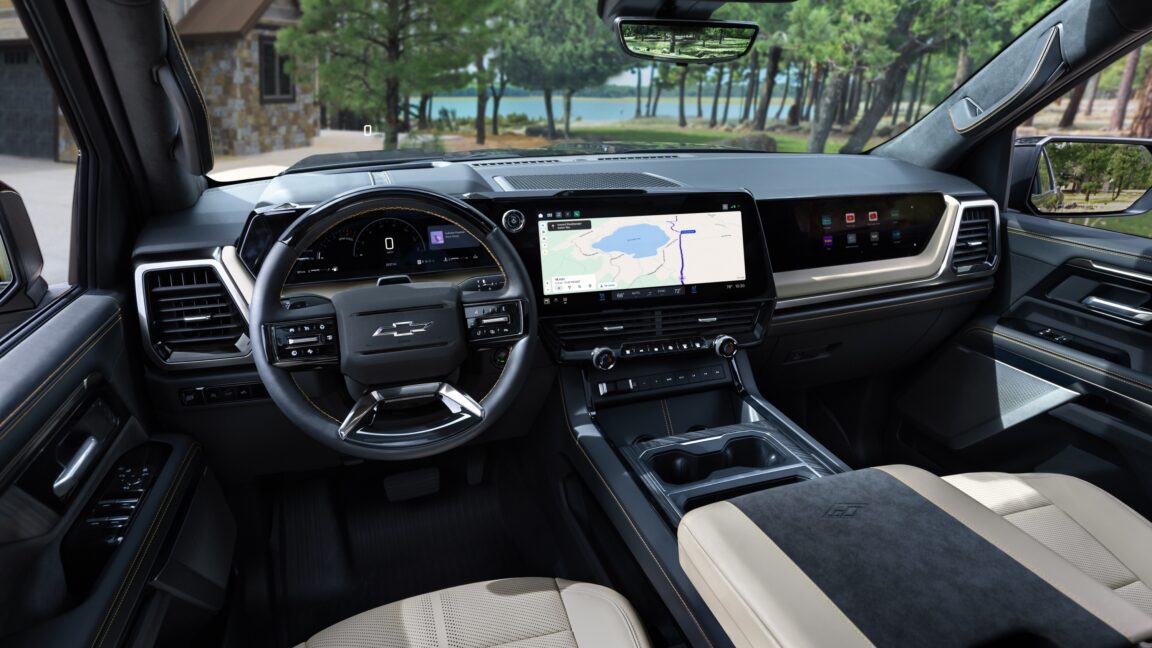
General Motors Has Experienced An Unexpected Flash Of Sanity

In the upcoming 2027 Chevrolet Silverado and GMC Sierra, drivers will actually be allowed to plug their phones in and see their own apps o...

Popular Posts