Thursday, October 23, 2025

Motorcycles as an Expression of Identity and Philosophy

The motorcycle, beyond its function as transport, exists as a deliberate, specialized choice. It is a sustained collaboration between human momentum and mechanical commitment. The identity of these machines is inextricably tied to the markings on the fuel tank—the brand insignia functioning less as a logo and more as a tribal banner, signifying allegiance to distinct philosophies of engineering, sound, and comfort. The entire knowledge base rests on this peculiar duality: utility fused completely with cultural mythology, forcing the rider into a profound, occasionally confusing, exercise in self-definition.

American motorcycling has long been anchored by two titans locked in a historical embrace: Harley-Davidson and Indian Motorcycle. The Harley V-twin, renowned for its characteristic, uneven *potato-potato* idle—a sound so fundamental it became proprietary—represents tradition carved into steel. These machines prioritize a specific torque delivery and an undeniable sense of ritual. Contrast this enduring loyalty with the strange journey of Indian, the oldest American marque, which suffered repeated dormancy only to emerge again, resurrected, yet still burdened by the weight of its 1910s dominance. The choice here is often a silent negotiation between the ubiquitous rumble of Milwaukee and the sleek, modern revival of the Springfield legacy. This is not about efficiency; it is about the particular way the engine shakes you, the specific cadence of the vibration.

European manufacturers approach design with a fixation on highly optimized idiosyncrasy. Ducati, hailing from Bologna, Italy, demands attention through its visceral L-twin engines and the intricate, high-maintenance beauty of its desmodromic valve actuation. This system, eliminating traditional valve springs, ensures precision at high RPMs, a wonderful over-engineering that requires deep affection—and perhaps a specialized tool kit—to maintain. Why make valve timing so complicated? For the shriek, the unholy resonance, the sheer theatrical commitment to speed. Germany's BMW Motorrad offers a structural counterpoint: the horizontally opposed Boxer twin. With cylinders protruding like persistent elbows, this design maintains a low center of gravity while often utilizing a shaft drive, eschewing the messiness of chains entirely. This choice promises meticulous, if occasionally heavy-handed, reliability—a philosophical certainty on two wheels.

Then there is the bewildering scale and quiet dominance of the Japanese "Big Four": Honda, Yamaha, Suzuki, and Kawasaki. These brands fundamentally altered the global motorcycling landscape in the mid-20th century, providing machines that simply worked, often ignoring the romantic historical narratives favored by their Western counterparts. Honda, especially, is responsible for the single most-produced motor vehicle in history, the Super Cub—a humble, step-through, 50cc utility vehicle whose revolutionary reliability redefined global personal transportation. A tiny, nearly silent machine that sold over 100 million units. The silent, confusing promise of the Super Cub. Yamaha, stemming from a background in musical instruments, and Suzuki, once a loom manufacturer, brought diverse engineering expertise to the fore, translating into highly sophisticated, rev-happy inline-four engines that became synonymous with the speed and handling revolution of the 1970s and 80s. The industry pivoted abruptly. The sheer volume, the overwhelming reliability, sometimes obscures the deep engineering mastery required to produce engines that scream to 14,000 RPMs while remaining practical daily machines. It is an impossible blend of the utterly practical and the completely thrilling.

Wednesday, October 22, 2025

# Navigating the Manual Shift: Key Concepts

The manual transmission—often referred to by the peculiar term "stick shift"—is less a convenience feature and more a sustained psychological commitment. It requires the driver to become an organic, moving part of the engine management system, synchronizing components that are, by their nature, intent on rotating at asynchronous speeds. The primary tool of this endeavor is the clutch pedal, which is not a polite instrument. It governs the engagement of the gearbox with the engine; mastering it means developing an internal, non-verbal sense of where the engine speed is, where the road speed must be, and the precise millisecond when those two disparate forces can be gently forced into cooperation. When the timing is off, the car bucks, often dying with a shuddering, embarrassed finality. This lurching failure is a necessary trauma in the learning process.

To operate the manual car, the procedure requires continuous dual-limb independence: the left foot modulates the clutch, the right foot handles the accelerator and brake, and the right hand is dedicated to the gear selector. The crucial moment occurs when starting from a standstill, a confusing moment of transition where the clutch must move out and the gas must move in, often referred to as finding the "friction point." If you apply insufficient throttle, the torque evaporates. If you release the clutch too fast, the engine stalls. The unique reward, however, is the undeniable feeling of absolute control; you are the one dictating the pace of the power delivery, deciding exactly when the next ratio is appropriate, rather than relying on the anonymous software calculating the optimal shift point.

The manufacturers who persist in offering manual transmissions often do so not for mass efficiency, but as a deliberate nod to this commitment. Porsche, for instance, maintains the seven-speed manual option in the current 911 despite their faster PDK automatic transmissions; this is a clear prioritization of driver engagement over measurable performance metrics. Conversely, companies like Mazda often reserve the manual for their purest driver's vehicles, such as the MX-5 Miata, where the entire ethos revolves around feeling connected to a relatively simple machine. The confusing aspect is the lack of uniformity: some budget brands offer manuals as a cost-saving measure, while many high-performance marques treat them as expensive, specialized luxuries reserved only for their flagship enthusiast models. This bifurcation—the manual as both the cheapest utility option and the most exclusive performance choice—makes its position in the modern automotive landscape deeply idiosyncratic.

•** * The Friction Point This is the specific arc of the clutch pedal travel where the clutch plate begins to make contact with the flywheel. Identifying this narrow band is the fundamental skill required for smooth starts; it varies significantly between every single vehicle model.
• Synchronizing Revs (Engine Speed) Unlike automatics, the driver must manage the synchronization of the engine speed with the appropriate transmission input shaft speed before engagement. In higher performance applications, this requires deliberate "rev-matching" or "heel-and-toe" shifting to prevent transmission shock and maintain momentum.
• Hill Starts A distinct challenge where gravity actively resists forward motion. This necessitates the rapid, coordinated release of the handbrake (or hill-hold system) as the clutch reaches the friction point and the accelerator is applied, requiring a level of kinetic awareness usually absent in daily driving.
• Manufacturer Intent When selecting a manual, recognize the company's motivation. Is it a cost-cutting measure (simpler components, often found in base models) or a performance statement (heavier duty components, specifically engineered shift feel, found in sport models)? The difference in shift quality and feel is profound.

The Efficiency of Everyday Mechanics

The subtle, high-pitched whine of the power steering pump, cold and complaining, introduces the sheer mechanical weight of the machine—a necessary burden we accept for movement. Efficiency, that elusive metric, is not a grand achievement wrought by complex electronics, but a meticulous attention to the commonplace. It begins not with the fuel you choose, but with the air you fail to notice.

The tires, those indispensable rubber cuffs that mediate the relationship between chassis and asphalt, demand a specific, unforgiving fidelity. This is the least glamorous yet most potent variable. Under-inflation increases the rolling resistance; the tire squats, generating excess heat and requiring the engine to shoulder a continuous, invisible friction. Consult the plaque, usually inside the driver's door jamb, which dictates the pounds per square inch (PSI) specific to your loaded vehicle. That number, often ignored, separates efficient travel from a wasteful, soft-footed struggle. Do not guess. Air is free, but the fuel wasted fighting inadequate pressure is very expensive indeed.

We are creatures of habit, often treating the car's boot as a traveling storage unit. Consider the heavy tools, the golf bag kept 'just in case,' the boxes transferred months ago and forgotten. Every kilogram requires kinetic energy to accelerate. Reduce the unnecessary ballast. That heavy bag of builder's sand carried for vague ballast in the winter, for instance, offers no benefit in July. This weight reduction is a straightforward, if sometimes uncomfortable, act of honest assessment regarding what one truly needs to haul.

Aerodynamics offer more confusing aspects. The air, that seemingly transparent medium, pushes back with remarkable force, especially as velocity increases. Wind resistance increases exponentially with speed; doubling your speed quadruples the aerodynamic drag. The empty roof rack, that convenience installed for a trip last summer, is now an aerodynamic spoiler working against you, subtly forcing the engine to work harder at every cruising speed above 60 kilometers per hour. That exposed structure tears at the passing flow. Remove it. An engine must not be tasked with fighting a permanent crosswind.

The human element remains the most significant variable. The manner in which you apply the accelerator pedal determines the fate of the petrol gauge more reliably than any laboratory test. Efficiency demands anticipation. Hard braking destroys calculation; every application of the brake pedal converts precious kinetic energy—paid for by fuel—into unusable heat and brake dust. Coasting into a traffic light is patience rewarded. Observe the horizon. Accelerate smoothly, using the brake pedal only when necessary, treating it as an indication of a failure in anticipation rather than a simple device of stopping. Drive as if there were an uncooked egg between your foot and the pedal. That gentle pressure, sustained, keeps the engine within its optimal, miserly operating range.

Navigating the Psychic Terrain of Automation: The Complex Reality of Self-Driving Technology

The anxiety inherent in technological transition is real; that moment when the human cedes cognitive driving control to the algorithmic oversight—it demands acknowledgment, a quiet mental preparation. Breathe. This shift, from active manual effort to mandatory supervisory vigilance, requires a mental adjustment far exceeding any superficial retraining. We must learn not how to drive, but how to be driven, trusting layers of code written by people we will never meet, residing in geographies entirely separate from the immediate physical reality of the vehicle moving at seventy miles per hour.

We are not here to instruct on the mechanics of the accelerator pedal, which is, in this context, becoming an anthropological relic; rather, the conceptual "How To" article must chart the psychic terrain of automation, a necessary cartography for navigating the complex reality of autonomy Levels 3 and above, the chasm that separates assistance from responsibility. To understand self-driving advancements is to understand perception engineering. The core challenge is not speed or route optimization, but the accurate comprehension of the environment, a feat the human brain handles via millions of years of messy, intuitive evolution. The machine, conversely, relies upon sensor fusion: a perpetually imperfect marriage of redundant systems, often simultaneously utilizing LiDar's precise, three-dimensional point clouds; the robust range detection of Radar, impervious to darkness; and the high-resolution, context-rich analysis provided by cameras, which, crucially, must read traffic light color and regulatory signage. This complex interplay ensures that when one system is temporarily blinded—say, LiDar struggling with heavy snow, or the camera matrix suffering from sudden, low-angle sun flare—the others provide the critical continuity necessary for decision-making.

The unique difficulties arise in the non-deterministic environment of the real world—the infamous "edge cases." How, for example, does the car classify the sudden, non-Euclidean path of a loose, wind-tossed plastic bag? It is not merely a technical error but an ontological dilemma for the software, which must distinguish this benign anomaly from the sudden, erratic movement of a small child or animal. A self-driving vehicle operating in Mountain View, California, where highly detailed, pre-scanned maps inform its location with centimeter-level precision, faces an entirely different set of constraints than one forced to navigate a construction zone in a rapidly changing city, where temporary barriers and inconsistent signaling redefine the operational design domain (ODD) every few hours. The sophistication is measured less by its speed and more by its capacity for probabilistic reasoning regarding objects it has never encountered. This is why the industry remains fixated on Level 3—where the system handles most tasks but requires human intervention with sufficient notice—as the most frustrating, existential problem: establishing the precise legal and cognitive moment of handoff, the return of control to an often distracted human supervisor.

• Understanding Supervisory Requirements (L2 vs. L3) You are not merely a passive passenger during Level 2 operation (like advanced cruise control); you are the mandated legal pilot, accountable for immediate intervention. The car assists; you drive.
• The Problem of Edge Case Classification The complexity of automation scales not linearly but exponentially when confronted with rare or ambiguous real-world phenomena—a traffic cop directing traffic differently than the programmed signal, or a road surface degradation not logged in the mapping data.
• LiDar and Point Clouds These systems generate millions of individual points of light (a "point cloud") to render depth and shape, offering precise geometry but demanding immense processing power to convert that data into understandable objects.
• Regulatory Patchwork Autonomous technology deployments are currently constrained by state and municipal laws; Arizona became known for being highly permissive for testing, while other states maintain rigorous, layered registration and reporting standards for every operational mile. The rules change faster than the hardware iterates.

Tuesday, October 21, 2025

The Hidden Cost of Electric: Patience, Infrastructure, and the Unnerving Paradox of EV Ownership

The true cost of owning an electric vehicle is paid not in currency at the pump, but in patience at the wall. You purchase a machine boasting instant torque, capable of silencing supercars, yet it is forever shackled, drawing its lifeblood at speeds that defy the very modernity it embodies. The most critical lesson in electric power management is simple: you are not buying a car; you are buying a complex, high-amperage home appliance, and its reliability is entirely dependent on the weakest link in your dwelling's electrical system. This shift in infrastructure responsibility—from the oil company to the homeowner—is the great, unnerving paradox of electrification.

How one charges is determined by necessity and infrastructure, rarely by convenience. Level 1 charging, the slow, agonizing crawl of 120 volts, is the inescapable foundation. This relies upon a standard residential outlet, yielding perhaps 3 to 5 miles of range per hour. It is adequate only for the truly sedentary—the commuter who drives fifteen miles a day and allows the car to rest eighteen hours. Understand that this slow cadence protects the battery and is perhaps the gentlest path to full charge, yet it demands a foresight that most drivers, raised on the immediate gratification of gasoline, find intolerable. The confusing aspect here is simple: many modern EVs are built on 800-volt architectures, designed for extreme speed, yet most owners begin their journey with a pitiful trickle, suitable for charging a phone, not a two-ton vehicle.

To escape the Level 1 purgatory requires commitment. Level 2 charging, generally utilizing 240 volts, necessitates dedicated hardware installation, often mirroring the setup required for an electric stove or dryer. This requires a professional assessment of the breaker panel's available capacity. A critical opinion here: do not attempt the wiring yourself unless you are licensed; the amperage drawn by a 48-amp EVSE (Electric Vehicle Supply Equipment) operating for six consecutive hours generates serious heat, and poorly seated connections burn houses down. A man must choose the appropriate breaker—typically 40, 50, or 60 amps—and the wire gauge must be robust enough to handle sustained, heavy load. Always prioritize *sustained* performance over initial cost when selecting wiring. Furthermore, in older homes, load shedding management systems become imperative, instructing the charger to pause if the air conditioning compressor demands peak power. Short phrases about real incidents: "The melted NEMA plug." "The flickering kitchen lights."

When venturing far from the sanctuary of the home charger, the DC fast charging network becomes necessary, a roadside tavern where prices fluctuate wildly and standards rarely align. The speed of these stations—Level 3—is dictated not by the station's maximum advertised output, but by the car's state of charge, the battery's temperature, and the maximum voltage the car's Battery Management System (BMS) will accept. A unique thing about fast charging is the reality of *tapering*. A vehicle might accept 250 kW at 10% state of charge (SOC), but that rate drops precipitously, often below 50 kW, once the battery crosses the 70% threshold. You are paying for speed you cannot use, for the last third of the battery fills like sand through a narrow neck. The charging curve is the bitter measure of real-world endurance.

• Charging Essentials
• Level 1 (120V AC) Standard outlet charging. Least expensive installation (often free), slowest possible replenishment (3–5 miles/hr).
• Level 2 (240V AC) Residential or public AC charging, requiring dedicated circuitry. Offers flexibility between 3.3 kW (16A) and 11.5 kW (48A) draw. The necessity for the sustained daily charge.
• Level 3 (DCFC) Direct Current Fast Charging. Bypasses the car's onboard converter. Speeds vary wildly (50 kW to 350 kW, depending on infrastructure and vehicle limits).
• Battery Preconditioning Many modern vehicles must actively heat or cool the battery prior to engaging a DC fast charger to achieve optimal speeds. Failure to do so significantly reduces the rate of energy acceptance.
• Charge Port Standards North America currently employs three primary ports: J1772 (AC L1/L2), CCS (Combined Charging System, for DCFC), and NACS (North American Charging Standard, pioneered by Tesla). The confusing shift between these standards is the current battleground for infrastructure dominance.

# The Inventory of Reclamation

That particular shade of gray, the one that coats the fenders just beneath the rearview mirror, where the sun hits hardest. Remember the fire in that original color? It's gone. Faded, like an old photograph left in the sun, lacking the definition it once possessed. That dullness—it is not inevitable. It is accumulated history resting on the clear coat, a history you can, with precision and deep effort, erase. We are not just cleaning a vehicle; we are reclaiming its inherent structure.

This specific undertaking requires more than soap and a quick spray. It demands a mechanical understanding of automotive paint layers and the precise abrasion required to smooth them. Most serious paint correction kits, those designed to remove etching and swirls left by automated car washes, introduce a confusing hierarchy of chemicals and foam discs. The machine demands respect. You must know what you are lifting away and what you must protect.

A professional paint correction kit must contain specific elements, each performing a distinct, non-negotiable task. The initial process is decontamination. This phase is about the immediate, rough removal of surface debris.

Start with the clay bar. This resinous material, sometimes blue or purple, is not merely soft putty. It is the tool that gathers the ghosts of the road: brake dust, industrial fallout, specks of rust that have bonded to the clear coat, microscopic fragments of road tar—things you cannot see but certainly feel. Run your hand across the metal after a thorough wash; if it sounds like sandpaper, the contamination is extensive. A well-lubricated clay bar pulls these imperfections cleanly out of the paint structure, leaving a surface smooth as glass. This preparation is the foundation. Fail here, and the subsequent efforts merely polish existing dirt.

Following the decontamination, you find the real work: the abrasion agents. These kits typically include a heavy compound and a light polish. The compound contains the larger, more aggressive cutting particles, designed to eliminate deep surface imperfections (scratches that do not penetrate the base coat). The polish, however, features minute, uniform particles, intended to refine the surface left by the compound and restore the clarity of the reflection. Always examine the grit rating. Confusing the two leads to disaster.

Technique and the Delicate Hand

The orbital polisher, whether dual-action or rotary, is a heavy rotary beast that demands control. Never start the machine directly on the paint; it must be brought up to speed slowly. The pads are color-coded, often confusingly so: Orange or yellow pads are designated "cutting" pads—they are dense and work with the heavy compound. Black or white pads are "finishing" pads—soft, delicate, paired with the final polish or sealant.

Use small sections. Two feet by two feet. Apply three or four small dots of compound directly onto the cutting pad. Too much liquid polish slings everywhere. Too little generates excessive friction. Work the product slowly across the section, overlapping your passes in a crosshatch pattern. The machine noise changes when the compound has "broken down"—when the abrasive particles have pulverized themselves into smaller, finer forms. This is the moment of maximum effectiveness.

Many people, rushing the process, spend too long on edges. Real incidents confirm this danger: the paint layer is thinnest around the sharp contours of the door jambs or near the lip of the hood. The metal heats quickly here. The friction can burn straight through the clear coat, leaving a hazy, irreparable spot. Go light on the edges.

This process—compound, wipe, inspect, polish, wipe, inspect—is meditative. It is slow. It forces you to witness the surface changing, the depth of color returning. The goal is not just removal but refinement. When the reflection of the shop light snaps into sharp focus on the fender, flat and undisturbed, then the work is done. Not before.

# The Principle of the Pull

The decision to design a vehicle using front-wheel drive (FWD) is a profound declaration regarding efficiency and interior architecture. It consolidates the engine, transmission, and differential—the trinity of motive power—into a single compact unit positioned immediately above the driving wheels. This configuration means the front wheels are tasked with all three functions: steering the vehicle, supporting the majority of its static weight, and providing the propulsion necessary for movement. This dense packaging saves mass and complexity in the vehicle's rearward sections, eliminating the necessity for a lengthy driveshaft stretching beneath the cabin floor.

This layout, often utilizing a *transverse engine mounting*, where the power unit sits sideways (perpendicular to the vehicle's long axis), directly impacts the passenger experience. The absence of a large driveshaft tunnel allows for a nearly flat floor, a significant empathetic concession to those occupying the middle rear seats. Furthermore, placing the entire mass of the engine and transaxle directly over the driving wheels provides inherent, beneficial loading under slippery conditions. Snow and ice, the winter's true lords, are often handled with greater initial confidence than by comparable rear-wheel-drive systems. FWD is inherently stabilizing under acceleration; the car attempts to pull itself straight.

However, mechanical decisions always invite conflict. Asking the front wheels to simultaneously manage steering input and maximum power output introduces specific dynamics the driver must understand. The phenomenon known as *torque steer* is the system's natural rebellion, a physical manifestation of high rotational forces being applied unevenly to the steering geometry. High-powered FWD vehicles fight the driver's hands under hard acceleration. While excellent for packaging and cost, FWD inherently limits the upper threshold of power that can be effectively transferred to the road surface before traction is utterly lost.

***

The mechanical essence of FWD lies in integration. The engine sits athwart, like a heavy heart placed sideways within the chassis. This arrangement minimizes the necessary space. The transmission (transaxle) is bolted directly to the engine block, acting as the nexus for power distribution. The drive axles then extend outward, delivering rotational force to the wheels.

Key FWD Specifications

Understanding FWD requires scrutinizing the unique components it demands:

• Transverse Layout Engine orientation relative to the vehicle's chassis. Crucial for determining hood length and crash deformation characteristics.
• Constant Velocity (CV) Joints These joints are non-negotiable necessities. They allow the drive axles to transfer continuous power to the wheels even as the wheels articulate up and down over bumps and turn left and right for steering. Their maintenance is often forgotten until failure stops all motion.
• *Real Incident* Boot failure allows ingress of grit. Rapid internal destruction follows.
• Weight Bias FWD vehicles typically exhibit a front weight bias far exceeding 55%, often approaching 60–65%. This concentration of weight improves straight-line stability but can induce greater understeer during aggressive cornering.
• Torsional Rigidity Because the entire powertrain is supported by the front subframe, the integrity of the chassis mounting points must be exceptionally high to manage vibrational forces and sudden torque loads. ***

The Architect's Compromise

The decision for FWD is often made at the blueprint stage, prioritizing manufacture and market appeal. It is the economical choice for mass production. Maintenance is focused heavily on the front end, complicating access to parts like spark plugs or accessory belts which are often tightly packed against the firewall.

This system offers predictable handling for the average motorist. When cornering too quickly, the vehicle's nose tends to slide wide (understeer), which is generally considered a more manageable and safer dynamic reaction for inexperienced drivers than the rear-end instability (oversteer) typical of RWD systems. It is a fundamental trade-off: less excitement for greater utility.

Unique FWD Characteristics


• Simplified Production Line Fewer components traveling rearward simplifies assembly.
• Flat Floor Increased cabin space and comfort, particularly vital in smaller vehicles where every inch matters.
• Effective Bad Weather Traction Weight concentrated over the drive wheels aids grip, particularly when climbing inclines on low-friction surfaces.
• Torque Steer Mitigation Engineers fight this inherent steering pull using axles of unequal length or complex electronic steering assistance; it remains a factor in powerful iterations.
• *Real Incident* Unexpected pull on acceleration demands immediate steering correction.

Featured Post

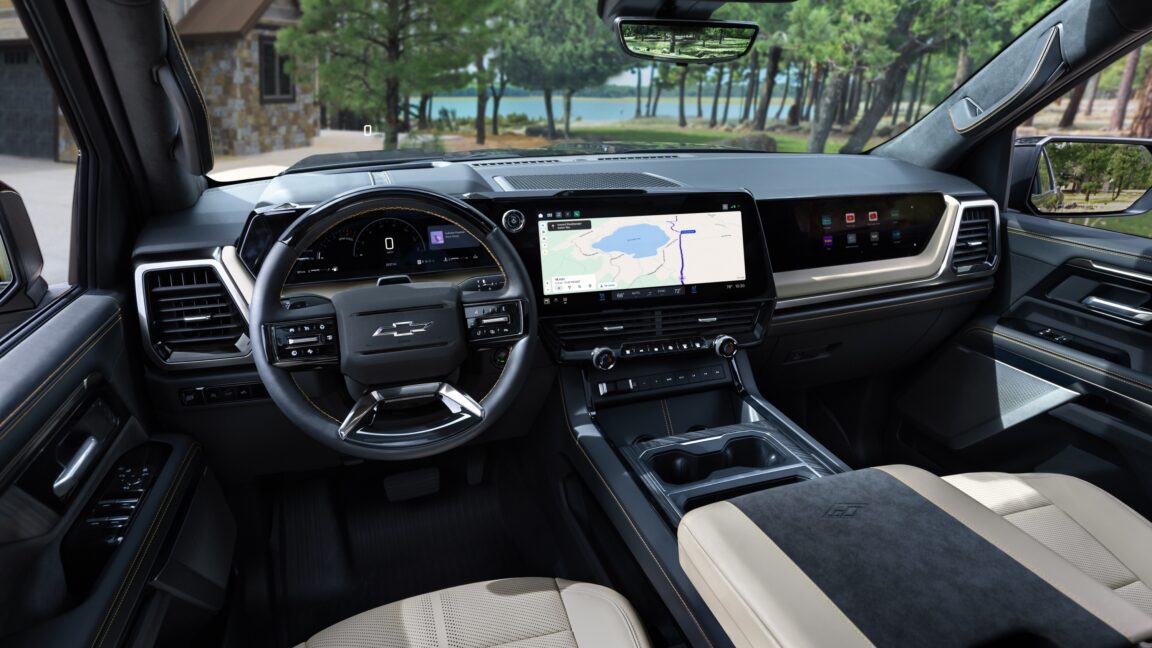
General Motors Has Experienced An Unexpected Flash Of Sanity

In the upcoming 2027 Chevrolet Silverado and GMC Sierra, drivers will actually be allowed to plug their phones in and see their own apps o...

Popular Posts