
A Massive Leap in Power and Weight
Look at the numbers because they are absolutely wild. McLaren took their four-liter twin-turbo V8 engine and pushed it to 778 horsepower. By shaving off weight until the car hits just 1,265 kilograms dry, they created a machine with a power-to-weight ratio of 615 horsepower per tonne. That beats every single previous car in this specific family tree.Aerodynamic Engineering Trades Speed for Grip
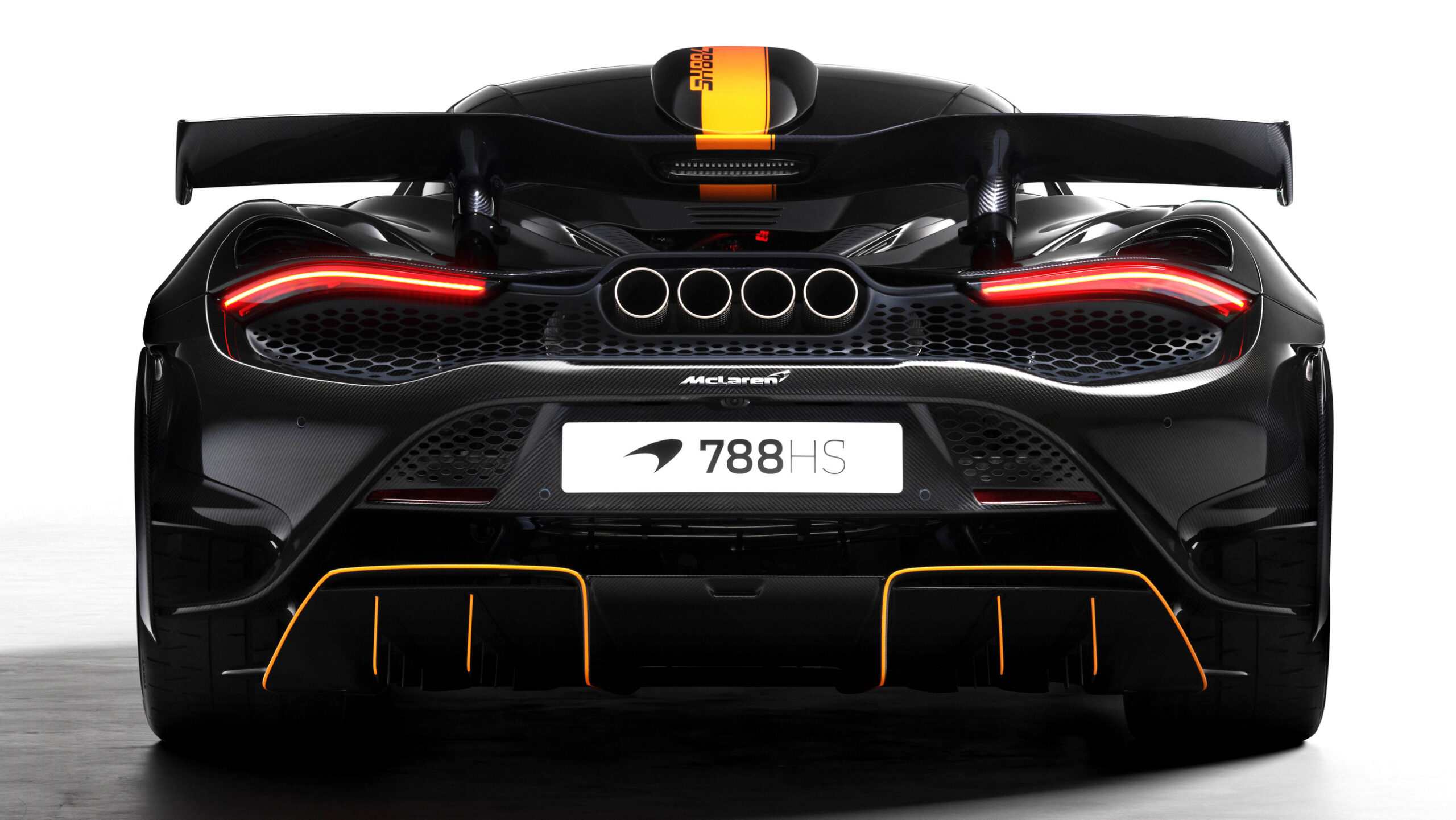
To harness this massive power-to-weight ratio, McLaren had to rethink how the car cuts through the air. Through clever aerodynamic engineering, this new body generates ten percent more downforce than the older, track-focused 765LT. You get a multi-section front splitter, an S-duct hood that completely eats up your front trunk storage space, and a tall active wing at the back. Because of all this extra wind resistance pushing the car down, the top speed drops slightly to 205 miles per hour. It swaps top speed for cornering grip.Chassis Upgrades Built for the Track
Supporting this increased aerodynamic grip requires a chassis that can handle the extreme downforce. Under the skin, the chassis gets some serious racing parts. The engineers dropped the front ride height by five millimeters and tuned the hydraulic suspension specifically for this setup. For the very first time on this platform, you get center-lock wheels wrapped around carbon-ceramic brakes taken straight from the McLaren Senna. It is built to beat lap times.An Ultra-Exclusive Production Run
To experience these track-focused capabilities, however, buyers must secure a spot in an incredibly limited lineup. Only 200 people on earth will ever own one of these machines. McLaren is splitting the production run right down the middle with 100 Coupes and 100 Spiders, each customized by their special operations team. With prices starting well north of $400,000, this is an incredibly elite club.The Fast Track Facts
To understand what makes this elite club so special, here are the key performance metrics and design elements:- The McLaren 788HS serves as the ultimate evolutionary peak of the decade-long 720S family tree.
- It hits 124 miles per hour in a blistering 7.0 seconds flat, shaving a crucial 0.2 seconds off the 750S.
- If you choose the coupe, a roof snorkel intake sits right above your head to feed air directly into the engine.
Why This Carbon Monster Matters Right Now
This extreme engineering is exactly why this carbon monster matters right now. This car marks the end of an era for pure, non-hybrid internal combustion supercars from the team in Woking. As McLaren transitions to hybrid powertrains like the Artura and future hypercars, the 788HS represents the absolute peak of lightweight, gas-only performance. It is a final shout of pure engine noise before the electric future takes over.The Secret Formula One Paint Weight Saving Method
To maximize this final non-hybrid showcase, McLaren went to extreme lengths to save weight—even rethinking the way the car is painted. By using a proprietary ultra-thin paint process, McLaren Special Operations can shave almost five pounds of weight off the car just from the paint coat. They apply the paint in microscopically thin layers that still look incredibly deep under the sun. On top of that, the optional visual carbon fiber panels use a special weave that aligns perfectly across the body panels. It is science disguised as art.Why Losing Your Grocery Space Makes You Faster
But the quest for speed isn't just about saving weight through high-tech paint; it also requires sacrificing everyday practicality. As noted earlier, the addition of the S-duct completely deletes your front trunk. Think about that. You are paying half a million dollars for a car, and you cannot even fit a gym bag in the front. But why did engineers make this choice? Because routing air through the nose and out the hood creates a massive low-pressure zone that glues the front tires to the tarmac. It is the exact same trick Ferrari used on the F8 Tributo and Porsche used on the hardcore 911 GT3 RS. And if you look at the engineering papers, the benefits are clear. In a study on automotive aerodynamics by the Journal of Wind Engineering, redirecting airflow through the body reduces front-end lift by up to thirty percent. That means you can take corners at terrifying speeds without flying off the road. So, yes, you have to put your milk carton on the passenger seat. But you will get home from the store much faster.To learn more about how supercars are changing their shapes, check out these reads:
- "Aerodynamic Development of the Ferrari 488 Pista" - A deep dive into how S-ducts revolutionized road car downforce.
- "The Packaging Challenges of Mid-Engine Supercars" in Automotive Engineering Magazine - A study on why modern supercars are sacrificing cabin and storage space for cooling and aero.
- "Active Aerodynamics vs. Static Aero in High-Performance Vehicles" by the International Journal of Automotive Technology.


No comments:
Post a Comment