
Tearing Down the Premium Illusion with Practical Speed
For decades, car companies sold us the lie that bigger is better. Acura breaks this cycle by giving us a small, agile machine that weighs just under 3,100 pounds. Under the hood, the 1.5-liter turbocharged engine breathes through a high-flow exhaust system to make 200 horsepower.
And you feel every single bit of that power because the engine pairs with a six-speed manual gearbox.
This gearbox uses a lightweight flywheel to make the engine rev fast. But the real magic lies in the rigid aluminum shift gates that make every gear change feel like a sharp snap. This setup gives people back the joy of driving without wasting resources on giant engines.
Why Lightweight Hatchbacks Save Us From Boring SUVs
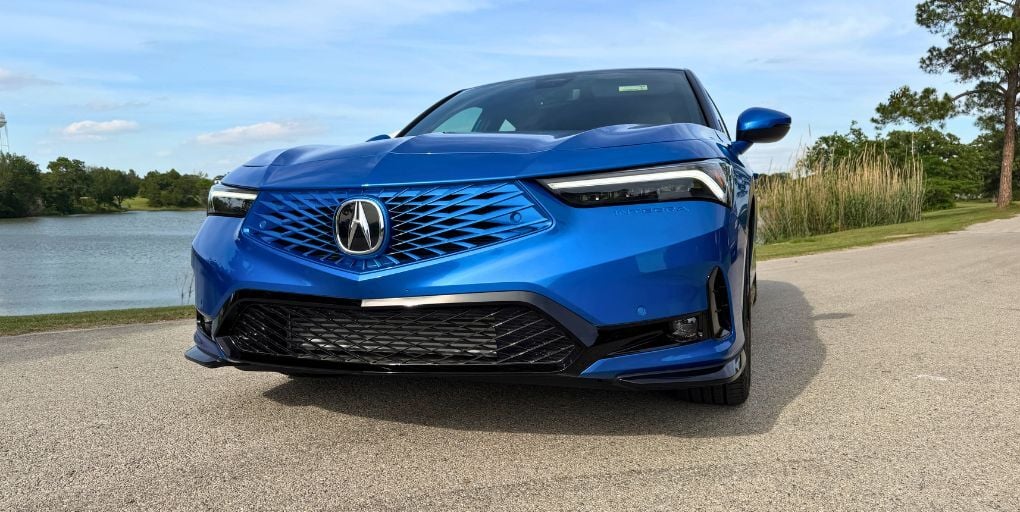
This rejection of unnecessary bulk extends beyond the engine bay and into the very design of the vehicle itself. Across our crowded cities, massive SUVs clog up the roads and block the sun. The Integra fights this giant car epidemic with its clever liftback shape. Inside the trunk, you get 24.3 cubic feet of space to haul your gear. So you can carry a bicycle or a week of groceries without buying a heavy, polluting truck.
By keeping the car low to the ground, Acura improves wind resistance and keeps fuel use low. This proves we can have highly useful cars without ruining our shared public spaces.
We do not need heavy tanks to live our daily lives.
How the Manual Transmission Fights Digital Overload
Consumers are increasingly agreeing with this philosophy, turning away from bloated, automated vehicles in favor of tactile control. During the first week of July 2026, American Honda released its latest sales data showing that the Integra continues to dominate the premium sport compact market.
Buyers are choosing physical engagement over boring self-driving features.
But Acura made a strange engineering choice on this model.
On tight corners, the A-Spec manual lacks a mechanical limited-slip differential.
Testing from Car and Driver reveals that brake-based torque vectoring wears down the front brake pads during hard driving.
To fix this, Acura should install the mechanical differential from the Civic Si to give drivers true traction.
This change would turn a good car into an absolute track champion.
The Mechanical Magic of the Short Throw Linkage
Achieving that level of responsiveness relies not just on the differential, but on the precise physical connection between the driver and the transmission. To understand how this tactile connection works, we must look at how the shift linkage works. Inside the cabin, the metal shift lever connects to two high-tension steel cables.
These cables run through the firewall directly to the shift arms on top of the transmission case. When you push the lever forward, the cables pull the shift forks to slide the synchronizer rings onto the gear hub. Because Acura uses Teflon-coated inner cables, the friction drops to almost zero. This mechanical layout gives the driver instant physical feedback through the palm of their hand.


No comments:
Post a Comment