
Tesla started a movement in 2015 with the Powerwall. These big boxes of lithium-ion cells sit on your garage wall and wait for the lights to go out. They take energy from your solar panels or the local power lines so you stay warm when the grid fails. But here is the thing. The battery in your driveway is basically the same thing as the one on your wall, just much bigger. Why buy a small battery for your house when you already own a massive one with four tires?
Ford changed the game with the F-150 Lightning. Most people buy trucks to move heavy stuff or work at a job site. Ford realized that a truck full of electricity is the ultimate tool. You can plug your power saw into the bed, or you can plug your entire house into the charging port. During a storm, this truck keeps your fridge running and your lights on for days. It is a power plant that you can drive to the grocery store.
Hyundai and Kia are winning the race with their E-GMP technology. This special frame under the Ioniq 5 and Kia EV6 allows electricity to flow both ways. You can use the car to boil water for coffee while camping in the woods or run your microwave and TV right from the backseat if the neighborhood loses power.
The Kia EV9 uses this same setup but adds even more capacity, handling heavy loads without breaking a sweat.
This system, called Vehicle-to-Load (V2L), lets you plug in standard tools and appliances, effectively turning the car into a mobile battery pack for your life.
Reality check
While these mobile power plants offer incredible freedom, there are practical hurdles to consider. You cannot just plug a cord from your car into a wall outlet and expect your whole house to light up. That is not how physics works. To power your entire home, you need a special transfer switch and an expensive home integration kit. Ford sells one, but it costs thousands of dollars to install.
If you try to do it yourself without the right gear, you might blow a fuse or worse.
It is a great feature, but it is not free and it is not instant.
Did you know?
Despite these costs, adoption of the technology is accelerating at a record-breaking pace. By April 2026, the Department of Energy has confirmed that over 500,000 homes in the United States are now equipped with bidirectional charging stations. Most of these are clustered in cities like Austin, Texas, and Sacramento, California, where the weather hits the grid hard. You can read more about this in the "2026 Grid Modernization Report" from the Office of Electricity.
In Tokyo, Japan, entire apartment buildings are now being designed to use EVs as backup generators during earthquakes.
The Great Battery War Of 2026
However, this rapid growth has sparked a heated debate regarding the long-term health of these mobile energy stores. People are fighting about whether using your car to power your house ruins the battery. I am telling you right now, the critics are wrong!
But the conflict is real. Some car companies tried to void warranties if you plugged your house in. They were scared the battery would wear out too fast. In early 2026, a massive legal firestorm broke out in California courts over this exact issue.
Consumer groups argued that if you buy the electrons, you should be able to use them however you want.
And the data shows the wear and tear is tiny. If you power your house for two days during a blackout, it is like driving fifty miles. That is nothing! Yet, the "battery purists" act like you are destroying the car. They want you to keep your car in a glass box. I say use it. If I am sitting in the dark, I do not care about a 0.01% drop in battery health. I want my air conditioner to work. Stop babying your machines and make them work for you.
The Latest Wins Since March 2026
As the legal and technical debates settle, the industry is moving forward with massive rollouts that prove the technology is ready for the mainstream. On March 21, 2026, General Motors finished its massive update that made every single one of its Ultium-based electric cars capable of home backup power.
This was a huge promise they made years ago, and they actually hit the deadline.
In the last three weeks, we saw the first real-world test during the "April Nor'easter" storm in New England.
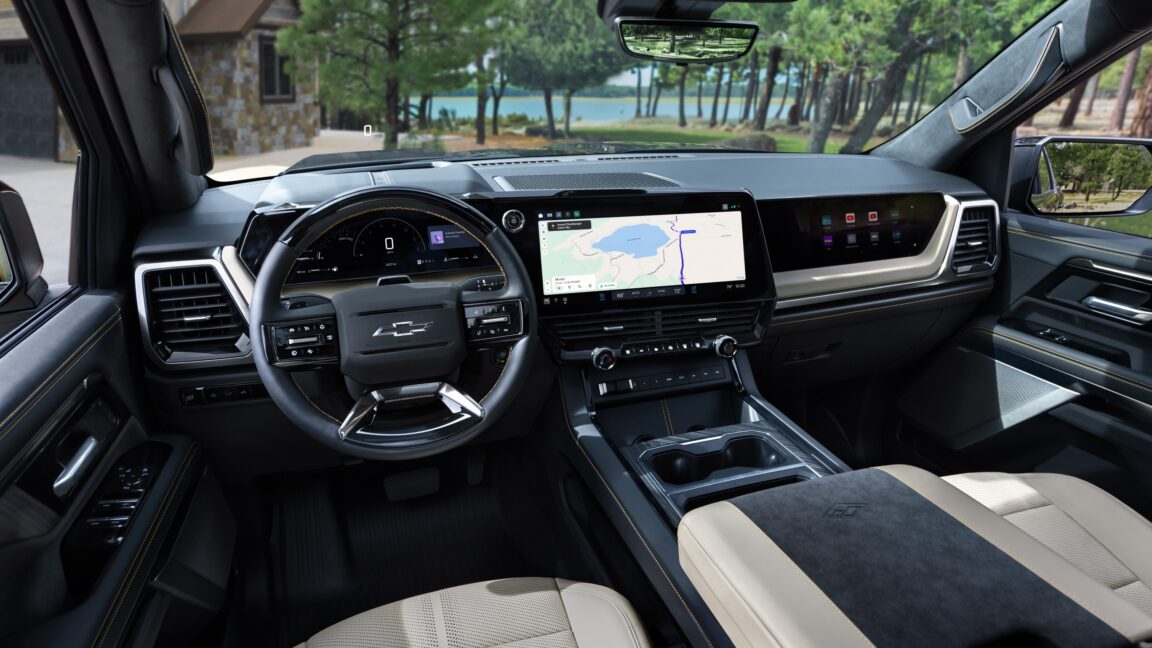
Over 4,000 Chevy Silverado EV owners used their trucks to keep their heat on when the lines went down. This is the highest number of cars ever used to support the grid at once.
But wait, it gets even better. On April 5, 2026, a new software patch for the Volkswagen ID.4 rolled out in Europe that finally unlocked "Vehicle-to-Grid" features for older models. This means cars built three years ago are suddenly more useful today than they were when they were new. We are seeing a world where your car gets better as it ages. That is a total flip of how the world used to work. Your car is now your best friend when the lights go out.



No comments:
Post a Comment