
The Dawn of Physical Intelligence
A profound shift stirs the foundations of modern technology, moving the ghost in the machine from the realm of pure thought into the cold, hard world of steel, glass, and rapid motion. For too long, the brilliant attention of the AI revolution—powered heavily by the silicon might forged by Nvidia—dwelled upon the ethereal software, the endless scrolling text of systems like ChatGPT. But the vanguard of innovation demands more.
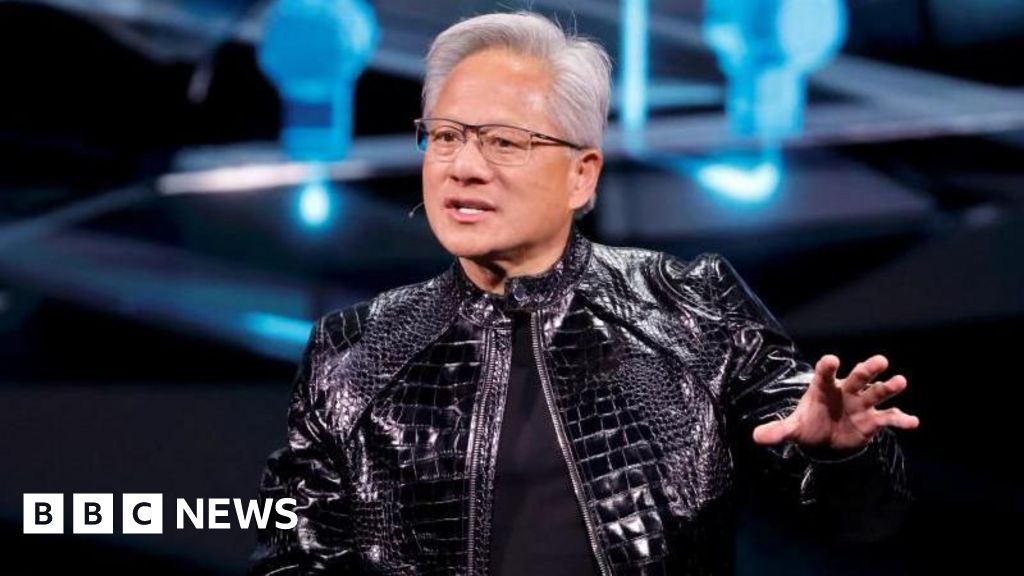
It requires embodiment. It requires physical AI. At the clamorous annual assembly in Las Vegas, Jensen Huang, wearing his distinctive black leather uniform, announced the next great campaign: embedding comprehensive intelligence into tangible products.
Nvidia's chips have been the unseen infrastructure, the very spine upon which the AI dream was built.
Now, the chip-maker seeks to provide not just the compute, but the complete platform for robotic systems. This ambition, this desire to bridge the divide between the computational universe and the material world, has yielded extraordinary knowledge, Huang revealed. The project has taught Nvidia an enormous amount. Paolo Pescatore, the keen observer from PP Foresight, rightly called this moment a pivot, recognizing that the company transcends its foundational role; it moves from being a mere provider of overwhelming compute power to establishing itself as the very architect of physical AI ecosystems.
The era of abstract processing ends.
Alpamayo's Reasoning Engine
The standard autonomous vehicle, while swift and capable, operates often on probabilistic response, reacting to scenarios already modeled in training data. Such systems can falter when faced with true novelty. Nvidia's new technological platform, christened Alpamayo, rejects this limitation.
It is not sufficient merely to drive. The machine must reason.
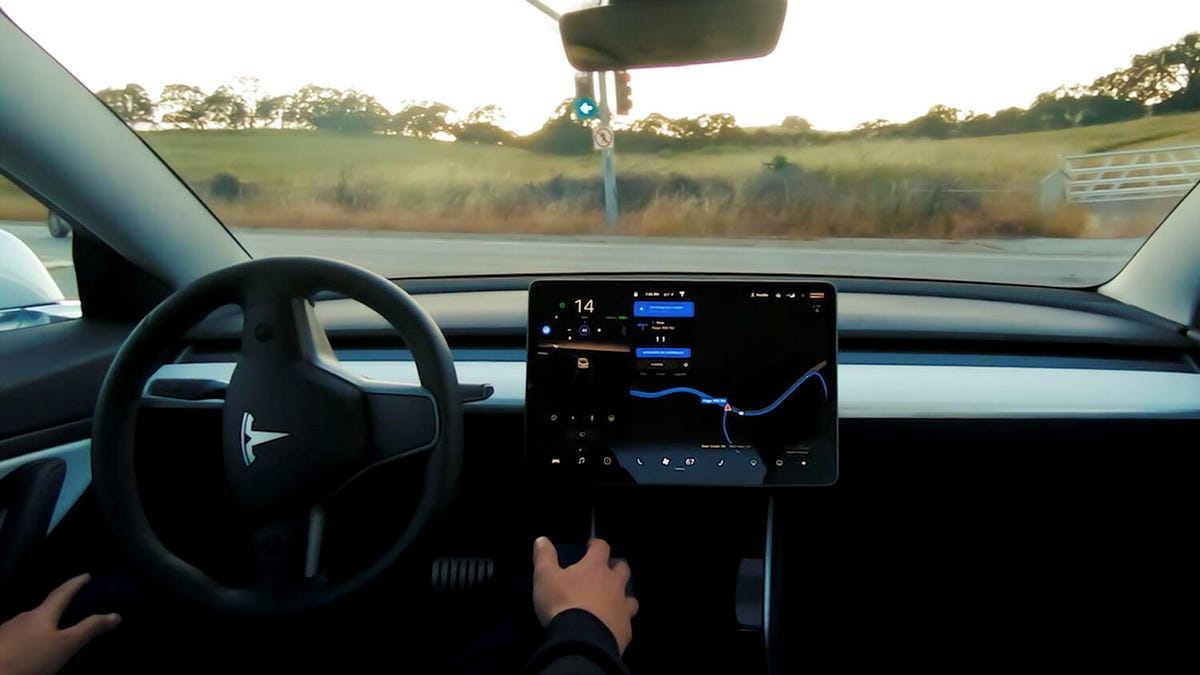
Alpamayo is designed not just to navigate traffic patterns, but to genuinely "think through rare scenarios," addressing those unpredictable, unique events that break conventional algorithms. This reasoning capability is the critical element. It enables safe passage even in the most complex, chaotic environments.
Furthermore, and most astonishingly for a black-box system, Alpamayo promises to explain its own driving decisions. This is crucial for accountability. An autonomous vehicle that can justify its immediate choices—why it swerved, why it paused, why it accelerated—changes the very nature of trust between human and machine.
Nvidia, collaborating with the engineering mastery of Mercedes, aims to introduce a driverless vehicle powered by Alpamayo into the unforgiving labyrinth of US roads in the coming months.
The deployment will then sweep across Europe and Asia. This platform, a comprehensive tool for physical intelligence, ensures that Nvidia maintains a crucial lead over its rivals. The machine learning is now married to the physical realm; the stakes, enormous. A new dynasty of intelligence begins.
In the realm of transportation, a revolution is unfolding, as self-driving car technology continues to advance at a breakneck pace. According to a report on bbc. com, several major automakers and tech companies are investing heavily in the development of autonomous vehicles, with some already testing their creations on public roads.
The promise of self-driving cars is tantalizing: reduced traffic congestion, improved safety, and increased mobility for the elderly and disabled.
As the technology improves, we're seeing the emergence of new players in the self-driving car space. Companies like Waymo, a subsidiary of Alphabet, and Cruise, a General Motors-backed firm, are leading the charge.
These companies are not only developing their own self-driving software and hardware but also partnering with established automakers to integrate their technology into existing vehicles.
The collaboration is yielding impressive results, with some self-driving cars already capable of navigating complex urban environments with ease.
One of the most significant challenges facing self-driving car developers is the need to improve their vehicles' ability to perceive and respond to their surroundings. This is where advances in sensor technology and artificial intelligence are proving crucial.
By equipping self-driving cars with a suite of sensors, including lidar, radar, and cameras, developers can create a 360-degree picture of the vehicle's environment.
Related perspectives: Visit websiteNvidia has unveiled a new tech platform for self-driving cars as the world's leading chip-maker seeks more physical products to embed AI into.○○○ ○ ○○○



No comments:
Post a Comment