
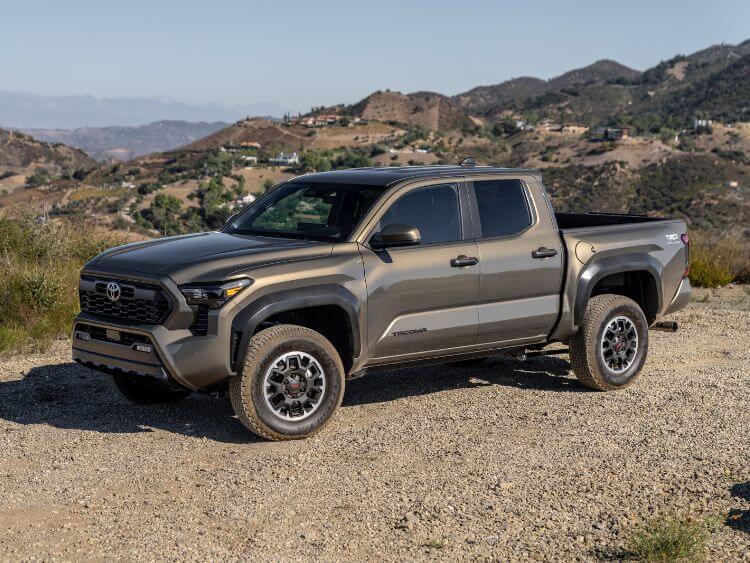
The silhouette of the machine, heavy and dependable, stood fixed against a tempest-tossed horizon, its tires—deeply etched with purpose—ready to churn through terrain that would stop lesser vehicles cold. It is not merely steel and rubber; it is an extension of human will against the indifferent logic of the Earth.
The employment of four-wheel drive (4WD) systems in the working world is less about speed and more about accessing the points that genuinely matter—the inconvenient corners of the map where crucial data is collected, where infrastructure must be maintained, or where rescue efforts begin. To truly master this mechanical capability, one must first recognize that the system is not a constant reassurance but a specific tool requiring respectful engagement. This is the inherent complication: unlike All-Wheel Drive (AWD), which operates continuously and often automatically modulates power between axles, a proper 4WD system demands the operator's decision. It asks for trust and timing. This distinction is vital for anyone whose livelihood depends on reaching the unpaved path, navigating the construction site saturated by unexpected rain, or scaling the gravel service road to the high-altitude antenna tower. Many fail to understand the sheer multiplication of torque available in the lowest gear ratios, thinking only of momentum when they ought to be considering controlled, painstaking movement.
The heart of the 'How To' lies within the transfer case, the mechanical sentinel that dictates where the power from the engine is permitted to travel. When working, the operator must know precisely when to shift from 2H (two-wheel drive, high range, standard road use) to 4H (four-wheel drive, high range, for light snow, sand, or slippery gravel roads) and, most critically, to 4L (four-wheel drive, low range). 4L is the real sorcery. Engaging this system multiplies the torque available, allowing the vehicle to crawl forward with immense power while maintaining very low speeds. This is not for gaining traction at 45 miles per hour; it is for pulling a heavily laden trailer up a steep embankment, extracting sampling equipment from deep mud, or delicately navigating a boulder field to service a remote weather station. This deliberate engagement—the physical movement of the lever or the turning of a dial—must usually happen when the vehicle is stopped or moving at a very slow crawl, preventing severe damage to the driveline. Failing to respect the transition can result in a catastrophic whirring sound, a dreadful warning that the machinery is momentarily confused by the operator's haste.
Consider the immense and unique responsibilities shouldered by those in specialized fields: the field ornithologist needing access to remote tidal flats to track migration patterns; the pipeline inspector whose route takes them across rugged, uneven easements far from established roads; or the mobile equine veterinarian carrying sensitive diagnostic equipment deep into remote farming valleys after a storm has rendered dirt access paths unstable. These are not merely challenging commutes; they are jobs where the delay of even a few hours can mean the difference between data collected or a successful intervention. The capabilities of 4WD offer not just mobility, but resilience—the ability to guarantee arrival when the standard world stops moving.
- Understand the Binding Limit: Never engage 4H or 4L on dry, high-traction pavement. The system locks the axles, meaning the wheels cannot spin at different speeds when turning corners, leading to driveline "binding" and severe component wear. Use 2H for paved surfaces.
- The Power of 4L: Utilize 4L only when maximum pulling power or slow, controlled descent is required. The torque generated is extraordinary, making it ideal for hauling heavy loads up inclines or navigating very tight, challenging off-road obstacles.
- Momentum Management: When tackling deep sand or mud, 4H is often more appropriate than 4L, provided you can maintain consistent, controlled speed. Low range can sometimes cause the vehicle to dig down rather than drive across. Learn the nuanced difference.
- Clearance is Not Traction: While high ground clearance helps prevent damage, it does not replace the necessity of proper tire selection and the intelligent deployment of the 4WD system. The tires are the only thing touching the challenge ahead.
- The 'Feel' of Engagement: Pay careful attention to the dashboard indicator light or the slight mechanical thump that signals successful 4WD engagement. If the light flashes or fails to illuminate, the transfer case is likely not fully locked, and the system may not be fully functional when you need it most.


No comments:
Post a Comment