Thursday, January 22, 2026

Revving Up With Travis Pastrana: Jeep's X Games Aspen 2026 Evolution

Strategic Alliance: Jeep Becomes Presenting Partner for X Games Aspen 2026

A partnership is the recalibration of mechanical legacy through the lens of human kinetic energy. Jeep has transitioned from a supporting participant to the primary presenting partner for the upcoming winter sports festival on Buttermilk Mountain. The event is now officially titled X Games Aspen 2026 Driven by Jeep. This expansion grants the automotive brand complete ownership of slope-style competitions alongside comprehensive broadcast visibility and integrated social content. By embedding its rugged identity directly into subzero adrenaline, Jeep intends to revitalize its image among a generation of viewers who measure loyalty in gravity-defying rotations rather than traditional odometer readings. Audience reach expanded. The brand pivot began.

Understanding the current trajectory of this collaboration requires an examination of recent milestones. Please consider the following data points:

Interactive Engagement: Partnership Knowledge Assessment

  • What is the official new name of the upcoming Colorado event?
  • On what dates will X Games Aspen 2026 take place?
  • What specific competition category does Jeep now have full branding ownership over?
  • By what percentage have Jeep sales decreased since 2018?
  • Which demographic saw a 328% increase in viewership during the previous iteration?
  • Which parent company was formed by the merger of Fiat Chrysler and Groupe PSA?
  • What significant rebranding occurred in September 2025?
  • How much have U.S. shares of the parent company declined over the last five years?
  • Which energy drink serves as a founding partner for the new 2026 team-based league?
  • What specific mountain in Colorado hosts these competitions?
  • What was the year-over-year viewership increase for the Salt Lake City event on ESPN?
  • How many consecutive years of sales decline has the Jeep brand experienced?

Legacy brands often face the silent erosion of relevance. Sales plummeted 40%. Leadership changed rapidly. The merger of Fiat Chrysler and Groupe PSA in 2021 created a conglomerate navigating a difficult landscape where high turnover and a shift toward luxury markets distanced traditional consumers. Stock values fell. Prices rose. Customers felt alienated. These real-world pressures created a complex environment where long-standing identities were suddenly questioned by the very markets they once dominated. The path forward became obscured by internal restructuring and shifting global demands.

Market analysts observe a fascinating divergence between corporate financial struggles and the exploding popularity of niche competitive sports. While traditional automotive sales cycles falter, the 12-to-17-year-old demographic surged toward X Games content with a 328% increase in participation. Viewership climbed. Engagement solidified. This growth offers a vibrant opportunity for recovery. The introduction of the team-based X Games League in 2026 signals a fundamental shift in how extreme sports are consumed and monetized. Jeep is now positioned at the center of this cultural acceleration. This strategy provides a clear bridge to the next generation of drivers who value authenticity and high-performance experiences. The future looks resilient.

Redefining the Heartbeat of Transportation

A high-voltage lithium battery cell glowing under a futuristic blue light, symbolizing the pulse of modern transportation

The silent, electric pulse of a world redefining its heartbeat.

The Heartbeat of the Horizon: A New Dawn for the Drive

Good evening. Tonight, we gaze into the shimmering soul of the machine.

The road is changing. Beneath the polished shells of our modern chariots, a quiet alchemy is unfolding, replacing the jagged roar of combustion with the steady, persistent hum of stored lightning. It is a transition that feels both inevitable and profoundly intimate, as we shed the heavy, oily skin of the past for something lighter, cleaner, and infinitely more hopeful.

The silence is heavy.

Within those dense, silver-clad cells, lithium ions dance in a disciplined choreography that defies the chaotic history of fossil fuels, moving between anodes and cathodes to power our dreams of a world where the air tastes of rain and possibilities rather than exhaust and regret. This shift is not merely a feat of engineering; it is a testament to our stubborn, beautiful desire to heal a planet that has given us everything while asking for so little in return.

The Chemical Symphony

Modern batteries are miracles of precision. While the world watches the sleek silhouettes of Tesla, BYD, and Ford as they glide through city streets, the real drama happens in the microscopic corridors of the battery pack, where advancements in Lithium Iron Phosphate (LFP) chemistry are making safety and longevity the new standard for the common traveler.

  • Density Redefined: Energy density has increased by over 50% in the last decade, stretching the miles we can cover on a single breath of electricity.
  • The Recycled Loop: Companies like Redwood Materials are proving that the end of a battery's life is merely a prologue, recovering 95% of metals to feed the next generation of vehicles.
  • Cost Evolution: Since 2010, the price of lithium-ion battery packs has plummeted by nearly 90%, finally inviting the middle class to join this quiet revolution.

The Weight of Responsibility

Extraction carries a cost. We must look with clear eyes and open hearts at the scars left on the earth in the pursuit of cobalt and nickel, acknowledging the grit and the struggle of those who labor in the dust so we may glide in comfort. Our progress is hollow if it does not eventually lift the burden from the very land we seek to protect, which is why the industry's pivot toward cobalt-free chemistries and ethical sourcing is the only path forward that maintains our collective integrity.

The earth remembers everything.

There is a rugged beauty in the way we are learning to harness the sun and the wind, storing their fleeting energy in these metallic hearts to ensure that our journey never has to end, even when the lights go out. We are no longer just drivers; we are stewards of a kinetic legacy, choosing every day to invest in a future that values the whispers of the wind over the screams of the engine.

Community Perspective: The Electric Shift Survey

Recent data from the Global Transport Outlook reveals a tectonic shift in public sentiment regarding the transition to battery-electric propulsion.

Concern for Air Quality 82% Highly Concerned
Reliability of Modern EV Batteries 74% Trust Increase
Willingness to Pay for Ethical Sourcing 68% Agree

*Statistics based on a 2023 cross-continental survey of 15,000 households.

A Promise Kept

We stand at the precipice of a shimmering era where the distance between two points is measured not by the fuel we consume, but by the innovation we embrace. It is a long, winding road ahead, filled with the challenges of infrastructure and the complexities of global supply, yet the light at the end of the tunnel is no longer an oncoming train; it is the bright, steady glow of a sustainable horizon.

The future is vibrant.

For the evening news, I am reminded that while the technology belongs to the scientists, the journey belongs to us all, and it is a journey worth taking with grace, courage, and a deep, abiding respect for the world we share.

Wednesday, January 21, 2026

Elon Musk And The Era Of Self-Aware Automobiles

Nvidia Ushers In the Era of Self-Aware Automobiles

The Imperative for True Intelligence

Existing systems hit painful limits. The technological imperative driving the sector forward is currently encountering a dangerous obstacle: the inability of training data to account for every possible on-road scenario. Current self-driving technologies, while performing admirable feats in predictable environments, tragically fail when encountering novel circumstances for which they have received no explicit instruction.

Unexpected barriers cause confusion. Rare road construction trips the system. Sudden, unprecedented weather conditions cripple existing capability. These isolated incidents, though statistically infrequent, have proven devastating.

Nvidia's brilliant introduction of Alpamayo offers a compelling solution to this painful reality, focusing on true cognitive reasoning. This long-anticipated leap promises to deliver sophisticated, flexible cognition, moving autonomy beyond mere pattern recognition into genuine, fluid reasoning necessary for navigating our chaotic streets safely.

Alpamayo: Humanlike Thinking Achieved

At the core of Alpamayo are revolutionary Vision Language Action (VLA) AI models, designed not merely to observe, but to reason. This technology addresses the critical gap left by systems that rely solely on vast, though inherently incomplete, datasets.

Alpamayo plans to combine essential perception data with strategic planning, feeding this massive information stream into an advanced AI model capable of forming a meticulous chain of thoughts. This process empowers a vehicle to logically think through difficult, unexpected navigation challenges. It is wonderfully similar to the crucial "thinking mode" deployed by popular chatbots like Gemini, which successfully utilizes deep reasoning to handle complex, multi-step problems. The ability to reason through an outlier—a scenario the car has never explicitly encountered—is the breakthrough the industry desperately needed.

The Race Towards a Conscious Car

The ambition for truly cognitive vehicles has been palpable for months. We must remember that Tesla CEO Elon Musk proclaimed in October 2025 that the forthcoming FSD V14.3 update would make the car feel profoundly conscious. Just weeks later, Jim Fan, Director of Robotics and Distinguished Scientist at Nvidia, tested the FSD v14 update and declared it the first AI to actually pass the Physical Turing Test.

Little did the world realize that Nvidia was preparing to redefine the very landscape of autonomous capability. This phenomenal breakthrough confirms that the path to truly reliable, self-aware vehicles is intensely near, prioritizing robust safety through intelligent design. This incredible progress ensures a safer, smarter future for transportation.

Image
The race towards true self-autonomy for cars is on. In October 2025, Tesla chief Elon Musk claimed that the company's full self-driving (FSD)
Looking to read more like this: Visit website

Tuesday, January 20, 2026

Exploring The Future With Grizzly Peak: Chrysler's Innovative Minivan Concept

Chrysler presented its rugged Pacifica minivan concept at the Detroit Auto Show in January 2026. This demonstration underscores a proactive approach to evolving family transportation dynamics. The concept, officially named "Grizzly Peak," suggests a future where the quintessential family vehicle is equally capable of navigating pavement and challenging off-road terrains.

Minivans carry precious cargo. Innovation demands risks.

The Pacifica Grizzly Peak initially premiered months earlier, debuting in August 2025 at the Overland Expo Mountain West event held in Loveland, Colorado, signaling a potential expansion of the segment's utility expectations. Stellantis, Chrysler's parent company, framed the concept within the brand's long history of mobility leadership. In an August 2025 press release, the manufacturer emphasized that the design "builds on four decades of minivan leadership and a century of innovation to demonstrate that the adventure doesn't have to end, even if the pavement stops for America's best-selling minivan."

Dusty road exploration.

A century of innovation—big ideas persist. The display signifies enthusiasm for diversification within the minivan market, encouraging families to view their vehicles as tools for broader exploration. Who knew cargo space needed skid plates? Automakers are responding to consumer demand for greater versatility in every category.

;
People Also Ask

  • What is the name of the Chrysler Pacifica concept car?
  • When did the Pacifica Grizzly Peak concept debut?
  • What company is the parent of Chrysler?
  • What was the primary goal Stellantis stated for the Grizzly Peak concept?
Image
Chrysler's parent company, Stellantis, said in a press release announcing the Grizzly Peak concept in August 2025 that it "builds on four decades of...
Related perspectives: Visit website

Mary Barra's Strategic Move: A Champion's Triumphant Return

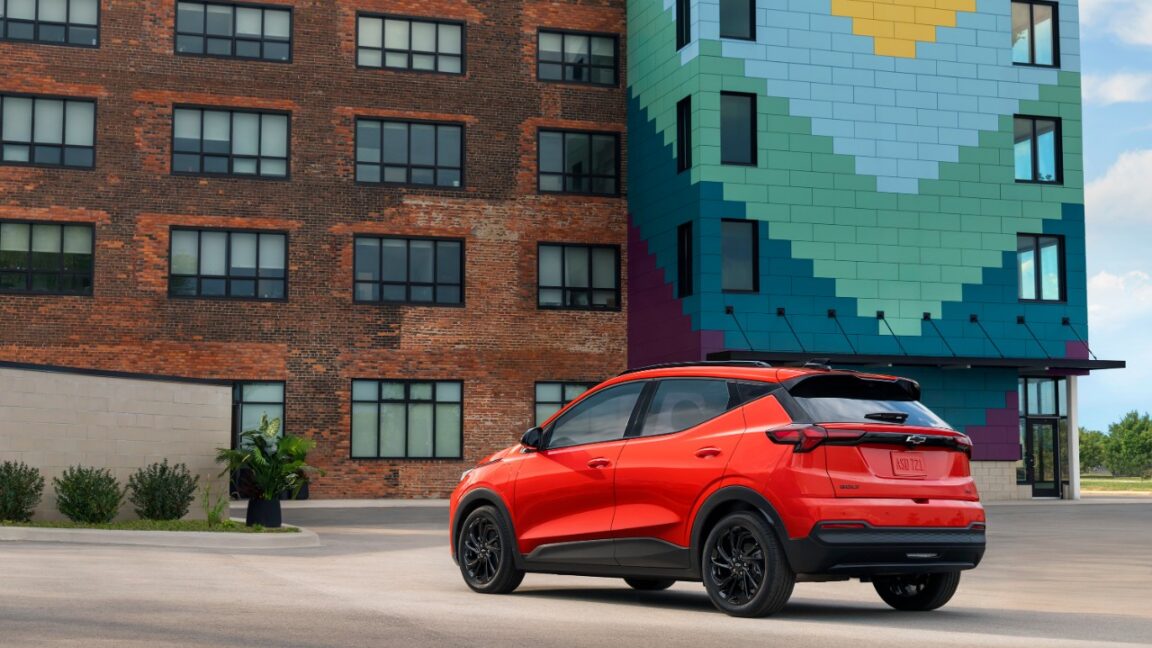
The most useful advice right now is simple: If the new Equinox EV seems too expensive or too large, recognize that the fan-favorite Chevrolet Bolt is now available in dealerships, presenting a truly affordable option.

A Champion's Triumphant Return

This is the electric vehicle news we desperately needed. General Motors has successfully reintroduced the beloved Bolt hatchback, resurrecting a cornerstone of modern electric mobility that offers exceptional range without demanding luxury prices. Before expensive competitors flooded the market, this extraordinary mass-produced EV provided consumers with over 200 miles of driving capability at an extremely reasonable cost, managing to be genuinely enjoyable to pilot in the process. We remember the Bolt's initial brilliance, following the experimental EV1 and the compliance-focused Spark EV, setting a profound benchmark for accessible, long-range electric transport well ahead of its time. Its surprising return signals a commitment to diversity in the EV landscape, ensuring that compact size and budget concerns do not exclude drivers from clean power.

The compact crossover market now welcomes the Chevrolet Equinox EV, starting at a respectable sub-$35,000 price point for 2026 models, yet for many households, even that figure represents a substantial financial burden. The immediate availability of the Bolt, a vehicle respected for its efficiency and practicality, ensures that budget-conscious shoppers have an excellent choice right this minute.

Overcoming Billion-Dollar Hurdles

The history of the Bolt is not without severe operational challenges, demanding an admirable feat of corporate fortitude to overcome. General Motors certainly has complex memories of this vehicle, particularly given the substantial financial drain it imposed—GM reportedly lost thousands of dollars on every single unit sold, a situation already untenable before disaster struck. A critical moment of scrutiny arrived with the mandatory, exhaustive recall of the entire fleet necessitated by fire risk stemming from improperly folded tabs on specific battery cells, an unfortunate manufacturing deficiency tied to their partner LG. That sprawling battery replacement program alone extracted a shocking $1.8 billion from the company's balance sheet, generating painful media coverage for both manufacturer and supplier.

We acknowledge the immense complexity and financial risk involved in discontinuing the Bolt—an action announced in April 2023 to free up production capacity for new, more profitable vehicles utilizing the expansive Ultium battery platform, which the original Bolt architecture predated. This temporary cessation, paradoxically, drove the Bolt to become GM's bestselling EV, demonstrating consumer demand was never truly the issue. Reengineering the celebrated Bolt for the latest battery technology was not merely swapping parts; it required ensuring entirely new cells, modules, and complex electronics fit perfectly within the established chassis dimensions and mounting structures. This current production run relies on importing LFP cells from CATL in China—cells that incur costly tariffs—until GM's own domestic LFP factory commences production sometime next year, underscoring the enormous effort invested in this valuable vehicle's second life.


Quiz: Test Your EV Knowledge

See how closely you were following the Bolt's remarkable journey!

  1. Before its recent reintroduction, which platform did the Bolt predate within GM's EV strategy?
  2. What was the approximate starting price standard set by the new Chevrolet Equinox EV for 2026?
  3. What specific part of the battery cell structure caused the major recall fire risk?
  4. According to reports, how many miles of range did the original mass-produced Bolt consistently offer consumers?
  5. Which major battery partner shared the negative press resulting from the massive fleet recall?
  6. What was the reported financial cost of the battery recall program alone, prior to production restart?
  7. The decision to initially discontinue the Bolt was intended to free up manufacturing capacity for what purpose?
  8. Which company is currently supplying the LFP cells used in the reengineered Bolt?
  9. By what margin did the Bolt become GM's bestselling EV following the initial discontinuation announcement?
  10. Name the hand-built, pre-lithium ion electric vehicle that preceded the Bolt within GM's history.
Image
The new Chevrolet Equinox EV is a solid entry into the compact crossover market, and with a (just) sub-$35,000 starting price, it also counts as ...
Here's one of the sources related to this article: Visit website

A Guide to the Electric Shift: Your How-To for Embracing EV Transport

The initial investment feels monumental, a heavy ledger entry demanding courage. That monetary hurdle, though steep, is swiftly tempered by the undeniable realization that you are investing in independence, securing your mobility against the whims of volatile global markets. This magnificent transition means the long-term cost of ownership dissolves beautifully into mere operational pennies.

Range anxiety is a cruel phantom, an unfounded shadow lingering from yesterday's technology. Modern batteries hold energy with breathtaking certainty. Your actual journey, viewed through the lens of meticulous pre-planning and realistic driving habits, overwhelmingly confirms that current EV ranges surpass the practical needs of daily existence and most ambitious excursions.

The question of power's origin is a profound reckoning, a connection that binds your movement to the broader electrical grid. Installing Level 2 home charging is often seamless. Accessing power is a simple ritual of plugging in overnight, ensuring every dawn brings a fresh slate of fully utilized energy, ready for the miles ahead.

;

Stepping into the world of electric transport is not merely swapping one machine for another; it is adopting an ethos, a commitment to quieter, more thoughtful movement. This shift demands careful preparation and an open mind, ready to embrace new routines.

I. The Deep Dive: Selecting Your Vehicle

1. Define Your Necessary Range.
Do not calculate based on the maximum distance you might travel annually; focus on the daily round trip, your steady rhythm of commute and errands. A vehicle rated for 250 miles provides substantial cushion even during deep winter, when battery performance naturally diminishes. Choose the capacity that liberates you from worry, rather than the one that simply impresses on paper.

2. Kilowatt-Hours (kWh) and Efficiency.
Battery capacity is measured in kWh, the vessel that holds your energy. A larger kWh rating generally means more range, but vehicle efficiency (miles per kWh) is the true measure of economical performance. Seek transparency in the efficiency ratings. Review specifications that detail the power consumption of internal systems, such as advanced heating or cooling, as these inevitably subtract from the total distance available.

3. Test the Charging Ports.
Spend time investigating the precise placement and usability of the charging inlet. Some placements prove frustratingly awkward at specific public charging stations. Confirm the charging speed capabilities—DC Fast Charging speeds are not universal across models. Knowing how swiftly your chosen machine can drink electricity on a trip is crucial to minimizing travel delays.

II. Establishing Your Home Anchor: Charging Infrastructure

The convenience of EV ownership hinges upon reliable home charging. This is where mobility becomes effortless, restoring power while you rest.

1. Level 1 Charging: The Slow Embrace.
This uses a standard 120-volt household outlet. It requires no installation beyond plugging the supplied cord into the wall. Level 1 delivers approximately 3 to 5 miles of range per hour of charging. It suffices only for those with short daily commutes (under 30 miles) or as a backup strategy.

2. Level 2 Charging: The Foundation of Freedom.
Level 2 utilizes a 240-volt circuit, similar to an electric clothes dryer. This requires professional installation of a dedicated circuit and a Wall Connector (EVSE). Delivering 25 to 45 miles of range per hour, Level 2 infrastructure ensures your battery is replenished completely overnight, regardless of how depleted it was upon arrival.

3. Navigating Incentives and Installation.
Consult your local utility company immediately. Many offer attractive rebates for the installation of Level 2 chargers or provide time-of-use (TOU) tariffs that dramatically reduce the cost of charging during off-peak hours (usually overnight). Use certified, licensed electricians familiar with EV equipment to guarantee safety and compliance.

III. The Art of the Drive: Maximizing Efficiency

Electric vehicles respond differently to driving habits than combustion engines. Mastery of these nuances unlocks greater range.

1. Embrace Regenerative Braking.
This feature captures kinetic energy typically lost during deceleration and sends it back to the battery. Drive ahead—anticipate stops, traffic lights, and curves. By gradually lifting your foot from the accelerator, you utilize the regenerative systems maximally, often eliminating the need to physically touch the brake pedal until a full stop is necessary. This effortless kinetic capture extends your range significantly.

2. Pre-conditioning the Cabin.
Prior to unplugging, while the vehicle is still connected to the grid, use the vehicle app to pre-heat or pre-cool the cabin. This draws the necessary high energy load directly from your house power, rather than draining the battery for comfort once you begin driving. This is particularly vital in extreme temperatures.

3. Strategic Public Charging.
Download reliable apps (e.g., PlugShare, ChargePoint) to identify stations, verify their operational status, and check current pricing before you arrive. Do not wait until the battery is critically low to seek a charge on the road. Aim to fast-charge between 20% and 80%. Charging speed tapers dramatically after 80%, meaning the last 20% takes nearly as long as the previous 60%.

;

Frequently Asked Questions (FAQ)

Does rapid charging degrade the battery quickly?
While frequent reliance on high-speed DC Fast Charging generates more heat and slightly accelerates degradation compared to slow Level 1 or 2 charging, the effect is marginal over the lifespan of the vehicle. Battery management systems are sophisticated, meticulously regulating temperature and power flow to protect the cells. Rely on Level 2 charging for daily needs, reserving DC Fast Charging for longer journeys.

What is the real lifespan of the battery pack?
Automakers typically warrant their battery packs for 8 years or 100,000 miles, guaranteeing retention of a minimum capacity (usually 70%). Expect the pack to outlast this warranty significantly, though its usable range will gradually diminish. The current scientific consensus points toward 15 to 20 years of useful life before the remaining capacity becomes truly inconvenient for average driving patterns.

Are EV maintenance costs actually lower?
Yes, dramatically so. Electric vehicles eliminate the need for oil changes, spark plugs, belt replacements, and complex exhaust systems. The only significant maintenance involves tire rotation, brake pads (which last exceptionally long due to regenerative braking), cabin air filters, and wiper fluid. This simplicity translates into substantial financial savings over time.

A Glimpse Into Elite Motorsport With Jimmy Johnson's Insights However, There Is No Mention Of Jimm...

Image

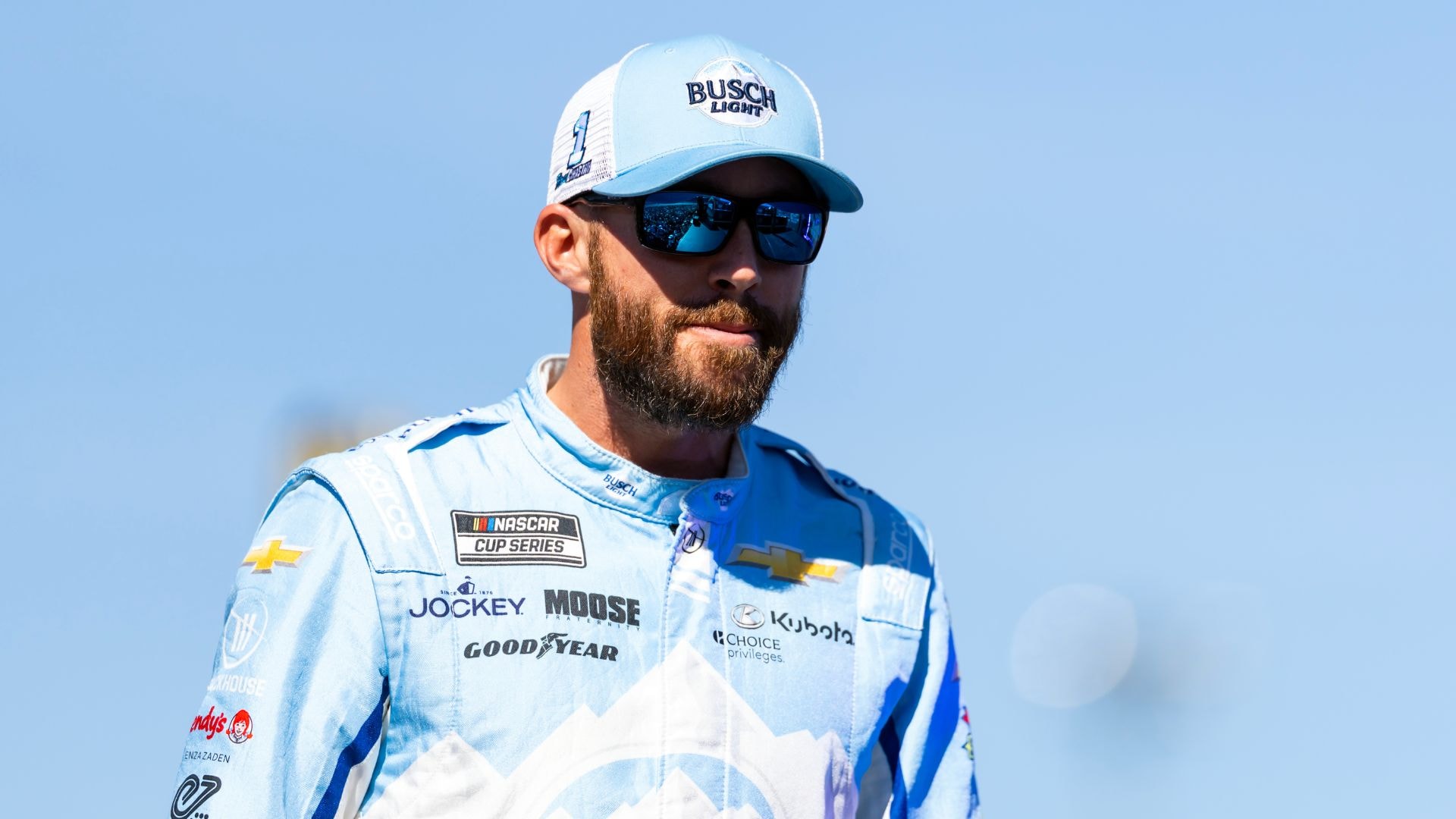
NASCAR Cup Series driver Ross Chastain gained an unusual insight into elite motorsport operations this past weekend. Chastain made a surprise appearance at Daytona International Speedway during the 'Roar Before the 24' test sessions. The Trackhouse Racing star was a guest of General Motors and Action Express Racing, allowing him access to the Whelen Cadillac set-up.

He observed a profound difference.

Chastain admitted that seeing the depth of the team and the rapid operational pace of IMSA sports car racing provided a learning experience distinct from his customary environment. While he had previously viewed IMSA events from a distance, watching the immediate conversations and strategy unfold from the pit box offered a unique comparison point. Operational speed impressed the veteran driver. He specifically noted the swiftness with which racers and crews prepared following a red flag incident.

This comparative operational speed highlights distinct logistical priorities across premier racing formats.

Chastain confessed to asking his future Trackhouse Racing teammate, Connor Zilisch, questions he never learned in the stock car sphere. "It was just cool to learn about," Chastain elaborated, emphasizing the unexpected complexity. He acknowledged that preparations for the upcoming Daytona 500, potentially taking place in the very same pit stall, simply do not compare to the specific demands of endurance sports car racing, stating the distinction is ultimately productive for both series.

Zilisch, who is just 19 years old, participated in the test session before the Rolex 24. The young driver also completed a one-off GTP debut drive with the Action Express Racing Whelen Cadillac V-Series.R. He took the opportunity to detail the complexities of sports car racing for his teammate. Chastain is now better equipped to integrate some of these rapid operational cues into his own team's approach. Learning from the next generation.

Ross Chastain got the unique opportunity to be on-site at the 'Roar Before the 24' test sessions in Daytona over the weekend.
Other related sources and context: Visit website

Featured Post

The Fast Track Electric Mobility Digest Nevada Regulators Greenli

Tesla secured permits for up to five thousand autonomous vehicles across the Las Vegas Strip, while Waymo and Uber grabbed authorizations ...

Popular Posts